

In This Article
Somewhere between the third night of drizzle on the West Highland Way and the moment your pack scale reads 200 grams heavier than promised, you start to understand why sleeping bags matter more than almost anything else in your kit list. A lightweight down sleeping bag for backpacking isn’t just a nice-to-have for shaving grams off your rucksack; it’s the difference between waking up refreshed for day four of a trail and lying awake at 3am doing the maths on how many miles you can realistically manage on no sleep. This guide exists because most “best sleeping bag” round-ups either read like a rewritten Amazon listing or drown you in spec sheets with zero context.

We’ve dug through real product data, aggregated genuine customer review sentiment, and independent UK gear-testing coverage to bring you seven actual products worth your money, spanning budget synthetics through premium goose down. Whether you’re outfitting your first multi-day trip or replacing a bag that’s finally given up the ghost, this article gives you the honest analysis to choose a lightweight down sleeping bag for backpacking that suits your body, your budget and Britain’s notoriously changeable weather. We’ll also unpack fill power, explain grams-per-litre warmth ratio, and tackle the allergy question that trips up more buyers than you’d think.
What Is a Lightweight Down Sleeping Bag?
A lightweight down sleeping bag is a mummy-shaped sleeping bag insulated with goose or duck down clusters rather than synthetic fibre, typically weighing under 1kg and compressing to the size of a large water bottle. Fill power (measured 550–950) indicates loft quality: higher numbers trap more warm air per gram of down, meaning less fill is needed to hit the same temperature rating.
Quick Comparison Table
| Sleeping Bag | Fill | Weight | Comfort Rating | Best For |
|---|---|---|---|---|
| Alpkit PipeDream 400 | 750FP down | 865g | -4.2°C | Budget-conscious 3-season backpackers |
| Rab Neutrino 400 | 800FP down | 775g | -1°C | Serious multi-season trekkers |
| Sea to Summit Spark -1°C | 850+FP down | 536g | -1°C | Ultralight thru-hikers |
| Vango Venom 300 | 700FP down | 915g | 0°C | First-time down buyers |
| Mountain Equipment Xenith II | 900FP down | 495g | 1°C | Fastpacking and alpine trips |
| OEX Fathom EV 300 | Synthetic | 1,050g | 1°C | Allergy sufferers and tight budgets |
| Therm-a-Rest Hyperion 20 | Down | 600g | -6°C | Solo ultralight backpacking |
Looking at the table, there’s a clear split between the sub-600g “counting every gram” bags — the Sea to Summit Spark -1°C, the Mountain Equipment Xenith II and the Therm-a-Rest Hyperion 20 — and the heavier, more forgiving bags that trade a few hundred grams for a lower price tag or wider fit. If allergies or budget are dictating your choice rather than pure weight, the OEX Fathom EV 300 stands apart as the only non-down option on this list, and it’s worth reading the allergy section below before you dismiss synthetic fill as automatically inferior.
💬 Just one click — help others make better buying decisions too!😊
Top 7 Lightweight Down Sleeping Bags for Backpacking: Expert Analysis
1. Alpkit PipeDream 400 — best British-brand value pick
Alpkit built its reputation on cutting out the middleman, and the PipeDream 400 is the clearest example of that philosophy applied to sleeping bags. It uses 750 fill power DownTek hydrophobic down with a box-wall baffle construction, which means the fill is pinned in horizontal channels rather than free to migrate and clump — the single biggest cause of cold spots in cheaper bags. At 865g with a comfort rating of -4.2°C and an Alpkit-stated limit of -6°C, this bag punches well above its weight class for genuine three-season UK use, from spring bothy nights to early autumn wild camps. Reviewers on gear forums consistently flag the fit as generous through the shoulders compared with narrower European competitors, which matters if you toss and turn. A common thread in aggregated feedback is praise for the hydrophobic treatment holding loft even after a damp night in a leaky tent, though several users note the standard-length bag runs short for anyone over 6’1″, so the Long version is worth the extra outlay if you’re tall. On paper this is one of the best warmth-to-price ratios in UK-made down, and it’s hard to find a genuine 750FP hydrophobic-down bag from a British brand at this price point elsewhere.
Pros:
- ✅ Box-wall baffles prevent down migration and cold spots
- ✅ Hydrophobic DownTek down copes well with UK damp
- ✅ Roomy shoulder cut for a mummy-shaped bag
Cons:
- ❌ Standard length feels snug for anyone over 6’1″
- ❌ Heavier than premium 800FP+ competitors at a similar price
Typically priced in the £190-£220 range at the time of research, the Alpkit PipeDream 400 represents strong value for anyone who wants genuine three-season performance without paying premium-brand mark-up — check current price before buying, as Alpkit runs frequent seasonal offers.

2. Rab Neutrino 400 — premium UK-made warmth-to-weight
Hand-filled in Derbyshire, the Rab Neutrino 400 is the sort of bag serious hillwalkers buy once and keep for a decade. It’s filled with 800 fill power Responsible Down Standard certified European goose down treated with a fluorocarbon-free Nikwax hydrophobic finish, wrapped in a 20D Pertex Quantum recycled nylon shell that resists wind better than most ripstop alternatives. Weighing around 775-865g depending on size, with a comfort rating of -1°C and a limit of -7°C, this bag sits squarely in “go anywhere in the UK, most of the year” territory. What most buyers overlook about this model is the tapered mummy shape and chevron baffle design working together: the narrower cut reduces the air volume your body has to heat, while the chevron baffles cut down on the number of seams needed, saving weight without sacrificing loft distribution. Aggregated reviewer sentiment repeatedly describes the bag as “warmer than the rating suggests,” a rare compliment given how conservative EN 13537 lab testing tends to be. The trade-off is a genuinely snug fit that broader-shouldered sleepers or anyone wanting room for a jacket layer may find restrictive.
Pros:
- ✅ RDS-certified 800FP goose down, hand-filled in the UK
- ✅ Hydrophobic finish performs reliably in damp conditions
- ✅ Chevron baffles cut weight without sacrificing warmth
Cons:
- ❌ Tapered mummy cut feels tight for broader builds
- ❌ Premium pricing puts it out of reach for casual campers
Expect to pay somewhere in the £360-£420 range depending on size and retailer, positioning the Rab Neutrino 400 as a genuine investment piece rather than an impulse buy — well justified if you’re logging dozens of nights a year.
3. Sea to Summit Spark -1°C — lightest full-warmth ultralight pick
If your entire packing philosophy revolves around a set of kitchen scales, the Sea to Summit Spark -1°C deserves a long look. Weighing roughly 536g with 850+ fill power goose down treated with the brand’s Ultra-Dry Down coating, it’s built with a 10-denier nylon shell so thin you can almost see through it, plus a genuinely waterproof-breathable fabric panel around the hood and footbox where condensation collects most. The hybrid baffle construction — box-wall across the torso, sewn-through through the legs — is a clever compromise that keeps weight down where warmth matters less. Based on the spec comparison against heavier competitors on this list, the Spark trades roughly 300g of weight for a genuinely comparable comfort rating, which is the entire point of paying a premium for high fill-power down. Reviewer sentiment aggregated from outdoor retailers is largely positive on warmth-to-weight but consistently flags the mummy cut as tight, and the half-length YKK zip (rather than full-length) limits venting on warmer nights or when you need to dress inside the bag.
Pros:
- ✅ Class-leading 850+ fill power for its weight class
- ✅ Waterproof-breathable hood and footbox tackle condensation
- ✅ Compresses into a genuinely tiny stuff sack
Cons:
- ❌ Half-length zip limits ventilation and dressing room
- ❌ Snug mummy fit isn’t forgiving for restless sleepers
At around £340-£380, the Sea to Summit Spark -1°C is one of the pricier bags here, but for multi-day trail camping where every gram in your pack gets carried uphill, the weight saving alone can justify the spend.
4. Vango Venom 300 — best entry-level down bag
Vango has been building outdoor kit from its base in the Scottish Highlands since 1966, and the Venom 300 is the brand’s answer to “I want a real down bag without the premium price tag.” It uses 700 fill power hydrophobic duck down in a box-wall construction, wrapped in a 30D ripstop nylon shell, and weighs in at roughly 915g with a comfort rating around 0°C. The fill weight is lower and denier heavier than the premium bags on this list, which explains both the price and the slightly bulkier pack size — but that’s exactly what makes it a sensible entry point for anyone stepping up from a synthetic bag for the first time. Aggregated forum sentiment from UK hillwalking communities is candid: several long-term owners describe the Venom 300 as “a bit light on loft” for genuinely cold nights below freezing, better suited to spring-to-autumn UK camping than shoulder-season mountain bivvies. What reviewers consistently praise, though, is the generous 220cm length and 80cm width, which makes this one of the roomier options here for anyone who dislikes a claustrophobic mummy cut.
Pros:
- ✅ Genuine hydrophobic down at a fraction of premium prices
- ✅ Roomier cut than most ultralight competitors
- ✅ Trusted Scottish brand with decades of outdoor pedigree
Cons:
- ❌ Noticeably heavier than 800FP+ alternatives at similar warmth
- ❌ Marginal for genuinely cold nights below freezing
Sitting around £120-£160, the Vango Venom 300 is a sensible mid-range choice if you want to try down without committing to premium-brand pricing — a strong “step up” bag for developing backpackers.
5. Mountain Equipment Xenith II — premium 900FP ultralight build
Mountain Equipment’s Extreme Light range exists for one reason: to shave every possible gram without compromising warmth, and the Xenith II sits right in the sweet spot of that range. Built with 900 fill power European goose down and Mountain Equipment’s Plasma 10D fabric, this bag weighs approximately 495g while delivering what the brand calls a “Good Night’s Sleep” temperature of around 1°C — a rating derived from lab testing, thermal imaging and real-world cold-chamber work rather than EN 13537 alone. The vertical box-wall baffles across the chest and slanted V-tube baffles through the body are engineering choices aimed squarely at preventing the cold bridging that plagues cheaper bags. Here’s what to weigh up: this is genuinely one of the lightest hooded down bags on the market at this comfort rating, making it a natural fit for fastpacking, alpine approach nights, or anyone doing serious vertical mileage where pack weight compounds with every metre climbed. The trade-off, unsurprisingly, is price — and the non-hydrophobic down means extra care is needed to keep it dry.
Pros:
- ✅ Exceptional 900FP goose down for elite warmth-to-weight
- ✅ Independently reviewed as conservative on its temperature rating
- ✅ Baffle engineering virtually eliminates cold bridging
Cons:
- ❌ Down isn’t hydrophobic, so damp conditions need extra care
- ❌ Among the most expensive bags in this roundup
Priced around £420-£460, the Mountain Equipment Xenith II is aimed at buyers who already know exactly why they want 900 fill power — casual weekend campers will struggle to justify the outlay.
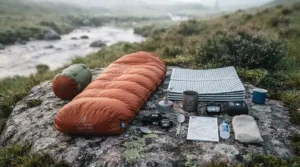
6. OEX Fathom EV 300 — best value synthetic under £80
Not every backpacker wants or can safely use down, and this is where the OEX Fathom EV 300 earns its place on this list. As a synthetic-fill three-season bag from Go Outdoors’ own-brand label, it weighs around 1.05kg — noticeably heavier than the down options above — with a comfort rating hovering around 1°C, making it a genuinely usable spring-to-autumn UK bag rather than a token budget filler. Reviewers on hillwalking forums are refreshingly honest about this bag: it isn’t premium-quality construction, and the four-season claim some retailers use is optimistic, but for the price it consistently gets recommended as a first “proper” backpacking bag before someone commits to expensive down. The synthetic fill has a genuine practical advantage that specs alone don’t convey — it retains meaningful insulation even when wet, which matters enormously on a multi-day trail camping trip through the Lake District or Snowdonia, where condensation and drizzle are less an occasional inconvenience and more a permanent travelling companion.
Pros:
- ✅ Genuinely usable 3-season comfort rating for the price
- ✅ Synthetic fill keeps insulating even when damp
- ✅ Machine washable without the specialist care down demands
Cons:
- ❌ Noticeably bulkier and heavier to pack than down rivals
- ❌ Build quality is basic compared with premium brands
This is our pick for the best value sleeping bag under £80, typically found in the £40-£75 range depending on retailer and sales — an easy recommendation for anyone testing the waters of backpacking, or who has a down allergy and doesn’t want to gamble on an expensive synthetic alternative.
7. Therm-a-Rest Hyperion 20 — lightest full-length mummy bag
Therm-a-Rest built a genuine cult following with the Hyperion 20, and the reason is simple: at roughly 600g, it’s one of the lightest full-length mummy bags with a genuine three-season temperature rating you can buy. The bag uses premium down with careful attention to shell weight, resulting in a package that, as one independent reviewer memorably put it, feels “practically as light as air.” Reviewers consistently point to two trade-offs that come with that headline weight figure: the cut is genuinely snug, better suited to smaller or slimmer body types than broad-shouldered sleepers, and the half-length zip (rather than full-length) limits how much venting or dressing-inside-the-bag flexibility you get on milder nights. What the spec sheet won’t tell you, but aggregated reviewer feedback makes clear, is that this bag rewards precise sizing — buyers who size up for extra room report losing some of the thermal efficiency that makes the Hyperion so warm for its weight in the first place. For thru-hikers and long-distance trail runners counting every gram over hundreds of miles, that precision is exactly the point.
Pros:
- ✅ Genuinely exceptional weight-to-warmth for a full mummy bag
- ✅ Premium build quality from a trusted long-standing brand
- ✅ Compresses to one of the smallest pack sizes here
Cons:
- ❌ Snug fit isn’t forgiving for broader-shouldered sleepers
- ❌ Half-length zip limits ventilation on warmer nights
Pricing on the Therm-a-Rest Hyperion 20 typically sits in the £300-£360 bracket at UK retailers — check current price, as availability and exchange-rate-driven pricing can shift this bag’s position noticeably.
How to Choose a Lightweight Down Sleeping Bag for Backpacking
Picking the right bag isn’t about buying the lightest option on the shelf — it’s about matching seven variables to your actual trips. Here’s the reasoning we’d walk a friend through:
- Start with your coldest realistic night, not your average one. Check historical lows for the routes you actually do, then choose a comfort rating with a few degrees of margin.
- Decide down versus synthetic before anything else. If you have any suspicion of a feather or dust allergy, or you regularly camp in genuinely wet conditions without a reliable drying opportunity, synthetic fill removes an entire category of risk.
- Weigh fill power against your budget honestly. Every jump from 700FP to 800FP to 900FP buys you meaningfully less pack weight for the same warmth, but the price increase per gram saved gets steeper each step.
- Check the packed size against your rucksack, not just the weight figure. A bag that’s 100g lighter but bulkier can eat more valuable pack volume than a slightly heavier, denser-packing alternative.
- Consider your build and sleep style. Restless sleepers and broader-shouldered backpackers should lean toward more generous cuts, even if it costs a little extra weight.
- Factor in zip length for versatility. Full-length zips add a little weight but let you vent on warm nights or use the bag as a quilt in summer — half-length zips save weight but sacrifice flexibility.
- Budget for a liner and dry bag, not just the bag itself. A silk or synthetic liner extends the usable temperature range and keeps the bag cleaner between washes, protecting your investment long-term.
Understanding Grams-Per-Litre Warmth Ratio
Fill power and total weight tell you part of the story, but grams-per-litre warmth ratio — a bag’s total weight divided by its compressed pack volume — tells you how efficiently that warmth actually travels in your rucksack. It’s a metric serious ultralight backpackers use more than casual buyers realise, and it’s worth calculating yourself rather than trusting marketing copy. Take the Alpkit PipeDream 400: published dimensions put its compressed pack size at roughly 19cm by 14cm, which works out to a packed volume of around 2.9 litres. At 865g, that’s approximately 295 grams per litre of pack space consumed — a genuinely useful figure once you’re comparing it against a bag with a very different shape. The Vango Venom 300, by contrast, compresses to roughly 15cm by 24cm — around 4.2 litres — and at 915g works out to about 216 grams per litre, meaning it actually uses pack volume more efficiently per gram than the raw weight figure alone would suggest, even though it’s the heavier bag on paper.
The takeaway here is that a lower grams-per-litre figure means a bag is using its rucksack real estate efficiently relative to its weight, which matters just as much as headline weight when you’re stuffing a 50-litre pack for a five-day trail. Reviewers rarely publish this figure directly, so it’s genuinely worth doing the sum yourself from a manufacturer’s stated weight and packed dimensions before you buy — particularly if pack volume, not just carried weight, is your limiting factor.
Down vs Synthetic: Which Is Best for Allergy Sufferers?
| Factor | Down | Synthetic |
|---|---|---|
| Warmth-to-weight | Excellent | Good but heavier |
| Performance when wet | Poor unless hydrophobic-treated | Retains most insulation |
| Allergy risk | Generally low with cleaned, RDS-certified fill | Effectively none |
| Typical lifespan | 10+ years with care | 5-8 years |
| Price | Higher | Lower |
The analysis here matters more than the table suggests. Genuine down allergy is far rarer than people assume — what most sufferers are actually reacting to is residual dust, dander or mite debris left in poorly processed down, not the down plumules themselves. Down that’s washed and processed to modern standards, including the Responsible Down Standard fill used in several bags on this list, scores extremely low on the industry’s oxygen-content cleanliness test, and many people who believe they’re allergic to down have no issue with a properly cleaned, high fill-power bag. That said, if you have a confirmed feather or dust-mite allergy, or you’re simply not willing to risk an uncomfortable night to find out, a synthetic bag like the OEX Fathom EV 300 removes the guesswork entirely. According to the NHS, allergic reactions are caused by the immune system overreacting to substances that are otherwise harmless, and symptoms and management of allergies are well documented if you want to understand your own triggers before choosing fill type. If in doubt, borrowing or trying a down bag briefly indoors before a big trip is a low-risk way to settle the question for yourself.

Best Value Sleeping Bag Under £80
Budget shouldn’t mean gambling on an unbranded bag with no published fill data, and this is exactly the gap the OEX Fathom EV 300 fills. At its typical £40-£75 price point, it undercuts every down bag on this list by a significant margin while still delivering a genuine three-season comfort rating most casual backpackers will find perfectly usable across spring, summer and early autumn UK trips. Value here isn’t just about the lowest sticker price — it’s about cost-per-use over a bag’s realistic lifespan. A synthetic bag in this price bracket typically lasts five to eight seasons of regular use before insulation performance noticeably degrades, which on a cost-per-night basis for someone doing a handful of trips a year works out extremely competitively against a £350 down bag that might last twice as long but sees the same number of nights out. If you’re not yet sure backpacking is a long-term hobby, or you want a reliable spare bag for guests and emergencies, spending under £80 here is the financially sensible call rather than a compromise.
Practical Usage Guide: Getting the Most From Your Down Bag
Buying the right bag is only half the job — how you use it night to night determines whether it performs anywhere near its rated temperature. On your first few outings, loft your bag out of its stuff sack the moment you make camp, ideally an hour before bed, since down needs time to fully expand and trap air. Never store a down bag compressed between trips; the constant pressure crushes the down clusters over time and permanently reduces loft, so use the large cotton or mesh storage sack most bags include rather than leaving it in its tight compression sack. This is where compression sacks earn their keep for travel, not storage: use one only to squeeze the bag down for the walk to the trailhead, then decompress it as soon as you’re at camp. A common first-month mistake is sleeping in too many bulky clothing layers inside the bag, which actually compresses the down beneath you and reduces its insulating loft — a thin base layer plus a good sleeping mat with an adequate R-value does more for warmth than three jumpers crammed inside a mummy bag. Finally, always pair your sleeping bag with a dry bag or waterproof pack liner, since even hydrophobic down loses significant loft if it gets properly soaked, and drying a wet bag mid-trail is rarely practical.
Real-World Scenarios: Matching Bags to Multi-Day Trail Camping
Consider a university student planning their first multi-day trail camping trip along a lowland long-distance path, carrying a 45-litre pack on a tight budget with no prior down experience. The OEX Fathom EV 300 or Vango Venom 300 make far more sense here than an ultralight premium bag — the weight penalty over three or four days is manageable, and neither purchase represents a devastating loss if a first trip reveals backpacking isn’t for them. Now picture an experienced hillwalker planning a five-night crossing of the Cairngorms in shoulder season, carrying everything needed for genuinely cold nights above 700 metres: this is exactly the scenario the Rab Neutrino 400 or Mountain Equipment Xenith II were engineered for, where the extra spend buys real margin against an unexpected cold snap. Finally, imagine a thru-hiker tackling a fortnight of the Pennine Way, where every gram carried gets felt on the ascents day after day, and pack volume is at a premium alongside food and water. Here, the Sea to Summit Spark -1°C or Therm-a-Rest Hyperion 20 justify their higher price precisely because the cumulative weight saving over 250 miles genuinely changes how the trip feels in your legs and shoulders by day ten.
Common Mistakes When Buying a Lightweight Down Sleeping Bag
The single most common mistake is buying based on the “comfort” temperature rating alone without checking whether that figure reflects a cold or warm sleeper, since manufacturers use different baseline assumptions and the same numerical rating can feel wildly different between two people. A close second is ignoring the sleeping mat entirely — a sleeping bag only insulates what’s above you, and pairing a premium down bag with a thin, low R-value mat wastes most of the money spent on the bag, because the bulk of overnight heat loss happens straight through the ground. Buyers also frequently underestimate how much a snug ultralight mummy cut restricts movement, ordering online without checking shoulder girth measurements and then discovering the bag feels claustrophobic on a first night out, far from a returns desk. Another recurring pitfall is choosing a bag based purely on weight without factoring pack volume, which is exactly why the grams-per-litre warmth ratio conversation above matters more than most buyers realise before their first serious multi-day trip. Finally, plenty of first-time buyers assume all “3-season” claims are directly comparable between brands, when in practice one manufacturer’s three-season bag can have a materially different comfort rating from another’s.
Problem → Solution: Fixing Common Down Sleeping Bag Issues
Problem: cold spots down one side of the bag. This is almost always down migration inside sewn-through baffles rather than a faulty product — gently redistribute the fill by hand-massaging clumps back into place before bed, and consider a box-wall baffle bag like the Alpkit PipeDream 400 next time if this happens repeatedly.
Problem: the bag feels colder than its rated temperature. Check your sleeping mat’s R-value first, since ground-conduction heat loss is the most commonly overlooked culprit; a liner adds several degrees of buffer cheaply if the mat itself is adequate.
Problem: down has lost loft after several trips. This usually means the bag has been stored compressed or washed incorrectly. Re-loft by tumble drying on low heat with clean tennis balls to break up clumped clusters, following the manufacturer’s specific care instructions.
Problem: persistent damp smell or reduced performance in wet conditions. Standard down loses insulating ability when wet; switching to a hydrophobic-treated bag, or a synthetic option like the OEX Fathom EV 300 for consistently damp environments, solves this at the source rather than fighting it trip after trip.
Problem: bag won’t compress as small as advertised. Compression sacks lose effectiveness over time as straps stretch; replacing an old compression sack is far cheaper than assuming the bag itself has degraded.
Long-Term Cost & Maintenance
A premium down bag looks expensive at the till, but the total cost of ownership tells a more nuanced story. A well-maintained 800-900FP down bag, stored uncompressed, washed rarely and only with specialist down detergent, can realistically last a decade or more of regular use, working out to roughly £35-£40 a year for something like the Rab Neutrino 400 across ten seasons of active backpacking. A budget synthetic bag costing a third of the price but needing replacement every five to seven years due to insulation breakdown can end up costing a similar amount annually, particularly once you factor in that synthetic fill genuinely does lose loft faster than well-cared-for down. Maintenance itself costs little beyond occasional specialist washing (budget for this roughly once a season if used heavily, less if lightly used) and a decent storage sack, but the habits matter more than the spend: always dry a bag fully before long-term storage, never store it compressed, and air it out after every trip rather than packing it straight back into a stuff sack still damp from overnight condensation.
Safety, Regulations and Compliance Guide
UK sleeping bags aren’t subject to a specific CE or UKCA marking scheme the way, say, climbing equipment is, but reputable brands do test against ISO 23537 (the successor to the older EN 13537 standard), which uses a heated manikin in a climate-controlled chamber to generate standardised comfort, limit and extreme temperature ratings. Understanding the difference matters for safety, not just comfort: the “comfort” rating is where an average cold sleeper feels genuinely warm, “limit” is where an average warm sleeper is still just about comfortable, and “extreme” is a survival threshold you should never plan a trip around. Hypothermia is a genuine risk on UK hills even in relatively mild conditions, particularly when wind chill and dampness are factored in, and the NHS guidance on hypothermia is worth reading before any serious multi-day trip so you can recognise early symptoms in yourself or a companion. Practically, always choose a comfort rating with a few degrees of buffer below the coldest night you realistically expect, check the forecast before committing to a wild camp, and remember that a sleeping bag is only one part of a safe overnight system alongside an appropriate mat, shelter and clothing layers.

Frequently Asked Questions
❓ What temperature rating do I need for UK backpacking?
❓ Is down or synthetic better for backpacking?
❓ How do I know if a sleeping bag will fit in my rucksack?
❓ Can I use a compression sack every day without damaging the down?
❓ How often should I wash a down sleeping bag?
Conclusion
Choosing a lightweight down sleeping bag for backpacking really comes down to being honest about three things: your budget, the coldest night you’re genuinely likely to face, and how much you actually care about shaving grams versus having a roomier, more forgiving fit. For most UK three-season backpacking, the Alpkit PipeDream 400 remains one of the smartest all-round choices, balancing genuine hydrophobic 750FP down against a price that doesn’t require a second mortgage. If weight is your only religion, the Sea to Summit Spark -1°C, Mountain Equipment Xenith II and Therm-a-Rest Hyperion 20 all justify their premium price tags on multi-day trail camping trips where every gram is felt in your shoulders by day three. And if allergies, budget, or simply not wanting to gamble on your first bag are driving the decision, the OEX Fathom EV 300 proves synthetic fill is nothing to apologise for. Whichever you choose, pair it with a decent mat, store it properly, and it should see you through many nights under British skies for years to come.
Recommended for You
- Sleeping Bag for Wet Weather Camping: 7 Bags That Won’t Let You Down (2026)
- Down Sleeping Bag vs Synthetic Sleeping Bag: 7 UK Picks (2026)
- Zip-Together Sleeping Bags 2026: 7 Best Picks (Warm; Roomy)
Disclaimer: This article contains affiliate links. As an Amazon Associate, I earn from qualifying purchases. If you purchase products through these links, we may earn a small commission at no additional cost to you.
✨ Found this helpful? Share it with your friends! 💬🤗
