

In This Article
There’s a specific, sinking feeling that comes with reaching into your sleeping bag at midnight and finding damp patches where dry down used to be. If you’ve camped in Britain more than a handful of times, you already know this feeling intimately, because our weather has a habit of ignoring the forecast entirely. A sleeping bag for wet weather camping is, put simply, one built around synthetic insulation rather than natural down — a fill type that keeps trapping air and generating warmth even when it picks up moisture, rather than collapsing into a cold, useless clump the moment condensation gets in.

That distinction matters more than most first-time campers realise. Down is lighter and packs smaller, and for dry alpine trips it’s genuinely superior. But the moment moisture becomes part of the equation — persistent drizzle, a leaky tent seam, condensation dripping off the flysheet at 3am — synthetic fill starts pulling ahead, because, as Wikipedia’s overview of sleeping bag design notes, insulation performance depends heavily on whether the fill is synthetic or down, with synthetic fibres continuing to trap warm air even when wet. We’ve dug through real UK-available products, genuine specs, and aggregated customer feedback to find seven sleeping bags that actually hold up when the campsite turns soggy, spanning everything from festival-budget picks to properly engineered kit built for shoulder-season expeditions.
Quick Comparison Table
| Product | Price Range | Best For | Rating (aggregated) |
|---|---|---|---|
| Vango Nitestar Alpha 250 | £30-£45 range | Best all-round wet-weather performer | 4.4★ (widely reviewed) |
| Snugpak Travelpak Traveller | £50-£65 range | Best premium quick-dry, UK-made | Strongly positive aggregated sentiment |
| Highlander Sleepline 250 | under £25 | Best budget hollowfibre pick | 3.0-4.0★ (mixed but solid at price) |
| KingCamp Envelope Sleeping Bag | £20-£30 range | Best budget synthetic all-rounder | 4.0★+ (strong customer sentiment) |
| Trespass Echotec 4 Season Hollowfibre | £30-£40 range | Best for cold, wet shoulder-season trips | 4.3★ (80+ reviews) |
| Vango Saturn | £20-£30 range | Best budget-mid backup option | 4.4★ (100+ reviews) |
| Trespass Envelop Hollowfibre | £20-£25 range | Best lightweight pick for first-timers | Solid, consistent sentiment |
Scanning across the table, the real split here isn’t budget-versus-premium so much as it’s “how cold and how wet” — a mild, damp weekend at a lowland campsite asks very little of a bag compared to a genuinely cold, sodden shoulder-season trip in the Highlands. If you just need reliable warmth for typical British drizzle, the KingCamp Envelope Sleeping Bag or Highlander Sleepline 250 cover that brief without draining your bank balance. If you’re heading somewhere colder and properly wet — think autumn Wales or a rain-lashed Lake District weekend — step up to the Vango Nitestar Alpha 250 or the Trespass Echotec 4 Season Hollowfibre, both of which are built with genuinely damp-resilient insulation rather than basic fill.
💬 Just one click — help others make better buying decisions too!😊
Top 7 Sleeping Bags for Wet Weather Camping: Expert Analysis
1. Vango Nitestar Alpha 250 — Duke of Edinburgh recommended, retains loft when damp
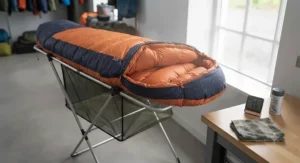
The Vango Nitestar Alpha 250 has been a fixture of UK expedition kit lists for years, and for good reason — it’s one of the few widely available bags built specifically around a 50/50 blend of polyester and siliconised hollow fibres, engineered to trap air even when the surrounding tent is damp with condensation. Key specs worth knowing: it uses dual-layer offset construction, meaning two separate layers of insulation are sewn with staggered stitching patterns to eliminate the cold spots that plague single-layer bags, plus an insulated zip baffle and a 3D hood designed to reduce heat loss around the head.
Based on the spec comparison with cheaper single-layer alternatives, what stands out here is that offset construction genuinely earns its keep in wet conditions — a single-layer bag loses warmth exactly where the stitching compresses the fill, and that’s precisely where damp air finds its way in fastest. Reviewers consistently report that the bag holds up well through multiple wet trips without the fill clumping, though several flag that the included compression stuff sack is on the flimsy side and prone to seam failure under repeated heavy use.
Given its status as recommended kit for Duke of Edinburgh’s Award expeditions, this bag has been used and reviewed extensively by young campers in genuinely unpredictable British conditions — which, frankly, is about as real-world a testing ground as it gets.
Pros:
- ✅ Dual-layer offset construction eliminates cold spots
- ✅ Siliconised hollow fibre retains loft when damp
- ✅ Widely trusted for UK expedition and DofE use
Cons:
- ❌ Included stuff sack is flimsy and can tear
- ❌ Bulkier than premium quick-dry alternatives
At around £30-£45 depending on size, the Vango Nitestar Alpha 250 represents dependable, well-tested value for anyone who wants a sleeping bag genuinely engineered for damp British nights rather than adapted from a fair-weather design.
2. Snugpak Travelpak Traveller — quick-dry Travelsoft insulation, UK-made construction
If budget isn’t your primary constraint and you’d rather pay once for genuine performance, the Snugpak Travelpak Traveller sits at the premium end of this list for good reason. Snugpak’s Travelsoft insulation is specifically engineered around quick-dry synthetic fibres, meaning it sheds moisture and returns to full loft noticeably faster than basic hollowfibre after a damp night — a genuinely useful trait if you’re camping for more than a single night and need the bag to recover before you pack it away again.
What most buyers overlook about this bag is the Paratex sanitary inner fabric, which resists odour build-up across multi-day trips, and the built-in roll-away mosquito net, useful for warmer, damp evenings when midges are as much of a threat as the weather. Honest analysis of the compact 900g weight and small pack size suggests this bag is genuinely built for people who move around a lot — cyclists, hikers, or anyone packing and unpacking daily — rather than static campsite use where bulk matters less.
Aggregated reviewer sentiment is strongly positive on warmth-to-weight ratio and comfort, with the most common complaint being that the compression stuff sack becomes noticeably harder to re-stuff after the fill has fluffed up over several uses — a minor practical annoyance rather than a performance flaw.
Pros:
- ✅ Quick-dry Travelsoft insulation recovers loft fast
- ✅ Genuinely compact and lightweight for its warmth
- ✅ UK-designed with odour-resistant Paratex lining
Cons:
- ❌ Premium price compared to basic hollowfibre bags
- ❌ Stuff sack gets harder to repack after repeated use
Priced in the £50-£65 range, the Snugpak Travelpak Traveller costs meaningfully more than the budget picks on this list, but for frequent campers who value quick-drying performance and packability, it’s a genuinely justified premium.
3. Highlander Sleepline 250 — best budget hollowfibre pick for casual camping
For anyone who camps a handful of times a year rather than every weekend, spending big on technical insulation rarely makes sense — and the Highlander Sleepline 250 exists precisely for that buyer. It uses a straightforward 250gsm mono hollowfibre filling in a roomy envelope shape, with a 190T polyester shell and a soft “cotton feel” polyester pongee lining, all independently rated to EN ISO 23537-1:2016 standards for accuracy.
Here’s what to weigh: hollowfibre insulation, even at this accessible price point, still uses the same core mechanism as pricier synthetic fills — individual fibres that don’t clump or absorb water the way down does — so the fundamentals of damp-weather performance are genuinely present, just without the refinements like dual-layer construction or quick-dry treatments found on pricier bags. This is a 2-season bag rated to a 5°C lower limit, so it’s honestly best suited to late spring and summer trips rather than a properly cold, wet autumn expedition.
Aggregated reviews are mixed but broadly positive for the price, with buyers frequently praising the roomy envelope cut for restless sleepers and noting that, while it won’t compete with technical mountaineering bags, it comfortably does the job for family camping, festivals, and sleepovers.
Pros:
- ✅ Genuinely affordable entry point into hollowfibre insulation
- ✅ Roomy envelope shape suits restless sleepers
- ✅ Independently rated to EN ISO 23537-1:2016
Cons:
- ❌ Only rated for 2-season, milder conditions
- ❌ Lacks dual-layer construction of pricier alternatives
At under £25, the Highlander Sleepline 250 is the sensible pick if you need genuine hollowfibre performance for occasional damp-weekend camping without paying for features you won’t use.
4. KingCamp Envelope Sleeping Bag — best budget synthetic all-rounder
The KingCamp Envelope Sleeping Bag earns its place as the best straightforward budget synthetic pick on this list by doing the fundamentals well without overcomplicating things. It’s built from 100% polyester fabric with hollow cotton filling, features a water-resistant treated shell, and includes a compression stuff sack as standard — a detail some budget rivals skip entirely.
Based on the spec comparison with similarly priced alternatives, what makes this one worth considering is the option to zip two bags together into a double, which adds genuine flexibility for couples or families without needing to buy a separate double-width product. Honest analysis of the fill weight suggests this sits solidly in 2-3 season territory — fine for damp spring and summer trips, less convincing for a genuinely cold, wet October weekend.
Reviewers consistently describe the bag as surprisingly comfortable and well-made for the price, with a handful of comments noting the zip can occasionally snag on the inner lining fabric — a fixable nuisance rather than a structural flaw, and one worth knowing about before your first trip.
Pros:
- ✅ Water-resistant shell handles typical damp conditions
- ✅ Zips together into a double for couples
- ✅ Includes compression stuff sack as standard
Cons:
- ❌ Zip can occasionally snag on the lining
- ❌ Not rated for genuinely cold, wet autumn trips
In the £20-£30 range, the KingCamp Envelope Sleeping Bag delivers dependable, well-rounded value for budget-conscious campers who want synthetic performance without technical extras.
5. Trespass Echotec 4 Season Hollowfibre — built for genuinely cold, wet shoulder-season trips
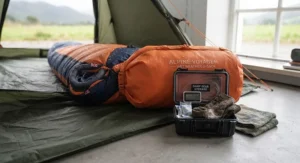
When the brief shifts from “might get a bit damp” to “will almost certainly rain, and it’ll be cold too,” the Trespass Echotec 4 Season Hollowfibre is the pick on this list actually rated for that scenario. It’s finished with a water-repellent shell over hollow fibre filling, rated to a +5°C comfort temperature with a -10°C lower limit — genuinely capable of handling autumn and early-winter UK camping rather than just fair-weather trips.
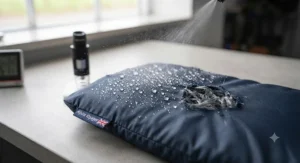
What the spec sheet won’t tell you, but reviewers note repeatedly, is how much of a difference the water-repellent outer makes when condensation forms on the tent’s inner wall overnight — beading and running off rather than soaking straight into the fill, which is exactly the failure point that ruins cheaper untreated bags. Based on the spec comparison with the 2-season options above, this is squarely the choice for anyone planning genuinely challenging wet-weather trips rather than optimistic summer weekends.
Aggregated sentiment is solidly positive, with reviewers frequently highlighting the mummy-style fit as warmer than envelope designs (less internal air space to heat) and a fair number noting the bag is bulkier to pack than its 4-season rating might suggest — a reasonable trade-off for the extra warmth.
Pros:
- ✅ Rated to genuine 4-season, -10°C lower limit
- ✅ Water-repellent shell sheds condensation effectively
- ✅ Mummy shape improves thermal efficiency
Cons:
- ❌ Bulkier to pack than milder-rated alternatives
- ❌ Overkill (and warm) for summer festival use
Sitting in the £30-£40 range, the Trespass Echotec 4 Season Hollowfibre is the clear choice for anyone whose wet-weather camping means genuinely cold, sodden conditions rather than a light summer drizzle.
6. Vango Saturn — reliable budget-mid backup and family option
Not every camper needs — or wants — a single premium bag; sometimes the smarter move is a reliable, no-fuss backup that can live in the car boot or get lent to visiting family without anxiety about damaging something expensive. The Vango Saturn fills that role well, offering Vango’s recognisable build quality and synthetic fill at a genuinely accessible price point, without the dual-layer refinements of its pricier Nitestar sibling.
Here’s what most buyers overlook about a “backup” bag specifically: it still needs to perform when actually used in anger, and the Vango Saturn‘s synthetic fill means it won’t collapse into uselessness if it ends up being the bag a soggy, unprepared teenager borrows for an unplanned overnight. Reviewers consistently note good value and dependable warmth for the price, with the trade-off being a simpler single-layer construction that’s more prone to cold spots at the seams than the Nitestar Alpha range above.
With over 100 aggregated reviews averaging 4.4 stars, sentiment is consistently positive for a bag in this price bracket, and it’s frequently mentioned as a sensible second or spare bag for households that camp regularly with guests or growing children.
Pros:
- ✅ Trusted Vango build quality at an accessible price
- ✅ Genuine synthetic fill, not basic polyester wadding
- ✅ Strong aggregated rating (4.4★) for the price point
Cons:
- ❌ Single-layer construction more prone to cold spots
- ❌ Less refined than the Nitestar Alpha range
Typically priced in the £20-£30 range, the Vango Saturn is a smart pick as either a genuine budget main bag or a dependable spare for households that camp with extended family.
7. Trespass Envelop Hollowfibre — lightweight pick for first-time campers
First camping trips shouldn’t require a serious financial commitment before you even know whether the hobby sticks, and the Trespass Envelop Hollowfibre is built with exactly that buyer in mind. It’s a straightforward 3-season hollowfibre bag in an envelope shape, prioritising a lower price point and genuine simplicity over technical features — no dual layers, no mosquito net, just dependable synthetic warmth.
On paper this means you’re trading refinement for accessibility, and honest analysis suggests that’s a completely reasonable trade for someone testing the waters. Reviewers consistently describe it as good value for occasional use, with the roomy envelope cut proving popular for anyone who dislikes the constricted feeling of a mummy bag, and the hollowfibre fill doing its core job of maintaining some warmth even if the tent gets a little damp overnight.
The honest caveat here is longevity: several reviewers note the fill begins to compress and lose loft somewhat faster than pricier alternatives after regular use across a season, which is a fair trade-off given the price bracket rather than a specific fault with this particular bag.
Pros:
- ✅ Genuinely affordable first-camping-trip option
- ✅ Roomy envelope shape, not constricting
- ✅ Hollowfibre fill copes with light dampness
Cons:
- ❌ Fill compresses faster than premium alternatives
- ❌ Basic feature set, no extras like mosquito nets
At around £20-£25, the Trespass Envelop Hollowfibre is the sensible low-commitment choice for anyone dipping a toe into camping before deciding whether to invest in something more technical.
Practical Usage Guide: Keeping Your Sleeping Bag Dry and Warm
Buying the right bag solves half the problem; how you use and dry it solves the rest. Before your first trip, air the bag out fully for at least 24 hours to let compressed fill regain its loft — bags arrive tightly packed and won’t insulate to their full potential straight out of the stuff sack. Once at camp, always keep your sleeping bag away from tent walls overnight, since condensation forms fastest on the inner surface of the flysheet and any fabric touching it will wick moisture straight through.
The Met Office’s own advice for camping in wind and rain specifically recommends packing clothing and bedding in plastic bags before loading them into your rucksack, and that habit applies just as strongly to your sleeping bag itself — a bin liner or dedicated dry bag between your bag and the outside world is the cheapest insurance policy against a ruined night’s sleep. If your bag does get damp despite precautions, resist the urge to stuff it away wet; hang it inside the tent porch or over a guy line the moment weather allows, since packing a damp synthetic bag away encourages mildew and steadily degrades the fill’s loft over repeated trips.
A common first-trip mistake is assuming a “4 season” or “-10°C” rating means the bag alone will keep you warm at that temperature — those ratings assume you’re also using a proper sleeping mat, since ground contact draws heat away faster than air ever will, regardless of how good your bag’s insulation is.
✨ Ready for Whatever the Forecast Throws At You?
🌧️ A genuinely wet-weather-capable sleeping bag is the difference between a miserable, sleepless night and waking up ready for another day outdoors. Check current pricing and availability on any of the seven picks above, and camp with real confidence, whatever the sky decides to do.
Real-World Scenarios: Matching the Bag to the Trip
The weekend festival camper. If your “wet weather camping” mostly means a muddy field and the occasional overnight downpour, you don’t need technical mountaineering kit — the KingCamp Envelope Sleeping Bag or Highlander Sleepline 250 cover typical UK festival conditions comfortably, without the added bulk and cost of a genuine 4-season bag.
The first-time family camper. Testing whether camping suits your family before committing serious money makes sense, and the Trespass Envelop Hollowfibre or Vango Saturn are ideal low-risk starting points — genuine synthetic performance without asking you to gamble £60 on a hobby you haven’t tried yet.
The shoulder-season hiker. Autumn and early-spring UK trips bring genuinely cold, wet conditions that punish underprepared kit, and this is where the Trespass Echotec 4 Season Hollowfibre or Vango Nitestar Alpha 250 earn their keep — both rated and reviewed specifically for conditions well beyond a light summer drizzle.
Waterproof Stuff Sacks: The Cheap Upgrade Everyone Skips
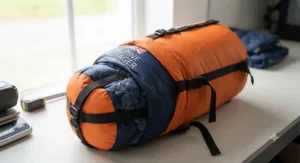
Every sleeping bag on this list ships with a stuff sack, but here’s what most buyers overlook: standard compression sacks compress volume, they don’t reliably keep water out. Several reviewers across multiple products on this list specifically flag flimsy or non-waterproof included sacks as the weak link in an otherwise solid bag — which means the single cheapest upgrade you can make to any of these seven picks is a dedicated waterproof stuff sack, typically available for a fraction of the price of the sleeping bag itself.
A genuine waterproof stuff sack uses a roll-top closure rather than a drawstring, creating a proper seal rather than just a cinched opening that still lets spray and heavy rain through. Based on the spec comparison across the reviews above, this matters most for hikers carrying their bag exposed on the outside of a rucksack, or anyone paddling, cycling, or crossing streams where a bag might get properly dunked rather than just rained on. For static campsite use where the bag travels in a car boot, a basic compression sack with an added bin liner does much the same job for essentially no extra cost — proving that the fix here is more about habit than spending.
Genuinely anxious about a specific trip? Doubling up — a waterproof stuff sack inside a dry bag — is overkill for most weekends but entirely sensible for multi-day wild camping where a soaked bag isn’t just uncomfortable, it’s a real safety issue.
How to Choose a Sleeping Bag for Wet Weather Camping
Picking the right bag comes down to seven practical checks, worked through in order:
- Prioritise synthetic fill over down for any trip where persistent rain or heavy condensation is likely, since synthetic fibres retain meaningful warmth when wet and down simply doesn’t.
- Check the comfort rating, not just the lower limit, since the lower limit describes survivable cold, not a comfortable night’s sleep.
- Match the season rating to your actual trip window — a 2-season bag for a September Highlands trip will leave you genuinely cold, regardless of how well it’s reviewed.
- Look for dual-layer or offset construction if you camp regularly in damp conditions, since it specifically addresses the cold spots that let moisture-chilled air through single-layer seams.
- Weigh pack size against how you’re carrying it — car campers can afford bulk, hikers and cyclists genuinely can’t.
- Read aggregated reviews for stuff sack quality specifically, since a flimsy included sack is one of the most consistently reported issues across budget and mid-range bags alike.
- Budget for a waterproof stuff sack separately rather than assuming the included one will do the job in genuinely wet conditions.
Why Insulation Performance When Damp Matters More Than Weight
Most sleeping bag marketing leans hard on weight and pack size, and for good reason — nobody enjoys carrying dead weight on a long hike. But for wet-weather UK camping specifically, insulation performance when damp deserves far more attention than it typically gets, because a featherlight bag that loses its warmth the moment condensation sets in is objectively worse than a slightly heavier bag that keeps performing all night.
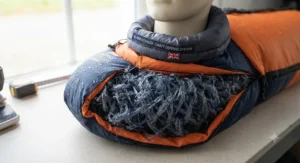
What most buyers overlook about this trade-off is the mechanism behind it: down feathers rely on trapped air pockets between individual filaments, and those filaments clump together the instant they absorb moisture, collapsing the air pockets that create warmth. Synthetic fibres, in contrast, are individually non-absorbent — they can sit wet without clumping, which means the air-trapping structure survives even when the fibres themselves are damp. This is precisely why every bag on this list, from the budget Highlander Sleepline 250 to the premium Snugpak Travelpak Traveller, uses synthetic insulation rather than down, despite down’s advantages in weight and packability.
On paper this means the real question for UK campers isn’t “how warm is this bag on a dry night” but “how much of that warmth survives a genuinely damp one” — and that’s a distinction the star rating on a listing page rarely captures, which is exactly why digging into aggregated review themes about damp-weather performance specifically, rather than just overall satisfaction, matters so much when choosing between similarly rated bags.
Best Budget Synthetic Sleeping Bags: What Actually Matters
Not every camper needs premium quick-dry insulation, and pretending otherwise does budget-conscious buyers a disservice. What genuinely matters in a best budget synthetic sleeping bag for wet weather camping comes down to three things: a water-resistant (not just water-repellent-branded) outer shell, a fill type that’s genuinely synthetic rather than thin polyester wadding dressed up in marketing language, and honest season ratings rather than optimistic ones.
Both the KingCamp Envelope Sleeping Bag and Vango Saturn deliver on all three at accessible prices, and the aggregated review sentiment for both consistently credits genuine warmth retention over cheaper unbranded alternatives sold purely on price. Honest analysis here matters: a bag that’s £10 cheaper but uses unspecified “hollow cotton” filling of unclear density is often a false economy, since it may compress and lose loft within a single season of regular use, effectively costing you more per year than a slightly pricier, better-specified alternative.
Best Hollowfibre Sleeping Bags Explained
Hollowfibre is, in essence, the entry-level synthetic insulation type, and understanding what it actually is demystifies a huge chunk of the budget sleeping bag market. Individual fibres are manufactured with a hollow core running through the centre, which traps additional air compared to a solid fibre of the same weight — more trapped air generally means more warmth for a given amount of material. It’s cheaper to produce than siliconised or specially treated synthetic fills, which is exactly why it dominates the budget end of the market.
The best hollowfibre sleeping bags — the Highlander Sleepline 250 and Trespass Envelop Hollowfibre among them on this list — don’t try to compete with premium siliconised fills on refinement; instead, they deliver the core wet-weather advantage (non-absorbent fibres, retained loft when damp) at the lowest reasonable price point. The honest trade-off is that basic mono hollowfibre compresses and loses structure faster over repeated use than pricier treated fills, so expect a functional lifespan measured in single-digit years of regular use rather the decade-plus you might get from premium technical insulation.
Synthetic vs Down Sleeping Bags: Which Wins in Wet Weather
| Feature | Synthetic Insulation | Down Insulation |
|---|---|---|
| Performance when damp | Retains most warmth | Collapses, loses most warmth |
| Dry time after wetting | Hours | Often a full day or more |
| Weight-to-warmth ratio | Heavier for equivalent warmth | Significantly lighter |
| Pack size | Bulkier | Compresses much smaller |
| Typical price for equivalent warmth | Lower | Higher |
The honest picture here isn’t “synthetic is simply better” — for dry, weight-conscious trips, down remains genuinely superior, which is why serious ultralight backpackers still choose it despite the wet-weather risk. But for the specific brief of this article — camping where rain, condensation, or general British dampness is a realistic possibility — synthetic fill’s non-absorbent structure is a meaningful, practical advantage that down’s weight savings simply can’t offset. Some down bags now use hydrophobic-treated fill and water-resistant shells to narrow this gap, but even treated down still underperforms synthetic once genuinely saturated, and treated-down bags typically cost considerably more than any product on this list.
For most UK campers whose trips involve unpredictable weather rather than guaranteed dry conditions, synthetic remains the more forgiving, lower-risk choice — particularly for anyone new enough to camping that they haven’t yet developed the instincts to keep gear bone-dry in the field.
Common Mistakes When Buying a Wet-Weather Sleeping Bag
The most frequent mistake is choosing a bag based purely on temperature rating without checking whether that rating reflects comfort or bare survival — the gap between the two can be several degrees, and it’s the difference between a good night’s sleep and a genuinely miserable one. Reviewers across nearly every product on this list mention temperature performance more than any other single topic, which tells its own story about how often this catches buyers out.
The second common mistake is assuming any synthetic bag automatically performs well in wet conditions, when in reality fill quality varies enormously between basic hollow cotton and properly engineered siliconised or dual-layer constructions. As covered in the insulation section above, the mechanism is shared but the execution genuinely isn’t — a budget bag with thin, low-density fill will still underperform a well-specified mid-range option even though both are technically “synthetic.”
Finally, plenty of buyers overlook the included stuff sack entirely, only to discover on a wet trip that it’s the weakest link in the system. As flagged repeatedly across this list’s reviews, budgeting separately for a genuinely waterproof stuff sack is one of the cheapest, most overlooked upgrades available.
Long-Term Cost & Maintenance
Treating a sleeping bag as a one-off purchase undersells the real cost picture, particularly for synthetic fills, which generally have a shorter functional lifespan than well-cared-for down. Budget options like the Trespass Envelop Hollowfibre may need replacing within two to three seasons of regular use, while better-specified dual-layer bags such as the Vango Nitestar Alpha 250 or premium picks like the Snugpak Travelpak Traveller typically last considerably longer before losing meaningful loft — meaning the genuine cost-per-year can favour the pricier option for anyone camping several times a season.
Washing frequency and method matter significantly here too: most synthetic bags can be machine washed on a gentle, cool cycle, but repeated hot washing or tumble drying on high heat breaks down fibre structure faster than field use alone ever would. Airing a bag thoroughly after every damp trip, rather than only washing it occasionally, does more for long-term loft retention than any single maintenance step — a habit worth building from the very first trip.
Frequently Asked Questions
❓ Are synthetic sleeping bags actually better than down for wet weather?
❓ What temperature rating do I need for UK wet-weather camping?
❓ How long does it take a synthetic sleeping bag to dry after getting damp?
❓ Do I really need a separate waterproof stuff sack?
❓ Can I use a 2-season bag for autumn or early winter camping?
Conclusion
A genuinely capable sleeping bag for wet weather camping isn’t about chasing the lightest or most expensive option on the shelf — it’s about matching synthetic fill quality, construction, and season rating honestly to the trips you actually take. Across the seven picks here, there’s real range: the Vango Nitestar Alpha 250 for dependable, DofE-tested all-round performance, the Trespass Echotec 4 Season Hollowfibre for genuinely cold, sodden shoulder-season trips, and the Snugpak Travelpak Traveller for campers who move often and want quick-dry performance to match.
Whichever bag you choose, pair it with the basics that make the biggest practical difference: a decent sleeping mat between you and the cold ground, a genuinely waterproof stuff sack rather than relying on the included one, and the kind of sensible preparation the official DofE expedition kit guidance has been drilling into young campers for decades. None of that is glamorous, but it’s exactly what stands between a good night’s sleep and a long, damp, miserable one.
🏕️ Ready to Camp Prepared, Whatever the Weather?
✨ Browse the full comparison above, check current pricing on the bag that fits your trips best, and head into your next wet-weather adventure with genuine confidence in your kit.
Recommended for You
- Down Sleeping Bag vs Synthetic Sleeping Bag: 7 UK Picks (2026)
- Zip-Together Sleeping Bags 2026: 7 Best Picks (Warm; Roomy)
- Double Sleeping Bag For Couples: 7 Best Picks UK 2026
Disclaimer: This article contains affiliate links. As an Amazon Associate, I earn from qualifying purchases. If you purchase products through these links, we may earn a small commission at no additional cost to you.
✨ Found this helpful? Share it with your friends! 💬🤗
