
In This Article
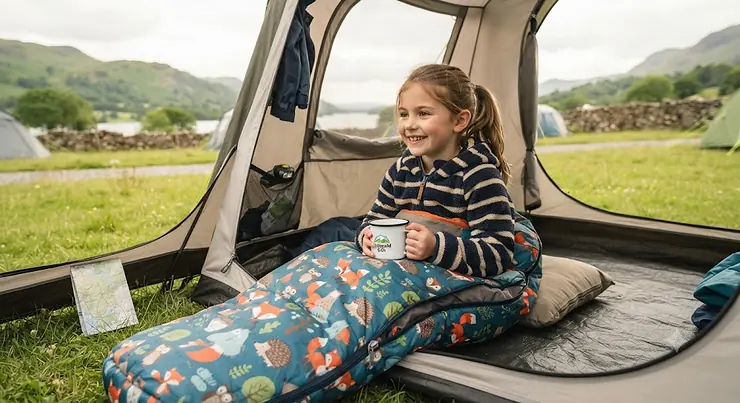
Right, let’s be honest about something first: buying a kids sleeping bag is rarely as simple as buying one for yourself. You know your own sleep habits. You know what “three-season” means to your own bones. But a child’s sleeping bag has to cope with a wriggling seven-year-old who somehow ends up sideways by 2am, a toddler who thinks the zip is a toy, and a British campsite that can swing from a balmy 18°C at dusk to a genuinely nippy 6°C by dawn — sometimes in the same weekend.
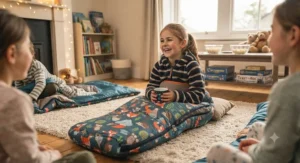
A kids sleeping bag is, at its simplest, a scaled-down sleeping bag built for a child’s smaller frame, lighter body mass, and faster heat loss, usually running somewhere between 100cm and 155cm in length with fill weights and shell fabrics tuned for three-season UK camping rather than alpine expeditions. That’s the textbook definition. In practice, it’s the difference between a child who sleeps through until 7am and one who’s awake at 3am, cold, cross, and climbing into your bag instead.
This guide is built the way you’d actually want to shop: real products with real specifications, honestly compared, not a repackaged spec sheet lifted from Amazon. We’ve pulled together seven genuine junior sleeping bags sold in the UK — from budget Decathlon options through mid-range Vango and Trespass staples to premium synthetic-fill bags — and we’ve weighed them against the things that actually matter for families: growing-room sizing, machine washability, safety features like elasticated (not drawcord) neck closures, and how each one behaves after its fortieth wash. Whether you’re kitting out a toddler for their first night under canvas or hunting for a machine washable option that survives a muddy Duke of Edinburgh trip, there’s a straight answer here rather than a sales pitch.
Quick Comparison Table
| Sleeping Bag | Best Age Range | Season Rating | Price Range | Best For |
|---|---|---|---|---|
| Vango Nitestar Alpha Junior | 6–13 yrs | 2–3 season | £45-£55 range | Best overall three-season performance |
| Quechua MH100 Junior | 4–10 yrs | 1 season | Under £20 | Best budget first bag |
| Vango Atlas Junior | 5–10 yrs | 1–2 season | £20-£30 range | Best value entry-level bag |
| Trespass Bunka | 5–11 yrs | 2 season | £15-£25 range | Best classic all-rounder |
| Regatta Trek Peppa Pig | 3–7 yrs | 1 season | Under £20 range | Best character bag for toddlers |
| Eurohike Adventurer Youth | 8–14 yrs | 2–3 season | £30-£40 range | Best for pre-teens and Scouts |
| Vango Kanto Junior | 4–9 yrs | 1–2 season | £25-£35 range | Best for sensory-sensitive sleepers |
Looking across the table, a clear pattern emerges: price tracks fairly closely with fill weight and fabric quality rather than with brand prestige alone. The Vango Nitestar Alpha Junior sits at the top of this line-up because its siliconised hollow-fibre fill genuinely performs closer to a budget adult bag than a toy-shop one, while the Quechua MH100 Junior proves that a first sleeping bag for a summer campsite trip doesn’t need to cost much at all. Families camping regularly in Wales, Scotland or northern England should weight their decision toward the 2–3 season bags in this table rather than the single-season options, because a chilly night with an underpowered bag is the single most common reason kids swear off camping.
💬 Just one click — help others make better buying decisions too!😊
Top 7 Kids Sleeping Bags: Expert Analysis
1. Vango Nitestar Alpha Junior — best three-season warmth-to-weight ratio
The Vango Nitestar Alpha Junior is the bag that keeps turning up in independent kit tests, and for good reason: it’s built like a scaled-down adult mummy bag rather than a padded envelope with a zip. It uses Vango’s siliconised hollow-fibre Alpha insulation, a fill type that’s been treated so the individual fibres resist clumping and hold their loft after repeated washing — the single biggest failure point in cheaper synthetic bags. Vango rates it as a 2–3 season bag suitable roughly between 4°C and 20°C, which lines up well with a typical UK camping season running from late spring through early autumn. The mummy shape and elasticated hood hem trap heat more effectively than boxier envelope bags, though that same tapered cut means older or broader children near the 155cm ceiling can find it a touch restrictive by the end of the season. Reviewers testing the bag with children around 130-153cm tall reported it fitting well without excess dead air space, and aggregated Amazon.co.uk feedback consistently flags the soft 100% polyester Polair lining as noticeably nicer against the skin than budget alternatives, alongside praise for the internal Velcro-closure pocket that keeps a torch or teddy within reach. On the practical side, at roughly 1,284g packed it isn’t the lightest bag here, and the absence of a large zip toggle can make it fiddlier for younger fingers to operate independently.
Pros:
- ✅ Siliconised fill keeps its loft through repeated washes
- ✅ Genuine 2–3 season range covers most UK camping trips
- ✅ Soft Polair lining rated highly in customer feedback
Cons:
- ❌ Heavier to pack than single-season alternatives
- ❌ No large zip toggle for smaller hands
Priced in the £45-£55 range, this is the bag to buy if your family camps more than once or twice a year and cold nights are a realistic risk — it’s the closest thing on this list to genuine long-term value for money.
2. Quechua MH100 Junior — best lightweight first bag for summer trips
Decathlon’s Quechua MH100 Junior earns its “best budget buy” reputation the honest way: it strips the design back to what a first-time young camper actually needs, and nothing more. It’s a lightweight, single-season bag rated for warmer summer nights, built around a simple envelope or slightly tapered shape that’s genuinely easy for a small child to climb into and zip up unaided — a detail that matters more than it sounds when you’re trying to get an excited four-year-old settled at 9pm. What most buyers overlook about entry-level bags like this one is that the low fill weight isn’t a corner cut so much as a deliberate design choice: less insulation means less bulk and weight to carry, which suits families doing short campsite trips rather than back-to-back wild camping. Aggregated reviews consistently highlight the soft-toy stuff sack as a genuinely effective way to get reluctant children excited about packing their own kit before a trip, a small but clever piece of product design. The trade-off, unsurprisingly, is warmth margin: this isn’t a bag for a chilly Scottish spring evening, and parents camping outside peak summer months report needing extra base layers to compensate.
Pros:
- ✅ Genuinely affordable first sleeping bag under £20
- ✅ Easy zip and shape for independent use by young children
- ✅ Soft-toy stuff sack helps engage reluctant campers
Cons:
- ❌ Single-season rating limits use to warm summer nights
- ❌ Thin fill means extra layering needed in cooler weather
At under £20, this is about as low-risk a purchase as kids camping gear gets, and it’s the sensible starting point if you’re not yet sure camping is going to become a regular family hobby.
3. Vango Atlas Junior — best value entry-level bag for regular campsite trips
Sitting just above Quechua’s budget bag in both price and performance, the Vango Atlas Junior is Vango’s entry-level junior line and it’s compact, warm enough for most three-season UK campsite nights, and specifically sized to avoid the “swimming in an adult bag” problem that causes so many cold, restless nights. Vango builds the Atlas range from polyester shell and lining fabrics rather than the premium siliconised fill found in the Nitestar, which keeps the price down while still delivering usable warmth for ages roughly 5 to 10. Based on the spec comparison with pricier junior bags, the honest trade-off here is compressibility and long-term loft retention — this bag packs down a little bulkier and, after a couple of seasons of heavy use, may not spring back to full loft as reliably as the siliconised alternatives. That said, for families testing whether their child actually enjoys camping before committing to premium kit, it’s a sensible middle ground between the ultra-budget Quechua and the performance-focused Nitestar. It’s a shorter length than most junior bags too, which specifically suits smaller-framed children who’d otherwise have excess dead air space in a longer bag — dead space that, as outdoor experts note, a child’s body simply can’t heat efficiently.
Pros:
- ✅ Compact junior sizing avoids excess dead air space
- ✅ Solid three-season warmth for a budget-friendly price
- ✅ Well-suited to first-time campsite trial trips
Cons:
- ❌ Bulkier pack size than siliconised-fill alternatives
- ❌ Loft retention weakens faster with heavy repeated use
In the £20-£30 range, this is a genuinely fair-value pick for parents who want more warmth margin than the absolute cheapest option without paying premium-bag prices.
4. Trespass Bunka — best long-running classic all-rounder
The Trespass Bunka has quietly become something of a classic in the UK junior sleeping bag market, and it’s stuck around this long because the fundamentals are sound rather than because of clever marketing. It’s built with a ripstop nylon outer that resists tears from spreading and carries a water-repellent coating — genuinely useful when a bag gets left half-out of the tent porch on a dewy morning, which happens more often than any parent would like to admit. Unusually for this price bracket, the Trespass Bunka uses a polycotton-blend inner rather than pure polyester, giving it a slightly different hand-feel that some children find comfortable against sensitive skin, though today’s version leans more polyester than cotton than earlier iterations. What most buyers overlook is that the 2-season rating here is genuinely conservative rather than optimistic marketing — reviewers camping in it during shoulder-season trips (April, September) generally report it holding up fine with a base layer added, which is more than can be said for some competitors that oversell their season rating. Available in multiple colourways and patterns, it also does well on the “will my child actually want to use this” front, which sounds trivial until you’re the parent dealing with bedtime refusal at a campsite.
Pros:
- ✅ Durable ripstop nylon outer with water-repellent coating
- ✅ Polycotton-blend inner is gentle on sensitive skin
- ✅ Wide range of colours and patterns children like
Cons:
- ❌ Season rating is conservative — needs layering in cold snaps
- ❌ Polycotton blend takes slightly longer to dry after washing
Typically found in the £15-£25 range, the Trespass Bunka rewards families who prioritise durability and skin comfort over ultra-lightweight packing, and it’s a strong pick if a hand-me-down between siblings is part of the plan.
5. Regatta Trek Peppa Pig — best character bag for reluctant toddlers and pre-schoolers
Character licensing gets a bad reputation in outdoor gear circles, but the Regatta Trek Peppa Pig sleeping bag earns its place here because it solves a genuine problem: getting a three- or four-year-old who’s never left their own bedroom to willingly settle into a strange bag in a strange tent. Built from 100% polyester with a brushed lining and single-layer stitch detailing to keep fill evenly distributed even when a small child wriggles constantly through the night, it measures around 145cm x 65cm — genuinely on the larger side for this age bracket, which gives useful growing-room but means very small toddlers may need a rolled towel or extra layer to fill excess space at the feet. Regatta positions this firmly as a single-season, campsite-and-sleepover bag rather than a serious three-season camping tool, and that honesty in the sizing and rating is worth crediting rather than criticising. Reviewers and parents online consistently note that the familiar Peppa Pig branding genuinely reduces bedtime resistance for this specific age group, which — while not a technical spec — is arguably the single most valuable feature for a toddler’s first few nights away from home. The bag also unzips flat into a blanket, giving it a second life at home once the camping trip is over.
Pros:
- ✅ Familiar character design reduces bedtime anxiety
- ✅ Converts flat into a blanket for use at home
- ✅ Generous 145cm length gives real growing room
Cons:
- ❌ Single-season rating unsuitable for cold nights
- ❌ Extra internal space needs filling for very small toddlers
Sitting under £20, this is less a serious piece of camping kit and more a comfort tool that happens to also work at a campsite — and for a first family trip, that’s exactly what’s needed.
6. Eurohike Adventurer Youth — best bridge bag for pre-teens and Scout camps
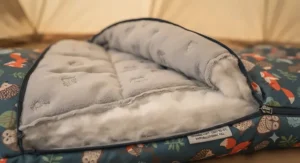
By the time children hit eight or nine, most junior bags start to feel snug, and the Eurohike Adventurer Youth exists specifically to bridge that gap between true junior sizing and full adult bags. Its mummy-style construction and hooded design closely mirror traditional three-season adult sleeping bags, which makes sense given the age group it targets — pre-teens who are increasingly doing Scout camps, school residentials, and family trips without quite being ready for genuine adult gear. Reviewers comparing it directly against the Vango Nitestar Alpha Junior note the two look remarkably similar in construction, though the Eurohike’s Polair-style lining is generally rated a notch below Vango’s in softness against the skin. Here’s what to weigh: the Eurohike tends to sit slightly cheaper than the Nitestar while covering a similar temperature range, so if lining softness isn’t a dealbreaker for your child, it represents a genuine cost saving for families with a pre-teen who’s outgrown standard junior sizing but doesn’t yet need full adult kit. It’s a sensible choice for Scout leaders and youth group organisers too, given the more grown-up look tends to go down better with children keen to not look “babyish” in front of peers.
Pros:
- ✅ Adult-style three-season construction suits pre-teens
- ✅ Competitively priced against similar-spec alternatives
- ✅ Less “childish” look favoured by older kids and Scouts
Cons:
- ❌ Lining feels slightly less soft than premium alternatives
- ❌ Sizing overlaps awkwardly with slim adult short bags
At £30-£40, this is the bag to reach for once your child has properly outgrown junior sizing but a full adult bag still feels premature — a genuinely useful middle rung that’s easy to overlook.
7. Vango Kanto Junior — best for sensory-sensitive sleepers and safety-conscious parents
The Vango Kanto Junior sits in Vango’s mid-tier range and it’s built around one specific idea done very well: comfort against the skin. It uses Vango’s Polair Snug fabric, a noticeably softer finish than the standard Polair found on cheaper junior bags, and it’s the one bag in this line-up regularly recommended specifically for children who are fussy about textures or have sensory sensitivities. There’s genuine engineering thinking here beyond the fabric choice too — the hood carries additional filling that functions as a built-in makeshift pillow, useful for tents where packing an actual pillow feels like one bag too many, and a zip protector plus insulated zip baffle stop the zip from snagging skin or hair while blocking draughts along the seam. From a safety standpoint, this is also worth flagging specifically: the Vango Kanto Junior uses elastic rather than a drawcord around the neck opening, a deliberate design choice that removes any risk of a loose cord — a genuinely sensible feature given that UK safety standards for children’s clothing (BS EN 14682) specifically restrict cords and drawstrings around the head and neck area for exactly this entrapment risk. Aggregated reviews are consistently positive on comfort but note the mid-tier price puts it above true budget alternatives.
Pros:
- ✅ Snug fabric ideal for sensory-sensitive children
- ✅ Elastic neck closure removes drawcord entrapment risk
- ✅ Built-in hood pillow reduces gear to pack
Cons:
- ❌ Priced above basic entry-level junior bags
- ❌ Extra hood filling adds slightly to overall bulk
Priced in the £25-£35 range, this is the pick for parents who’ve had a child refuse to settle in scratchier fabrics before, or who simply want the added peace of mind that comes with a proper elasticated neck closure.
Practical Usage Guide: Getting the Most From a Kids Sleeping Bag
Buying the right bag is only half the job — how it’s used in the first month determines whether it lasts three seasons or one. Before the first trip, air the bag out of its stuff sack for at least 24 hours; synthetic fill compresses tightly in storage and needs time to loft back up properly, and a bag pulled straight from its stuff sack won’t insulate at its rated temperature. On the first night, resist the urge to zip a young child in fully from the start — let them get used to the sensation of the hood and zip with it loosely done up first, particularly with mummy-shaped bags like the Vango Nitestar Alpha Junior, since a panicked child fighting a zip at 11pm is nobody’s idea of a good trip.
For maintenance, store the bag loosely rolled or, ideally, hung in a breathable cotton storage sack rather than permanently compressed in its stuff sack — long-term compression is the single biggest cause of premature loft loss in synthetic fill, more so than washing. A common first-30-days mistake is over-washing after every single trip; unless there’s visible dirt or spills, an airing-out is usually sufficient, and unnecessary washing accelerates wear on both fill and fabric. When washing genuinely is needed, always check the care label for the maximum safe temperature rather than guessing — most junior polyester bags top out around 30°C on a gentle or synthetics cycle. Finally, teach the child themselves how to do up the zip and stuff the bag back into its sack; smaller bags are specifically designed with this independence in mind, and it turns a chore into a small confidence-building ritual.
Real-World Scenario: Matching Families to the Right Bag
Scenario one — the first-timer, aged 3-5. A family taking a three-year-old on their first-ever campsite weekend in July, budget-conscious, staying at a well-serviced UK site with facilities nearby. The Regatta Trek Peppa Pig or Quechua MH100 Junior both fit well here: low cost, low commitment, and in the Regatta’s case, a familiar character that eases bedtime anxiety in an unfamiliar tent. Neither is built for cold nights, but a July UK campsite rarely demands it.
Scenario two — the regular campers, aged 6-10. A family camping four or five times a year across spring through autumn, sometimes in Wales or the Lake District where nights drop below 10°C. This is where the Vango Nitestar Alpha Junior earns its higher price tag — genuine three-season performance and fill that survives repeated washing without collapsing, which matters when “regular camping” means “regular mud.”
Scenario three — the pre-teen Scout, aged 10-13. A child doing termly Scout camps and school residentials who’s outgrown standard junior sizing but finds adult bags baggy and cold. The Eurohike Adventurer Youth or a full-length short adult bag both work, but the Eurohike wins on cost and on not looking “babyish” among peers — a factor that matters more to a self-conscious eleven-year-old than any parent might initially assume.
How to Choose a Kids Sleeping Bag
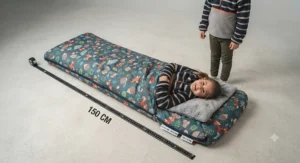
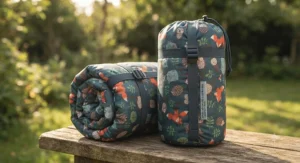
- Match the length to the child, not their age. Junior bags typically run 100-155cm; a bag with roughly 15-20cm of spare length beyond current height gives sensible growing-room without creating the dead air space that causes cold nights.
- Check the season rating against your actual camping calendar. A single-season bag rated above 10°C is fine for July and August; anything shoulder-season or beyond genuinely needs a 2-3 season bag like the Vango Nitestar Alpha Junior.
- Prioritise a machine washable fabric and lining. Children’s sleeping bags get dirty fast, and a bag that can’t survive a 30°C gentle wash cycle becomes a hygiene problem within one season.
- Look for elastic rather than drawcord neck and hood closures. As covered under child safety below, this isn’t a minor preference — it’s a recognised entrapment risk category under UK safety standards.
- Weigh pack size against who’s carrying it. If a child is expected to carry their own kit on a walk-in pitch, pack volume matters as much as warmth.
- Consider the lining fabric for sensory-sensitive children. Softer brushed finishes like Vango’s Polair Snug genuinely reduce bedtime resistance for texture-sensitive kids.
- Don’t oversize “to save money later.” Reusing an older sibling’s bag only works if the length gap is modest; an adult bag on a young child creates a genuine cold-and-safety risk, not just a comfort issue.
Best Sleeping Bag for Toddlers Camping
Toddlers present a genuinely different set of requirements to school-age children, and it’s worth being direct about the guidance here rather than glossing over it. Outdoor safety experts are consistent on one point: children under roughly 3 years old shouldn’t sleep in a standard sleeping bag at all, due to a real suffocation and entrapment risk if a small child wriggles down inside the bag unsupervised. For toddlers who are ready — generally once they can reliably roll over and reposition themselves independently — a properly sized, shorter “mini” length bag such as the Regatta Trek Peppa Pig is appropriate, but oversized adult or even standard junior bags are not, because the extra dead space a toddler can’t heat efficiently is the same space they can slip down into. Dress toddlers in appropriate base layers underneath rather than relying on the bag alone, keep a close eye during the first hour of settling, and always check the manufacturer’s minimum age guidance printed on the bag’s own label rather than assuming “junior” automatically means “toddler-safe.”
Growing-Room Sizing: Getting the Fit Right Without Buying a New Bag Every Year
Growing-room sizing is the single most misunderstood spec on any junior sleeping bag listing, and getting it wrong causes more cold, miserable camping nights than a poor season rating ever does. The physics is straightforward: a sleeping bag insulates by trapping a layer of warmed air around the body, and a child’s body simply cannot generate enough heat to warm a large air pocket efficiently — children lose heat faster than adults relative to their body mass, so a bag with excessive spare room actually performs worse than a snugly-fitted one, not better. The sensible approach is to buy a bag with 15-20cm of genuine spare length beyond a child’s current height — enough to last a growing child through one or two seasons without leaving them swimming in fabric on night one. Bags like the Vango Atlas Junior, deliberately shorter than some competitors, suit smaller-framed children precisely because they minimise this dead space, while longer options like the Regatta Trek Peppa Pig at 145cm suit toddlers expected to grow into the bag over a couple of summers. As a rough rule of thumb, expect to size up roughly every two to three years for an average-growing child, and resist the temptation to buy a bag several sizes too large “to save money” — the false economy shows up the first cold night of the trip.
Machine Washable Kids Sleeping Bags: What “Washable” Actually Means
Every product on this list is marketed as machine washable, but that label hides a fair amount of nuance worth understanding before the first muddy trip home. Most junior polyester sleeping bags carry a maximum wash temperature of 30°C on a gentle or synthetics cycle — check the washing symbol on the sewn-in label rather than assuming, since fill type and shell fabric both affect the safe ceiling. A bag with siliconised hollow-fibre fill, like the Vango Nitestar Alpha Junior, generally tolerates repeated 30°C washes with minimal loft loss because the fibre treatment resists clumping during the wash-and-spin cycle, while cheaper unsiliconised fill can bunch into cold spots after just a handful of washes. Practically speaking, most domestic washing machines struggle to fit a full-size sleeping bag properly — a launderette with an oversized drum is often the better option for a genuinely deep clean, and tumble drying on low heat with a couple of clean tennis balls helps redistribute clumped fill far more effectively than air-drying alone. Never dry-clean a synthetic-fill bag unless the label specifically says so, since dry-cleaning solvents can strip the water-repellent coating some shells (like the Trespass Bunka‘s ripstop nylon) rely on.
Washing Care Labels: Reading Them Correctly Before the First Wash
UK textile care labels aren’t a legal requirement in the way fibre-content labelling is, but every product in this guide includes one, and reading it correctly before the first wash genuinely prevents avoidable damage. The GINETEX-based care symbol system used across the UK follows a consistent format: a wash tub symbol shows the maximum safe temperature as a number inside it (commonly 30°C for children’s synthetic sleeping bags), a triangle governs bleach use, a square shows drying guidance, and an iron symbol indicates safe ironing heat — most sleeping bags simply carry a “do not iron” cross given the synthetic fabrics involved. One line beneath the wash tub symbol means a reduced-agitation synthetics cycle should be used rather than a standard cotton cycle, which matters because standard-cycle agitation can damage stitched baffles and cause fill migration inside the bag. If a label has faded or been removed — common after a couple of seasons of use — the safest default for a polyester-filled junior sleeping bag is a 30°C gentle synthetics wash, air-dried or tumble-dried on the lowest heat setting only.
Child Safety in Sleeping Bags: What Actually Matters
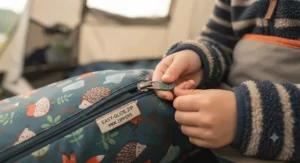
This is worth treating seriously rather than as a box-ticking section, because the risks involved are genuine and well documented. UK children’s clothing safety standards — specifically BS EN 14682, the harmonised standard covering cords and drawstrings on children’s clothing — exist because entrapment injuries from hood and neck cords have caused real, serious accidents, particularly around playground equipment and vehicle doors, with younger children at greatest risk in the head and neck area. While sleeping bags themselves sit slightly outside the strict clothing category the standard covers, the underlying safety principle applies directly: a hood or neck closure with a loose, free-hanging drawcord is a genuine entrapment risk for a young child, which is exactly why safety-conscious products like the Vango Kanto Junior use elastic instead. Beyond cord safety, outdoor gear experts are unanimous on a second point: children under about three shouldn’t sleep in a standard sleeping bag at all due to suffocation risk if they wriggle down inside, and no child of any age should sleep in a bag significantly oversized for their body, since the excess space that makes cold nights more likely is the same space that increases entrapment risk if a child slides downward during sleep. Practical safety habits worth adopting regardless of which bag you buy: check zips are snag-free before each trip, avoid layering heavy loose blankets over a zipped bag which can restrict a child’s ability to reposition themselves, and always follow the manufacturer’s printed minimum age and maximum height guidance rather than treating it as a rough suggestion.
✨ Ready to Kit Out Your Young Camper?
🔍 Take your family camping trips to the next level with a properly fitted, genuinely warm sleeping bag. Click on any highlighted pick above to check current pricing and availability, and give your little ones the cosy, safe nights of sleep that make them actually want to come back next season!
What to Expect: Real-World Performance on a Typical UK Camping Weekend
Specs on a listing rarely translate directly into what a parent actually experiences at 11pm in a tent, so it’s worth setting expectations plainly. A properly fitted 2-3 season bag like the Vango Nitestar Alpha Junior should keep a school-age child comfortable through a typical May-to-September UK night without additional layering, though a base layer of pyjamas is still sensible rather than optional — sleeping bags are rated assuming some clothing underneath, not skin against the fabric. Budget single-season bags such as the Quechua MH100 Junior perform genuinely well in July and August but will leave a child noticeably cold on a shoulder-season trip without extra layers or a fleece liner added underneath. Expect some initial fussing with zips and hoods on the first night regardless of price point — this settles within a trip or two as the child gets used to the sensation. And realistically, expect at least one spilled hot chocolate or muddy boot incident per camping season; this is precisely why machine washability matters as much as warmth rating when making the actual purchase decision.
Common Mistakes When Buying a Kids Sleeping Bag
The most frequent mistake, by a wide margin, is buying an adult bag “because it’ll last longer” — as covered above, this creates both a comfort problem (excess cold air space) and a genuine safety consideration, and it rarely actually saves money once a child spends two miserable, cold trips refusing to camp again. A close second is ignoring the season rating printed on the label and assuming “sleeping bag” is a single category; a single-season summer bag used on a chilly September trip will leave a child cold regardless of how good the brand’s reputation is. Parents also commonly overlook washing instructions until there’s already a problem — checking the care label before the first trip, not after the first muddy return journey, avoids most fill-clumping issues entirely. Finally, underestimating the value of a genuinely soft lining is a mistake that only becomes obvious at bedtime one, when a texture-sensitive child refuses point-blank to get in — the Vango Kanto Junior‘s Polair Snug fabric exists specifically to solve this problem, and it’s worth the modest price premium for a child known to be fussy about fabric feel.
Long-Term Cost and Value Analysis
Thinking in cost-per-use rather than upfront price changes the maths considerably. A £45-£55 Vango Nitestar Alpha Junior, used across three camping seasons for a child aged roughly 8-11, works out to significantly less per trip than repeatedly replacing a £15 bag that’s lost its loft after one season of heavy washing. Conversely, for a family unsure whether camping will become a regular hobby, spending £45+ on a premium bag before establishing that interest is genuinely poor value — the £15-£25 range Trespass Bunka or under-£20 Quechua MH100 Junior make more sense as a “let’s find out” purchase. Growing-room sizing also factors into long-term value directly: a bag bought with sensible spare length, as discussed earlier, can realistically span two to three years of growth rather than needing annual replacement, which meaningfully changes the cost-per-year calculation in favour of the mid-to-premium options for regular camping families.
Frequently Asked Questions
❓ What age is a kids sleeping bag suitable for?
❓ Can you wash a kids sleeping bag in a normal washing machine?
❓ How much growing room should a kids sleeping bag have?
❓ Is a mummy or envelope shaped sleeping bag better for children?
❓ Are drawstring sleeping bags safe for young children?
Conclusion
There isn’t a single “best” kids sleeping bag, and any guide claiming otherwise is skipping the part where families actually differ. What matters is matching the bag to the child in front of you: their age, their height, how often you actually camp, and — frankly — how fussy they are about fabric against their skin at bedtime. For families camping regularly through a proper British three-season calendar, the Vango Nitestar Alpha Junior earns its higher price with genuine warmth and washability. For a first tentative trip with a toddler, the Regatta Trek Peppa Pig or Quechua MH100 Junior remove cost and complexity from a decision that’s really about building good camping memories rather than technical performance. And for the specific, common problem of a child who simply won’t settle in scratchy fabric, the Vango Kanto Junior‘s softer lining and safer elastic closure solve a real issue that specs sheets rarely mention. Whichever you choose, get the sizing and season rating right first — everything else about a good night’s camping sleep follows from there.
Recommended for You
- 7 Best Lightweight Down Sleeping Bag for Backpacking (2026 UK Guide)
- Sleeping Bag for Wet Weather Camping: 7 Bags That Won’t Let You Down (2026)
- Down Sleeping Bag vs Synthetic Sleeping Bag: 7 UK Picks (2026)
Disclaimer: This article contains affiliate links. As an Amazon Associate, I earn from qualifying purchases. If you purchase products through these links, we may earn a small commission at no additional cost to you.
✨ Found this helpful? Share it with your friends! 💬🤗
