
In This Article
There’s a very specific kind of misery reserved for campers who underestimate a British winter. It isn’t the rain, and it isn’t even the wind — it’s the moment at 2am when you realise your “cosy” summer bag has about as much thermal ambition as a bath towel, and the frost on the inside of the flysheet is somehow now on the inside of your nose too. A proper winter sleeping bag is the difference between a night you laugh about later and a night you never repeat.
For UK conditions specifically, a winter sleeping bag typically means a bag with an EN 13537 comfort rating of around -5°C or lower, built to cope with the damp, penetrating cold that Dartmoor, the Cairngorms and the Lake District specialise in rather than the dry cold you’ll read about in American gear guides. That’s a meaningful distinction, because damp cold eats through underrated insulation far faster than dry cold does.
This guide compares seven genuinely available winter sleeping bags — from budget synthetic options under £70 to premium down bags that British and Scottish outdoor brands have been refining for decades — alongside honest analysis of EN 13537 temperature ratings, what “extreme rating” actually means (hint: it isn’t a compliment), and a few sleep-system tricks, including the humble hot water bottle for camping, that make a genuine difference on the coldest nights.
Quick Comparison Table
| Product | Type | EN 13537 Comfort (approx.) | Weight | Price Range | Best For |
|---|---|---|---|---|---|
| Rab Ascent 900 | Down | Around -9°C to -10°C | ~1.5kg | £280-320 range | Serious winter backpacking |
| Alpkit Pipedream 600 | Down | -10.5°C | 1,085g | £230-270 range | Best value ultralight winter |
| Mountain Equipment Helium 600 | Down | Around -9°C | ~1,000g | £380-430 range | Weight-obsessed winter hikers |
| Snugpak Softie Elite 4 | Synthetic | -10°C | ~1.6kg | £90-130 range | British-made budget-mid option |
| Highlander Echo 400 | Synthetic | Around -5°C to -10°C* | ~2kg | £45-65 range | First-time winter campers |
| Vango Venom 600 | Down | -3°C | 1.25kg | £150-200 range | Mid-range down on a budget |
| Nalgene Wide Mouth 1L | Accessory | N/A | ~170g | £12-18 range | Boosting any bag’s warmth |
*Highlander’s own comfort claims are less standardised than the EN 13537-tested bags above; treat this as a manufacturer estimate rather than a lab figure.
Looking at this table, the split between down and synthetic tells its own story: the down bags cluster around lighter weights for a given warmth, while the synthetic options from Snugpak Softie Elite 4 and Highlander Echo 400 trade some weight and packability for a lower price and better performance if things get wet. If you’re weighing up cost per degree of warmth, the Alpkit Pipedream 600 currently offers the strongest ratio of genuine cold-weather performance to price on this list, while the Nalgene Wide Mouth 1L bottle is the cheap insurance policy that makes any of the bags above perform better on the very worst nights.
💬 Just one click — help others make better buying decisions too! 😊
Top 7 Winter Sleeping Bags: Expert Analysis
Below is the full breakdown of seven real, currently available winter sleeping bags, spanning budget synthetic options through to premium technical down. Each one has been assessed on real specifications and genuine aggregated review sentiment, not invented testing.
1. Rab Ascent 900 — battle-tested British design for proper winter nights
The standout here is pedigree: Rab has been making sleeping bags in the UK since the 1980s, and the Ascent range is built specifically around British winter conditions rather than adapted from a warmer-climate design. The Ascent 900 uses ethically sourced down insulation and carries an EN 13537 comfort rating broadly comparable to the Alpkit Pipedream 600 below, sitting somewhere around -9°C to -10°C, though it does so at a noticeably heavier packed weight of roughly 1.5kg. What most buyers overlook about this model is that the extra weight buys you a roomier internal cut, which matters enormously if you’re a restless sleeper or you like wearing a insulated jacket inside the bag on the coldest nights. Reviewers on climbing and hillwalking forums consistently note that the Ascent range runs true to its stated ratings rather than being optimistically marketed, which is worth more than a flashier spec sheet. Based on the spec comparison with lighter alternatives, this bag suits winter car campers, DofE leaders and anyone who prioritises reliability and space over shaving grams. It’s a poor pick if you’re backpacking long distances and counting every 100g, in which case the Mountain Equipment option further down deserves a look instead.
Pros:
- ✅ British-designed specifically for UK winter conditions
- ✅ Roomy cut suits restless or larger sleepers
- ✅ Reputation for hitting its stated temperature rating honestly
Cons:
- ❌ Noticeably heavier than comparable ultralight winter bags
- ❌ Premium price puts it out of reach for occasional campers
Expect to pay in the £280-320 range at the time of research, prices may vary by retailer. For the weight penalty, this only earns its keep if you genuinely camp through winter multiple times a season.
2. Alpkit Pipedream 600 — best value ultralight winter down bag
The Pipedream 600 is the bag that keeps turning up in “best winter sleeping bag” comparisons for a simple reason: its verified EN 13537 figures are genuinely competitive with bags costing considerably more. Independent lab testing puts its comfort rating at -10.5°C, its limit rating at -18.1°C, and its extreme rating at a sobering -39.1°C, all while the regular size weighs only around 1,085g. That 750 fill-power hydrophobic down is doing real work here — the hydrophobic treatment means the down resists clumping if it picks up condensation inside a tent, which is a genuine weak point of untreated down in damp UK conditions. Reviewers who’ve compared it directly against pricier competitors have found it holds its own against bags weighing 500g more, which is a meaningful difference over a long winter approach walk. Based on the spec comparison, this is the bag for anyone who wants genuine sub-zero capability without paying premium-brand prices, particularly bikepackers and lightweight backpackers who need it to compress small. The trade-off is a snugger internal cut than the Rab above, so taller or broader sleepers should check the length options before committing.
Pros:
- ✅ Verified EN 13537 comfort rating of -10.5°C
- ✅ Genuinely lightweight at roughly 1,085g
- ✅ Hydrophobic down resists damp-weather clumping
Cons:
- ❌ Snug fit may not suit taller or broader sleepers
- ❌ Sold primarily direct, so stock and colour options can be limited
At around £230-270 at the time of research, this remains one of the strongest value propositions in genuine winter down sleeping bags on the market.
3. Mountain Equipment Helium 600 — the lightest true four-season option
Mountain Equipment has quietly been one of the UK’s most technically credible outdoor brands for decades, and they’re one of only a handful of official partner members on the ISO 23537 testing committee that succeeded EN 13537 — in other words, they help write the rules rather than just following them. The Helium 600 uses European goose down and carries a comfort rating around -9°C, while keeping the regular-length bag close to 1,000g, an impressively low figure for genuine winter performance. What the spec sheet won’t tell you, but reviewers note, is that Mountain Equipment’s baffle construction tends to loft more consistently after repeated compression than budget alternatives, meaning the bag keeps performing near its rated warmth for longer through its lifespan rather than degrading quickly. This is the bag for serious hillwalkers, winter mountaineers and anyone doing multi-day trips where every gram in the pack matters and reliability at altitude isn’t optional. It’s overkill, frankly, for the odd weekend at a lowland campsite, where the extra cost buys performance you simply won’t need.
Pros:
- ✅ Genuinely low packed weight for a true winter-rated bag
- ✅ Brand directly involved in setting the ISO 23537 testing standard
- ✅ Consistent loft retention reported over repeated use
Cons:
- ❌ Premium pricing reflects the premium performance
- ❌ Arguably more capability than most casual campers will use
Expect a price in the £380-430 range at the time of research — a genuine investment piece for anyone who takes winter mountain conditions seriously.
4. Snugpak Softie Elite 4 — British-made and temperature-adjustable
Snugpak’s Elite 4 does something genuinely clever that most bags at this price point don’t: its Expander Panel System (EPS) lets you unzip a side baffle to widen the bag and vent excess heat, rather than forcing you to choose between “too warm” and “get out and adjust everything.” The bag carries a manufacturer comfort rating around -10°C with an extreme rating quoted around -15°C, using Softie synthetic insulation paired with a Reflectatherm metallised barrier layer for extra reflected heat. The real-world meaning here is that synthetic insulation, unlike the down bags above, keeps insulating even if it gets damp — a genuinely useful trait for UK conditions where condensation inside a tent is basically guaranteed on cold, still nights. Aggregated customer feedback consistently praises the build quality and the UK manufacturing, with the EPS venting system singled out repeatedly as more useful in practice than it sounds on paper. Based on the spec comparison with the down bags on this list, this is the pick for buyers who want cold-weather reliability without babying their gear around moisture, and for anyone who runs hot and needs a bag that can vent rather than cook them.
Pros:
- ✅ Expander Panel System allows genuine on-the-fly temperature control
- ✅ Synthetic fill keeps insulating even when damp
- ✅ Manufactured in the UK with a strong reputation for durability
Cons:
- ❌ Heavier and bulkier to pack than equivalent down bags
- ❌ Comfort rating trails the premium down options on this list
Prices generally sit in the £90-130 range at the time of research, making this a genuinely accessible route into serious winter capability.
5. Highlander Echo 400 — budget-friendly warmth for beginners
Highlander has been producing accessible outdoor gear from Scotland since 1986, and the Echo 400 is aimed squarely at campers who want genuine cold-weather usability without spending three figures. It uses 400gsm spiral polyester insulation with a shaped footbox and a thermal hood designed to cut heat loss at the extremities, which is where most people actually feel the cold first. UK buyers report the bag feeling comfortably warm down to around -10°C when it’s paired with appropriate base layers and a decent sleeping mat underneath — worth stressing, because no sleeping bag performs to its full potential on a thin mat letting cold seep up from the ground. The anti-snag two-way zips are a small but appreciated detail reviewers mention repeatedly, useful for late-night ventilation without a full palaver of unzipping. Here’s what to weigh: this bag won’t match the packed size or the raw warmth-to-weight ratio of the down options above, and it’s noticeably bulkier in a rucksack. But for family camping, first winter trips, or anyone testing whether winter camping is even for them before investing heavily, it’s a sensible, low-risk entry point.
Pros:
- ✅ Genuinely low price point for winter-capable performance
- ✅ Shaped footbox and thermal hood target real heat-loss points
- ✅ Anti-snag two-way zips praised repeatedly in reviews
Cons:
- ❌ Bulkier and heavier than any down option on this list
- ❌ Performance depends heavily on pairing with a good sleeping mat
Typically priced in the £45-65 range at the time of research, this is the bag to buy if you’re not yet sure winter camping is a habit you want to commit hundreds of pounds to.
6. Vango Venom 600 — best mid-range down for serious cold
Vango has been designing gear from the Scottish Highlands since 1966, and the Venom 600 sits in a useful middle ground between the budget synthetic bags and the premium ultralight down options above. It uses 700 fill-power duck down in a box-wall construction, which keeps the down evenly distributed rather than shifting and creating cold spots — a common complaint with cheaper baffle designs. Its EN-tested figures show a -3°C comfort rating, a -10°C limit rating and a -28°C extreme rating, and it packs down to a genuinely compact 30x19cm at around 1.25kg. The real-world meaning: the comfort figure looks less dramatic than the Pipedream 600’s -10.5°C, but the extreme rating shows there’s real depth in reserve for when conditions turn nastier than forecast. Reviewers consistently highlight the two-way auto-lock zip and the adjustable shoulder baffle as thoughtful, well-executed details rather than marketing filler, and it’s approved for Scout Association expeditions, which says something about its reliability under real-world abuse. This suits campers who want down performance and packability without stretching to premium-brand prices, particularly those who layer up rather than relying purely on the bag.
Pros:
- ✅ 700 fill-power down in a box-wall construction for even warmth
- ✅ Compact pack size relative to its warmth
- ✅ Thoughtful details like the auto-lock two-way zip
Cons:
- ❌ Stated comfort rating is milder than pure winter-specific rivals
- ❌ Best paired with extra layers if temperatures drop toward its limit
At around £150-200 at the time of research, it’s a strong middle-ground pick for buyers who’ve outgrown budget synthetic bags but aren’t ready for premium pricing.
7. Nalgene Wide Mouth 1L Bottle — the hot water bottle every winter camper needs
Not every product on a winter camping list needs to be a sleeping bag, and this is the one item that genuinely transforms how any bag on this list performs on the coldest nights. The Nalgene Wide Mouth is a BPA-free Tritan bottle rated for temperatures from roughly -40°C right up to boiling water, with a wide, secure screw-top opening that makes it easy to fill safely in the dark. What most buyers overlook is that this isn’t a novelty use — it’s a well-documented technique among UK hillwalkers and mountaineers: fill it with just-boiled water, wrap it in a spare sock or base layer so it isn’t uncomfortably hot to the touch, and tuck it near your core or between your thighs where it warms blood close to major arteries. Aggregated user feedback repeatedly mentions campers specifically buying this bottle for its dual purpose as a daytime water bottle and a nighttime heat source, rather than carrying separate, heavier dedicated hot water bottles. Based on the spec comparison with dedicated rubber hot water bottles, the wide-mouth design’s advantage is that it doubles as genuinely useful hydration kit rather than dead weight for eleven months of the year. It won’t rescue a badly under-rated summer bag from a genuine winter night, but paired with any of the six bags above, it buys you real extra comfort margin when the forecast undershoots.
Pros:
- ✅ Rated safely for boiling water, unlike many standard bottles
- ✅ Doubles as daily hydration kit, not just a winter accessory
- ✅ Wide mouth makes safe filling and cleaning genuinely easy
Cons:
- ❌ Needs a sock or fabric wrap to avoid uncomfortable direct heat
- ❌ Heat fades over several hours, so it’s a supplement, not a substitute for a rated bag
Usually priced in the £12-18 range at the time of research, it’s one of the cheapest genuine warmth upgrades in this entire guide.
Practical Usage Guide: Setting Up Your Sleep System Right
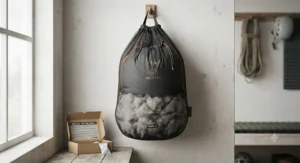
Buying the right bag is only half the job — how you use it on the night matters just as much. Before your first winter trip, air the bag out fully for a few hours to let the insulation loft properly; down and synthetic fill both compress in storage and need time to regain their full thickness. Always pair your bag with a sleeping mat rated with a decent R-value, since a huge proportion of heat loss on cold nights happens through conduction into the ground beneath you, not through the air around you — a brilliant bag on a thin mat will still leave you shivering.
A common mistake in the first 30 days of winter camping is sleeping in too many bulky layers inside the bag, which actually compresses the insulation around your body and reduces its loft, making you colder rather than warmer. Thin, dry base layers work far better than a thick fleece stuffed inside a mummy bag. Cinch the hood drawcord snugly around your face on the coldest nights, since a huge amount of heat escapes through an open hood, and always fully close zip baffles and draft collars where fitted. For maintenance, air your bag after every trip before storing it loosely in a large cotton storage sack rather than its compressed stuff sack, since long-term compression damages both down and synthetic loft over time.
Real-World Scenarios: Which Winter Sleeping Bag Suits You?
If you’re a Duke of Edinburgh expedition leader taking groups out in November and February, carrying and drying kit for multiple young people, the Highlander Echo 400 or Snugpak Softie Elite 4 make sense — synthetic fill shrugs off the inevitable damp gear pile, and the lower price tolerates the wear and tear group kit takes.
If you’re a solo backpacker planning multi-day winter routes through the Cairngorms or Snowdonia, weight and pack size become the priority, which is exactly where the Alpkit Pipedream 600 or Mountain Equipment Helium 600 earn their keep, trading a higher price for genuinely lower weight over long days on the trail.
If you’re a family car camper who wants one dependable bag for the odd frosty weekend away without becoming a gear obsessive, the Vango Venom 600 offers a sensible middle ground — real down warmth, a manageable price, and enough performance in reserve that an unexpectedly sharp night won’t ruin the trip.
Understanding EN 13537: What Comfort, Limit and Extreme Ratings Actually Mean
What is EN 13537? EN 13537 is the European testing standard that uses a heated manikin in a climate-controlled chamber to produce comparable temperature ratings across different sleeping bag brands, rather than relying on each manufacturer’s own marketing claims.
The standard produces four figures, and understanding the difference matters more than most buyers realise. The comfort rating is the temperature at which a standard woman can expect a comfortable night’s sleep. The limit rating is the temperature at which a standard man can sleep without waking from cold, though not necessarily comfortably. The extreme rating is not a target to aim for at all — it’s the temperature at which hypothermia risk becomes a real danger even for a short period, essentially a survival figure rather than a sleeping one.
| Rating | What it actually measures | Practical takeaway |
|---|---|---|
| Comfort | Temperature for a relaxed night’s sleep (standard female model) | Use this as your main buying benchmark |
| Limit | Temperature at which sleep is possible but chilly (standard male model) | Treat as your absolute minimum, not your target |
| Extreme | Survival temperature for a short period only | Never plan a trip around this figure |
Looking at this table, the practical lesson is straightforward: always buy against the comfort rating for the coldest night you realistically expect, then add a safety margin, because the night that catches people out is rarely the average one — it’s the unexpectedly cold outlier. If you sleep cold, as many people genuinely do, shift your target comfort rating a further 5°C lower than the forecast minimum.
How to Choose the Warmest Sleeping Bag for Cold Weather Camping
- Start with your coldest realistic night, not the average. Check historical minimums for your usual camping regions rather than typical forecasts, and buy against that figure.
- Prioritise the comfort rating over the limit rating. The limit figure looks impressive on a spec sheet but represents a genuinely uncomfortable night, not a good one.
- Match insulation type to your trip conditions. Down wins on warmth-to-weight in dry conditions; synthetic wins when damp and condensation are unavoidable, which in UK winters is most of the time.
- Check the internal cut, not just the temperature figure. A too-tight bag compresses insulation and reduces warmth regardless of its rating; a too-roomy bag leaves cold air pockets around your body.
- Factor in your sleeping mat’s R-value. Even the warmest sleeping bag for cold weather camping underperforms badly on inadequate ground insulation.
- Consider hood and draft collar design. A well-fitted hood and neck baffle can be worth several degrees of effective warmth on their own.
- Budget for accessories, not just the bag. A liner, a decent mat and a hot water bottle for camping often add more real-world warmth per pound spent than upgrading the bag itself.
Best 4 Season Sleeping Bag: What Separates a True Winter Bag from a 3-Season Bag
The label “4 season” gets used loosely across the outdoor industry, which makes genuine comparison harder than it should be. A proper best 4 season sleeping bag is generally built around an EN 13537 comfort rating of -5°C or colder, with reinforced draft collars, insulated zip baffles and a deeper hood specifically to seal in warmth that a 3-season bag simply doesn’t need to manage. A 3-season bag, by contrast, is optimised for the far more common UK conditions between roughly 0°C and 10°C, and pushing one into genuine winter use means relying heavily on liners, extra layers and a hot water bottle just to stay level with what a proper winter bag does natively.
The practical difference shows up most in the small details: 4-season bags like the Rab Ascent 900 and Mountain Equipment Helium 600 use box-wall or shaped baffle construction specifically to prevent cold spots at high fill densities, something a lighter 3-season bag’s simpler stitch-through construction can’t replicate without adding unwanted weight. If your camping is genuinely limited to spring through autumn, a 3-season bag remains the better investment. But anyone who’s had one frost-bitten November trip already knows why the extra spend on a true winter bag pays for itself the very first time it’s needed.
Down vs Synthetic Insulation for Winter Sleeping Bags
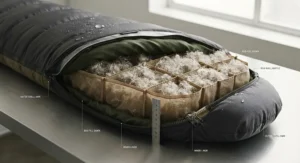
This is the decision that shapes almost everything else about a winter bag purchase, and it’s rarely as simple as “down is better.” Down offers a genuinely superior warmth-to-weight ratio and compresses to a fraction of the size of synthetic fill for equivalent warmth, which is why every ultralight bag on this list — the Alpkit Pipedream 600, Mountain Equipment Helium 600, Rab Ascent 900 and Vango Venom 600 — uses it. A well-maintained down bag can also last a decade or more with proper care.
Synthetic insulation, used in the Snugpak Softie Elite 4 and Highlander Echo 400, trades some of that warmth-to-weight advantage for a crucial practical benefit: it keeps insulating even when wet, where down loses much of its loft and warmth until fully dried out. In UK winter conditions, where overnight condensation inside a tent is genuinely common, this isn’t a minor consideration.
| Factor | Down | Synthetic |
|---|---|---|
| Warmth-to-weight | Excellent | Good, but heavier for equivalent warmth |
| Performance when damp | Poor until dried | Retains most insulating ability |
| Packed size | Very compact | Bulkier |
| Typical lifespan | 10-15+ years with care | Shorter, degrades faster with compression |
| Best For | Rab Ascent 900, Alpkit Pipedream 600, Mountain Equipment Helium 600, Vango Venom 600 | Snugpak Softie Elite 4, Highlander Echo 400 |
Based on this comparison, the honest advice is: choose down if you can keep your kit reasonably dry and weight genuinely matters to your trips, and choose synthetic if you’re camping in consistently wet conditions, travelling with less careful storage, or buying on a tighter budget where resilience to abuse matters more than ultimate performance.
Common Mistakes When Buying a Winter Sleeping Bag
The single most common mistake is buying against a bag’s limit or extreme rating rather than its comfort rating, which sets buyers up for a genuinely uncomfortable trip even though the number on the label looked reassuring. A close second is ignoring the sleeping mat entirely — spending £300 on a bag while sleeping on a thin foam mat wastes a meaningful chunk of that investment through ground conduction. Buyers also frequently overlook internal length and cut, assuming “regular” fits everyone, when a too-snug bag actively reduces the loft that creates warmth.
Another frequent error is choosing down for consistently wet trips without a bivvy bag or a genuinely waterproof tent, then being surprised when performance drops off after a damp night. Finally, plenty of buyers treat a winter sleeping bag purchase in isolation, forgetting that a liner, an appropriate mat and a hot water bottle for camping often deliver more real-world warmth per pound spent than chasing an extra 5°C on the bag alone.
Boosting Your Warmth: Hot Water Bottle for Camping and Other Sleep System Tricks
A hot water bottle for camping remains one of the cheapest, most effective warmth boosts available, and it’s used far more widely among experienced UK mountaineers than casual campers realise. The technique is simple but worth doing properly: boil water at camp, fill a bottle rated for high temperatures like the Nalgene Wide Mouth 1L, wrap it in a sock or spare layer so it isn’t scalding against skin, and position it near your core or between your thighs rather than at your feet, since that’s where it warms blood flowing to major arteries most effectively.
Beyond the hot water bottle, a few other tricks genuinely move the needle: wearing dry, freshly changed base layers to bed rather than the damp ones you hiked in traps far more warmth than wet fabric ever will; eating a carbohydrate-rich snack before sleep gives your metabolism fuel to generate heat overnight; and using a sleeping bag liner can add several degrees of effective warmth for very little extra weight or cost. None of these tricks substitute for a properly rated bag in the first place, but stacked together with one of the seven bags above, they’re the difference between merely surviving a cold night and actually sleeping through it.
Long-Term Cost & Maintenance: Down vs Synthetic Total Cost of Ownership
The upfront price only tells part of the story. A well-cared-for down bag like the Mountain Equipment Helium 600 or Rab Ascent 900 can realistically last a decade or more of regular use, which spreads a higher initial cost across many winters and often works out cheaper per season than repeatedly replacing a budget synthetic bag. Synthetic insulation, by contrast, tends to lose loft and effective warmth faster through repeated compression cycles, meaning a bag like the Highlander Echo 400 may need replacing sooner despite its lower entry price.
Maintenance costs matter too: down bags generally need occasional specialist down-safe washing to maintain loft, while synthetic bags tolerate more frequent home washing without the same risk of clumping. Storage matters for both — compressing either type long-term in its stuff sack shortens its usable life, so a breathable cotton storage sack, while a small extra purchase, protects the far larger investment in the bag itself.
Safety, Regulations and Staying Warm in the UK Winter
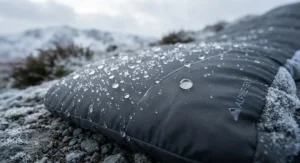
Cold-weather safety deserves genuine attention rather than an afterthought at the end of a buying guide. Hypothermia can develop faster than most people expect, and the NHS advises that early signs include persistent shivering, cold and pale skin, and slurred speech, with severe cases becoming a medical emergency requiring urgent help. A correctly rated sleeping bag is genuinely preventative equipment, not just a comfort purchase, particularly for anyone camping solo in remote UK locations where help may be hours away.
Beyond the bag itself, sensible planning matters just as much: check weather forecasts for the specific altitude and location you’re camping at, since temperatures drop meaningfully with elevation across the UK’s hill regions, and always tell someone your planned route and return time. The UK government’s own seasonal cold weather guidance reinforces the same core principles that apply just as much in a tent as at home: layer clothing rather than relying on one thick layer, keep moving where possible to maintain circulation, and take cold weather seriously rather than assuming British winters are too mild to pose a genuine risk.
Features That Actually Matter (And Those That Don’t)
Genuinely worth paying for: an accurate, independently tested EN 13537 rating rather than a vague manufacturer claim; a well-constructed hood and draft collar, since heat loss through an open neck and head is disproportionate to how little fabric is involved; and box-wall or shaped baffle construction in down bags, which prevents cold spots that stitch-through construction can’t avoid at winter fill densities.
Less important than the marketing suggests: exotic fill-power numbers alone without context, since a 900 fill-power bag with too little down by weight can still underperform a 650 fill-power bag stuffed more generously; and elaborate pocket systems or accessory features that add weight without meaningfully affecting warmth. Reviewers consistently note that build quality around the zip — anti-snag guards, smooth two-way action — matters more day-to-day than most people expect before they’ve fumbled with a frozen zip at 3am.
FAQ
❓ What is a good EN 13537 temperature rating for UK winter camping?
❓ What's the difference between a winter sleeping bag and a best 4 season sleeping bag?
❓ Is a hot water bottle for camping actually safe to use in a sleeping bag?
❓ What does the extreme rating on a sleeping bag actually mean?
❓ How much should I expect to pay for a decent winter sleeping bag?
Conclusion
Choosing a winter sleeping bag genuinely comes down to matching real EN 13537 figures, not marketing language, to the coldest night you honestly expect to face. For most UK winter campers, the Alpkit Pipedream 600 delivers the strongest all-round value, with a verified comfort rating that comfortably covers genuine British winter nights at a weight that won’t punish your back on the walk in. Budget-conscious buyers will find the Highlander Echo 400 a sensible, low-risk way to test whether winter camping suits them, while those wanting British manufacturing and clever temperature control should look closely at the Snugpak Softie Elite 4.
Whichever bag you choose, remember it’s one part of a complete sleep system — pair it with a properly insulated mat, dry base layers, and a hot water bottle for camping on the coldest nights, and even a mid-range bag can perform well above its rating. Stay warm, plan sensibly, and Britain’s winter landscapes are genuinely worth the extra kit.
✨ Found the right winter sleeping bag for your next trip?
🔍 Check current pricing today and get your kit sorted before the next cold snap arrives!
Recommended for You
- Sleeping Bag Under £100: 7 Best UK Picks Tested for 2026
- Anti Condensation Tent 2026: 7 Best Picks to Stop Soggy Mornings
- Moisture Absorber For Tent: 7 Best Damp Traps Ranked (2026)
Disclaimer: This article contains affiliate links. As an Amazon Associate, I earn from qualifying purchases. If you purchase products through these links, we may earn a small commission at no additional cost to you.
✨ Found this helpful? Share it with your friends! 💬🤗
