
In This Article
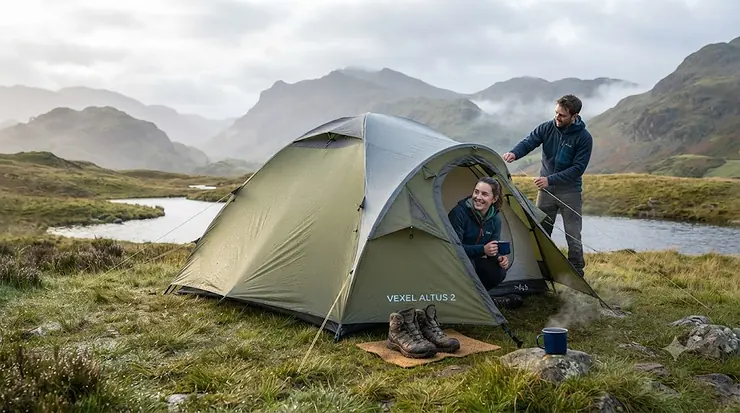
There’s a specific kind of misery reserved for British campers: unzipping the inner door at 7 a.m. to find the flysheet dripping like it rained indoors overnight. It didn’t. That’s condensation, and it’s arguably the single biggest complaint levelled at tents across the UK’s damp, temperature-swinging climate. An anti condensation tent won’t make the problem vanish entirely — nothing short of camping in the Sahara will do that — but the right combination of fabric, venting and pitching technique can turn a soggy, clammy night into a dry one. This guide digs into seven real, currently available tents (plus one genuinely useful accessory) that are built or treated specifically to fight moisture build-up, alongside the science of why it happens in the first place. We’ve researched actual specs, aggregated real review sentiment where it exists, and skipped the marketing fluff.
Quick Comparison Table
Before the deep dive, here’s the headline view. Prices are indicative ranges only — always check current pricing before buying, as retailers adjust these constantly.
| Tent | Type | Condensation Control | Price Range | Best For |
|---|---|---|---|---|
| Robens Chaser 1 | Ultralight double-wall | Full double-wall, mesh inner | Budget-mid | Solo wild campers |
| Naturehike Cloud Up 2 | Budget double-wall | Undyed flysheet, mesh vestibule | Budget | Value-conscious backpackers |
| Alpkit Aeronaut 2 | Double-skin air tent | Ventilation wing, mesh inner | Mid-range | Fast pitching in the rain |
| Outwell Earth Tunnel | Trekking/family crossover | Rear vents, breathable inner | Mid-range | Couples and small families |
| Vango Apollo 500 | Family pole tent | Multi-point mesh venting | Mid-premium | Larger families, longer stays |
| Terra Nova Laser Competition 2 | Premium ultralight | Mostly-mesh inner | Premium | Serious hillwalkers |
| Nikwax Tent & Gear SolarProof | Anti condensation spray | Restores DWR, UV protection | Budget accessory | Reviving an existing tent |
Looking across this table, the pattern is obvious: every genuinely effective anti condensation tent uses a double-skin (or double-wall) construction, because a single layer simply cannot separate your warm, moist breath from the cold outer air. The Terra Nova Laser Competition 2 sits at the top for pure performance-per-gram, while the Naturehike Cloud Up 2 proves you don’t need to spend big to get decent airflow. If your existing tent already has the bones but has lost its water-repellency, the Nikwax Tent & Gear SolarProof spray is the cheapest fix on this list by a wide margin.
💬 Just one click — help others make better buying decisions too!😊
Top 7 Anti Condensation Tents: Expert Analysis
Here’s the detailed breakdown of all seven picks, covering what the spec sheet actually means for you on a damp Tuesday night in the Lakes.
1. Robens Chaser 1 — best ultralight full double-wall for solo trips
The headline figure here is weight: 1.3kg packed for a genuinely full double-wall tent is unusual, since most manufacturers cut weight by skimping on the flysheet-to-inner gap. Robens hasn’t done that. The full double-wall construction means there’s a proper air gap between the mesh inner and the waterproof outer, which is exactly the buffer zone that stops your breath condensing straight onto the fabric above your face. Based on the spec comparison with similarly-weighted ultralight shelters, this is one of the few sub-1.5kg tents that doesn’t force a condensation trade-off for the weight saving. It suits solo wild campers and fastpackers who refuse to compromise on a dry night just to shave grams, and reviewers testing it in damp UK conditions consistently note that setup stays straightforward even when you’re pitching in the rain with cold fingers — a detail that matters more than people expect when you’re exhausted on a Scottish hillside.
Pros:
- ✅ Full double-wall design at a genuinely ultralight weight
- ✅ Straightforward pitching even in poor weather
- ✅ Mesh inner keeps airflow moving through the night
Cons:
- ❌ Porch space is modest, typical of one-person ultralight shelters
- ❌ Costs more than basic single-skin rivals of similar weight
At the time of research, the Robens Chaser 1 typically sits in the lower-mid price bracket for ultralight tents — check current pricing, as stock and price bands shift. For what you get in weather protection per gram, it represents strong value for anyone serious about multi-day wild camping.
2. Naturehike Cloud Up 2 — best budget pick for eco-conscious backpackers
What actually sets the Naturehike Cloud Up 2 apart isn’t just the price — it’s the undyed flysheet, a detail most budget tents skip entirely because dyeing fabric is cheap and undyed fabric costs more to source. Reducing water and chemical use during manufacturing won’t stop your morning dew, admittedly, but the double-wall construction that comes with it will. What most buyers overlook about this model is that the vestibule is genuinely generous for the price point, giving you somewhere to stash wet boots away from the sleeping area — itself a meaningful condensation-reduction trick, since a boot full of trapped moisture is basically a tiny humidifier next to your face all night. Reviewers testing it against pricier rivals report it copes with wind and rain far better than the price tag suggests, though the pole quality naturally sits a notch below premium aluminium options like DAC or Easton.
Pros:
- ✅ Undyed flysheet reduces chemical use and looks understated
- ✅ Roomy vestibule keeps wet gear away from the sleeping area
- ✅ Handles wind and rain well above its price class
Cons:
- ❌ Pole quality is a step below premium aluminium alternatives
- ❌ Seam reproofing may be needed sooner with heavy use
Expect this one to sit firmly in the budget bracket — genuinely one of the best value double-wall tents currently sold through UK retailers, and a smart entry point if this is your first proper anti condensation tent.
3. Alpkit Aeronaut 2 — best for fast pitching without sacrificing airflow
Inflatable-pole tents get a bad reputation among condensation-conscious campers, largely because early air tents prioritised speed of pitching over ventilation. The Alpkit Aeronaut 2 doesn’t fall into that trap: it’s a double-skinned freestanding design with two doors, two porches, and a dedicated ventilation wing built into the flysheet. The 4,000mm hydrostatic head on the fly is a genuinely solid rating for a tent at this price, though — and this is the honest caveat reviewers and testers flag repeatedly — the 15D nylon floor only carries a 1,500mm rating, which feels low against the flysheet’s performance. Based on the spec comparison, we’d strongly recommend pairing it with Alpkit’s additional footprint, both to protect that thinner floor and to add a touch more waterproof buffer underneath. For campers who hate wrestling with pole sleeves in the rain, the air-pole system genuinely speeds up pitching, which indirectly helps condensation too: less time with the inner exposed to drizzle before the fly goes on means less trapped damp air at the start of the night.
Pros:
- ✅ Dedicated ventilation wing built into the flysheet design
- ✅ Solid 4,000mm hydrostatic head on the outer fly
- ✅ Fast, fuss-free pitching thanks to inflatable poles
Cons:
- ❌ Floor rating (1,500mm) is noticeably lower than the fly
- ❌ Only one ventilation point limits airflow options in stagnant air
At around £199.99 (check current pricing), this is one of the more honestly-priced double-skin air tents on the market, and testers who’ve used it through “sodden Welsh weather” describe the waterproofing as holding up well despite the thin floor spec.
4. Outwell Earth Tunnel Tent — best for couples wanting active moisture extraction
Where a lot of tents rely on passive airflow — air simply drifting through mesh panels because warm air rises — the Outwell Earth Tunnel Tent builds in a rear ventilation system specifically engineered to pull moist air out rather than just letting it happen. Outwell’s own condensation-control philosophy positions wall vents beneath the windows to draw air in at ground level, circulate it gently around the tent, then exhaust it through a large rear vent — and this tunnel model inherits that thinking in a lighter, trekking-friendly footprint. The 3,000mm hydrostatic-head flysheet paired with breathable inner fabric means moisture has somewhere to go rather than pooling against cold nylon. What the spec sheet won’t tell you, but the design logic makes clear, is that this active-exhaust approach outperforms tents that rely purely on mesh doors, particularly on still, muggy nights when there’s no breeze to push air through passively. The darkened bedroom fabric is a nice bonus for anyone who struggles to sleep past dawn in a bright tent.
Pros:
- ✅ Rear ventilation system actively draws moist air out
- ✅ Bathtub groundsheet blocks draughts and rising damp
- ✅ Darkened bedroom fabric improves sleep on bright mornings
Cons:
- ❌ Fibreglass DuraTec poles are less robust than aluminium in strong wind
- ❌ Tunnel shape needs firm, careful guying on exposed pitches
Sitting in the mid-range price bracket, this is a strong pick for couples or small families who camp often enough that active ventilation earns its keep over a basic mesh-only design.
5. Vango Apollo 500 — best for families needing multi-point venting over longer stays
Family tents face a condensation problem that solo backpacking tents don’t: five people breathing overnight generates a lot more water vapour than one, and a big pole tent has far more internal air volume for that moisture to hang around in before finding an exit. The Vango Apollo 500 addresses this with multiple low-level and high-level mesh vents distributed around the tent rather than a single vent doing all the work, plus a large front porch that functions as a genuine airlock-style buffer zone between the damp outside world and the dry sleeping compartments. Honest analysis of the layout suggests the porch does double duty here — it’s somewhere to cook and store muddy boots, but it also means the bedroom doors aren’t opening directly onto wet grass and cold air every time someone nips out at 2 a.m., which is a surprisingly common condensation trigger in family tents. Aggregated reviewer sentiment across similar Vango pole-tent ranges consistently flags the ventilation as a strength, though the trade-off is a genuinely substantial pack size that rules this out for anything but car camping.
Pros:
- ✅ Multiple mesh vents spread airflow around a large interior
- ✅ Generous porch buffers bedrooms from outside damp
- ✅ Separate bedrooms suit families needing five-person capacity
Cons:
- ❌ Bulky pack size, unsuitable for backpacking or festival travel light
- ❌ Higher price than similarly-sized inflatable family alternatives
This one sits in the mid-to-premium bracket for a five-berth pole tent — worth it if you’re doing week-long family holidays where the ventilation system genuinely gets used every single night.
6. Terra Nova Laser Competition 2 — best premium pick for serious hillwalkers
British-made and genuinely used on mountain expeditions, the Terra Nova Laser Competition 2 earns its premium price through a combination that’s hard to beat: 1.07kg total weight, a mostly-mesh inner tent, and a single flexible-pole crossover design that creates a low, wind-shedding profile. What most buyers overlook about mesh-heavy inners is that they’re not just about weight saving — they’re the most effective passive condensation control available, because the mesh lets moist air escape continuously rather than trapping it against solid fabric until a vent happens to be angled right. The 5,000mm floor rating against a 3,000mm flysheet is a sensible, deliberately asymmetric spec: floors take abrasion and pooling water, flysheets need to breathe as much as they repel. Based on the spec comparison with heavier dome and tunnel tents on this list, the Laser Competition 2 sacrifices interior space for a genuinely superior weather-and-condensation package, which is exactly the trade-off serious hillwalkers on multi-day Munro rounds are willing to make.
Pros:
- ✅ Exceptional weight-to-weather-protection ratio at 1.07kg
- ✅ Mostly-mesh inner delivers genuinely superior passive ventilation
- ✅ British engineering pedigree proven on real expeditions
Cons:
- ❌ Premium price reflects the specialist ultralight materials used
- ❌ Single-pole design means less headroom than dome or tunnel tents
At roughly £750 (check current pricing before buying), this sits well above the rest of this list — but for anyone who camps in genuinely exposed UK terrain repeatedly, it’s a long-term investment rather than an impulse buy.
7. Nikwax Tent & Gear SolarProof — best accessory for reviving an existing tent
Not every anti condensation strategy means buying a new tent, and this is where the Nikwax Tent & Gear SolarProof spray earns its place on this list. It doesn’t add ventilation — that’s an honest limitation worth stating upfront — but it tackles a condensation-adjacent problem that catches people out: a flysheet that’s lost its durable water repellency (DWR) doesn’t bead rainwater away, it lets it “wet out” and soak into the fabric, which then traps humid air against the inner and makes condensation feel far worse than it actually is. The product is water-based, non-aerosol and PFAS-free, and it doubles as UV protection — genuinely useful given that two weeks of continuous UV exposure can roughly halve a synthetic tent fabric’s tear strength. One verified Amazon customer review we found specifically praised a redesigned spray nozzle, noting the older version clogged frequently but the current one “works great” and made application far easier — a small but real detail that matters when you’re trying to treat an entire flysheet in one session.
Pros:
- ✅ Restores DWR so rain beads off instead of soaking in
- ✅ UV protection can roughly double a fabric’s usable lifespan
- ✅ Far cheaper than replacing a tent with condensation issues
Cons:
- ❌ Does nothing to improve poor ventilation design on its own
- ❌ Needs reapplication every season or two with regular use
Priced from around £15 for a 500ml bottle up to roughly £40+ for the 2.5L option with spray attachment, this is the smallest outlay on this entire list — and arguably the best value if your existing tent’s real problem is a tired flysheet rather than a design flaw.
What Is an Anti Condensation Tent?
An anti condensation tent is a tent specifically designed — usually through a double-skin construction, mesh ventilation panels, and dedicated air vents — to reduce the moisture that naturally forms inside a tent overnight when warm, humid breath meets a cold outer fabric surface. No tent eliminates condensation entirely, but design choices can dramatically reduce how much builds up and how it affects your sleep.
How to Stop Tent Condensation: 7 Practical Steps
Buying the right tent is half the battle; how you pitch and use it does the rest. Here’s the practical rundown, drawn from established UK camping guidance and manufacturer condensation-control advice.
- Pitch on higher, drier ground where possible. Low spots collect cold, damp air overnight, and that temperature difference is exactly what drives condensation on your flysheet.
- Open every vent before bed, not just the door. Passive airflow only works if there’s an entry and an exit point — a single open door with no rear vent just creates a still-air pocket.
- Avoid cooking inside the inner tent. Boiling water releases a surprising volume of vapour directly into a small enclosed space; use the porch or cook outside entirely.
- Dry your tent fully before packing it away. Storing a damp tent breeds mould and degrades the waterproof coating, which then makes condensation worse on the next trip.
- Keep wet boots and clothing in the porch, not the sleeping area. Every damp item you bring inside effectively becomes a small humidifier running all night.
- Wipe down the inner in the morning before it’s disturbed. A cheap absorbent cloth or pack towel removes overnight moisture before it drips onto sleeping bags as you move around.
- Reproof the flysheet when water stops beading. A worn DWR coating (see the Nikwax Tent & Gear SolarProof entry above) lets rain soak in rather than run off, indirectly worsening the humid micro-climate inside.
Reviewers and long-term campers who follow this routine consistently report drier mornings than those who simply blame the tent — ventilation habits genuinely matter as much as the hardware itself.
Tent Ventilation vs Condensation: What Actually Works
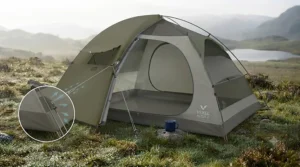
It’s worth separating two things people often conflate: ventilation is the mechanism, and condensation is the symptom you’re trying to prevent. Tent ventilation vs condensation isn’t really a fair fight, because ventilation is one of only two real levers you have — the other being insulation, which most tents don’t attempt at all. Mesh panels, low-and-high vent pairs, and rear exhaust vents like those on the Outwell Earth Tunnel Tent work because warm, moist air naturally rises and needs somewhere to escape; block that exit and it simply condenses on the nearest cold surface, which is almost always the flysheet directly above your face. What most buyers overlook is that a single vent rarely does much on a still night — you need a through-draught, meaning air genuinely needs to enter low and exit high (or at the opposite end) rather than just one opening doing double duty. Tents like the Vango Apollo 500, with multiple vent points spread around a large interior, tend to outperform single-vent designs in exactly this scenario, even though the raw hydrostatic-head numbers might look similar on paper.
| Ventilation Approach | How It Works | Best Suited To |
|---|---|---|
| Single door mesh only | Passive, relies on breeze | Fine-weather, warm nights |
| Low + high vent pair | Active through-draught | Most UK three-season camping |
| Dedicated rear exhaust vent | Actively channels air out | Damp, still nights |
| Mostly-mesh inner | Continuous passive escape | Ultralight, exposed pitches |
Looking at this breakdown, the clear winner for typical British conditions is the low-and-high vent pair or a dedicated rear exhaust, simply because still, muggy nights are common enough in the UK that pure passive airflow through one opening often isn’t enough. Tents relying solely on a single mesh door, by contrast, tend to underperform specifically on the calm, overcast nights when condensation is at its worst.
Double Skin Tent Benefits: Why Two Layers Beat One
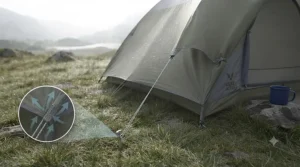
If there’s one universal truth running through every product on this list, it’s that double skin tent benefits come down to physics rather than marketing. A single-skin tent has one fabric layer separating your warm breath from the cold night air, so condensation forms directly on the inside of the very fabric you’re touching. A double-skin (or double-wall) tent adds a mesh or breathable inner layer with an air gap before the waterproof outer fly, meaning any condensation that forms happens on the flysheet — where it can drip harmlessly to the ground or run off — rather than directly onto you or your sleeping bag. Reviewers testing single-skin pop-up tents, including entry-level Vango models, consistently flag them as fine for “simple camping adventures in fine weather” but genuinely risky for anything wetter, precisely because there’s no buffer zone.
| Feature | Single-Skin Tent | Double-Skin Tent |
|---|---|---|
| Condensation location | Directly on inner touching you | On outer fly, away from sleeper |
| Weather performance | Fine-weather only | Handles UK three-season conditions |
| Typical weight | Lighter | Slightly heavier |
| Typical price | Cheaper | Moderate premium |
The extra weight and cost of a double-skin design, illustrated above, is a genuinely worthwhile trade-off for anyone camping more than the occasional dry summer weekend. Products like the Robens Chaser 1 prove you don’t have to sacrifice much weight to get that air-gap protection, which is precisely why double-wall construction is now the default recommendation across most UK-focused buying guides.
The Anti Condensation Spray Tent Route: When a Product Alone Isn’t Enough
Sometimes the honest answer isn’t “buy a new tent” — it’s “fix the one you’ve got.” An anti condensation spray tent treatment, such as the Nikwax Tent & Gear SolarProof covered above, works by restoring durable water repellency to a flysheet that’s stopped beading water properly. It’s important to be upfront about what this does and doesn’t fix: reviewers correctly note it’s a waterproofing and UV treatment, not a ventilation upgrade, so it won’t help a tent with genuinely poor vent placement. What it does solve is the far more common scenario where a perfectly well-designed tent has simply aged — the DWR coating wears off through UV exposure and general use, water starts soaking into the fabric instead of running off, and that damp fabric then traps humid air against the inner far more than it did when new. Based on the spec comparison between treated and untreated fabric performance claims, reapplying a spray-on treatment once a season is a genuinely cost-effective maintenance habit, especially compared with replacing an otherwise perfectly good tent.
Real-World Scenarios: Matching Tents to Campers
Specs only mean so much in the abstract, so here’s how these picks map onto real situations.
If you’re a solo hillwalker tackling multi-day Munro rounds in unpredictable Highland weather, the Terra Nova Laser Competition 2 earns its price tag — the weight saving matters over long days, and the mesh-heavy inner keeps you dry through consecutive damp nights without a rest day to air everything out. If you’re a couple planning your first proper wild camping trips on a tighter budget, the Naturehike Cloud Up 2 or Robens Chaser 1 both deliver genuine double-wall protection without the premium price, and the Robens’ extra weight saving suits anyone hiking further between pitches. If you’re a family of five doing a week at a Cornwall or Pembrokeshire campsite, the Vango Apollo 500‘s multi-point venting and separate bedrooms matter more than raw weight, since you’re driving to the pitch rather than carrying it on your back. And if your existing tent is otherwise fine but has started smelling musty or letting water soak through the fly, reaching for the Nikwax Tent & Gear SolarProof spray before buying anything new is genuinely the more sensible first move.
Solving the Morning Dew Tent Problem: Common Problems and Fixes
The morning dew tent problem — waking up to a flysheet coated in droplets that then rain down as you pack away — has a handful of common, specific causes, each with its own fix.
Problem: The whole flysheet is soaked, but it didn’t rain. This is classic condensation caused by a still night and insufficient venting; open all vents fully before bed and avoid pitching in low, damp hollows.
Problem: Water is pooling inside the inner tent itself. This usually means a worn DWR coating letting the fly wet out and soak through; a treatment like the Nikwax Tent & Gear SolarProof spray is the direct fix.
Problem: Condensation drips directly onto your sleeping bag. This points to inner-to-fly contact somewhere, often from an under-tensioned pitch; re-guy the tent taut so the two layers stay properly separated.
Problem: The tent smells musty even when dry. This suggests it was packed away damp at some point; unpack and fully air it at home before the next trip, ideally pitched in the garden for a few hours.
Problem: Mornings are worse in autumn than summer. Larger day-to-night temperature swings in cooler months increase the dew point gap, so expect more condensation regardless of tent quality and factor in extra airing time when packing up.
How to Choose an Anti Condensation Tent
- Check for a genuine double-skin construction first — this single feature does more for condensation control than any other spec on the sheet.
- Count the vents, not just their presence — a single vent rarely creates the through-draught you actually need.
- Look at the mesh-to-solid-fabric ratio on the inner — more mesh generally means better passive airflow, at a small cost to warmth.
- Match hydrostatic head to your actual use — 3,000mm+ suits most UK three-season camping; go higher for exposed, wet locations.
- Consider pack weight against your camping style — car campers can prioritise ventilation features over grams; backpackers often need to balance both.
- Factor in porch space for wet gear storage — keeping damp boots and clothing out of the sleeping area meaningfully reduces internal humidity.
- Budget for reproofing as ongoing maintenance, not a one-off — even the best anti condensation tent needs its DWR coating refreshed periodically.
Common Mistakes When Buying an Anti Condensation Tent
The most frequent mistake is chasing hydrostatic head numbers alone while ignoring ventilation entirely — a tent can be bone dry from rain and still soak your sleeping bag from the inside if it can’t breathe. A close second is buying single-skin for “just one summer trip,” only to get caught out by a genuinely common British cold snap or damp evening; UK weather rarely reads the forecast. Another common error is skipping the footprint or groundsheet protector on thinner-floored tents like the Alpkit Aeronaut 2, which accelerates wear and eventually compromises the waterproofing that keeps damp ground air out. Finally, plenty of buyers assume a bigger, more expensive tent automatically means less condensation — in reality, a larger family tent with poor vent placement can trap more moisture simply because there’s more air volume and more people breathing into it overnight.
Long-Term Cost & Maintenance
A genuinely good anti condensation tent is a multi-year investment rather than a disposable purchase, provided it’s looked after properly. Most quality double-wall tents last five to ten years of regular use with basic care — drying fully before storage, avoiding compression when damp, and replacing guy lines or poles as they wear. Reproofing treatments like the Nikwax Tent & Gear SolarProof spray are the main recurring cost, typically needed every season or two depending on use, and represent excellent value against the alternative of replacing an entire tent once the DWR coating fails.
| Tent | Approx. Lifespan | Typical Maintenance |
|---|---|---|
| Robens Chaser 1 | 5–8 years | Seam check, occasional reproof |
| Naturehike Cloud Up 2 | 4–6 years | More frequent reproofing |
| Terra Nova Laser Competition 2 | 8–10+ years | Pole care, periodic reproof |
| Vango Apollo 500 | 6–10 years | Guy line replacement, reproof |
Set against these lifespans, a £15–£40 bottle of spray-on waterproofer every year or two is a rounding error compared with the cost of replacing a tent outright — which is exactly why long-term value calculations on tents should include maintenance products as part of the total cost of ownership, not as an optional extra.
Safety, Weather and Regulations Guide for UK Camping
Condensation isn’t just an inconvenience — persistent damp inside a tent can contribute to hypothermia risk in cold conditions, since wet sleeping bags and clothing lose insulating value fast. The Met Office explains that condensation forms when air is cooled to its dew point, which is exactly why still, clear, cool nights — common across much of the UK outside high summer — tend to produce the worst tent condensation, since there’s no cloud cover to trap ground-level warmth. There’s no specific UK regulation governing tent ventilation, but the general safe-camping principle from bodies like the Camping and Caravanning Club is to never cook with gas inside a fully sealed inner tent, both for carbon monoxide safety and because it dramatically worsens condensation. If you’re camping somewhere genuinely exposed, checking Met Office forecasts for overnight humidity and dew point, not just rain probability, will tell you more about how bad condensation is likely to be than the rain icon alone.
Frequently Asked Questions
❓ What causes condensation in a tent?
❓ Do anti condensation sprays actually work?
❓ Is a double skin tent always better for condensation?
❓ How do I stop tent condensation without buying a new tent?
❓ Why is my tent worse for condensation in autumn than summer?
Conclusion
There’s no single anti condensation tent that suits every camper, but the pattern across all seven picks here is consistent: double-skin construction, genuine multi-point ventilation, and a well-maintained DWR coating do the heavy lifting, whether you’re spending £20 on a spray treatment or £750 on a British-made expedition shelter. For solo, weight-conscious trips, the Terra Nova Laser Competition 2 and Robens Chaser 1 both deliver serious passive ventilation without excess bulk. Budget-conscious backpackers get real double-wall protection from the Naturehike Cloud Up 2, while the Alpkit Aeronaut 2 and Outwell Earth Tunnel Tent strike a sensible mid-range balance for couples wanting faster pitching or active venting. Families doing longer stays are better served by the Vango Apollo 500‘s multi-point mesh system, and anyone whose existing tent just needs reviving should start with the Nikwax Tent & Gear SolarProof spray before spending on anything new. Match the tent to how you actually camp, follow the ventilation habits covered above, and soggy mornings become the exception rather than the rule.
✨ Don’t Miss These Exclusive Deals!
🔍 Take your camping setup to the next level with these carefully selected anti condensation tents. Click on any highlighted item to check current pricing and availability. These picks will help you create genuinely dry, comfortable mornings your whole family will love!
Recommended for You
- Moisture Absorber For Tent: 7 Best Damp Traps Ranked (2026)
- Mini Dehumidifier Camping: 7 Best Picks for Damp-Free Nights (2026)
- Tent Dehumidifier UK: 7 Best Picks for Damp-Free Camping 2026
Disclaimer: This article contains affiliate links. As an Amazon Associate, I earn from qualifying purchases. If you purchase products through these links, we may earn a small commission at no additional cost to you.
✨ Found this helpful? Share it with your friends! 💬🤗
