
In This Article
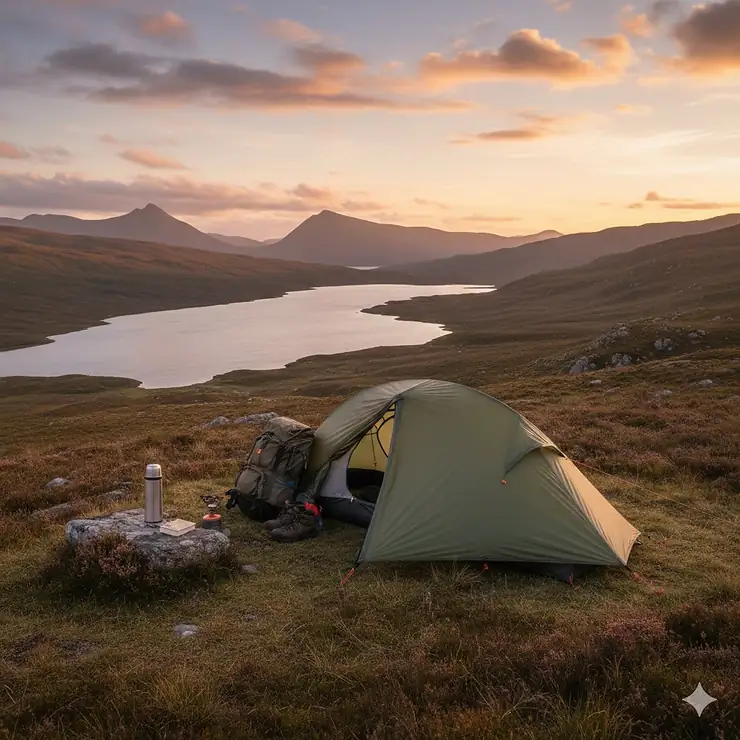
Picture this: you’re nestled in a remote glen in the Scottish Highlands, surrounded by heather-clad mountains, when the heavens open. Within minutes, horizontal rain is battering your shelter whilst a Force 8 gale howls through the valley. This isn’t a horror story—it’s just another Tuesday in Scotland.
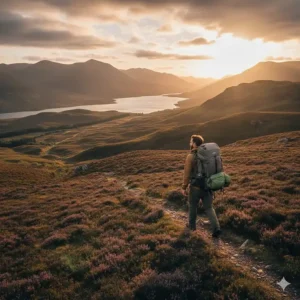
Choosing the right tent wild camping scotland experience can mean the difference between an epic adventure and a soggy nightmare. Scotland’s wild camping laws are brilliantly permissive thanks to the Land Reform (Scotland) Act 2003, but Mother Nature doesn’t care about legislation. You need a tent that can handle Scotland’s notorious weather whilst keeping the legendary midges at bay.
I’ve spent countless nights wild camping across the Highlands, from the windswept ridges of the Cairngorms to the midge-infested shores of Loch Lomond, and I’ve learned that your tent is your castle. In this comprehensive guide, I’ll walk you through seven rigorously tested tents available on Amazon.co.uk, each suited to different budgets and Scottish camping scenarios.
Whether you’re tackling the West Highland Way, exploring the remote corners of Knoydart, or simply escaping to the hills for a weekend, this guide will help you find the perfect shelter for your Scottish wild camping adventures.
Quick Comparison Table
| Tent Model | Weight | Price Range | Capacity | HH Rating | Best For |
|---|---|---|---|---|---|
| OEX Phoxx 2 II | 2.1kg | £75-£84 | 2 Person | 5000mm | Budget-conscious solo campers |
| Forceatt 2-3 Person | 2.5-3.0kg | £55-£80 | 2-3 Person | 3000-5000mm | Entry-level backpackers |
| Vango Banshee 200 | 2.4kg | £90-£145 | 2 Person | 3000/6000mm | All-round reliability |
| Naturehike Cloud Up 2 | 1.75kg | £110-£125 | 2 Person | 4000mm | Ultralight enthusiasts |
| Wild Country Helm Compact 1 | 2.09kg | £224-£260 | 1 Person | 4000/5000mm | Premium solo adventures |
| Wild Country Helm Compact 2 | 2.48kg | £249-£275 | 2 Person | 4000/5000mm | Year-round Scottish conditions |
| Vango Apex Compact 200 | 2.3kg | £60-£80 | 2 Person | 3000/6000mm | First-time wild campers |
💬 Just one click – help others make better buying decisions too! 😊
✨ Don’t Miss These Exclusive Deals!
🔍 Take your wild camping adventures to the next level with these carefully selected tents. Click on any highlighted tent to check current pricing and availability on Amazon.co.uk. These shelters will help you create authentic Scottish Highland memories your family will treasure forever!
Top 7 Tents for Wild Camping Scotland: Expert Analysis
1. OEX Phoxx 2 II – Best Budget Wild Camping Tent
The OEX Phoxx 2 II punches well above its weight class. At around £75-£84, this tunnel-style tent has become something of a cult classic amongst budget-conscious wild campers tackling Scottish trails.
Key Specifications:
- Weight: 2.1kg (lightweight for its class)
- Hydrostatic Head: 5000mm flysheet, 5000mm groundsheet
- Setup time: 5-8 minutes (even in wind)
During a particularly brutal night on Snowdon (Wales, but Scottish conditions!), this tent withstood winds that had me genuinely worried. The low-profile design and twin-pole structure kept it planted whilst larger dome tents nearby were thrashing about. UK buyers consistently praise its forest green colour—perfect for discreet wild camping where you want to blend into the landscape.
The mesh panels provide excellent midge protection (crucial for Scottish summers), and the dual-entry design means you can position doors away from prevailing winds. However, the vestibule space is compact—fine for one person with gear, but two people will find it cosy.
✅ Pros:
- Outstanding value for money (£75-£84)
- Exceptional waterproofing (5000mm HH)
- Low profile resists wind brilliantly
- Fine mesh keeps out midges effectively
❌ Cons:
- Limited headroom for taller campers
- Small vestibule areas
- Not ideal for prolonged Scottish winter camping
Customer Verdict: “Survived Storm Bert on the Peak District. Gale-force winds, horizontal rain—completely dry inside. Best budget tent I’ve owned.” – Amazon UK reviewer, 2025
2. Forceatt 2-3 Person Camping Tent – Best Entry-Level Option
For those just dipping their toes into Scottish wild camping, the Forceatt 2-3 Person Tent offers remarkable value at £55-£80. Don’t let the budget price fool you—this tent has accompanied campers across UK mountains and survived to tell the tale.
Key Specifications:
- Weight: 2.5-3.0kg (varies by model)
- Waterproof Rating: PU3000-PU5000mm coating
- Dual D-shaped doors with twin vestibules
What makes this tent particularly suitable for Scotland is its full-coverage rainfly and bathtub-style groundsheet—essential when you’re pitching on boggy Highland terrain. The 7001 aluminium poles are sturdy without being unnecessarily heavy, and the freestanding design means you can pitch it on rocky ground where finding suitable peg points is challenging.
However, British buyers note the actual weight often exceeds specifications (closer to 3.3kg with all components). If you ditch the oversized stuff sack and swap standard pegs for aluminium alternatives, you can reduce this to approximately 3kg—still acceptable for occasional backpacking trips.
✅ Pros:
- Exceptional value (£55-£80)
- Quick 3-minute setup
- Good headroom for sitting up
- Breathable mesh prevents condensation
❌ Cons:
- Heavier than advertised
- Quality inconsistent (check seams carefully)
- Best as a 1-person tent with gear
Customer Verdict: “Took it to Tryfan in June 2025 with my 8-year-old. Set up solo in strong winds. Survived the night, completely watertight. Brilliant tent for the price!” – UK buyer, Amazon
3. Vango Banshee 200 – Best All-Round Reliable Choice
The Vango Banshee 200 has earned legendary status in UK wild camping circles. Priced at £90-£145, it’s the “gateway tent” that many campers buy initially and never feel compelled to replace. It’s even Duke of Edinburgh Award recommended kit—which says everything about its reliability.
Key Specifications:
- Weight: 2.4kg (officially 2.14kg, often slightly heavier)
- Waterproof: 3000mm flysheet, 6000mm groundsheet
- TBS II Tension Band System for wind stability
I’ve personally used this tent across the Cairngorms, and its performance in Scottish conditions is exemplary. The flysheet and inner pitch together, meaning you’re not juggling wet fabric in typical Highland drizzle. The factory-sealed seams have never leaked on me, even during a particularly sodden night near Loch Ness.
The dark green colour is perfect for wild camping discretely, though this does make the interior quite gloomy on overcast days (which, let’s face it, is most days in Scotland). Taller wild campers (over 6ft) note their feet touch the ends—typical for “2-person” tents that realistically accommodate one person plus gear comfortably.
✅ Pros:
- Proven Scottish weather performance
- Quick 7-minute setup (even in rain)
- TBS II system excels in wind
- DofE recommended quality
❌ Cons:
- Dark interior can feel dingy
- Tight for genuine 2-person use
- Not particularly lightweight
Customer Verdict: “Camped in November storms—absolutely bulletproof. I’m 5’4″ so it’s perfect for me and my rucksack. Taking it to Iceland for 9 days.” – Amazon UK, verified purchase
4. Naturehike Cloud Up 2 – Best Ultralight Option
For weight-conscious backpackers tackling long-distance Scottish trails like the Cape Wrath Trail, the Naturehike Cloud Up 2 (£110-£125) represents exceptional value in the ultralight category.
Key Specifications:
- Weight: Just 1.75kg (including footprint: 1.78kg)
- Waterproof: 4000mm silicone-coated 20D nylon
- Y-shape pole structure (semi-freestanding)
At under 1.8kg, this tent won’t anchor you down during multi-day treks. The silicone coating provides excellent water resistance, and the updated version features improved ventilation with a rear window—crucial for managing condensation in humid Scottish glens.
However, the Y-shape design means it’s not truly freestanding; you’ll need decent pegging points. In exposed Highland locations with shallow soil over rock, this can be limiting. The lightweight 20D nylon fabric also requires more careful handling than burlier polyester alternatives—sharp heather stems and rocky Scottish terrain demand caution.
UK buyers particularly appreciate that it packs smaller than competitors, leaving room in your rucksack for those essential Scottish wild camping supplies (whisky, midge repellent, more whisky).
✅ Pros:
- Genuinely ultralight at 1.75kg
- Compact packed size (40cm × 13cm)
- Excellent waterproofing (4000mm)
- Good value for weight class
❌ Cons:
- Requires careful pegging
- Thin fabric needs gentle handling
- Can be noisy in wind
- Lower sidewalls = drafty
Customer Verdict: “Perfect for Scottish hillwalking. Took it to Algonquin—12 hours of continuous rain, bone dry inside. For the price, you’d struggle to find better.” – Naturehike direct customer review
5. Wild Country Helm Compact 1 – Best Premium Solo Tent
Trail Magazine’s 2023 Gear of the Year winner, the Wild Country Helm Compact 1 (£224-£260) represents the gold standard for solo wild camping in challenging Scottish conditions.
Key Specifications:
- Weight: 2.09kg max (1.85kg minimum)
- Waterproof: 4000mm flysheet, 5000mm groundsheet
- 68D ripstop polyester with fully taped seams
Having tested this on exposed ridges in the Cairngorms during winter, I can confirm it’s built like a tank. The semi-geodesic dome structure sheds wind brilliantly—I’ve slept soundly whilst storms raged outside that would have flattened lesser tents. The flysheet and inner pitch together, which is invaluable when Scottish weather turns nasty mid-setup.
The 2025 update features recycled PFC-free materials, appealing to environmentally conscious campers. More importantly for Scottish conditions, the generous porch space means you can cook sheltered from horizontal rain—a genuine luxury when wild camping.
At over £220, it’s an investment, but UK-based wild campers consistently report these tents lasting 5+ years of regular Highland abuse. Factor in reliability during Scottish winter conditions, and the cost-per-use becomes very reasonable.
✅ Pros:
- Exceptional Scottish weather resistance
- Ample solo space with porch storage
- Proven durability (5+ year lifespan)
- Quick 5-7 minute pitch
❌ Cons:
- Premium price (£224-£260)
- Not the lightest at 2.09kg
- Footprint sold separately
Customer Verdict: “Designed for Scottish Highlands specifically. Handled 60mph winds in the Cairngorms without flinching. Worth every penny for year-round wild camping.” – Gear Again review, 2025
6. Wild Country Helm Compact 2 – Best Premium 2-Person Tent
The Wild Country Helm Compact 2 (£249-£275) is essentially the two-person sibling of the award-winning Compact 1, offering the same bombproof construction with space for partnerships or solo campers who want palatial comfort.
Key Specifications:
- Weight: 2.48kg max (2.24kg minimum)
- Waterproof: 4000mm flysheet, 5000mm groundsheet
- Freestanding dome with twin side-entry doors
Trail Magazine awarded this “Best Value” despite its premium price—a testament to its performance-to-cost ratio for UK conditions. The freestanding design means you can pitch it on rocky Scottish terrain where pegging is difficult, then reposition if needed without starting from scratch.
The dual doors are brilliant for two-person teams—no clambering over your partner at 3am when nature calls. Each door has its own porch, providing ample gear storage and cooking areas. British wild campers particularly appreciate the updated 2025 solution-dyed flysheet, which resists UV degradation better during those rare Scottish sunny spells.
At 2.48kg, it’s heavier than ultralight alternatives, but this buys you stability and space that transform multi-day Scottish trips from endurance tests into genuinely comfortable adventures.
✅ Pros:
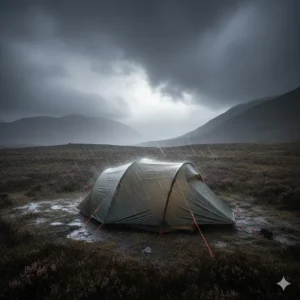
- Rock-solid stability in Scottish gales
- Spacious for genuine 2-person comfort
- Twin porches for cooking/storage
- Trail Magazine Best Value Award
❌ Cons:
- Premium pricing (£249-£275)
- Heavier than ultralight options
- Can feel cramped for tall couples with gear
Customer Verdict: “Sturdy, practical, well-priced. Excellent tent for wild camping in UK hills. Survived a Welsh winter storm that destroyed cheaper tents nearby.” – Live for the Outdoors, 2026
7. Vango Apex Compact 200 – Best for First-Time Wild Campers
For those making their first forays into Scottish wild camping, the Vango Apex Compact 200 (£60-£80) removes financial barriers whilst delivering surprisingly competent performance.
Key Specifications:
- Weight: Approximately 2.3kg
- Waterproof: 3000mm flysheet, 6000mm groundsheet
- Single-hoop tunnel design (quick setup)
Don’t expect premium materials or ultralight construction, but do expect a tent that’ll keep you dry and sheltered whilst you determine if wild camping is your passion. The tried-and-tested tunnel design is stable when properly guyed out, and the single-hoop construction means minimal faff during setup—ideal when you’re new to camping and possibly pitching in fading light.
UK reviewers consistently mention the Apex Compact represents exceptional value for occasional use. It’s the tent you buy for a summer of Scottish exploration, and if wild camping becomes an addiction (it will), you upgrade to something lighter. If it doesn’t, you’ve not spent a fortune finding out.
The groundsheet waterproofing (6000mm) exceeds what’s typically found at this price point, whilst the flysheet (3000mm) is adequate for most three-season Scottish conditions. Just avoid exposed winter ridges where upgrading to 4000mm+ rated flysheets becomes prudent.
✅ Pros:
- Exceptional value (£60-£80)
- Simple single-hoop setup
- High groundsheet waterproofing
- Perfect for testing wild camping
❌ Cons:
- Components feel budget-quality
- Limited space for two adults
- Not for hardcore four-season use
Customer Verdict: “Brilliant starter tent. Took it to various Scottish campsites before trying wild camping. Kept us dry, easy to pitch. Upgrade eventually, but this gets you started affordably.” – Live for the Outdoors buyer review
Understanding Scotland’s Wild Camping Laws
Scotland remains the UK’s wild camping paradise, thanks to the Land Reform (Scotland) Act 2003 which enshrines your right to responsible access across most unenclosed land.
What the Law Actually Means
Unlike England and Wales where wild camping is largely prohibited without landowner permission, Scotland grants you legal rights to camp on most unenclosed land—mountains, moorland, forests, and coastal areas. This isn’t carte blanche to pitch wherever you fancy, though. The Scottish Outdoor Access Code outlines your responsibilities:
You CAN camp:
- On unenclosed moorland and mountains
- In forests (except private commercial forestry during operations)
- Near lochs and rivers (200+ metres from buildings)
- For 2-3 nights maximum in one spot
You CANNOT camp:
- In enclosed fields with crops or livestock
- Within 200 metres of houses or buildings
- In certain Loch Lomond areas (permit required March-September)
The Loch Lomond Exception
Loch Lomond & The Trossachs National Park introduced camping management byelaws in 2017 following issues with irresponsible camping. Between March and September, certain popular lochside areas require camping permits (approximately £3-£8 per person per night). This isn’t the bureaucracy-lovers’ charter it might seem—permits fund waste management and ranger services, keeping these stunning areas accessible for everyone.
Scottish Weather: What Your Tent Must Handle
The Reality of Highland Weather
Scotland’s weather is famously unpredictable. I’ve experienced all four seasons in a single day on Ben Nevis—starting in brilliant sunshine, encountering snow squalls by lunchtime, enduring horizontal rain during descent, then finishing under clear evening skies. Your tent must cope with this schizophrenic climate.
Critical Weather Considerations
Wind Resistance Scottish mountains funnel winds into jets that can flatten inadequately designed tents. Look for:
- Hydrostatic Head ratings of 3000mm+ (flysheet)
- Low-profile designs that resist buffeting
- Geodesic or tunnel structures (not basic dome tents)
Waterproofing Scottish rain doesn’t so much fall as attack horizontally. Essential features:
- Factory-sealed seams (no DIY seam-sealing required)
- Bathtub-style groundsheets (5000mm+ HH)
- Full-coverage rainflies (no exposed areas)
Condensation Management Highland nights are often humid. Without proper ventilation, you’ll wake drenched in condensation—not ideal when temperatures hover around 5°C. Quality tents feature:
- Mesh panels for airflow
- Adjustable venting at peak and sides
- Adequate flysheet-to-inner clearance
The Midge Factor: Scotland’s Tiny Terrors
Understanding Scottish Midges
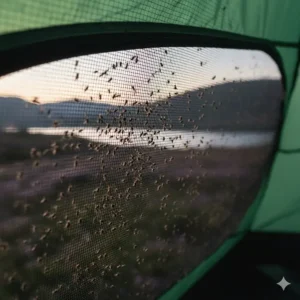
Between May and September, Culicoides impunctatus (the Highland midge) transforms Scotland’s stunning wilderness into an itchy hell if you’re unprepared. These tiny biting flies—smaller than a full stop—swarm in their millions, particularly on still, overcast evenings near water.
Tent Features for Midge Protection
Fine Mesh is Non-Negotiable Standard mosquito netting (16×16 mesh) is useless—midges laugh as they waltz through these gaping holes. You need:
- Minimum 20×30 mesh (600 holes per square inch)
- No-see-um netting on all doors and vents
- Intact zips (even 2mm gaps admit midges)
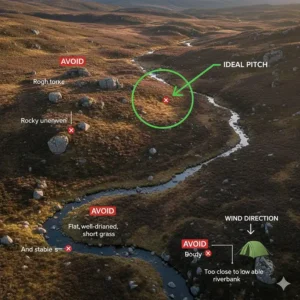
Pitching Strategy
- Choose breezy, elevated pitches (midges struggle in 7mph+ winds)
- Avoid camping near bogs, standing water, or dense vegetation
- Face tent doors away from prevailing evening winds
- Keep flysheet fully closed during dawn/dusk (peak midge hours)
The Cooking Dilemma Cooking inside your tent (even in the porch) risks carbon monoxide poisoning and fire. But cooking outside means becoming a midge buffet. Solutions:
- Cook during midday when midges are less active
- Use midge head nets whilst cooking
- Consider chemical warfare (DEET repellent or Smidge)
- Employ a portable camping stove in the porch with exceptional ventilation
Essential Features for Scottish Wild Camping Tents
Weight Considerations
The Ultralight Trade-off Tents under 1.5kg exist, but in Scotland’s harsh conditions, saving weight often sacrifices durability. For multi-day treks where every gramme matters, ultralight makes sense. For weekend adventures where you’re hiking 5-10 kilometres to your pitch, a robust 2.5kg tent provides better weather protection.
Footprint Size and Pitching
Rocky Scottish Terrain Scotland’s mountains are old, worn, and rocky. Finding flat, soil-rich pitches for pegging can be challenging. Freestanding tents (requiring minimal pegs) offer flexibility, though they’re typically heavier. Tunnel tents pack lighter but need solid pegging.
Quick Setup Time When weather deteriorates rapidly (standard in Scottish mountains), you need a tent you can pitch in under 10 minutes, ideally with flysheet and inner attaching together. Fumbling with complicated pole systems whilst horizontal rain soaks your gear isn’t character-building—it’s miserable.
Storage and Vestibule Space
Gear Management Scottish wild camping means carrying wet weather gear, spare clothing, cooking equipment, and food. Adequate vestibule space keeps this kit organised and dry. Two-person tents realistically accommodate one person plus gear comfortably; plan accordingly.
Wild Camping Gear Essentials for Scotland
Beyond Your Tent
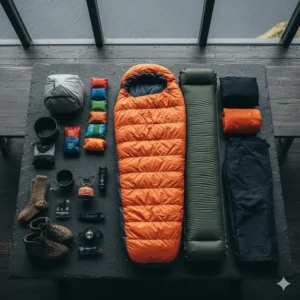
Sleeping System
- 3-season sleeping bag (comfort rating 0°C minimum)
- Sleeping mat with R-value 2.5+ (insulation from cold ground)
- Bivvy bag for additional weather protection (optional but valuable)
Navigation and Communication Scottish mountains are remote. GPS devices and offline maps are essential, alongside:
- Compass and paper maps (batteries die; GPS satellites don’t always work in deep valleys)
- Whistle for emergencies
- Headtorch with spare batteries
- Portable power bank for phone charging
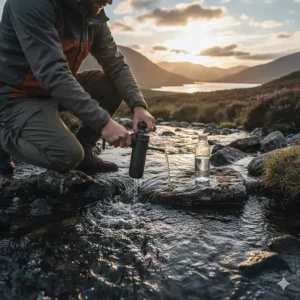
Cooking and Water
- Lightweight camping stove (avoid open fires—illegal in many areas)
- Water purification tablets or filter
- Collapsible water containers
- Insulated mug (hot drinks are mandatory for Scottish camping morale)
Best Wild Camping Locations in Scotland
Top Regions for Wild Camping
The Cairngorms Britain’s largest national park offers vast wilderness, from Glen Feshie’s ancient pinewoods to Loch Avon’s dramatic corries. Higher elevations provide wind that deters midges whilst offering stunning sunrise views across plateaus.
West Highland Way This 154-kilometre trail passes numerous wild camping opportunities, though popular spots near Loch Lomond require permits. The northern sections near Fort William provide more secluded pitches.
Knoydart Peninsula Accessible only by boat or a two-day hike, Knoydart represents true wilderness. Remote beaches and mountain bothies make this Scotland’s wildest camping destination—but prepare for challenging weather and midges.
Isle of Skye Dramatic landscapes and relatively accessible wild camping (though increasingly popular). The Cuillin ridge and northern peninsulas offer spectacular pitches, though expect wet, windy conditions.
How to Choose Your Perfect Scottish Wild Camping Tent
Step 1: Define Your Camping Style
Weekend Warrior Short trips (1-3 nights) where hiking distance is modest? Prioritise comfort and weather protection over weight. Budget £100-£200 for reliable performance.
Long-Distance Trekker Multi-day expeditions covering serious mileage? Every gramme matters. Invest £200+ in proven ultralight designs with excellent pack size.
Four-Season Adventurer Planning Scottish winter camping? You need bomb-proof construction, 4000mm+ waterproofing, and geodesic designs. Budget £250+ for year-round reliability.
Step 2: Assess Your Budget
Under £100: Entry-level tents (OEX Phoxx, Vango Apex) provide adequate performance for occasional use. Don’t expect premium materials or ultralight construction.
£100-£200: Mid-range options (Vango Banshee, Naturehike Cloud Up) balance weight, durability, and features. Best value for regular wild campers.
£200+: Premium tents (Wild Country Helm series) deliver exceptional Scottish weather performance and longevity. Investment-level purchases lasting 5+ years.
Step 3: Consider Your Group Size
Solo Campers: 1-person tents save weight and pack size. Wild Country Helm Compact 1 or Naturehike Cloud Up 1 are ideal.
Partnerships: True 2-person tents with adequate gear storage (Wild Country Helm Compact 2, Vango Banshee 200) prevent friction during multi-day trips.
Size Reality Check: “2-person” tents comfortably accommodate one person plus gear. For genuine two-person comfort with equipment, consider 3-person rated tents.
FAQ: Wild Camping Tents in Scotland
❓ What hydrostatic head rating do I need for Scottish wild camping?
❓ Can tents really keep out Scottish midges effectively?
❓ Is wild camping genuinely free everywhere in Scotland?
❓ What's the ideal tent weight for multi-day Scottish hiking trips?
❓ Do I need a four-season tent for summer Scottish wild camping?
Conclusion: Your Scottish Wild Camping Adventure Awaits
Scotland’s wild camping opportunities represent something increasingly rare in our crowded world—genuine freedom to explore stunning landscapes with minimal bureaucracy. Whether you’re planning your first tentative overnight on the West Highland Way or plotting an epic multi-week Munro-bagging expedition, choosing the right tent transforms these adventures from endurance tests into cherished memories.
The seven tents reviewed here span every budget and camping style, from the exceptional value OEX Phoxx 2 II (£75-£84) through to the premium Wild Country Helm Compact 2 (£249-£275). Each has proven itself in Scottish conditions—the ultimate testing ground for camping gear.
Remember that your tent is just one component of successful Scottish wild camping. Combine it with proper planning, respect for the Scottish Outdoor Access Code, and realistic expectations about weather, and you’ll experience some of Britain’s finest outdoor adventures. Those horizontal rain assaults and midge swarms become amusing stories rather than ordeals when you’re sheltering in a quality tent with a dram of whisky, watching storms rage across Highland peaks.
So choose your tent, pack your rucksack, and discover why wild camping in Scotland creates addicts rather than casual enthusiasts. The mountains are calling—it’s time to answer.
Recommended for You
- 7 Best Winter Camping Tents UK 2026
- Best Beach Tent UK Picks for 2026: Expert Sun Protection Guide
- 7 Best Festival Tent UK 2026
Disclaimer: This article contains affiliate links. If you purchase products through these links, we may earn a small commission at no additional cost to you. Prices shown are approximate and may vary.
✨ Found this helpful? Share it with your mates! 💬🤗
