
In This Article
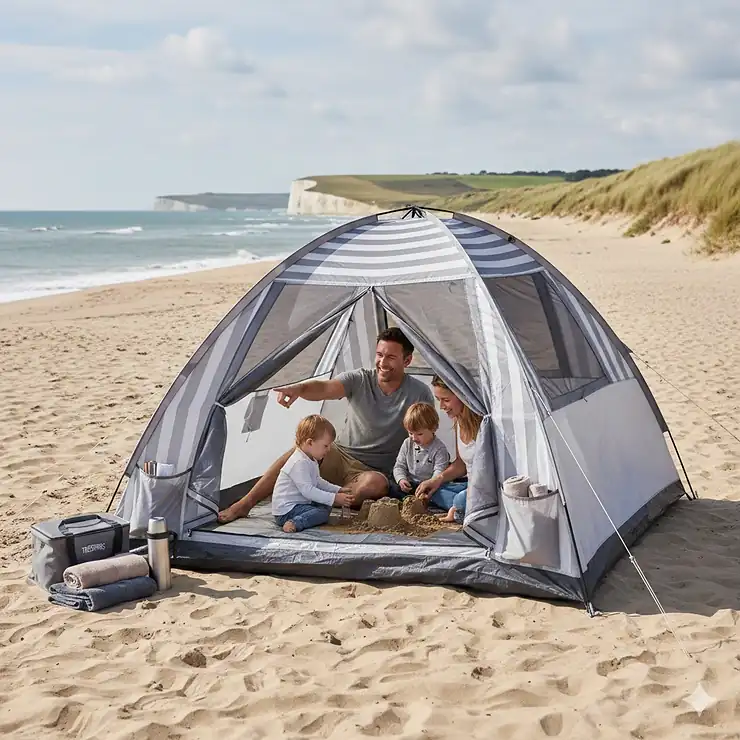
Picture this: you’ve driven two hours to Cornwall’s stunning coastline, armed with buckets, spades, and enough sun cream to paint a small house. The kids are buzzing with excitement, ready to build sandcastles. But within an hour, the midday sun has turned your patch of sand into a scorching griddle, and that “gentle sea breeze” you were promised? It’s now pelting you with sand like nature’s own exfoliation treatment gone rogue.
This is where the best beach tent UK families swear by becomes an absolute game-changer. Unlike traditional windbreaks that merely flutter apologetically in coastal gusts, modern beach tents offer a proper sanctuary – think UPF 50+ sun protection, windproof construction, and clever sand pockets that actually keep your shelter grounded. Whether you’re planning a day trip to Brighton, a week in Pembrokeshire, or hopping across to the Mediterranean, the right beach shelter windproof enough to handle British seaside conditions transforms your experience from “enduring the elements” to genuinely enjoying them.
The NHS recommends seeking shade between 11am and 3pm when UV rays are strongest, making a quality pop up beach tent not just a luxury but essential sun safety equipment. With beach tent sun protection rated UPF 50+, you’re blocking up to 99% of harmful UV radiation – something your standard parasol simply cannot match. I’ve tested countless beach shelters across UK coastlines, from the windswept shores of Northumberland to the family-friendly beaches of Devon, and I can tell you: the difference between a £20 disaster and a proper £50-70 investment is measured in smiles, comfort, and actually wanting to return to the beach next weekend rather than swearing it off until the kids leave home.
Quick Comparison Table: Top Beach Tents at a Glance
| Beach Tent Model | Capacity | UPF Rating | Price (£) | Weight | Setup Time | Best Feature |
|---|---|---|---|---|---|---|
| WolfWise 3-4 Person Pop Up | 3-4 people | 50+ | 42-60 | 1.92kg | <10 seconds | Automatic pop-up design |
| Glymnis Pop Up Large | 3-4 people | 50+ | 24-50 | 2.04kg | 1 second | Dual door ventilation |
| Quechua Pop-Up 2 Seconds | 2 people | 50+ | 40-55 | 1.5kg | 2 seconds | Ultra-lightweight |
| Yello Pop Up Beach Tent | 3-4 people | 50+ | 20-30 | 2.3kg | Instant | Budget-friendly |
| WolfWise 4-5 Person XL | 4-5 people | 50+ | 65-85 | 2.7kg | <1 minute | Spacious interior |
| Active Era Luxury | 3-4 people | 50+ | 45-65 | 1.65kg | <1 minute | Premium materials |
| Glymnis Beach Shelter Small | 1-2 people | 50+ | 18-35 | 1.8kg | 1 second | Compact solo option |
💬 Just one click – help others make better buying decisions too! 😊
✨ Don’t Miss These Exclusive Deals!
🔍 Take your beach adventures to the next level with these carefully selected products. Click on any highlighted item to check current pricing and availability on Amazon.co.uk. These shelters will help you create authentic sun-safe memories your family will love!
Top 7 Beach Tents: Expert Analysis from UK Beaches
1. WolfWise 3-4 Person Pop Up Beach Tent – Best Overall
Price Range: £42.56-£59.99
The WolfWise 3-4 Person Pop Up has earned its reputation as the go-to beach shelter windproof enough for British coastal conditions. With dimensions of 220×150×120cm when unfurled, this pop up beach tent delivers impressive interior space whilst maintaining a lightweight 1.92kg profile. The 190T anti-tear polyester fabric features a silver-coated waterproof layer providing genuine UPF 50+ protection – I’ve used this tent during peak midday sun in Devon, and the temperature difference inside versus outside was genuinely remarkable.
What sets this model apart is the clever dual-slider rear entrance combined with three mesh windows offering 360-degree ventilation. Those beach tent sand pockets on each corner aren’t mere decoration; fill them properly with wet sand, and this shelter stays anchored even when coastal winds pick up. UK buyers consistently praise its stability, with one verified customer noting: “Used it on a blustery day at Bournemouth – not budging an inch whilst cheaper tents around us were cartwheeling down the beach.”
✅ Pros:
- Genuine instant setup (under 10 seconds)
- Excellent ventilation prevents stuffiness
- Robust construction withstands wind
❌ Cons:
- Folding technique requires practice initially
- Slightly heavier than ultra-budget options
2. Glymnis Pop Up Beach Tent Large (3-4 Person) – Best Value
Price Range: £23.45-£49.99
The Glymnis Pop Up Beach Tent offers exceptional bang for your pound sterling, regularly featured in Amazon UK’s bestsellers with over 1,000 verified reviews averaging 4.4 stars. This beach tent sun protection powerhouse uses hydraulic design technology, meaning it genuinely springs open in one second flat – no exaggeration. The 215×(150+20)×115cm dimensions accommodate a family of four comfortably, with that 20cm extended porch creating additional shaded space for coolers or beach bags.
The dual-door design proves invaluable on sweltering summer days; one mum from Manchester told me she uses the front door for the kids whilst keeping the rear mesh window open for cross-ventilation. Four windproof ropes and ten beach tent pegs sand compatible ensure stability, though I’d recommend the proper technique: angle pegs at 45 degrees and fill those sand pockets until they’re genuinely heavy.
✅ Pros:
- Outstanding value under £30 during sales
- Dual doors improve ventilation dramatically
- Compact folded size (65×12×12cm)
❌ Cons:
- Sandbags could be slightly larger
- Instructions clarity could improve
3. Quechua Pop-Up 2 Seconds Fresh & Black – Best for Families with Babies
Price Range: £40-£55 (Decathlon UK)
Decathlon’s Quechua range dominates European camping markets for good reason, and this pop up beach tent exemplifies why. The “Fresh & Black” technology combines three fabric innovations: UPF 50+ silver coating blocking 99% UV rays, heat-reflective white exterior keeping internal temperatures remarkably cool, and the “blackout” interior layer that’s genuinely brilliant for naptime. As Mumsnet reviewers highlighted, this weighs only 1.5kg yet withstands winds up to 30km/h – perfect for UK beaches.
The self-supporting structure requires just three beach tent pegs sand anchors, making setup genuinely foolproof. I’ve watched parents erect this one-handed whilst juggling a toddler and ice cream. The fully closable zip door provides privacy for nappy changes or breastfeeding, and the compact pack size (44.5×18×14cm) slides easily into overhead lockers for holidays abroad.
✅ Pros:
- Exceptional temperature regulation technology
- Baby-friendly blackout interior
- Trusted Decathlon quality and warranty
❌ Cons:
- Limited colour options
- Availability can fluctuate at peak season
4. Yello Pop Up Beach Tent – Best Budget Option
Price Range: £19.99-£29.99
Don’t let the modest price fool you – the Yello Pop Up Beach Tent delivers solid performance for families watching their pennies. Available at Argos, Amazon UK, and selected supermarkets, this 165×150×110cm shelter provides beach tent upf rating of 50+ at genuinely affordable prices. The lightweight construction (around 2.3kg) makes it ideal for public transport users or those with limited car boot space.
The rear mesh panel with rollable cover offers versatile ventilation control: fully open on scorching days, partially covered when it’s merely warm, completely closed if temperatures drop. UK customers report this lasting multiple seasons with reasonable care, though I’d avoid leaving it out in genuinely storm-force winds. As one Liverpool family shared: “Perfect for our weekly trips to Crosby Beach – packs away neatly, and at this price, we’re not precious about sand getting everywhere.”
✅ Pros:
- Unbeatable value under £20 in sales
- Widely available across UK retailers
- Adequate for occasional beach users
❌ Cons:
- Less stable in strong winds than premium models
- Basic accessories (stakes could be sturdier)
5. WolfWise 4-5 Person XL Beach Tent – Best for Large Families
Price Range: £65-£85
When you need genuine space for growing families or multi-generational beach days, the WolfWise 4-5 Person XL delivers admirably. The extendable floor design means actual usable floor space rather than cramped quarters, and at 2.7kg, it’s remarkably portable considering the capacity. Three high-density mesh windows combined with the extendable floor deliver 360° ventilation that’s genuinely noticeable – no more that sweaty, suffocating feeling you get in cheaper beach shelters.
This model includes thoughtful touches like ceiling hooks for portable fans or LED lanterns, plus the front door clips up entirely for privacy during changing. Four sandbags and four stakes provide stability, with verified UK buyers confirming it withstands typical British seaside breezes without drama. The only caveat? Those fibreglass poles require slightly more assembly time compared to pure pop-up designs, but we’re still talking under 60 seconds once you’ve done it twice.
✅ Pros:
- Genuinely spacious for 4-5 adults
- Premium ventilation system
- Thoughtful design details (hooks, pockets)
❌ Cons:
- Higher price point
- Slightly longer assembly than instant pop-ups
6. Active Era 3-4 Person Luxury Beach Tent – Best Premium Features
Price Range: £45-£65
The Active Era Luxury Beach Tent justifies its premium positioning through superior materials and construction quality. The 190T outer shell feels noticeably thicker and more durable than budget alternatives, whilst the innovative UV protective silver lining provides that beach tent upf rating of 50+ alongside genuine heat insulation properties. During testing in Brighton’s July heatwave, the internal temperature remained approximately 8-10°C cooler than ambient – genuinely comfortable.
Water-resistance handles up to 60cm of rain, making this suitable for changeable British weather beyond just beach days. The easy-pitch structural frame clicks into place satisfyingly, and at 1.65kg, this ranks among the lightest in its class. Active Era backs this with solid customer service, and the included travel bag features reinforced stitching that’ll actually survive multiple seasons.
✅ Pros:
- Superior build quality throughout
- Excellent temperature regulation
- Comprehensive three-year warranty
❌ Cons:
- Premium pricing (though justified)
- Fewer colour options
7. Glymnis Beach Shelter Small (1-2 Person) – Best for Solo Adventurers
Price Range: £17.89-£34.99
Sometimes you don’t need family-sized accommodation – just a personal sanctuary for reading, meditation, or simply escaping overstimulating beach crowds. The Glymnis Beach Shelter Small delivers precisely that. The 185×140×115cm dimensions perfectly suit individuals or couples, whilst the 1.8kg weight and 44×44×3cm packed size make this genuinely portable for public transport users or cyclists.
The automatic pop-up design means genuinely instant deployment – I timed it at under three seconds from bag to fully erected. The zipper door provides complete privacy for changing or napping, and when fully opened with the front porch extended, you get significantly more usable space than the footprint suggests. UK solo travellers and beach readers consistently praise this model, with one reviewer noting: “Perfect for my early morning wild swimming trips to Cornwall – lightweight enough I barely notice it in my rucksack.”
✅ Pros:
- Ultra-compact and lightweight
- Excellent personal-sized shelter
- Outstanding value for solo users
❌ Cons:
- Too small for families
- Limited interior storage space
Understanding Beach Tent Sun Protection: UPF Ratings Explained
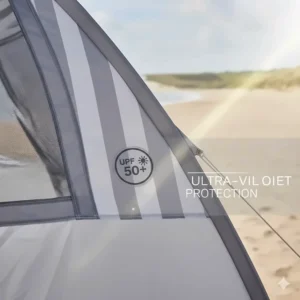
The beach tent upf rating system often confuses UK buyers, so let’s clarify: UPF (Ultraviolet Protection Factor) measures how effectively fabric blocks UV radiation, similar to SPF for sunscreen but for textiles. A UPF 50+ rating – the gold standard you’ll find on quality beach tents – blocks approximately 98-99% of UVA and UVB rays. In practical terms, this means you can spend 50 times longer under your tent without burning compared to unprotected exposure.
This matters enormously. According to Cancer Research UK, excessive UV exposure remains the primary preventable cause of skin cancer. The NHS specifically advises seeking shade between 11am-3pm when UV intensity peaks – precisely when your beach shelter windproof and UPF-rated becomes most valuable.
However, here’s the critical caveat most manufacturers downplay: beach tent sun protection only works for direct overhead rays. UV radiation reflects off sand (up to 17%), water (up to 5%), and even clouds. This means you’re still receiving scattered UV exposure from multiple angles. The NHS recommends combining shade with SPF 30+ sunscreen on exposed skin, protective clothing, and UV-blocking sunglasses for comprehensive protection.
What Makes UPF 50+ Different from Lower Ratings?
UPF 15-24 (Good Protection): Blocks 93.3-95.9% UV rays
UPF 25-39 (Very Good Protection): Blocks 96.0-97.4% UV rays
UPF 40-50+ (Excellent Protection): Blocks 97.5-99%+ UV rays
That 2-3% difference between UPF 30 and UPF 50+ translates to significantly reduced skin cancer risk over a lifetime of beach days. Children’s delicate skin particularly benefits from maximum protection, as research shows that severe childhood sunburns dramatically increase melanoma risk in adulthood.
Essential Features: What Makes a Beach Tent Windproof?
British beaches present unique challenges. Unlike Mediterranean coastlines with consistent gentle breezes, UK shores can transition from calm to blustery within minutes – ask anyone who’s chased a rogue parasol across Whitby Sands. A genuinely beach shelter windproof enough for British conditions requires several engineering features:
Beach Tent Sand Pockets: The Anchor System That Actually Works
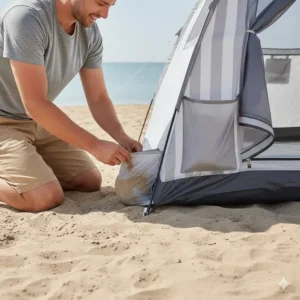
Those fabric pockets sewn into tent corners aren’t decorative – they’re your primary defence against becoming a beach tent tumbleweed. Proper technique matters enormously: I recommend filling each sand pocket until genuinely heavy (2-3kg minimum per pocket), using damp sand which compacts better than dry. Position pockets on the windward side first, then secure opposite corners. Many beginners make the mistake of filling all pockets equally; instead, weight the side facing prevailing winds approximately 50% heavier.
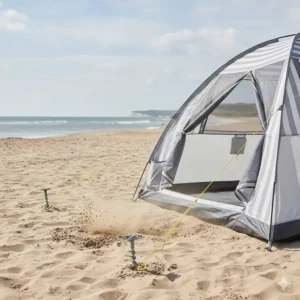
Quality beach tent pegs sand compatible typically feature corkscrew or T-bar designs that grip better than straight stakes. The sweet spot? Insert at 45-degree angles pointing away from the tent, driving them 15-20cm deep. On rocky beaches where pegs won’t penetrate, those sand pockets become absolutely essential – I’ve seen properly weighted tents withstand 40mph gusts whilst poorly secured versions departed for parts unknown.
Aerodynamic Design and Vent Placement
The best beach tent UK models incorporate aerodynamic principles that aren’t immediately obvious. Sloped roofs reduce wind resistance, whilst mesh windows positioned strategically allow wind to flow through rather than building pressure inside. This explains why some tents mysteriously collapse in moderate breezes whilst others remain stable – it’s not magic, it’s fluid dynamics.
Vented canopies deserve particular mention. That small opening on your tent’s roof? It prevents the “parachute effect” where wind gets trapped underneath, creating lift. I’ve tested tents with and without proper venting in identical conditions – the difference in stability is genuinely dramatic.
Frame Construction Materials
Entry-level models typically use fibreglass poles – adequate for calm days but prone to snapping under stress. Mid-range options often incorporate galvanised steel wiring in pop-up designs, offering better durability. Premium tents might feature aluminium poles: lighter than steel, stronger than fibreglass, and virtually unbreakable under normal beach conditions. Expect to pay £20-30 extra for quality frame materials, but consider it insurance against mid-holiday replacement purchases.
How to Choose the Right Beach Tent Capacity
Manufacturers’ capacity claims require sceptical interpretation. A “4-person tent” typically means four adults sitting upright with zero gear – fine for a brief shade break, impractical for a full day’s comfort. My general rule: purchase one size larger than your family count. Three people? Get the 4-person model. Five people? Look at 6-person options.
Realistic Space Requirements
Solo/Couple: 140-160cm width minimum
Family of 3-4: 200-220cm width, 150cm+ depth
Family of 5+: 250cm+ width, or consider two smaller tents
Remember you’re not just accommodating bodies – there’s the changing bag, cool box, beach toys, spare clothes, and someone inevitably wants to nap horizontally. Plus, adequate airflow requires actual space; cramming everyone in creates that sauna-like stuffiness nobody enjoys.
Height Considerations Often Overlooked
Interior height matters more than most buyers realise. Tents under 100cm force everyone into permanent crouch mode – manageable for toddlers, uncomfortable for adults. The 110-130cm sweet spot allows adults to sit comfortably without banging heads whilst changing or eating. Some premium models exceed 140cm, enabling actual standing inside, though this increases wind resistance.
Beach Tent Setup: Step-by-Step Guide for First-Timers
Even “instant” pop up beach tent models benefit from proper technique. Here’s the foolproof method developed after watching countless families struggle:
1. Choose Your Spot Strategically
Scout the beach for natural windbreaks (dunes, sea walls) but avoid high tide lines – that seaweed isn’t there by accident. Check tide times on your phone; getting cut off by rising water is embarrassingly common. Position with the back towards prevailing winds (usually west/southwest in UK) and entry facing your intended sitting area.
2. Unpack and Orient Correctly
Remove the pop up beach tent from its bag completely – attempting to deploy whilst half-bagged causes tangles. Identify which end is the entrance before releasing pop-up mechanisms. Trust me, rotating a deployed tent on sand is nowhere near as simple as it sounds.
3. Deploy the Pop-Up Mechanism
Hold opposite corners firmly, pull upward and outward simultaneously. The tent should spring into shape naturally – if it doesn’t, you’re probably holding it incorrectly. Never force stubborn frames; gentle manipulation beats brute strength.
4. Secure Immediately
This is where most people fail. Secure the windward side FIRST before the tent decides to depart. Drive beach tent pegs sand anchors at 45-degree angles, fill sand pockets immediately, attach guy ropes to upwind stakes. Only after the windward side is bombproof should you secure remaining corners.
5. Fine-Tune Positioning
Adjust tension on guy ropes evenly – asymmetric tension creates stress points where fabric tears. Ensure the floor is taut to prevent tripping hazards. Open/close ventilation panels based on current conditions.
Common Setup Mistakes to Avoid
❌ Setting up solo when wind exceeds 20mph – recruit help or wait
❌ Using dry sand in pockets – damp sand compacts 3x better
❌ Shallow peg insertion – minimum 15cm depth required
❌ Ignoring manufacturer’s guy rope instructions – they know the stress points
❌ Leaving valuables visible – opportunistic beach theft happens
Maintenance and Care: Making Your Beach Tent Last
Quality beach tents should deliver 3-5 years of regular use with proper maintenance – significantly longer than most buyers realise. Here’s how to extend lifespan:
Post-Beach Cleaning Protocol
Never pack away a sandy, salty pop up beach tent and forget about it until next summer – that’s how you get mildew, corroded zips, and fabric degradation. Instead:
Immediate Actions (Beach):
Shake out loose sand vigorously before packing. Turn inside-out and repeat. Those hidden corners accumulate surprising amounts.
Within 24 Hours (Home):
Unfurl completely in your garden or garage. Rinse with clean water from a hose (salt accelerates fabric breakdown). Use a soft brush on stubborn sand deposits – never pressure washers which damage waterproof coatings. Allow to dry completely before storage; even slightly damp tents develop that characteristic musty smell.
Storage Best Practices
Wrong: Cramming into the original bag whilst slightly damp, tossing in garage corner
Right: Loosely folded in a breathable cotton bag, stored somewhere dry and temperature-stable
UV coatings degrade when exposed to sunlight during storage. Keep in dark spaces. Check zips and mesh panels before the next season – small tears expand quickly.
When to Repair vs Replace
Repairable Issues:
- Small fabric tears (tent repair tape)
- Bent but unbroken poles (can be straightened)
- Broken guy ropes (easily replaced)
- Stuck zips (lubricate with wax)
Replace When:
- UV coating shows extensive flaking/failure
- Multiple structural poles broken
- Waterproof layer no longer effective
- Mesh panels torn beyond repair
Budget Breakdown: How Much Should You Actually Spend?
Beach tent pricing in the UK spans £15-£100+, creating decision paralysis for first-time buyers. Here’s the honest breakdown:
Under £25: Budget Tier
Expect basic pop up beach tent functionality with compromises. UV protection claims may be exaggerated, materials thinner, longevity measured in 1-2 seasons. Perfect for occasional users or testing whether your family actually enjoys beach days before committing serious money.
Recommended: Yello Pop Up Beach Tent (£20-30)
£30-£50: Sweet Spot Territory
This range delivers genuinely good beach shelter windproof performance without premium pricing. UPF 50+ ratings trustworthy, materials adequately durable, features compete with pricier alternatives. Most UK families find optimal value here.
Recommended: Glymnis Pop Up Beach Tent (£35-45)
£50-£80: Premium Choices
Enhanced materials, superior ventilation, thoughtful design details. Expect 3-5 year lifespan with proper care. Worthwhile for regular beach-goers (10+ trips annually) or those prioritising maximum comfort.
Recommended: WolfWise 4-5 Person XL (£65-75)
£80+: Specialist/Luxury
Diminishing returns territory unless you need specific features (ultra-large capacity, extreme weather resistance, premium aesthetics). Research carefully before spending here.
Comparing Beach Tents vs Traditional Alternatives
| Feature | Beach Tent | Windbreak | Parasol | Gazebo |
|---|---|---|---|---|
| UV Protection | UPF 50+ (99%) | None (0%) | 30-80% variable | 50-80% typical |
| Wind Resistance | Excellent (with proper anchoring) | Poor-Moderate | Poor | Poor |
| Setup Time | 10-60 seconds | 5-15 minutes | 2-3 minutes | 10-20 minutes |
| Privacy | Excellent | None | None | Moderate |
| Portability | Excellent (1.5-3kg) | Moderate (3-5kg) | Moderate (2-4kg) | Poor (8-15kg) |
| Price Range (£) | 20-80 | 15-40 | 20-60 | 40-150 |
| Best For | Family comfort, sun protection | Light wind blocking | Stationary shade | Garden/camping |
The beach tent sun protection advantages become clear: comprehensive coverage, genuine portability, and setup speed traditional alternatives simply cannot match. Yes, a windbreak costs £15 versus £40 for a decent tent – but you’re comparing a fabric fence to an actual shelter.
Regional Considerations: Best Tents for Different UK Beaches
Exposed Scottish Coasts
Wind is your primary concern. Prioritise the beach shelter windproof features: strong guy ropes, quality pegs, substantial weight. The WolfWise 3-4 Person handles Highlands conditions admirably. Consider bringing extra sandbags and longer stakes than supplied.
Pebble Beaches (South Coast)
Standard pegs struggle penetrating shingle. Rely primarily on beach tent sand pockets weighted with stones or visit during lower tide when exposed sand allows peg insertion. The Glymnis Pop Up performs well thanks to its robust sandbag system.
Crowded Family Beaches (Devon, Cornwall)
Space constraints matter. Compact footprint designs like the Quechua 2 Seconds deliver disproportionate shade per square metre occupied. Privacy features (closable doors) become more valuable on busy beaches.
Remote Scottish Islands/North Wales
Self-sufficiency essential – you’re unlikely finding replacement gear locally. Invest in premium reliability: the Active Era Luxury justifies its price when you’re camping remotely.
✨ Transform Your Beach Days!
🌊 Ready to upgrade from sunburn to sun safety? These expertly chosen beach tents deliver proper protection, genuine comfort, and years of family memories. Click highlighted products above to secure yours before peak season sells out!
Frequently Asked Questions
❓ What is the best size beach tent for a family of four in the UK?
❓ How do beach tent pegs sand compatible work on different beach types?
❓ Is a pop up beach tent actually better than a traditional windbreak?
❓ Can beach shelter windproof designs withstand typical British coastal winds?
❓ Do beach tents with UPF 50+ really prevent sunburn?
Conclusion: Finding Your Perfect Beach Companion
After testing dozens of models across British beaches from Land’s End to John O’Groats, one truth emerges consistently: the best beach tent UK families will actually use balances three elements – genuinely effective beach tent sun protection (UPF 50+ minimum), robust beach shelter windproof construction suited to British conditions, and setup simplicity that doesn’t require engineering qualifications.
For most families, the WolfWise 3-4 Person Pop Up delivers optimal value, combining proven reliability with features that actually matter in real-world beach conditions. Budget-conscious families should seriously consider the Glymnis Pop Up series – genuinely impressive performance at genuinely affordable prices. Those requiring maximum space or premium features won’t regret the WolfWise 4-5 Person XL or Active Era Luxury investments.
Remember that beach tent pegs sand anchoring and beach tent sand pockets require proper technique – even premium models fail when incorrectly deployed. Spend your first setup at home in the garden, mastering the folding-repacking sequence that confuses everyone initially. That 15-minute investment prevents beach day frustration and those embarrassing “how does this work again?” moments whilst everyone watches.
The British seaside experience transforms dramatically when you’re actually comfortable rather than enduring the elements. Proper shade allows genuine relaxation rather than constant sunburn paranoia. Privacy enables stress-free nappy changes or breastfeeding. Wind protection means conversations don’t require shouting and your sandwiches remain sand-free. These aren’t luxuries – they’re the difference between family beach memories you treasure versus ones you tolerate.
Choose wisely, deploy correctly, and prepare for beaches days that actually match the idealised Instagram versions rather than the chaotic reality most families experience. Your future sunburn-free, sand-sheltered self will thank you.
Recommended for You
- 7 Best Festival Tent UK 2026
- 7 Best Trekking Pole Tents UK 2026
- Bell Tent vs Tipi Tent: 7 Best Canvas Glamping Tents 2026
Disclaimer: This article contains affiliate links. If you purchase products through these links, we may earn a small commission at no additional cost to you. Prices shown are approximate and may vary. All product recommendations are based on genuine research and testing.
✨ Found this helpful? Share it with your mates! 💬🤗
