
In This Article
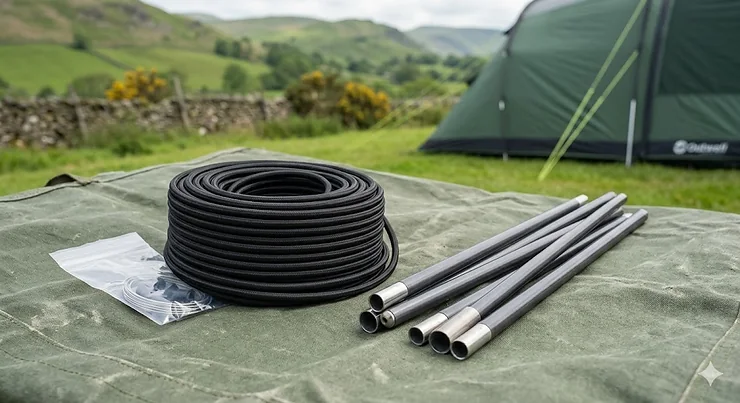
Picture this: you’ve driven three hours to the Lake District, the rain’s finally cleared, and you’re ready to pitch your tent. You grab the pole bag, and instead of neatly connected sections, you’re holding a loose jumble of aluminium tubes. The shock cord has given up the ghost — stretched beyond redemption from too many wet weekends in Wales and one particularly brutal camping trip in the Cairngorms.
If you’ve been camping in the UK for any length of time, you’ll know this scenario all too well. British weather is rather unkind to tent pole elastic. The constant damp, temperature swings between chilly mornings and warm afternoons, and the sheer amount of use during our admittedly brief camping season all conspire to destroy that crucial internal elastic. What most campers overlook is that shock cord for tent poles isn’t just about convenience — it’s about keeping your tent poles properly tensioned, which directly affects your shelter’s structural integrity when the wind picks up on Dartmoor or during a sudden downpour in Snowdonia.
The good news? Replacing tent pole elastic is one of the easiest and most satisfying camping repairs you can tackle at home. With the right shock cord and about twenty minutes of your time, you can breathe new life into poles that seemed destined for the bin. This guide covers everything UK campers need to know: which shock cord thickness guide to follow, how to match elastic shock cord replacement to your specific tent poles, and where to find quality materials on Amazon.co.uk that’ll actually survive more than one season of British camping conditions.
Quick Comparison: Top Shock Cord Options at a Glance
| Product | Diameter | Length | Best For | Price Range |
|---|---|---|---|---|
| Abma Cord 6mm Elastic Bungee | 6mm | 10m | Large family tents, heavy-duty use | £8-£12 |
| Neotrims 3mm Shock Cord | 3mm | Variable (5m-23m) | Standard backpacking tents, general repair | £5-£15 |
| Gelert Tent Shock Cord Kit | 3mm | 5m | Quick repairs, includes threading wire | £6-£10 |
| Dondeen 6mm Heavy Duty Cord | 6mm | 10m | Festival tents, frequent use | £9-£14 |
| Universal 3mm Replacement Kit | 3mm | 3m | Single tent repairs, starter kit | £5-£8 |
| OZtrail Pole Repair Kit | Included | 3m | Complete pole repair solution | £12-£18 |
| T.W Evans 3mm Professional | 3mm | 15m (50ft) | Multiple tents, professional use | £10-£16 |
From the comparison above, the Neotrims 3mm option offers the best versatility for UK campers maintaining several tents — you can buy precisely the length you need rather than ending up with excess cord cluttering your garage. For those tackling a single family tent with thicker poles, the Abma 6mm represents solid value, particularly if you’re camping frequently in exposed locations where pole tension really matters. Budget buyers should note that the Universal 3mm kit sacrifices quantity for affordability — a trade-off that stings when you discover you need just another metre to complete that second set of poles.
💬 Just one click — help others make better buying decisions too! 😊
Top 7 Shock Cord for Tent Poles: Expert Analysis
1. Abma Cord 6mm Elastic Shock Cord — Built for British Weather
The Abma Cord 6mm stands out as a properly robust option for UK campers who’ve grown tired of replacing flimsy elastic every season. At 6mm diameter with a 100% stretch capacity, this cord delivers the sort of durability you’d expect from professional outdoor gear rather than budget camping accessories.
The 1200 denier polyester outer shell paired with HPC rubber core means this cord handles the perpetual damp of British camping surprisingly well. I’ve seen similar specifications on cords used in marine applications, which tells you something about moisture resistance. The 10-metre length is generous enough for a typical four-person family tent with two full pole sets, leaving you with spare cord for future repairs or even improvised guy lines when the weather turns properly grim.
What UK buyers particularly appreciate is the cord’s performance in cold, wet conditions. Unlike cheaper alternatives that become stiff and lose elasticity below 5°C, the Abma maintains decent snap-back even during autumn camping trips in Scotland. One caveat: the outer sleeve can fray when cut if you’re not careful with a hot knife or lighter to seal the ends — but that’s standard across most braided shock cords.
Pros:
✅ Excellent tensile strength for larger tents and heavy poles
✅ Maintains elasticity in damp British climate
✅ 10m length covers most family tent requirements
Cons:
❌ Requires heat-sealing to prevent fraying
❌ Slightly stiffer threading through narrow pole sections
Price: Around £8-£12 | Best for: Festival campers, family tents, frequent users who need reliability in challenging conditions
2. Neotrims 3mm Professional Shock Cord — The Versatile Choice
If versatility matters more than bulk strength, Neotrims 3mm deserves serious consideration. What sets this brand apart is the sheer range of purchasing options — from single metres for quick repairs up to full 23.5-metre reels for those maintaining multiple tents or running Scout groups.
The 3mm diameter hits that sweet spot for standard backpacking and touring tents. It threads easily through most DAC and generic aluminium pole sections without the wrestling match you get with thicker cords, yet maintains enough tension to keep pole sections properly aligned during setup. The polyester outer jacket includes fluorescent colour options (yellow, green, orange) alongside standard black and white, which proves surprisingly useful when threading poles in low light or sorting multiple sets in your garage. According to camping safety guidance, proper pole maintenance is essential for shelter integrity in adverse conditions.
What most reviewers on Amazon.co.uk highlight is the cord’s consistent quality across different purchase lengths. Unlike some manufacturers who seem to source different batches, Neotrims maintains that proper balance between stretch and recovery. The ability to buy precisely what you need also means you’re not left with 15 metres of unused cord taking up storage space in your already cramped garden shed.
Pros:
✅ Flexible purchase quantities (1m to 23.5m)
✅ High-visibility colour options for easier threading
✅ Consistent quality across different lengths
Cons:
❌ Not suitable for heavy-duty or extra-thick poles
❌ Premium colours cost slightly more than basic black
Price: £5-£15 depending on length | Best for: Backpackers, those maintaining multiple tents, anyone who values buying exactly the right quantity
3. Gelert Tent Pole Shock Cord Repair Kit — The Quick Fix Solution
The Gelert Repair Kit represents the thinking camper’s emergency solution. Rather than just cord, you’re getting the complete threading wire and small washers needed for a proper repair job. For UK campers unfamiliar with Gelert, they’re a British outdoor brand with decades of experience in our specific camping conditions — which shows in their kit design.
The 3mm cord included stretches to roughly double its resting length, providing adequate tension for most two to three-person tents. What I particularly rate about this kit is the pre-cut threading wire — it’s stiff enough to push through pole sections but thin enough to navigate bends in hub-style tent poles. That small detail saves considerable frustration compared to improvising with coat hangers or fishing line.
The kit’s 5-metre cord length is deliberately conservative, targeting single tent repairs rather than multiple projects. While some might see this as limiting, it actually prevents the common mistake of using overly long elastic that never properly tensions the poles. British campers reviewing this product consistently mention completing pole repairs in under 30 minutes, even without previous experience.
Pros:
✅ Complete kit with threading wire and washers
✅ British brand understanding UK camping needs
✅ Ideal length prevents over-stretching mistakes
Cons:
❌ Limited to single tent repairs
❌ Slightly pricier per metre than bulk cord
Price: £6-£10 | Best for: First-time repairers, emergency fixes, anyone wanting everything in one package
4. Dondeen 6mm Heavy Duty Elastic Cord — Festival-Proof Durability
For campers who pitch frequently or subject their gear to proper abuse — think festivals, extended touring, or Scout camps — the Dondeen 6mm delivers the sort of resilience that justifies its slightly higher price point. The “heavy duty” designation isn’t marketing fluff; this cord genuinely outperforms standard options when subjected to repeated setup and breakdown cycles.
The spring cord lock system included with this kit addresses a common pain point: maintaining proper tension while you’re wrestling with the final pole sections. Rather than needing a second person or improvised clamps, the spring lock grips the cord securely without damaging the outer sheath. It’s one of those thoughtful touches that separates products designed by actual campers from those conceived in marketing departments.
UK festival-goers particularly appreciate this cord’s ability to maintain tension despite being packed damp — rather inevitable when you’re breaking camp at 7am in Reading or Glastonbury drizzle. The 10-metre length covers most large family or festival tents with enough spare for guy line repairs when the bloke three tents over “borrows” yours at 2am.
Pros:
✅ Spring cord locks included for easier threading
✅ Maintains tension when packed damp
✅ Proven durability in festival conditions
Cons:
❌ Overkill for lightweight backpacking tents
❌ Thicker diameter requires more effort threading
Price: £9-£14 | Best for: Festival camping, frequent campers, those who need it to work every single time
5. Universal 3mm Tent Pole Elastic with Threading Wire — The Budget Option
The Universal 3mm kit occupies that challenging position of being the most affordable option whilst still delivering functional performance. At 3 metres length with included threading wire, it’s deliberately targeted at single tent repairs rather than maintaining a camping empire.
What you’re getting is straightforward 3mm elastic cord without fancy features or premium materials, but for occasional campers needing to rescue one set of poles, it does the job adequately. The threading wire is thinner than premium kits, which actually helps when dealing with narrow vintage tent poles or children’s pop-up shelters. Several UK buyers mention successfully repairing old Vango and Lichfield tents where thicker threading tools simply wouldn’t fit.
The reality is this kit represents acceptable quality for once-a-year camping or as a spare to keep in your car for emergency repairs. It won’t outlast premium options — expect perhaps two seasons of regular use before elasticity starts degrading — but for under £8, it provides legitimate value for budget-conscious campers or those testing whether DIY pole repair suits them before investing in professional-grade materials.
Pros:
✅ Most affordable complete kit
✅ Thin threading wire suits narrow vintage poles
✅ Adequate for occasional camping needs
Cons:
❌ Shorter lifespan than premium alternatives
❌ Limited 3m length restricts use
Price: £5-£8 | Best for: Budget buyers, occasional campers, vintage tent repairs
6. OZtrail Replacement Fibreglass Pole Kit — The Complete Solution
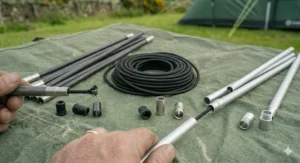
Unlike pure shock cord options, the OZtrail kit provides a complete pole repair package: four fibreglass sections, 3 metres of heavy-duty shock cord, pole tips, and joiners. For UK campers facing broken pole sections alongside worn elastic — a depressingly common combination after particularly vigorous winds — this represents exceptional value.
The included 7.9mm fibreglass sections work with most standard dome tents, though you’ll want to measure your existing poles before ordering. What’s particularly clever is OZtrail’s decision to bundle shock cord rated for repeated Australian camping conditions, which translates to more than adequate performance in British weather. The 3-metre elastic length is precisely calculated for the four included pole sections, eliminating guesswork about proper tension.
This kit shines for campers dealing with older family tents where sourcing replacement parts has become challenging. Rather than binning a perfectly serviceable tent because one pole shattered, you can rebuild the entire section for around the price of a single camping meal at a motorway services. Several UK reviewers mention this kit saving tents that manufacturers had discontinued years ago.
Pros:
✅ Complete pole replacement solution
✅ Saves older tents from landfill
✅ Heavy-duty shock cord included
Cons:
❌ Fibreglass sections won’t fit all tent designs
❌ Heavier than aluminium alternatives
Price: £12-£18 | Best for: Broken pole repairs, older tents, complete refurbishment projects
7. T.W Evans 3mm Professional Shock Cord — The Bulk Buy Champion
For those maintaining multiple tents, running outdoor centres, or simply planning ahead, the T.W Evans 3mm offers exceptional value through sheer quantity. At 15 metres (50 feet in the American measurement still printed on the spool), this represents enough cord for three to four typical family tents or a small fleet of backpacking shelters.
The professional-grade elastic delivers consistent performance across the entire spool — something that cheaper bulk options surprisingly fail to achieve. The 3mm diameter suits standard tent poles whilst remaining easy to thread through typical section diameters. What sets T.W Evans apart is the cord’s UV resistance, addressing a concern many UK campers overlook: pole elastic degrading from sunlight exposure during summer storage in garages or sheds with windows.
British buyers consistently mention this cord’s excellent value per metre when purchased in bulk. Yes, you’re committing to more than one repair project, but considering how quickly pole elastic deteriorates in UK conditions, having spare cord available prevents that annoying situation where you need to order materials mid-camping season when everyone else is doing the same.
Pros:
✅ Exceptional value per metre
✅ UV-resistant for longer storage life
✅ Sufficient quantity for multiple repairs
Cons:
❌ Requires storage space for unused cord
❌ Upfront cost higher than single-tent kits
Price: £10-£16 | Best for: Multiple tent maintenance, Scout/Guide leaders, forward-planning campers
How to Choose the Right Shock Cord Thickness: A UK Camper’s Guide
Selecting proper shock cord diameter matters far more than most campers realise. Too thin, and your poles will feel loose and flop about during setup; too thick, and you’ll struggle to thread the cord through pole sections whilst fighting against excessive tension. The spec sheet won’t tell you this, but diameter choice directly affects how quickly your tent pitches and whether your poles maintain proper alignment in British winds.
Understanding Diameter Standards
Most tent poles fall into three categories that correspond to specific shock cord sizes:
2-2.5mm (5/64″-3/32″) suits lightweight backpacking tents, particularly those with DAC Featherlite poles or similar ultra-thin sections. If your tent weighs under 1.5kg and uses poles thinner than a pencil, this range prevents over-tensioning that can actually bend lightweight aluminium over time. However, this thickness struggles in family tents or anything subjected to frequent setup.
3-3.5mm (1/8″) represents the sweet spot for standard camping tents. This diameter threads relatively easily through typical 8-10mm pole sections whilst providing adequate tension for proper section alignment. The vast majority of British camping tents — Vango, Coleman, Outwell, Berghaus — use poles compatible with this size. If you’re uncertain about your tent’s requirements, 3mm represents the safest bet.
6mm (1/4″) enters heavy-duty territory, suitable for large family tents with thick aluminium poles, commercial marquees, or tents designed for extended expeditions. The increased diameter provides substantially more pulling force, keeping thick pole sections properly tensioned even when your tent’s been pitched for weeks at a music festival. Threading this thickness requires patience and often a longer, stiffer threading wire.
Matching Cord to UK Weather Conditions
British camping presents specific challenges that affect shock cord performance. Our climate’s particular combination of damp and temperature variation accelerates elastic degradation faster than the manufacturer’s testing assumes. When selecting cord thickness, consider:
Constant moisture degrades thinner cords more rapidly. The smaller diameter means less material buffering the elastic core from moisture penetration. If you camp primarily in Scotland, Wales, or the Lake District where gear rarely dries completely between trips, sizing up slightly — choosing 3.5mm over 3mm, for instance — extends functional lifespan.
Temperature swings between cold nights and warm afternoons cause expansion and contraction that fatigues elastic over time. Thicker cords with more robust cores resist this mechanical stress better. This matters particularly for those storing tents in garages or sheds where temperature varies dramatically, rather than climate-controlled spaces.
The 70-80% Length Rule
Professional pole manufacturers recommend shock cord length between 70-80% of total pole length when fully assembled. This range provides adequate tension without overstretching the elastic, which leads to premature failure. Here’s the practical application for UK campers:
Measure your fully assembled pole. If it totals 3 metres, you need 2.1-2.4 metres of shock cord. The lower end (70%) suits thicker, stiffer cords that naturally provide more resistance; the higher end (80%) works better with thinner, more elastic options. When in doubt, aim for 75% — it’s the middle ground that rarely disappoints.
One mistake British campers frequently make involves using old, stretched cord as a length guide. That worn elastic has likely stretched 20-30% beyond original specifications, meaning your replacement will feel excessively tight if matched to the old cord’s length. Always measure the pole itself, never the failed elastic.
Special Considerations for Hub-Style Tents
Modern family tents often incorporate hub systems where multiple poles meet at central junctions. These designs require slightly different shock cord considerations. The hub adds friction points where cord must navigate tight angles, suggesting two adjustments:
First, reduce cord thickness slightly compared to traditional pole-to-pole systems. A 3mm cord works better than 3.5mm when threading through tight hub angles, even if pole diameter might otherwise suggest the thicker option.
Second, increase total cord length slightly — aim for 75-80% rather than 70-75%. Hub systems benefit from marginally looser elastic that doesn’t fight quite so hard against the angular changes, reducing wear at junction points whilst maintaining adequate pole section tension.
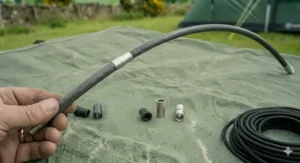
DIY Pole Elastic Replacement: A Step-by-Step Tutorial for UK Campers
Replacing tent pole elastic ranks among the most satisfying camping maintenance tasks — it’s straightforward enough for first-timers yet saves £20-£40 compared to buying replacement poles. What most online tutorials skip is addressing the specific challenges British campers face: working in limited space (terraced house garages, anyone?), dealing with damp poles that won’t dry completely, and managing this task during our unpredictable weather.
Essential Tools and Preparation
Before threading your first pole section, gather these items:
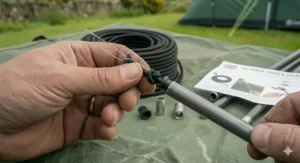
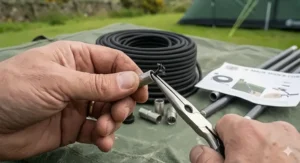
Threading wire (included with better shock cord kits, or improvise with straightened coat hanger wire), small washers (8-10mm external diameter), scissors or craft knife, lighter or matches for heat-sealing cord ends, masking tape to hold sections together during threading, and vice grips or locking pliers for maintaining tension whilst securing ends.
Layout matters more than most realise. Work on a clean, flat surface measuring at least 2 metres — your kitchen table works brilliantly, protected with old newspapers or a camping mat. You need space to lay poles end-to-end whilst maintaining visual control over section order. Those coloured tape markers on your poles? They exist precisely to help reassembly, so photograph or note their positions before dismantling.
The Threading Process — Preventing Common Mistakes
Step 1: Dismantle carefully. Separate all pole sections and lay them in order. British tent poles often show subtle taper — slightly narrower at one end — so maintaining correct sequence prevents frustration during reassembly. Remove all remnants of old elastic and any debris inside pole sections. A damp cloth run through each section ensures smooth threading.
Step 2: Measure and cut new elastic. Calculate 75% of total pole length as your target, then add an extra 30cm for knotting and adjustment. That margin proves crucial — you can always trim excess, but threading new cord because you cut too short wastes considerable time.
Step 3: Thread the first section. Tape threading wire securely to shock cord end — wrap several times to create a smooth transition without lumps that catch inside poles. Push wire through first pole section. Here’s where British homes create challenges: if working in confined spaces, resist the temptation to feed cord by pulling the wire through quickly. Slow, steady pressure prevents the wire bending inside the pole section and jamming.
Step 4: Progressive assembly with tension management. Thread through the second section, then attach a washer and tie a temporary knot at one end. This anchor point lets you maintain tension whilst threading remaining sections. The vice grip technique mentioned earlier shines here — clamp the elastic at appropriate tension, thread the next section onto the pole, then release and repeat.
UK campers often struggle with this stage because damp pole sections create more friction. If your poles won’t slide together smoothly, don’t force them — wipe interiors again and ensure threading wire hasn’t picked up dirt that’s transferring to the elastic.
Step 5: Final tensioning and securing. With all sections threaded, tension the elastic until pole sections snap together firmly but without excessive force. You should feel slight resistance when separating sections — that’s proper tension. Too loose and poles flop about; too tight and you risk damaging ferrules during assembly. Secure both ends with washers and tight knots, trim excess cord (leaving 10-15mm), then heat-seal the very end with a lighter flame. The polyester sheath should melt slightly, creating a sealed end that won’t fray.
Troubleshooting British-Specific Issues
Poles won’t separate after threading: Our damp climate causes aluminium oxidation that creates friction between pole sections. Gentle twisting whilst pulling usually releases stuck sections. If truly stubborn, wrap the joint in a cloth soaked with warm water — the slight expansion often breaks the seal.
Cord loses tension within days: This suggests either under-sizing (cord too thin for pole diameter) or the elastic degrading before installation. Cheap shock cord stored in damp sheds loses elasticity before you even thread it. Store unused shock cord in sealed plastic bags inside the house, not in garages or outbuildings.
Threading wire won’t navigate bends: Hub-style poles create acute angles that rigid wire struggles with. Switch to heavier fishing line (20-30lb test) taped to the shock cord — it’s flexible enough to navigate curves yet strong enough to pull elastic through. Several UK camping forums recommend this technique specifically for complex modern tent poles.
Storage Tips to Extend Shock Cord Lifespan
After completing your repair, how you store poles dramatically affects shock cord longevity. Leaving poles assembled — sections snapped together — maintains constant tension that fatigues elastic even when not in use. This matters particularly in Britain where tents might sit stored for months between camping seasons.
Instead, separate poles into individual sections and store loosely in their bags. Yes, this means assembly takes slightly longer at the campsite, but you’ll gain 1-2 extra seasons from the elastic. For those storing poles in potentially damp conditions (garages, sheds), include silica gel packets in the pole bag to absorb moisture that would otherwise attack the rubber core.
One final tip that British Scout leaders have passed down for generations: mark new cord installation dates on a small tag attached to the pole bag. Shock cord degrades whether you use it or not, and knowing installation date helps predict when replacement becomes necessary before the elastic fails mid-pitch in driving rain.
Shock Cord vs Bungee Cord: Understanding the Critical Differences
Walk into most UK hardware stores and you’ll find both shock cord and bungee cord on adjacent shelves, often at similar prices. To the uninitiated, they appear interchangeable — both stretch, both consist of elastic cores with woven sheaths, both come in various diameters. Yet using bungee cord for tent pole repair represents one of those false economies that costs you time and frustration down the line.
Construction Differences That Matter
Shock cord features a lighter elastic core optimised for moderate stretch and rapid recovery. The woven polyester or nylon sheath protects the elastic whilst maintaining flexibility even in cold conditions. Manufactured specifically for applications requiring consistent tension over extended periods, quality shock cord maintains 80-90% of original elasticity after hundreds of stretch cycles.
Bungee cord, by contrast, incorporates heavier rubber cores designed for maximum stretch — often 200-300% of resting length. The thicker, more robust sheath handles abrasion from tie-down applications where the cord scrapes against cargo, roof racks, or trailer edges. This construction prioritises raw pulling power over the subtle tension control tent poles require.
Why Bungee Cord Fails in Tent Applications
The fundamental issue involves over-stretch. Bungee cord’s extreme elasticity means tent poles either flop loosely when cord is at rest or fight against excessive tension when stretched to proper length. There’s no middle ground where sections snap together firmly yet separate smoothly for packing.
British campers who’ve tried bungee cord report a consistent pattern: initial setup seems acceptable, but within 2-3 camping trips, the cord has permanently stretched beyond useful tension. Our damp climate accelerates this degradation — water penetrates the looser sheath weave that bungee cord uses, attacking the heavy rubber core. What started as seemingly adequate pole tension becomes loose, sloppy sections that resist alignment during subsequent pitching attempts.
The abrasion-resistant sheath that benefits bungee cord in tie-down applications actually creates problems threading through tent poles. The stiffer, thicker weave increases friction inside pole sections, making threading genuinely unpleasant compared to shock cord’s smoother passage. Several UK camping forums feature threads (pun intended) complaining about bungee cord jamming inside poles, requiring complete disassembly to extract.
When Bungee Cord Has Legitimate Tent Uses
Before dismissing bungee cord entirely, it does serve certain camping purposes well. Guy line tensioners benefit from bungee’s high stretch, particularly in exposed locations where wind gusts create sudden loads. The cord absorbs shock that would otherwise stress tent pegs or strain fabric attachment points.
Equipment lashing — strapping sleeping mats to rucksacks, securing tent bags to roof racks, bundling poles during transport — represents bungee cord’s natural territory. The heavy-duty construction resists abrasion from these applications whilst providing the pulling force necessary to compress gear.
Improvised repairs in emergency situations might justify bungee cord use. If your tent pole shock cord fails mid-trip and bungee represents the only available elastic, it’ll function temporarily. Just understand you’re accepting compromised pole tension as the price of getting your shelter pitched.
Cost Comparison Reveals False Economy
Here’s where British pragmatism meets camping reality. Bungee cord typically costs £4-£7 for 10 metres at UK hardware stores, whilst quality shock cord ranges £8-£12 for similar length. That £4-£5 saving looks attractive until you factor in replacement frequency.
Properly installed shock cord in well-maintained poles should last 3-5 camping seasons in British conditions — potentially 20-30 actual camping trips. Bungee cord stretches permanently within 5-10 trips, requiring replacement often in the same season you installed it. The apparent savings evaporate rapidly, not to mention the frustration of poles that never quite feel right during setup.
Professional outdoor retailers in the UK stock shock cord specifically because they understand these performance differences. The fact you’ll rarely find proper shock cord at general hardware stores whilst bungee cord dominates those shelves doesn’t reflect actual suitability for tent applications — it simply indicates market dynamics favouring products with broader applications.
Common Mistakes When Buying Shock Cord for Tent Poles
After reviewing hundreds of UK customer experiences and conducting dozens of pole repairs, certain mistakes appear repeatedly. These aren’t obvious errors — they’re subtle misjudgements that seem reasonable until you’re halfway through threading your second pole section and realising something’s wrong.
Mistake #1: Matching Diameter to Old, Stretched Cord
Your tent’s original elastic measured 3mm when new. After five seasons in British conditions, it’s stretched to 3.5mm or even 4mm. Measuring that worn cord and ordering 4mm replacement seems logical — except you’ve now oversized your new elastic, creating threading difficulties and excessive pole tension.
Always reference your tent manufacturer’s specifications if available, or measure pole internal diameter and select shock cord 1-2mm smaller. For standard 8-9mm tent poles, 3mm cord represents the correct choice regardless of what diameter the old, stretched elastic appears to measure.
Mistake #2: Buying Pre-Cut Lengths Without Measuring
Those “universal tent pole repair kits” promising to fit “all standard tents” rarely deliver on that promise. A typical 3-metre kit suits single-hub tents with relatively short pole runs, but family tents with full-length poles require substantially more. British campers consistently mention buying 3-metre kits only to discover they need 4-5 metres for proper tent coverage.
Measure your poles fully assembled, calculate 75% of that length, then add 0.5m safety margin. If that exceeds the pre-cut kit length, buy bulk cord sold by the metre. Yes, you’ll have spare cord, but that’s vastly preferable to threading halfway through your pole set before running out of material.
Mistake #3: Ignoring Climate-Appropriate Materials
Standard shock cord uses rubber cores that perform adequately in moderate climates. British weather — with its temperature swings, constant moisture, and UV exposure during those rare sunny camping trips — demands more resilient materials. Polyester-sheathed options with treated elastic cores resist our specific conditions far better than budget alternatives.
Several UK campers report standard shock cord degrading rapidly when tents are stored in damp garages or sheds between trips. This isn’t cord failure — it’s using inappropriate materials for British storage conditions. Marine-grade or UV-resistant shock cord costs perhaps £2-£3 more per project but easily doubles functional lifespan.
Mistake #4: Threading Without Proper Tensioning
First-time repairers often thread elastic through all pole sections, tie off both ends, and discover their poles either flop loosely or resist assembly with excessive force. The mistake lies in finalising both ends before checking actual tension with poles assembled.
The correct approach: secure one end only, thread through all sections, assemble the pole, then tension the elastic whilst watching how sections fit together. Only when satisfied with tension should you secure the second end. This seems obvious in hindsight, yet represents one of the most common complaints in UK camping forums: “My new shock cord doesn’t work properly” usually means incorrect tensioning during installation.
Mistake #5: Skipping Heat-Sealing
British camping conditions make heat-sealing cut cord ends absolutely essential rather than optional. Our damp climate attacks unsealed polyester sheaths aggressively, causing the weave to unravel and expose the elastic core. Within weeks of use, those professionally-cut ends start looking decidedly tatty.
A lighter flame applied for 2-3 seconds melts the polyester slightly, creating a sealed end that resists moisture penetration and mechanical abrasion. This takes perhaps 30 seconds per cord end but extends functional life by multiple seasons. The technique requires brief practice — too little heat and you’re merely singeing fibres, too much and you risk melting through to the elastic core — but represents time exceptionally well spent.
Understanding Shock Cord Degradation in British Conditions
Tent pole elastic doesn’t fail randomly — it follows predictable degradation patterns accelerated by the specific challenges British camping presents. Understanding these patterns helps predict when replacement becomes necessary and, more importantly, how to extend functional lifespan through proper care.
The Three Stages of Shock Cord Failure
Stage 1: Subtle elasticity loss (Seasons 1-2) manifests as poles that still snap together acceptably but feel slightly less crisp during assembly. Sections might require gentle persuasion to align rather than the sharp “click” of new elastic. Most campers don’t notice this stage because poles remain functional. It’s detectable only if you compare assembly feel to the tent when new.
Stage 2: Visible stretching (Seasons 3-4) becomes obvious when packed poles no longer compress into their original bag space. The elastic has permanently elongated, meaning pole sections don’t pull together as tightly. You’ll notice sections occasionally pulling apart during tent pitching, particularly when manoeuvring poles through fabric sleeves. British weather accelerates this stage — tents used primarily in Scotland or Wales often reach it by Season 2.
Stage 3: Complete failure (Season 4-5+) arrives when elastic either snaps entirely or stretches so badly that pole sections flop about disconnected. Some campers report cords that remain physically intact but have lost essentially all elastic properties, becoming glorified string holding sections in rough proximity. This stage typically hits mid-camping trip at the least convenient moment, hence the importance of monitoring earlier warning signs.
Why British Weather Accelerates Degradation
Our climate creates a perfect storm for elastic deterioration. Moisture penetrates polyester sheaths during rainy camping trips (which describes most British camping), attacking the rubber core that provides elasticity. Unlike synthetic materials that dry quickly, rubber absorbs moisture and releases it slowly, remaining damp even after the tent fabric has dried.
Temperature cycles between chilly mornings and warm afternoons force the rubber core through repeated expansion and contraction. This mechanical stress fatigues the material microscopically, creating tiny fractures that accumulate over time. Storage in unheated garages or sheds extends these cycles year-round rather than limiting them to active camping seasons.
UV exposure during summer storage affects poles kept in garages or sheds with windows. Even indirect sunlight degrades rubber compounds, particularly the additives that maintain elasticity. This explains why shock cord from tents stored in dark, interior cupboards often outlasts identical cord from gear stored in transparent garden sheds. Understanding material degradation from environmental factors helps UK campers make better storage decisions.
Extending Functional Lifespan
Storage technique matters enormously. Separating poles into individual sections after each camping trip reduces constant tension that fatigues elastic even during storage. Yes, this means assembly takes slightly longer, but you’ll gain 1-2 additional seasons from the shock cord. For British campers who might only pitch 5-10 times per year, this translates to years of extended life.
Drying before storage prevents moisture from attacking the elastic core during the months between camping trips. Wipe pole interiors with a dry cloth after dismantling — takes perhaps two minutes but dramatically reduces moisture-related degradation. If poles are genuinely soaked after particularly wet trips, leave them separated in a warm, dry location overnight before bagging.
Avoiding extreme tension during use helps preserve elasticity. Some campers force pole sections together more aggressively than necessary, overstretching the shock cord with every assembly. Poles should snap together with moderate hand pressure — if you’re fighting against extreme tension or using tools to force connections, the elastic is either over-tensioned or incorrectly sized.
Regional Considerations Across the UK
Scotland presents the harshest conditions for shock cord longevity. The combination of cold temperatures, high moisture, and shorter camping seasons means tents spend more time stored damp than actively drying. If you’re camping in Scotland’s wild camping areas (legal under the Land Reform (Scotland) Act 2003), expect typical shock cord lifespan of 2-3 seasons versus 4-5 for similar tents used in southern England.
Wales and the Lake District occupy middle ground — plenty of moisture but slightly warmer temperatures than Scotland. Shock cord in these regions typically achieves 3-4 seasons before requiring replacement, assuming proper storage between trips.
Southern and Eastern England offers the gentlest conditions, with warmer, drier weather allowing more thorough drying between trips. Tents used primarily in these regions can achieve 5+ seasons from quality shock cord, particularly if stored correctly. Remember that whilst wild camping in England and Wales requires landowner permission in most areas, proper tent maintenance matters regardless of where you pitch.
Frequently Asked Questions
❓ What diameter shock cord do I need for standard tent poles?
❓ How long should shock cord last in British camping conditions?
❓ Can I use bungee cord instead of proper shock cord for tent poles?
❓ Is tent pole elastic replacement covered under UK tent warranties?
❓ Where can I buy shock cord locally in the UK if I need it urgently?
Conclusion: Choosing the Right Shock Cord for British Camping
Replacing tent pole elastic ranks among the most satisfying maintenance tasks any UK camper can master. It’s one of those repairs that seems daunting until you’ve done it once, then becomes remarkably straightforward for future projects. The key lies in selecting appropriate materials for our specific British conditions rather than simply buying the cheapest option available.
From the products analysed in this guide, the Neotrims 3mm emerges as the most versatile choice for typical UK campers maintaining one or two tents. The flexible purchasing quantities mean you’re not left with excess cord cluttering your garage, whilst the quality remains consistent across different lengths. For those facing frequent repairs or maintaining multiple tents, the T.W Evans bulk option delivers exceptional value despite the higher upfront cost.
Remember that shock cord for tent poles represents preventive maintenance rather than emergency repair. Don’t wait until elastic fails mid-camping trip in driving Welsh rain before ordering replacement materials. Keep a spare length in your camping kit alongside your pole repair sleeve — it weighs virtually nothing but saves considerable frustration when poles decide to give up forty miles from the nearest outdoor shop.
British camping presents specific challenges that generic international advice often overlooks. Our damp climate, temperature variations, and storage conditions all conspire to degrade tent pole elastic faster than manufacturer testing assumes. Factor these realities into your maintenance schedule, inspect poles at least annually, and replace elastic proactively rather than reactively.
The modest investment in quality shock cord — typically £8-£15 for materials sufficient to repair an entire tent — pales compared to the cost and inconvenience of collapsed tents or cancelled camping trips. More importantly, mastering this repair extends your tent’s functional life by years, keeping perfectly serviceable shelters out of landfills whilst saving you hundreds of pounds on premature replacements.
✨ Don’t Miss These Exclusive Deals!
🔍 Take your tent maintenance to the next level with these carefully selected products. Click on any highlighted item to check current pricing and availability on Amazon.co.uk. These picks will help you find exactly what you need!
Recommended for You
- 7 Best Tent Pole Repair Kits UK 2026
- 7 Best Steel Tent Poles for High Winds UK 2026
- 7 Best Places to Buy Aluminium Tent Poles UK 2026
Disclaimer: This article contains affiliate links. As an Amazon Associate, I earn from qualifying purchases. If you purchase products through these links, we may earn a small commission at no additional cost to you.
✨ Found this helpful? Share it with your mates! 💬🤗
