
In This Article
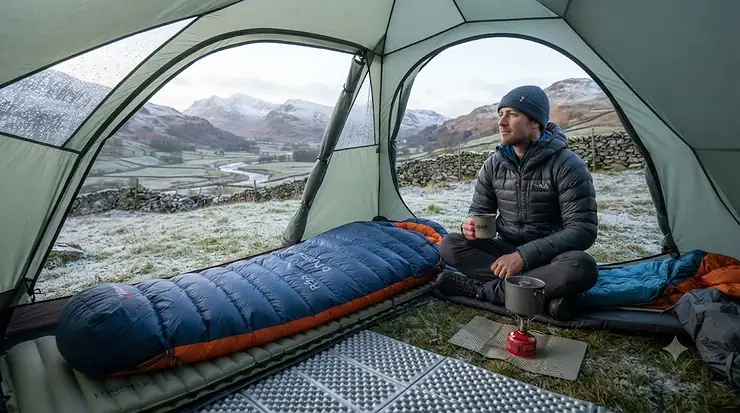
Here’s a confession that might save your next trip: most winter camping insulation failures have nothing to do with the tent. They’re a sleep system problem wearing a tent-shaped disguise. You can pitch the warmest, most weatherproof shelter on the market and still wake up at 3am with your teeth doing a nervous little rattle, because the actual battle for warmth happens in the thin gap between your body and the frozen ground beneath you.
Winter camping insulation refers to the combined layers — ground pads, bag fill, liners, tent design, and supplementary heating — that trap your body heat and block conductive, convective, and radiant heat loss while you sleep outdoors in sub-zero or near-zero conditions. Get that combination wrong and no amount of down feathers will save you; get it right and a proper winter tent setup turns a brutal night into something you’ll actually want to repeat.
Context matters here, too: the UK’s long-term winter average sits around 4°C, but overnight temperatures on exposed pitches regularly dip several degrees below that headline figure, which is exactly why “it’s not that cold outside” is such a misleading benchmark for choosing gear.
This guide breaks down what genuinely works, based on real product specifications, aggregated review sentiment, and honest cold-weather camping tips gathered from UK campers who’ve actually shivered through the Cairngorms and come out the other side still enthusiastic about the hobby. We’ll walk through seven pieces of insulated camping gear worth your money, show you exactly how they stack up against each other, and hand you practical frameworks for choosing what suits your trip — whether that’s a Peak District weekend or a proper winter tent setup for a multi-day Highland traverse. Along the way, expect a fair dose of “what the spec sheet won’t tell you,” because that’s usually where the real decision gets made.
Quick Comparison: Winter Camping Insulation at a Glance
| Product | Category | Insulation Rating | Price Range | Best For |
|---|---|---|---|---|
| Therm-a-Rest NeoAir XTherm NXT | Inflatable sleeping pad | R-value 7.3 | £180-£230 | Serious winter/expedition sleepers |
| Therm-a-Rest Z Lite Sol | Closed-cell foam pad | R-value 2.0 | Under £60 | Budget layering pad, backup insurance |
| Sea to Summit Thermolite Reactor Extreme | Sleeping bag liner | Adds up to 14°C | Around £60-£75 | Extending an existing 3-season bag |
| Alpkit Pipedream 400 | Down sleeping bag | Comfort -4.2°C | Around £200 | Shoulder-season and cold-but-not-arctic trips |
| Vango Venom 300 | Down sleeping bag | Comfort 5°C | £110-£160 range | Budget entry point, paired with a liner |
| Outwell Katla Camping Heater | Electric ceramic heater | 1kW/1.5kW output | Around £45-£60 | Hook-up campsites and static winter pitches |
| SOL Escape Lite Bivvy | Reflective survival bivvy | Reflects ~70% body heat | Under £45 | Backup insulation and emergency shelter |
Looking at the table above, there’s a clear pattern: the genuinely cold-capable gear (the Therm-a-Rest NeoAir XTherm NXT and the Alpkit Pipedream 400) costs noticeably more than the entry-level options, and that premium buys you a real R-value and comfort-rating jump rather than marketing fluff. Budget buyers shouldn’t despair, though — pairing the Vango Venom 300 with the Sea to Summit Thermolite Reactor Extreme liner gets you most of the way there for considerably less outlay. Note that none of these prices are fixed; always check current pricing at the time of purchase, since retailers adjust stock and promotions constantly.
💬 Just one click — help others make better buying decisions too!😊
Top 7 Winter Camping Insulation Products: Expert Analysis
1. Therm-a-Rest NeoAir XTherm NXT — the highest R-value-to-weight sleeping pad on the market
The standout here isn’t just the R-value of 7.3 — it’s that Therm-a-Rest achieved this figure while keeping the regular-size pad at roughly 440g, which used to be an either/or trade-off in sleeping mat design. The pad uses Triangular Core Matrix construction paired with heat-reflective ThermaCapture technology to hit that R-value while weighing just 439g in the regular size, and it’s 7.6cm thick with a horizontal baffled structure. In practical terms, an R-value above 7 means the pad is doing serious work against conductive heat loss into frozen or snow-covered ground — the single biggest source of nighttime cold that beginners underestimate, because they’re focused on the air temperature rather than what’s happening beneath their sleeping bag.
Who should care about this: anyone camping on snow, frozen ground, or in temperatures reliably below freezing overnight. Reviewers who’ve used it on proper winter expeditions report that it delivers excellent warmth and has become a trusted choice for cold weather where staying warm is essential, with one UK gear tester noting it was used on winter wild camps in the Cairngorms and an Arctic trip in Kiruna, Sweden, offering a strong balance of comfort and durability. Aggregated customer sentiment across retailer reviews consistently flags the WingLock valve as genuinely easier to use with gloves on than older Therm-a-Rest valve designs — a small detail that matters enormously at 2am in a frozen tent porch. On the downside, some buyers have reported pinhole leaks developing at pinch points near the valve, with mixed experiences around warranty support, so a repair kit in your kit bag (thankfully included) isn’t just decorative.
Pros:
- ✅ Best-in-class warmth-to-weight ratio for winter use
- ✅ WingLock valve works well even with gloves on
- ✅ Reinforced base fabric resists punctures in the field
Cons:
- ❌ Premium price compared to 3-season alternatives
- ❌ Some reported leak issues at valve pinch points
At around £180-£230 depending on size, this sits at the premium end, but for anyone serious about winter tent setup below freezing, the value case is straightforward: this is the layer that decides whether you sleep or shiver.
2. Therm-a-Rest Z Lite Sol — the closed-cell foam backup that never lets you down
This is the tent insulation equivalent of a spare tyre — not glamorous, but the one product on this list you genuinely cannot puncture or deflate in your sleep. The reflective ThermaCapture coating and heat-trapping dimples capture radiant heat, increasing overall warmth by around 20 percent, giving it an R-value of 2.0, and the foam is softer on top for comfort while denser underneath for insulation and durability. On its own, an R-value of 2.0 is fair-weather territory. But that’s not really the point of this pad — the point is what happens when you stack it.
Based on the spec comparison with the XTherm above, the honest analytical take is this: the Z Lite Sol’s R-value of 2.0 helps boost insulation even when used in combination with an inflated pad, and it also provides peace of mind in case of a failure or loss of an inflatable sleeping pad. That’s the real use case for winter campers — a closed-cell foam pad underneath your inflatable XTherm adds roughly another two R-value points and, crucially, means a puncture doesn’t end your trip. Reviewers consistently note that it’s a good choice for anyone wanting a no-brainer, rolls-with-the-punches, low-weight pad, and that the closed-cell foam construction is nearly indestructible, though the same reviewers flag that its foam can feel insufficient on its own once temperatures dip below around 4°C.
Pros:
- ✅ Virtually indestructible closed-cell foam construction
- ✅ Doubles warmth when layered under an inflatable pad
- ✅ Doubles as an emergency backup if your main pad fails
Cons:
- ❌ Too thin for standalone use in genuine winter cold
- ❌ Bulkier to carry than a packed inflatable pad
At under £60, this is the cheapest genuine insurance policy in a winter kit, and the value verdict is simple: buy it as a companion piece, not a solo solution.
3. Sea to Summit Thermolite Reactor Extreme — the liner that turns a summer bag into a shoulder-season one
What most buyers overlook about sleeping bag liners is that they’re not just a hygiene layer — the right one is a legitimate warmth upgrade. The Thermolite Reactor Extreme is Sea to Summit’s warmest knitted sleeping bag liner, and it uses hollow-core Thermolite fibres that work like a polar bear’s fur, trapping insulating air within a knitted structure. The fabric also uses infrared-absorbing ceramic pigments that reflect the body’s own heat back to the wearer — essentially a passive radiant barrier stitched directly into a liner you were probably going to buy anyway for hygiene reasons.
In practice, that translates to this liner adding up to 25°F (around 14°C) of warmth to an existing sleeping bag, which is the difference between a 3-season bag surviving a proper cold snap and it simply not being warm enough. This is precisely the kind of transformation content Amazon listings won’t spell out for you: pair this liner with the Vango Venom 300 below, and you’ve effectively built yourself a winter-capable sleep system for a fraction of the cost of buying a genuine 4-season down bag outright. The drawcord footbox and shoulder openings can be opened or closed for ventilation, and the liner is machine washable, which matters because a liner earns its keep by being washed regularly rather than the bag itself.
Pros:
- ✅ Adds up to 14°C of extra warmth to any bag
- ✅ Machine washable, protecting your main bag’s loft
- ✅ Doubles as a standalone summer sleeping bag
Cons:
- ❌ Adds bulk and weight versus a silk liner
- ❌ No side zip, so entry is via shoulder snaps only
Priced around £60-£75, this is arguably the highest value-per-pound item on this whole list, because it makes every other sleeping bag on this page warmer.
4. Alpkit Pipedream 400 — the British-designed down bag that punches above its price
Here’s what the spec sheet won’t tell you outright: temperature ratings on sleeping bags are notoriously optimistic, and this is one of the more honestly-rated bags in its price bracket. The Pipedream 400 has an EN 13537 comfort rating of -4.2°C, with Alpkit’s own limit rating extending to -6°C, built around 750 fill power DownTek hydrophobic down, with a double compression system for easy packing. The mummy shape narrows toward the feet, reducing the internal air volume your body has to heat, which meaningfully boosts thermal performance compared with roomier rectangular bags.
Based on aggregated reviewer experience, this is a genuinely trustworthy 3-season bag rather than a stretched 4-season claim. One long-term reviewer who has owned a Pipedream 400 for most of a decade called it a “quiver killer,” noting it doesn’t drip with unnecessary features and just quietly gets on with the job, while another reviewer’s cooler-sleeping experience found the comfort rating usable down to around 3°C rather than pushing right to the EN-tested limit. That’s honest, useful context: treat the printed rating as optimistic and budget in a 2-3°C safety margin, exactly as you would with any sleeping bag regardless of brand.
Pros:
- ✅ Genuinely trustworthy 3-season rated warmth
- ✅ Hydrophobic down keeps performing if it gets damp
- ✅ Excellent weight-to-warmth ratio for the price
Cons:
- ❌ Not a true winter/4-season bag despite marketing framing
- ❌ Long version runs slightly cooler for the same weight
At around £200, this sits in the mid-range and represents strong value for anyone whose “winter camping” means cold British nights rather than genuine sub-zero expedition conditions.
5. Vango Venom 300 — the budget down bag built to pair with a liner
This is the honest budget pick on the list, and it earns its spot precisely because it doesn’t pretend to be something it isn’t. The Venom 300 uses box wall construction with 700 fill power duck down and a 30D mini ripstop nylon shell with a water-resistant finish, weighing in at a genuinely packable size. Reviewers are consistent and fair about where this bag sits: it’s excellent value for money and lightweight, but the lower cost is achieved through lower fill power and less down overall, meaning it isn’t as warm as pricier alternatives, and Vango themselves describe it as a 2-3 season bag. One tester estimated it would be comfortable for most sleepers down to around +5°C.
That honest limitation is exactly why it appears alongside the Thermolite Reactor Extreme liner above — stack the two together and you’re realistically adding a meaningful chunk of extra comfort range, turning a cool-weather bag into something that can cope with a proper cold snap. It also comes with a roll-top waterproof stuff sack, useful for backpacking in wet British conditions, and at this price point testers found it “pretty good on features,” even while noting the down doesn’t loft quite as generously as pricier bags.
Pros:
- ✅ Genuinely low price for a down-filled bag
- ✅ Lightweight and compact for backpacking
- ✅ Waterproof roll-top stuff sack included
Cons:
- ❌ Only rated 2-3 season, not true winter cold
- ❌ Down doesn’t loft as fully as premium fills
At £110-£160, this is the entry point for anyone who wants a genuine down bag without committing to expedition pricing — provided you accept it needs backup insulation for real winter nights.
6. Outwell Katla Camping Heater — safe, simple warmth for hook-up and static pitches
Not every winter camping insulation solution is passive. Sometimes actively heating the tent air is the right call, provided you’re camping somewhere with mains hook-up and you follow the safety rules to the letter (more on that below). The Katla runs on 230V mains power with two heat settings — a nominal 1.8kW maximum output and a 1.0kW minimum — controlled by a mechanical thermostat, and it includes tilt protection and overheating protection that automatically cuts power if it’s knocked over or covered.
What most buyers overlook about electric camping heaters is that the safety features genuinely matter more than the wattage figure. The tip-over switch and overheat protection are the features that keep you safe, and the unit can also run as a cold air fan if the weather turns mild — useful versatility for shoulder-season trips where temperatures swing. Aggregated Amazon customer sentiment is positive: buyers consistently describe it as a “brilliant little heater,” particularly well-suited to camping use. The obvious caveat, which we’ll return to in the safety section further down, is that this is a mains-electric unit only — never a gas or solid-fuel substitute for use inside a sealed tent.
Pros:
- ✅ Genuine tip-over and overheat safety cut-offs
- ✅ Dual heat settings plus a cold-fan-only mode
- ✅ Compact and lightweight for a static-pitch accessory
Cons:
- ❌ Requires mains hook-up, useless off-grid
- ❌ Not a substitute for proper sleep system insulation
At roughly £45-£60, this is a genuinely useful accessory for caravan-adjacent or campsite winter camping, but it’s a supplement to good insulation, never a replacement for it.
7. SOL Escape Lite Bivvy — the featherweight reflective backup that earns its place in every winter kit
This is the product most winter campers only discover they needed after their first uncomfortably cold night. The Escape Lite Bivvy reflects 70% of body heat to prevent heat loss, weighs just 5.5oz, and uses a breathable design that prevents condensation build-up by letting moisture escape while keeping rain out. It can be used as a sleeping bag liner, an emergency blanket, or an ultralight summer bag in its own right, which is precisely the kind of multi-role flexibility that earns permanent space in a pack rather than gathering dust in a drawer.
Here’s what most buyers overlook: this isn’t just an emergency-only product. Sea to Summit’s parent category advice notes that using an Escape-style bivvy alongside your existing sleeping bag can add 10 to 15 degrees Fahrenheit of extra temperature rating, which mirrors what winter campers report anecdotally — slipping one of these over a 3-season bag on an unexpectedly cold night has rescued more than one trip. Reviewers describe it as reliable and reusable rather than single-use, with the caveat that it functions best as a supplementary layer rather than a standalone winter shelter.
Pros:
- ✅ Reflects roughly 70% of radiated body heat
- ✅ Doubles as emergency shelter if plans go wrong
- ✅ Genuinely reusable, not a single-trip disposable
Cons:
- ❌ Crinkly material can be noisy inside a shared tent
- ❌ Not warm enough as a standalone winter solution
At under £45, this is one of the cheapest genuine safety-and-warmth upgrades on this entire list, and honestly one of the easiest to justify regardless of your budget tier.
Top 7 Products: Specs, Price Range & Ratings Comparison
| Product | Weight | Insulation Metric | Price Range | Best For |
|---|---|---|---|---|
| Therm-a-Rest NeoAir XTherm NXT | ~440g | R 7.3 | £180-£230 | Snow and sub-zero pitches |
| Therm-a-Rest Z Lite Sol | ~400g | R 2.0 | Under £60 | Layering and backup |
| Sea to Summit Thermolite Reactor Extreme | ~370g | +14°C boost | £60-£75 | Upgrading a 3-season bag |
| Alpkit Pipedream 400 | ~865g | -4.2°C comfort | Around £200 | Cold-but-not-arctic trips |
| Vango Venom 300 | ~900g | 5°C comfort | £110-£160 | Budget entry, with a liner |
| Outwell Katla Heater | 1.5kg | 1.8kW max | £45-£60 | Hook-up static pitches |
| SOL Escape Lite Bivvy | 156g | ~70% heat reflected | Under £45 | Backup and emergency use |
The pattern that jumps out from this table is weight-to-warmth efficiency: the SOL Escape Lite Bivvy and Therm-a-Rest Z Lite Sol both weigh next to nothing yet meaningfully boost your overall system, which makes them easy additions regardless of how tight your pack space already is. Meanwhile, the Outwell Katla Heater is the heaviest single item here by a wide margin, and it’s also the only one that depends entirely on external power — a genuine limiting factor for anyone camping off-grid rather than on a serviced pitch.
Insulated Camping Gear vs Traditional Camping Setups
Traditional three-season camping gear and dedicated insulated camping gear solve genuinely different problems, and conflating the two is where most first-time winter campers come unstuck. A standard summer sleeping bag and a basic foam mat are engineered around ventilation and weight-saving, on the assumption that overheating is a bigger risk than freezing. Winter camping insulation flips that assumption entirely: the priority becomes trapping every possible degree of warmth, managing condensation from your own breath and body moisture, and adding redundancy in case any single layer fails.
The clearest illustration is the sleeping pad. A typical 3-season inflatable pad might carry an R-value around 2 to 3, which is perfectly adequate for a summer festival but genuinely dangerous on frozen or snow-covered ground, where conductive heat loss into the earth beneath you can outpace your body’s ability to generate warmth overnight. Stepping up to something like the Therm-a-Rest NeoAir XTherm NXT‘s R-value of 7.3 isn’t a luxury upgrade in these conditions — it’s the difference between a functional night’s sleep and a genuinely risky one. Similarly, a 2-3 season bag like the Vango Venom 300 is honestly rated and works fine into low single digits, but without a liner such as the Sea to Summit Thermolite Reactor Extreme layered in, it simply isn’t engineered for a proper cold snap.
Practical Usage Guide: Setting Up Your Winter Tent Properly
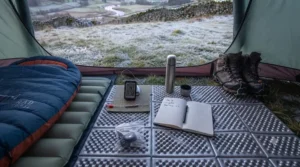
Getting your winter tent setup right starts well before you climb into your sleeping bag, and small sequencing mistakes in the first thirty days of winter camping are what separate miserable trips from genuinely enjoyable ones. Start with site selection: pitch away from low-lying ground where cold air pools overnight, and avoid direct wind corridors even if the view looks tempting — a few metres of tree line or a low ridge can cut wind chill dramatically. Stake out your groundsheet fully taut before adding any insulating layers on top, since a loose groundsheet traps cold air pockets underneath your sleeping system rather than blocking them.
Layer your insulation from the ground up: groundsheet first, then your closed-cell foam pad (like the Z Lite Sol), then your inflatable pad on top, then your sleeping bag, then your liner inside that. This order matters because it puts the most puncture-resistant layer closest to any sharp ground debris, and it means a failure in your inflatable pad doesn’t leave you with zero insulation. Common first-month mistakes include over-inflating pads (which reduces surface contact and actually loses warmth), sleeping in the same base layers you hiked in (damp from sweat, they’ll chill you fast), and ignoring tent ventilation entirely in an attempt to trap warmth, which instead causes condensation to soak your bag from the inside out. A cracked vent, even in genuinely cold weather, is almost always the right call.
For maintenance, dry your down sleeping bag and any synthetic liners fully before storing them — compressed, damp down loses loft permanently over repeated trips. Check pad valves for grit before every pack-down, since a single trapped grain of sand is a common cause of slow leaks. And always carry a basic pad repair kit; most inflatable winter pads, including the XTherm, ship with one, but it’s worth checking yours is present and in date before you set off.
Real-World Scenario: Matching Gear to Your Winter Trip
Picture three different winter campers, because “winter camping insulation” means something different for each of them.
First, there’s the weekend car-camper heading to a serviced UK campsite in the Peak District, budget around £150, camping perhaps four nights a year in temperatures rarely below freezing. For this profile, the Vango Venom 300 paired with the Sea to Summit Thermolite Reactor Extreme liner covers the realistic cold range, and the Outwell Katla Camping Heater is a genuinely sensible add-on given the mains hook-up on offer. This is a low-risk, comfort-focused setup rather than an expedition-grade one.
Second, there’s the regular wild camper who heads into the Cairngorms or Lake District several times each winter and needs gear that performs reliably below freezing without hook-up access. This is exactly where the Therm-a-Rest NeoAir XTherm NXT and the Alpkit Pipedream 400 earn their higher price tags — genuine R-7.3 ground insulation and an honestly-rated -4.2°C bag, topped with a SOL Escape Lite Bivvy carried as backup insurance rather than a primary layer.
Third, there’s the budget-conscious student or Duke of Edinburgh’s Award participant who needs functional winter capability without the premium price tag. Here, the Vango Venom 300, Therm-a-Rest Z Lite Sol, and the Thermolite Reactor Extreme liner together build a genuinely capable system for a fraction of the cost of premium alternatives, accepting a slightly narrower comfortable temperature range in exchange.
How to Choose Winter Camping Insulation
- Start with your ground insulation, not your bag. Conductive heat loss into frozen ground is consistently underestimated by beginners, so prioritise R-value before you obsess over bag temperature ratings.
- Read comfort ratings, not “extreme” ratings. The EN 13537 comfort figure reflects a genuinely restful night; the “extreme” figure on the label reflects survivable, not comfortable, conditions. For a deeper explanation of how the standard is tested, Wikipedia’s overview of the EN 13537 standard is a useful primer.
- Budget for a liner even on a tight budget. A liner is consistently the cheapest way to meaningfully extend an existing bag’s usable range, often for less than the price difference between two bag tiers.
- Check whether your trip has mains hook-up. This single factor determines whether an electric heater like the Katla is even a viable option, or whether your whole system needs to be self-sufficient.
- Always carry backup insulation. A closed-cell foam pad or reflective bivvy weighs almost nothing and provides genuine insurance against equipment failure in conditions where failure genuinely matters.
- Match your insulation tier to your actual trip frequency. Someone camping four nights a year in mild UK winters doesn’t need expedition-grade kit; someone camping fortnightly through a Highland winter probably does.
- Factor in drying and maintenance time between trips. Down insulation needs proper drying to maintain loft, so factor this into your kit rotation if you’re camping frequently through a wet British winter.
Common Mistakes When Buying Winter Camping Insulation
The single most common mistake is buying a warmer sleeping bag while ignoring the sleeping pad entirely — a genuinely warm bag over an inadequate pad still results in a cold night, because the ground beneath you draws heat away regardless of how many down feathers are stacked above you. A closely related error is trusting a sleeping bag’s “extreme” rating as a usable comfort figure, when it’s genuinely intended as a survival threshold rather than a restful one.
Another frequent misstep is treating a sleeping bag liner as purely a hygiene accessory and skipping it to save money, missing out on one of the cheapest genuine warmth upgrades available. Buyers also commonly overlook tent ventilation, assuming that sealing every vent traps more warmth, when in practice this simply redirects your own breath moisture into condensation that dampens your insulation from within. Finally, plenty of first-time winter campers bring an electric heater on a trip with no mains hook-up, discovering only on arrival that it’s dead weight in their pack — always confirm site facilities before you build a heating plan into your kit list.
What to Expect: Real-World Performance in Cold Conditions
Specs on a page rarely translate directly into lived experience, so here’s what actually happens on a genuinely cold night. With an R-7-class pad beneath you, the ground feels neutral rather than actively cold through the fabric — you stop noticing it, which is precisely the point. Drop to an R-2 pad alone in the same conditions, and most sleepers report a persistent chill along the spine and hips within the first hour, regardless of how warm the air inside the bag feels.
A comfort-rated bag at its actual limit temperature typically means waking periodically through the night rather than sleeping through — not dangerous, but not restful either, which is why building in a safety margin below the printed rating matters more than the number itself. Liners genuinely change the feel of a bag from the inside: the Thermolite-style hollow-core fibres create a noticeably softer, warmer lining texture rather than simply adding a thin barrier layer, and most users report it feels like a meaningfully different bag rather than a marginal tweak.
Long-Term Cost & Maintenance
Winter camping insulation is one area where buying twice is a genuinely common and avoidable expense. A budget inflatable pad that punctures on its second trip, forcing a replacement purchase, often ends up costing more over two years than simply buying the Therm-a-Rest NeoAir XTherm NXT outright and maintaining it properly. Total cost of ownership for down products depends heavily on maintenance: down that’s stored compressed or packed away damp loses loft permanently, effectively shortening a bag’s useful lifespan regardless of its original price tag.
By contrast, closed-cell foam products like the Z Lite Sol have essentially no maintenance cost and an extremely long service life, which is part of why they remain a sensible permanent fixture in a winter kit even after you’ve upgraded to premium inflatable pads. Liners are the cheapest ongoing cost on this list and arguably deliver the best return, since a £60-£75 liner meaningfully extends the usable life and temperature range of a bag that might otherwise need replacing entirely for colder conditions.
Features That Actually Matter (And Those That Don’t)
R-value and EN comfort ratings matter enormously — they’re standardised, independently tested, and directly predictive of real-world warmth. Genuine safety cut-offs on electric heaters, like the tip-over switch on the Katla, matter just as much, because they’re the difference between a convenience feature and a fire risk. Fabric denier and puncture resistance matter more than most buyers initially assume, particularly for anyone camping on rocky or frozen ground where a foam pad’s near-indestructibility becomes a genuine asset rather than a marketing line.
What matters considerably less: exact fill weight figures in isolation, since fill power and construction (box-wall versus stitch-through) affect real warmth more than raw gram counts. Colour and cosmetic branding on any of these products makes zero difference to performance. And headline heater wattage numbers, taken alone, matter less than the safety features and thermostat control that determine whether that wattage gets used safely inside canvas.
Safety, Regulations & Compliance for Winter Camping
This is the section worth reading twice if you’re considering any form of tent heating. Carbon monoxide poisoning can occur when people bring gas or charcoal appliances into tents and other small enclosed spaces, sometimes in an attempt to keep warm, and CO is produced by the incomplete combustion of solid, liquid, and gaseous fuels. This is precisely why the Outwell Katla featured above is a mains-electric unit rather than gas or solid-fuel — running any combustion heater inside a sealed tent is genuinely dangerous, full stop, regardless of how cold the night is.
Hypothermia is a dangerous drop in body temperature below 35°C and is a medical emergency requiring hospital treatment, and the same NHS guidance notes early warning signs include shivering, confusion, and slurred speech — symptoms worth knowing before you’re the one experiencing them in a tent at 2am. If you or a companion shows these signs on a winter trip, prioritise moving to shelter, replacing wet clothing, and seeking medical help over finishing the trip as planned; further detail is available directly from the NHS hypothermia guidance. If you’re new to genuinely cold-weather trips, it’s also worth reading up on cold-weather safety more broadly via a resource such as the British Red Cross first aid guidance, which covers practical warming steps for a companion in the field.
Frequently Asked Questions
❓ What R-value do I need for winter camping in the UK?
❓ Can I use a summer sleeping bag for winter camping with a liner?
❓ Is it safe to use a gas heater inside a tent overnight?
❓ How do I stop condensation ruining my tent insulation?
❓ What's the difference between comfort rating and extreme rating on a sleeping bag?
Conclusion
Winter camping insulation isn’t a single purchase — it’s a system, and the products that matter most are usually the unglamorous ones sitting between you and the ground. A premium sleeping pad like the Therm-a-Rest NeoAir XTherm NXT genuinely earns its price tag for anyone facing frozen or snow-covered pitches, while budget-conscious campers can build real capability by pairing the Vango Venom 300 with the Sea to Summit Thermolite Reactor Extreme liner and a Therm-a-Rest Z Lite Sol for backup. Add the Outwell Katla Camping Heater where mains hook-up allows it, and keep a SOL Escape Lite Bivvy in your pack regardless of budget tier, because it’s cheap insurance against a genuinely miserable — or dangerous — night.
Whatever combination you land on, treat printed temperature ratings as a starting point rather than gospel, prioritise ground insulation as much as bag warmth, and never bring a combustion heater into a sealed tent. Do that, and winter camping stops being something you endure and starts being something you’d genuinely choose to do again.
Recommended for You
- Clip On Fan for Tent: 7 Best Picks to Beat the Heat 2026
- Rechargeable tent fan UK 2026: 7 Best Picks That Won’t Die at 3am
- Battery Powered Tent Fan: 7 Best Cordless Picks for 2026
Disclaimer: This article contains affiliate links. As an Amazon Associate, I earn from qualifying purchases. If you purchase products through these links, we may earn a small commission at no additional cost to you.
✨ Found this helpful? Share it with your friends! 💬🤗
