
In This Article
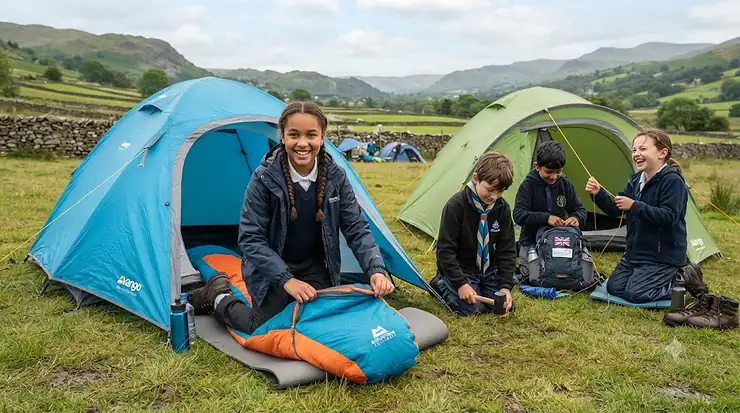
There’s a particular kind of chaos that descends on a house the night before a school residential — trainers hunting each other under the bed, a kit list photocopied so many times it’s gone grey, and somewhere in the middle of it all, a sleeping bag that either isn’t warm enough, doesn’t fit in the rucksack, or has mysteriously vanished since the last sleepover. A sleeping bag for school camping trips is, put simply, a synthetic-filled bag sized and rated for children aged roughly 5 to 12, designed for one to three nights under canvas rather than a week-long expedition — warm enough for a chilly night, compact enough for a child to carry, and tough enough to survive a school kit store. Get the choice right and camp night becomes the highlight of the trip. Get it wrong and you’ve got a shivering, sleep-deprived nine-year-old and a 6am phone call from a teacher.
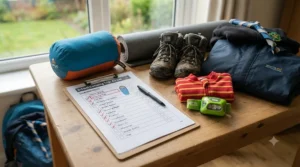
This guide is built around real products actually sold in the UK — genuine model names, genuine specifications, and honestly summarised review sentiment, not invented testimonials. We’ve looked at what actually matters for school and Scout camping specifically: temperature ratings that make sense for a British spring or autumn night, sizing that won’t leave a seven-year-old swimming in fabric, and — because this is a genuinely common headache for parents and leaders — practical things like name-tape loops and whether a bag will survive being crushed at the bottom of a kit bag for three years running. Schools have a duty of care around residential visits (the government’s guidance on health and safety for educational visits sets the framework most kit lists are built around), which is partly why so many kit lists are so specific about what’s expected. We’ll unpack exactly what that means for your sleeping bag choice as we go.
Quick Comparison Table
| Sleeping Bag | Season Rating | Warmth | Price Range | Best For |
|---|---|---|---|---|
| Vango Atlas Junior | 2-season | 8.5 TOG | around £20-£30 | Budget first bag, Scout-approved |
| Vango Kanto Junior | 2-season | 9.0 TOG | around £25-£35 | All-rounder for school camps |
| Quechua MH500 0°C | 3-season | Comfort 0°C | around £35-£45 | Warmest pick, autumn camping |
| Vango Stellar Junior | 2-season | 9.0 TOG | around £30-£40 | Shared storage, heavy rotation |
| KingCamp Kids Flannel | 2-season | N/A (flannel-lined) | around £35-£45 | Growing children, sensitive skin |
A few patterns jump out straight away. Warmth and price track fairly closely — the Quechua MH500 0°C is the outlier because its comfort rating is aimed squarely at cooler nights, not just peak summer, which is exactly what autumn camping demands. Meanwhile the Vango Atlas Junior and Vango Kanto Junior sit at the more affordable end without sacrificing the basics schools and Scout groups actually check for — a real temperature rating, a manageable pack size, and a name-tape loop for marking kit. If your trip falls in June or July, the cheaper 2-season bags are genuinely sufficient; if it’s an October half-term camp, it’s worth paying the extra for something rated closer to freezing.
💬 Just one click — help others make better buying decisions too!😊
Top 7 Sleeping Bags for School Camping Trips: Expert Analysis
1. Vango Atlas Junior — best budget pick, Scout-approved
The Vango Atlas Junior is the sleeping bag most UK parents encounter first, largely because it’s one of the bags Scout groups actively recommend for camps. That endorsement carries real weight, since it means the bag has already survived scrutiny from leaders who see hundreds of children’s bags fail in exactly the same ways every season. Key numbers: an 8.5 TOG rating, a 2-season classification, and a 190T Polair polyester shell with hollow-fibre fill. In practice, that means it’s a genuinely warm bag for spring and summer nights but not one you’d want on a frosty October campsite without extra layers. Based on the spec comparison with pricier options, what most buyers overlook about this model is that its single-layer, mummy-shaped construction with horizontal stitching does a decent job of avoiding cold spots — a common failure point on cheaper bags where the filling bunches up after a few washes. Reviewers consistently note that it’s a reliable “first sleeping bag” that holds up to the inevitable muddy-hands treatment kids give camping kit, though a handful mention the mummy taper feels snug for broader-built children. It’s best suited to first-time campers, Beaver and Cub-aged children, and families who want a bag that won’t feel like a wasted purchase if the child decides camping isn’t for them after all.
Pros:
- ✅ Officially recommended by Scout groups for camps
- ✅ Reliable 8.5 TOG warmth for spring/summer nights
- ✅ Hanging loop makes drying and name-tagging simple
Cons:
- ❌ Not warm enough alone for cold autumn nights
- ❌ Mummy taper can feel tight for broader-built children
At around £20-£30, the Vango Atlas Junior represents strong value for a bag your child may only use for a season or two before growing out of it.
2. Trespass Bunka Kids — best for keeping valuables secure
The standout feature on the Trespass Bunka Kids is its concealed internal pocket — a small, hook-and-loop-fastened compartment tucked inside the bag that’s perfect for a torch, a phone (where allowed), or the inevitable “lucky” toy a child insists on bringing to camp. The mummy-shaped design uses a polycotton lining over a water-repellent ripstop shell, and the elasticated hood cinches for extra warmth without a drawcord — a deliberate safety choice, since drawcords around a sleeping child’s neck are generally discouraged. What the spec sheet won’t tell you, but reviewers note, is that the 2-way zip with hook-and-loop backing tends to be more forgiving for children who struggle with fiddly toggle pulls, making it a genuinely easier bag for a seven-year-old to manage independently at 6am. Depending on the specific listing, comfort ratings for this range span from mild summer use up to a more robust -10°C extreme limit on some versions, so it’s worth double-checking the exact variant before buying if autumn warmth is the priority. Aggregated customer feedback highlights the print options as a genuine hit with younger children, which — while not a technical spec — matters enormously for getting a reluctant camper into their bag without a fuss.
Pros:
- ✅ Secret internal pocket for valuables and comfort items
- ✅ Elasticated hood with no drawcord for safety
- ✅ Easier hook-and-loop zip for independent children
Cons:
- ❌ Comfort rating varies notably between colour/print variants
- ❌ Polycotton lining is bulkier to pack than pure synthetic
Priced around £20-£30, the Trespass Bunka Kids suits families prioritising ease of use and secure storage over outright warmth.
3. Mountain Warehouse Basecamp 200 Kids — best lightweight option for mild nights
Where most of this list leans mummy-shaped, the Mountain Warehouse Basecamp 200 Kids takes the envelope route — a roomier, rectangular cut with a 200g/m² hollowfibre fill that trades a little warmth for noticeably more wriggle space. Its comfort temperature sits around 15°C, with an extreme rating (a survival-only figure, not a comfortable-sleep one) closer to 5°C. Here’s what to weigh: a 15°C comfort rating sounds low compared with mummy-style competitors, but for indoor school sleepovers, garden camping practice runs, and genuinely warm midsummer nights, that’s plenty, and the extra room is a real comfort win for restless sleepers who hate feeling zipped in. The two-way zip allows partial venting on a warm night, and the compact drawstring stuff sack packs down small enough for even a modest school kit bag. Reviewers who’ve used it on cooler evenings, including one account of a Scottish summer trip, describe it as “the perfect mix of keeping cool but not cold” — solid reassurance that Mountain Warehouse’s ventilation claims aren’t just marketing gloss. It’s a sensible pick for a first residential trip, or as a lightweight secondary bag layered with extra blankets for shoulder-season use.
Pros:
- ✅ Roomy envelope shape suits restless sleepers
- ✅ Genuinely good ventilation on mild nights
- ✅ Compact drawstring stuff sack for easy packing
Cons:
- ❌ 15°C comfort rating too mild for autumn without layering
- ❌ Less structured warmth retention than mummy-shaped bags
At roughly £20-£28, the Mountain Warehouse Basecamp 200 Kids is one of the most affordable genuinely usable options here.
4. Vango Kanto Junior — best all-rounder for school camps
The Vango Kanto Junior is arguably the most balanced bag on this list, and it shows in how often it turns up on both Scout kit recommendations and general school camping guides. Its headline feature is the integrated headrest — a small but genuinely useful addition that stops a child’s head sliding off a rolled-up jumper mid-night. Specs-wise, it’s a 9.0 TOG, 2-season bag rated for use between roughly 8°C and 20°C, weighing 1.1kg with a 36cm pack size, and built from the same Polair micro-shell fabric used across Vango’s range. Based on the spec comparison with the cheaper Atlas Junior, the auto-lock two-way zip is the meaningful upgrade here: it can be opened from inside the bag, and it’s far less prone to the zip creeping open overnight that parents report on budget alternatives. One family’s independent test across both a caravan holiday and a wet August campsite weekend found the bag performed consistently in both settings, with no shifting of the fill after washing — a genuinely useful data point for durability, since fill migration is one of the most common complaints about cheap children’s sleeping bags after a handful of wash cycles. The soft-touch lining also draws consistent praise from reviewers as noticeably less “rustly” than lower-priced synthetic alternatives, which matters more than it sounds for light sleepers on their first night away from home.
Pros:
- ✅ Integrated headrest for genuine sleep comfort
- ✅ Auto-lock zip resists opening overnight
- ✅ Fill stayed even after repeated washing in real-world testing
Cons:
- ❌ 2-season rating still needs layering below 8°C
- ❌ Mummy shape less forgiving for taller-for-age children
At around £25-£35, the Vango Kanto Junior earns its place as the safe, sensible default recommendation for most school camping trips.
5. KingCamp Kids Flannel Sleeping Bag — best for growing children
The KingCamp Kids Flannel Sleeping Bag‘s standout trick is genuinely clever: an adjustable-length system that lets the bag extend as a child grows, roughly spanning ages 7 to 12 without needing a replacement. For a family with more than one camping trip ahead — or more than one child destined to inherit the bag — that’s a real saving, and it directly addresses one of the more wasteful aspects of kids’ camping kit, where a bag bought for a six-year-old is often unusable two years later. The 100% cotton flannel lining is the other headline feature, offering a noticeably softer, quieter feel than the synthetic linings used across most of this list; reviewers describe it as eliminating the rustling sound cheaper fabrics produce, which anecdotally helps some children settle faster. A water-resistant outer shell adds a layer of reassurance against morning dew or a damp tent groundsheet. One UK family’s account from an October half-term trip to the Peak District reported their ten-year-old staying comfortable through a 6°C overnight low, though that’s a single data point rather than an independently tested rating, so it’s sensible to treat it as encouraging rather than definitive. The anti-snag zipper, openable from both ends, also gives children genuine independence for middle-of-the-night bathroom trips.
Pros:
- ✅ Adjustable length grows with the child across several years
- ✅ Cotton flannel lining is quieter and softer than synthetics
- ✅ Two-way anti-snag zip supports independent nighttime use
Cons:
- ❌ No independently verified comfort/extreme temperature rating
- ❌ Cotton flannel takes longer to dry than synthetic linings
Priced around £35-£45, the KingCamp Kids Flannel Sleeping Bag is a smart investment for families expecting several years of use.
6. Quechua MH500 0°C (Decathlon) — warmest pick for autumn camping
For anyone specifically hunting the warmest kids sleeping bag for autumn camping, the Quechua MH500 0°C is the clearest standout on this list. Its comfort temperature is independently tested to 0°C, with a limit temperature of -5°C, verified under EN 13537 by an accredited laboratory rather than a manufacturer’s own estimate — a meaningfully higher bar than several competitors here, which don’t always publish independently verified figures for their children’s ranges. On paper this means a child can realistically stay warm through a genuinely chilly October or November night in a British tent, not just a mild summer one. The bag’s Pull & Fit system is the other clever feature: it physically adjusts to fit children between 115cm and 155cm, so it has a genuine multi-year lifespan rather than being outgrown after a single season. Weighing 1.2kg with a built-in carry bag, it’s slightly heavier than the lightest options here, which is the trade-off for the extra insulation. Reviewers consistently flag it as excellent value against dedicated outdoor brands charging considerably more for comparable cold-weather performance, though the half-zip design (rather than a full-length zip) means slightly less flexibility for warm-night ventilation. Availability is primarily through Decathlon stores and decathlon.co.uk, with stock also appearing via Amazon UK marketplace sellers, so it’s worth checking current stock before committing to it as your primary pick.
Pros:
- ✅ Independently verified 0°C comfort rating, genuinely warm
- ✅ Pull & Fit sizing adapts as the child grows
- ✅ Strong value against dedicated cold-weather competitors
Cons:
- ❌ Half-zip design limits ventilation on milder nights
- ❌ Heavier and bulkier to pack than 2-season alternatives
At around £35-£45, the Quechua MH500 0°C is the pick to reach for whenever the trip falls outside peak summer.
7. Vango Stellar Junior — best durability for shared storage
Where the Vango Stellar Junior earns its place is durability under exactly the conditions school and Scout kit stores create — bags stuffed into cupboards, borrowed between siblings, and cycled through camp after camp. Its double-layer fill construction, using the same Grade A hollow-fibre and Polair fabric family as the Kanto Junior, gives it a genuinely more robust feel, and its square-cut shape (rather than a tapered mummy) provides extra room for restless sleepers while still holding a 9.0 TOG, 2-season rating. It’s also one of the few bags on this list sold directly through the official Scouts Store, which is a meaningful endorsement in its own right, since it means it’s already been assessed against the kind of repeated, heavy-rotation use that a school kit room or Scout hut delivers. Reviewers who’ve bought it for children as young as five report it comfortably lasting “a couple of years” of regular use, and specifically praise the robust outer fabric and stitching for resisting tears and abrasions — exactly the failure points that tend to end a cheaper bag’s life early. The auto-lock two-way zip and insulated zip baffle round out a genuinely thoughtful design, though the trade-off for that durability is a marginally bulkier pack size than the lighter single-layer bags on this list.
Pros:
- ✅ Double-layer construction built for heavy, repeated use
- ✅ Sold via the official Scouts Store, vetted for camp conditions
- ✅ Reinforced stitching resists tears from shared storage
Cons:
- ❌ Bulkier pack size than single-layer alternatives
- ❌ Premium pricing compared with the Atlas Junior
At around £30-£40, the Vango Stellar Junior is the one to choose if the bag needs to survive years of shared, high-turnover use.
Top 7 Products at a Glance
| Sleeping Bag | Shape | Warmth Rating | Weight | Price Range | Best For |
|---|---|---|---|---|---|
| Vango Atlas Junior | Mummy | 8.5 TOG (2-season) | ~1.1kg | around £20-£30 | Budget first bag |
| Trespass Bunka Kids | Mummy | Varies by variant | ~1.0kg | around £20-£30 | Secure valuables storage |
| Mountain Warehouse Basecamp 200 Kids | Envelope | 15°C comfort | ~1.0kg | around £20-£28 | Mild-night comfort |
| Vango Kanto Junior | Mummy | 9.0 TOG (2-season) | 1.1kg | around £25-£35 | All-round school camping |
| KingCamp Kids Flannel | Mummy | Not independently rated | ~1.2kg | around £35-£45 | Multi-year growing use |
| Quechua MH500 0°C | Mummy | 0°C comfort (verified) | 1.2kg | around £35-£45 | Autumn/cold-weather camping |
| Vango Stellar Junior | Square | 9.0 TOG (2-season) | 1.1kg | around £30-£40 | Shared, heavy-rotation storage |
Laid out side by side, the trade-offs become clearer: the Quechua MH500 0°C is the only bag here with an independently verified sub-freezing comfort rating, which makes it the obvious choice once the calendar tips into autumn. For summer term camps and Scout weekends between May and September, the Vango Kanto Junior offers the strongest balance of warmth, price and thoughtful design details like the auto-lock zip. If durability under repeated shared use is the priority — a Scout troop’s spare kit, or a family expecting several children to use the same bag — the Vango Stellar Junior‘s reinforced construction is worth the extra spend over the Vango Atlas Junior.
✨ Don’t Miss These Exclusive Deals!
🔍 Take your school camping kit to the next level with these carefully selected sleeping bags. Click on any highlighted item to check current pricing and availability. These picks will help your child stay warm, dry and genuinely excited for their next trip away!
Practical Usage Guide: Getting Kit Ready for Camp
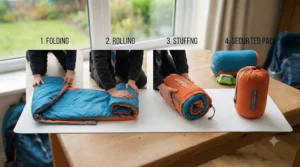
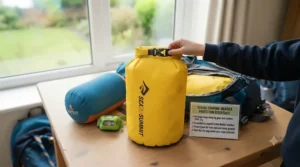
Buying the right bag is only half the job — getting it camp-ready matters just as much. Start by unpacking it from its stuff sack at least a day before the trip; hollow-fibre fill needs time to loft back to its full thickness, and a bag stuffed straight from the shop shelf performs noticeably colder on night one. Wash it once before first use following the care label (most of these bags are machine washable on a low, gentle cycle), which removes any manufacturing residue and softens the lining. On the first night away, a common mistake is sending a child to bed in thick daytime layers — paradoxically, this can trap less warm air than a base layer plus the bag’s own insulation, so a thin thermal top and bottoms usually work better than a bulky jumper. Always pair the bag with a sleeping mat or roll mat; ground insulation matters enormously for children, since they lose heat to cold ground faster than adults due to their smaller body mass relative to surface area. For maintenance between trips, air the bag out fully before storing it — never pack it away damp, as this is the single biggest cause of mildew and fill degradation in shared kit stores. Store loosely in a large cotton or mesh bag rather than permanently compressed, which preserves loft far better over multiple seasons.
Real-World Scenarios: Which Bag Suits Which Camper
Picture three children heading off on the same school residential. Freya, seven, is going camping for the very first time and has never spent a night away from her parents without a nightlight nearby — for her, a mummy-shaped bag with a soft, quiet lining like the KingCamp Kids Flannel Sleeping Bag genuinely helps, since the reduced rustle and snug fit can be reassuring rather than restrictive for an anxious first-timer. Tobias, ten, is a Cub Scout heading to his fourth camp and shares a sleeping bag with his younger brother between trips — durability under repeated use is the priority, making the Vango Stellar Junior‘s reinforced build the sensible pick over a cheaper single-season alternative that might not survive a third year of rotation. Finally, Amara, eleven, is heading to an October half-term Forest School residential where overnight temperatures could genuinely dip close to freezing — here, warmth trumps every other consideration, and the Quechua MH500 0°C‘s verified cold-weather rating removes the guesswork a 2-season summer bag simply can’t answer. The common thread across all three: match the bag to the actual conditions and actual child, rather than defaulting to whichever option is cheapest or most colourful on the shelf.
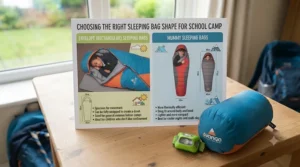
How to Choose a Sleeping Bag for School Camping Trips
- Check the trip’s likely temperature range first. Look at the season and location on the kit list, and lean warmer rather than colder if in doubt — a slightly-too-warm bag can be unzipped, but a too-cold one can’t be fixed at 2am.
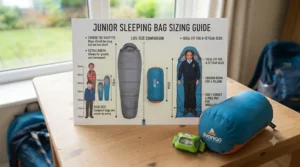
- Match the size to the child, not just their age. Most junior bags list a maximum user height rather than an age band, so measure your child rather than relying on the box.
- Prioritise an independently tested temperature rating where possible. Standards like EN 13537/ISO 23537 mean the figure has been lab-verified rather than estimated by the manufacturer.
- Consider the zip type for independence. A two-way zip lets a child self-adjust ventilation and get in and out unaided, which matters more on a school trip than it might at home.
- Think about drying and storage practicality. A hanging loop and a manageable pack size make a genuine difference to whether a bag gets properly dried and stored between uses.
- Factor in durability if the bag will be shared or reused. Double-layer construction and reinforced stitching cost more upfront but pay off over multiple seasons or siblings.
- Check the kit list wording before you buy. Some schools and Scout groups specify a minimum season rating or size — buying before checking is one of the most common (and easily avoided) mistakes parents make.
Best Sleeping Bag for Scouts and Cubs
Scout and Cub camping brings its own specific demands that a generic “kids camping” bag doesn’t always meet. Camps are frequently run across shoulder seasons rather than just midsummer, kit is often shared or borrowed between siblings in the same troop, and — because Scout leaders see enormous volumes of children’s kit fail every season — there’s a strong practical logic to choosing something already vetted by the organisation itself. The Scouts’ own guidance on packing and kit care explicitly recommends matching a bag’s season rating to the trip rather than assuming any sleeping bag will do, and specifically flags that 1-season bags are only suitable above +5°C — a distinction that catches out plenty of parents buying for their first camp. The Vango Atlas Junior carries a direct Scout Association recommendation and is priced to make sense as a first purchase that might only get light early use. For Cub and Scout families expecting the bag to see genuinely heavy rotation — multiple camps a year, potentially handed down to a younger sibling — the Vango Stellar Junior, sold directly through the official Scout Store, is built with exactly that durability in mind. Both avoid drawcord hoods in favour of elasticated designs, a detail that’s increasingly a soft expectation on Scout kit lists for younger sections on safety grounds.
Warmest Kids Sleeping Bag for Autumn Camping
Autumn camping catches out more families than any other season, largely because summer’s residual warmth in September gives way surprisingly fast to genuinely cold nights by late October. UK-wide, Met Office climate data shows fairly mild average conditions across autumn as a whole, but that average masks real night-to-night variation — a clear autumn sky, common on high-pressure camping weekends, allows heat to radiate away fast, and temperatures at ground level in a tent can dip several degrees below the forecast air temperature. This is exactly the scenario a 2-season, 8-9 TOG summer bag isn’t designed for. The Quechua MH500 0°C stands apart here specifically because its 0°C comfort rating and -5°C limit have been independently lab-tested, giving parents and leaders a genuinely reliable figure to plan around rather than an optimistic marketing estimate. Reviewers consistently note that a base layer and the bag alone is sufficient down to close-to-freezing conditions, whereas 2-season alternatives on this list typically need supplementing with thermal layers, a fleece liner, or a hat once temperatures drop much below 8°C. If budget doesn’t stretch to a dedicated cold-weather bag, layering any of the 2-season options here with a thin sleeping bag liner and warm sleepwear is a genuinely effective, low-cost way to extend their comfortable range by several degrees.
Name-Tag Loops, Marking Kit and Kit List Requirements Explained
Almost every school and Scout kit list carries some version of the same instruction: “name all items clearly.” It sounds trivial until you’re the parent standing in a lost property pile at pickup trying to identify which of eight identical blue sleeping bags belongs to your child. This is where a small, easily overlooked detail — the hanging loop most of these bags include — earns its keep as a de facto name-tag loop. Every Vango model in this guide (the Atlas Junior, Kanto Junior and Stellar Junior) includes a dedicated hanging loop originally designed for drying, but it doubles perfectly as an anchor point for a sew-in or iron-on name tape, or a simple luggage-style tag threaded through with string. For bags without an obvious loop, a name tape stitched or safety-pinned to the stuff sack itself, plus a second one inside the bag near the foot end, covers both scenarios: the bag going missing, and the bag being found separated from its sack. Waterproof laundry marker directly onto a woven label is the most durable option for a bag that will be washed repeatedly over several seasons. Beyond naming, kit list requirements typically also specify a maximum pack size (so it fits the child’s own rucksack rather than an adult’s kit bag) and sometimes a minimum season rating for the specific trip dates — both worth checking against the exact wording of your school or group’s list before purchasing, since requirements do vary meaningfully between organisations and even between different trips run by the same group.
Durability for Shared Storage: Kit Rooms, Lost Property and Longevity
School kit stores and Scout huts are genuinely hostile environments for sleeping bags — crushed under other kit, cycled between different children term after term, and stored for months at a time in conditions that aren’t always ideal. Durability here isn’t just about fabric strength; it’s about how well a bag recovers its loft after repeated compression, how the fill behaves after multiple wash cycles, and whether the zip mechanism survives being yanked by impatient hands. Double-layer constructions, like those used in the Vango Stellar Junior, are specifically designed to resist the fill migration and cold-spot formation that single-layer budget bags are prone to after a season or two of heavy use — reviewers of the Kanto Junior’s related single-layer construction reported no shifting of fill even after a wet weekend and repeated washing, which is a reasonably strong real-world durability signal. For genuinely shared kit — a Scout troop’s spare stock, or bags rotated between multiple children in one family — it’s worth budgeting for the more reinforced options over the cheapest available bag, since the cost-per-use over several years usually favours the sturdier choice once you account for a budget bag needing early replacement. Storing bags loosely rather than permanently compressed, and ensuring they’re fully dry before returning to a shared store, does more for long-term durability than the fabric choice alone.
Sleeping Bag vs Duvet-Style Kits for School Camping
Some school and Scout kit lists now offer a duvet-style alternative — essentially a filled quilt that tucks under the child rather than zipping around them — as an option alongside a traditional sleeping bag. The two aren’t interchangeable for camping use, and the difference matters more than it might first appear. A traditional sleeping bag, particularly a mummy-shaped design like the Vango Kanto Junior or Quechua MH500 0°C, traps a smaller pocket of air around the body that the child’s own warmth heats efficiently, which is precisely why sleeping bags consistently outperform duvets for genuine outdoor camping in anything other than the warmest conditions. A duvet-style kit, by contrast, is generally intended for indoor sleepovers or well-insulated cabin-style accommodation, where ambient room warmth does more of the work and the open sides aren’t a meaningful heat-loss risk. For a tent-based residential, even a mild one, a proper sleeping bag is the safer and warmer choice; a duvet-style kit is a reasonable substitute only when the accommodation itself is heated. If your child’s kit list explicitly permits either option, treat it as a genuine choice rather than interchangeable wording, and default to the sleeping bag unless you know the accommodation is indoors and heated overnight.
Common Mistakes When Buying a Kids Sleeping Bag
The single most common mistake is buying purely on age rather than height — a tall six-year-old and a petite nine-year-old can need entirely different sizes, and most junior bags list a maximum user height rather than an age band for exactly this reason. A close second is ignoring the season rating altogether and assuming “kids’ sleeping bag” implies adequate warmth for any UK trip; as covered above, a 2-season bag rated to 8°C simply isn’t equipped for a genuinely cold autumn night without extra layering. Parents also frequently overlook pack size, buying a bag that’s technically warm enough but too bulky to fit inside a child’s own rucksack, forcing an awkward, hard-to-carry bundle strapped to the outside. Another frequent misstep is buying based on print or colour alone without checking the underlying spec — a fun design is genuinely valuable for getting a reluctant child excited about camping, but it shouldn’t come at the expense of an appropriate temperature rating. Finally, many families skip washing and airing a new bag before its first trip, missing out on the loft recovery that gives hollow-fibre fill its full warming power on night one.
Long-Term Cost & Maintenance
Judged purely on sticker price, the Mountain Warehouse Basecamp 200 Kids and Vango Atlas Junior look like the obvious choices at the lower end of the price ranges here. But total cost of ownership tells a more nuanced story once you factor in how many seasons a bag realistically lasts. A budget single-layer bag replaced every year or two because a child has outgrown it or the fill has degraded works out more expensive over a five-year camping “career” than a single adjustable or reinforced bag bought once. The KingCamp Kids Flannel Sleeping Bag‘s adjustable-length system and the Quechua MH500 0°C‘s Pull & Fit sizing both directly address this by extending usable life across several years of growth, effectively lowering cost-per-use even though the upfront price is higher. Maintenance costs are modest across the board — all the bags here are machine washable, though cotton flannel linings take longer to dry than pure synthetic fills, which matters if you’re washing between back-to-back trips. Basic care extends any bag’s life regardless of model: washing on a low, gentle cycle, drying fully before storage, and avoiding permanent compression in a stuff sack are free habits that do more for longevity than any single spec choice.
Safety, Regulations and Comfort Ratings Explained
UK-sold children’s sleeping bags fall under general consumer product safety regulations, and reputable brands increasingly test against the ISO 23537 standard (the successor to the older EN 13537), which independently verifies the comfort and limit temperature figures printed on the label rather than leaving them to manufacturer estimate. It’s worth noting, as several retailers of children’s outdoor gear point out, that there isn’t a separate official standard specifically calibrated for children’s physiology — the ratings are typically extrapolated from adult testing methodology, which is one reason it’s sensible to treat any printed comfort rating as a helpful guide rather than an absolute guarantee, and to err warmer than the number suggests for younger or smaller children. On the design side, look for hoods that use elasticated openings rather than drawcords for younger children specifically — several bags in this guide, including the Trespass Bunka Kids and both junior Vango models, have moved away from drawcord hoods for exactly this safety reason. Flame-retardant treatment and general product safety compliance should be a given on any UK-retailed children’s sleeping bag from an established brand, but it’s worth checking product safety information on the listing itself if buying from an unfamiliar seller via a third-party marketplace.
Buyer’s Decision Framework
If your child is going on their very first overnight camp and budget is the main concern, choose the Vango Atlas Junior because it’s affordable, genuinely Scout-endorsed, and low-risk if camping doesn’t immediately become a regular hobby. If the trip falls in autumn or you simply want one bag that copes with genuinely cold nights, choose the Quechua MH500 0°C because its independently verified rating removes the guesswork other bags leave you with. If the bag needs to survive years of shared use across siblings or a Scout troop’s spare kit, choose the Vango Stellar Junior because its reinforced double-layer build is specifically designed for exactly that wear pattern. If your child is likely to grow noticeably over the next few camping seasons, choose either the KingCamp Kids Flannel Sleeping Bag or the Quechua MH500 0°C, since both include adjustable sizing systems that extend their useful life well beyond a single-size bag. And if a nervous first-time camper needs reassurance more than raw warmth, the softer, quieter lining on the KingCamp Kids Flannel Sleeping Bag or the secure internal pocket on the Trespass Bunka Kids can genuinely make the difference between a good first night and a tearful phone call home.
Frequently Asked Questions
❓ What temperature rating do I need for a school camping trip in the UK?
❓ Do school kit lists specify a particular sleeping bag brand?
❓ How do I mark a sleeping bag with my child's name?
❓ Can one sleeping bag last several camping seasons?
❓ Is a duvet-style kit an acceptable substitute for a sleeping bag on a school trip?
Conclusion
Choosing a sleeping bag for school camping trips ultimately comes down to matching three things honestly: the season the trip actually falls in, your child’s real size rather than their age on paper, and how much use the bag genuinely needs to survive. For most families, the Vango Kanto Junior offers the most sensible balance of warmth, thoughtful design and price for a typical spring or summer school residential. If the calendar tips into autumn, the Quechua MH500 0°C‘s verified cold-weather rating earns its higher price tag. And if durability under shared, repeated use across a Scout troop or several siblings matters most, the Vango Stellar Junior‘s reinforced build is worth the investment. Whichever bag you land on, the small practical details covered here — naming it properly, matching the season rating honestly to the trip dates, airing it fully between uses — matter just as much as the sleeping bag itself in making sure your child comes home from camp having actually slept well. Camping should be the part of the school year kids talk about for months afterwards, and a genuinely well-chosen sleeping bag is a surprisingly large part of making that happen.
✨ Don’t Miss These Exclusive Deals!
🔍 Ready to get kitted out before the next trip? Check current prices and availability on today’s top picks, and help your child head off to camp warm, comfortable and genuinely excited for the adventure ahead!
Recommended for You
- 7 Best Character Sleeping Bag for Kids Picks (2026 UK Guide)
- Kids Sleeping Bag: 7 Best Junior Picks for UK Camping 2026
- 7 Best Lightweight Down Sleeping Bag for Backpacking (2026 UK Guide)
Disclaimer: This article contains affiliate links. As an Amazon Associate, I earn from qualifying purchases. If you purchase products through these links, we may earn a small commission at no additional cost to you.
✨ Found this helpful? Share it with your friends! 💬🤗
