

In This Article
A silk sleeping bag liner is a thin inner sheet, woven from silk or a silk blend, that sits inside your sleeping bag or works alone as a travel sheet. It keeps the bag cleaner, adds a modest amount of warmth, and typically weighs somewhere between 110 and 180 g. That’s less than a bar of chocolate, and it’s the cheapest “comfort upgrade” in outdoor kit.
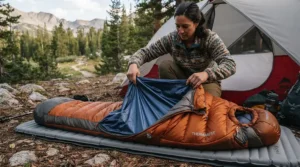
Here’s the honest catch, though. Silk is brilliant at being light, tiny and nice against the skin, but it is not a magic heater. One outdoor-gear feature that looked at the question found that the real-world warmth boost from silk liners is smaller than many brand claims suggest. So choosing the right silk sleeping bag liner is mostly a game of matching shape, fabric and weight to the trip you’re actually taking.
This guide is built on spec sheets, manufacturer care labels and genuine published review feedback, not invented testing. Where I couldn’t verify a model’s review pool, I say so. We’ll cover seven real models, then dig into silk liner vs cotton liner for travel, the best silk sleeping bag liner for hostels, the pack size vs warmth trade-off, luxury lightweight fabrics, and what matters on multi-week backpacking trips.
Silk Sleeping Bag Liner Quick Comparison: 7 Models at a Glance
Here’s the shortlist before we get into detail. Weights are approximate and vary slightly between retailer listings. Prices are indicative ranges at the time of research, so check current price before buying.
| Product | Fabric | Approx. weight | Price range | Best For |
|---|---|---|---|---|
| Sea to Summit Premium Silk Stretch Liner | Ripstop silk + stretch panels | 125-148 g | £60-£85 | Restless sleepers, hostel sheet use |
| Sea to Summit Silk Blend Liner | 72% Thermolite / 28% silk | 140-154 g | £80-£110 | Cold sleepers, less slippery feel |
| Cocoon MummyLiner Silk | 100% silk | 135 g | £70-£95 | All-round travel and trekking |
| Cocoon MummyLiner Silk Ripstop | Ripstop silk | 135 g | £80-£100 | Durability on long trips |
| Cocoon MummyLiner Silk-Cotton | 55% silk / 45% cotton | 180 g | £45-£65 | Hardwearing compromise |
| Lifeventure Silk Ultimate Liner | 100% silk | 134-154 g | £55-£80 | Features and pillow sleeve |
| Browint Silk Sleeping Bag Liner | Silk (listings vary) | ~140-180 g | £30-£50 | Budget, extra-wide sheet |
Looking at the comparison above, the Cocoon MummyLiner Silk and the Sea to Summit Premium Silk Stretch Liner are the lightest and most packable. The Sea to Summit Silk Blend Liner trades a few extra grams for a grippier feel and a bit more warmth. Budget buyers should note that the Browint Silk Sleeping Bag Liner is the cheapest entry, but its fabric claims vary between listings, so it needs a more careful look.
💬 Just one click — help others make better buying decisions too!😊
Top 7 Silk Sleeping Bag Liner Picks: Expert Analysis
1. Sea to Summit Premium Silk Stretch Liner — best stretch silk for restless sleepers
Stretch gussets along the seams are the headline here, and they fix the most common complaint about plain rectangular silk: getting wound up like a spring-roll when you roll over.
The body is AA-grade ripstop silk with polyester/Lycra panels. The Standard rectangular (185 x 92 cm) is listed at roughly 125-148 g depending on the retailer, packing to around 12 x 10 x 7 cm. The Mummy (about 140 g) and Traveller with pillow compartment (about 165 g) suit different jobs. On paper, those stretch panels also reduce strain on the seams, which Sea to Summit says improves liner life.
Based on the spec comparison, this is the one I’d shortlist if you’ll use a liner mostly as a stand-alone sheet. Rectangular shapes are easier to climb into on a hostel bunk, and the Traveller’s pillow pocket stops a grubby pillow touching your face. If you’re mostly lining a mummy bag, the Mummy shape is the better fit.
On reviews, I couldn’t verify a large, current pool of independent UK feedback for this exact model, so the comfort claims here rest on manufacturer specs and retailer descriptions.
Pros:
- ✅ Stretch seams move with you
- ✅ Four shapes, including pillow-pocket Traveller
- ✅ Ripstop silk with reinforced seams
Cons:
- ❌ Only a few degrees of added warmth
- ❌ Dearer than cotton or budget silk
Price: around £60-£85. A sensible premium if comfort in motion matters to you.

2. Sea to Summit Silk Blend Liner — best for warmth without the bulk
Pure silk can feel like sleeping on a wet fish, and this liner is Sea to Summit’s answer.
The fabric is 72% recycled Thermolite and 28% natural silk, with HeiQ Fresh odour control. The Mummy Standard is listed at around 140-154 g (206 x 80 cm) and packs to about 12 x 6.5 x 10 cm. The mummy version also has shoulder openings for temperature regulation. Sea to Summit says it lifts a bag’s temperature performance by 5% for a three-season bag and 8% for a one-season bag. Those are modest, percentage-based claims, so don’t expect miracles.
Here’s what to weigh: because silk is only about a quarter of the fabric, you’re buying grip and a bit of insulation rather than pure silk luxury. If you move around a lot at night, that grip is arguably worth more than a slippery pure-silk feel.
Reviewers on retailer pages consistently praise the warmth boost for almost no extra weight, and some suggest sizing up to the longer cut if you’re tall. A UK walking-gear guide also describes it as less slippery than pure silk.
Pros:
- ✅ Less slippery than pure silk
- ✅ Extra warmth for minimal weight
- ✅ Odour-control finish helps between washes
Cons:
- ❌ Not a pure silk feel
- ❌ Air-dry only, so slower after washing
Price: around £80-£110. Good value for cold sleepers.
3. Cocoon MummyLiner Silk — best all-round pure silk
If one liner has become the default recommendation in UK outdoor circles, it’s this one.
Cocoon lists 135 g, 241 x 90/56 cm, and a packed size of 14.5 x 6.5 cm, with a drawstring hood, wide top opening, boxed foot and fully double-stitched seams. The brand claims it adds up to 5.3°C. Treat that as a best-case figure, because independent reviewers report far less.
A UK hill-walking group test of Cocoon’s range called silk the lightest and most packable option. That fits my reading of the specs: if grams and litres matter more than warmth, silk wins. The tapered cut slips neatly inside mummy bags, and the generous 241 cm length covers tall sleepers.
Reviewers on a US retailer’s page describe the liner as tiny when packed, say it kept the bag clean, and put the warmth gain at roughly 3-5°F (about 2-3°C). One reviewer reported snagging damage, a reminder that the featherweight fabric is delicate.
Pros:
- ✅ Packs to roughly a soda-can size
- ✅ Hood, boxed foot and double-stitched seams
- ✅ Machine-washable at 30°C
Cons:
- ❌ Delicate fabric can snag
- ❌ Only a couple of degrees of real warmth
Price: around £70-£95. Solid value for an all-rounder.
4. Cocoon MummyLiner Silk Ripstop — best for durability
Cocoon’s patented ripstop weave tackles silk’s biggest weakness: the way a small snag can become a long tear.
A grid of stronger silk threads is woven through the fabric. The listing shows the same 241 x 90/56 cm dimensions and 135 g weight as the standard version, with a packed size of about 14.5 x 6 cm. In practice that means you get extra tear resistance for what looks like no weight penalty on paper.
What most buyers overlook is how much durability matters once a liner becomes a daily-use item. A snag on night three of a trip is annoying. A split by week three is a nuisance you can’t fix on the trail. For that reason, I’d lean towards this over the standard version for anyone who will be handling the liner roughly, such as stuffing it into a pack or sleeping on abrasive hut bunks.
I couldn’t verify a deep pool of independent reviews for this exact ripstop version, so the durability case rests on the construction claim rather than long-term user reports.
Pros:
- ✅ Ripstop grid resists tearing
- ✅ Same low weight as standard silk
- ✅ Hood, boxed foot and double stitching
Cons:
- ❌ Costs more than standard silk
- ❌ Limited independent review evidence
Price: likely £80-£100, though listings vary, so check current price. Worth it for rougher use.
5. Cocoon MummyLiner Silk-Cotton — best hardwearing compromise
Think of this as the sensible middle child between pure silk and plain cotton.
The fabric is 55% silk and 45% Egyptian cotton. Retailer specs list about 180 g and a packed size near 14 x 7 cm. The cotton adds durability and moisture-wicking, while the silk keeps weight and bulk far below a cotton-only liner. A UK hill-walking test put a Cocoon organic cotton liner at around 380 g, so this blend roughly halves that.
My analytical take is that this suits people who would otherwise choose cotton for cost and toughness but want to claw back weight. It’s about 45 g heavier than Cocoon MummyLiner Silk, which is a modest penalty for a more forgiving fabric. Silk-cotton blends from other makers are also described as less shiny and less slippery than pure silk, which many sleepers prefer.
I couldn’t verify a solid pool of reviews for this exact model, so I’m relying on specs and the known behaviour of blended fabrics.
Pros:
- ✅ Tougher than pure silk
- ✅ Around half the weight of cotton
- ✅ Less expensive than pure silk
Cons:
- ❌ Heavier than the pure-silk Cocoons
- ❌ Slightly bulkier when packed
Price: around £45-£65. Strong value for rugged use.
6. Lifeventure Silk Ultimate Liner — best British-brand feature set
Lifeventure packs in the extras that other brands treat as optional.
It’s 100% silk with a pillow sleeve, a Contact Germ Guard, Polygiene odour control, stretch side panels and a hidden passport pocket, all in a ripstop carry case. Reviewers list the mummy at about 134 g and the rectangular at about 154 g, with a 220 x 85 cm cut and a packed size near 12 x 8.5 x 4.5 cm. That’s genuinely compact for a feature-packed liner.
One outdoor-gear reviewer called it ultralight, comfortable and surprisingly warm for autumn and early spring, and thought it felt less likely to tear than many cotton liners. Another UK reviewer praised the way the mummy shape fits technical bags and the generous pillow sleeve. A caution from a owner of the plain Lifeventure silk liner: it snags easily and has no zip, so getting in and out takes some faff.
That makes this the stronger choice for hostel use, where the pillow sleeve and passport pocket genuinely earn their keep.
Pros:
- ✅ Pillow sleeve and hidden passport pocket
- ✅ Odour control and germ-guard finish
- ✅ Mummy and rectangular options
Cons:
- ❌ Silk can snag on rough surfaces
- ❌ No zip, so entry takes some wriggling
Price: around £55-£80. Good value for travellers.
7. Browint Silk Sleeping Bag Liner — best budget extra-wide sheet
If your priority is room to move at the lowest price, this is the entry point.
Listings show a generous 87 x 43 inch (roughly 221 x 109 cm) single and a Traveller with pillow pocket at around 87 x 34-36 inches. Weight is listed at roughly 5-6.3 oz (about 140-180 g), packing to about 5 x 3 inches, with reinforced gussets and a ripstop stuff bag. Care guidance is cold hand or machine wash with no machine drying.
Here’s the honest bit: the momme weight is stated inconsistently across listings, with one retailer citing 8 momme AA-grade silk. Reviewers say it’s soft, compact and comfortable in warm hostels, but one noted it isn’t the highest momme, so it feels light rather than luxurious. Another reported that the dye isn’t colourfast. Wash it separately, and check the current UK listing for exact fabric details.
Pros:
- ✅ Extra-wide cut for easy movement
- ✅ Pillow-pocket Traveller option
- ✅ Lowest price of the seven
Cons:
- ❌ Fabric specs vary between listings
- ❌ Reports of colour running in the wash
Price: around £30-£50. Decent value if you accept the caveats.
How to Use and Care for a Silk Sleeping Bag Liner (First 30 Days)
A silk liner rewards a little care and punishes a lot of carelessness. Here’s a practical routine that Amazon listings don’t spell out.
Setup. Before your first trip, do a trial night at home. Slide the liner in feet first, pull it fully taut across the footbox, and settle into it with your sleeping bag around you. If you’re using a mummy shape, pull the drawstring hood loosely so you aren’t boxed in. If you’re using a rectangular sheet, check that the pillow pocket opens the right way for the pillow you’ll carry.
First-use tips. Make sure your nails and any rough zips or jewellery are out of the way when you get in. Silk snags more readily than cotton, which is the single most common complaint from owners. A short pre-trip night also tells you whether a mummy cut feels restrictive.
Maintenance schedule. Cocoon’s care label calls for a gentle machine wash at 30°C with mild detergent, or hand washing, no bleach or stain remover, and a low tumble or drip dry. Sea to Summit advises always air drying any liner containing silk. Following the more cautious of the two is the safer default. Wash coloured liners separately, particularly if they bleed dye.
Common mistakes in the first 30 days.
- Washing at high temperatures or with strong detergents
- Wringing the fabric, which stresses the weave
- Storing the liner damp in its stuff sack
- Pulling it out of the sack hastily, which invites snags

Real-World Scenarios: Matching a Silk Liner to Your Trip
Specs only matter when you map them to a real journey. Here are three profiles with budget, environment and frequency of use.
The Interrail hostel-hopper. Imagine a student on a month-long European trip with a £50-£70 budget for a liner, sleeping in dorm bunks most nights. A rectangular sheet makes sense, so the Sea to Summit Premium Silk Stretch Liner with the Traveller pillow compartment or the Lifeventure Silk Ultimate Liner with its passport pocket would fit. Use is nightly, so durability and a pillow sleeve count for more than saving 10 g.
The long-distance walker. Picture someone doing a four-week trek with a three-season synthetic bag, camping most nights. Here the Cocoon MummyLiner Silk Ripstop earns its premium, because tear resistance and tiny pack size matter every single day. If the walker sleeps cold, the Sea to Summit Silk Blend Liner adds a little extra warmth.
The budget weekend camper. For someone using a liner a handful of times a year, in summer, paying a premium makes little sense. The Browint Silk Sleeping Bag Liner or the Cocoon MummyLiner Silk-Cotton keep the bag clean without a big outlay.
The pattern is simple: nightly use pays for durability and features, while occasional use pays for nothing but the basics.
Silk Sleeping Bag Liner Specs and Value Side by Side
Now the fuller comparison. Review evidence is rated by how much genuine published feedback I could verify.
| Product | Packed size | Shapes | Price range | Review evidence | Best For |
|---|---|---|---|---|---|
| Sea to Summit Premium Silk Stretch Liner | ~12 x 10 x 7 cm | Standard, Mummy, Long, Traveller, Double | £60-£85 | Thin | Hostel sheet use |
| Sea to Summit Silk Blend Liner | ~12 x 6.5 x 10 cm | Mummy, Rectangular | £80-£110 | Good | Cold sleepers |
| Cocoon MummyLiner Silk | ~14.5 x 6.5 cm | Mummy (S and standard) | £70-£95 | Good | Everyday trekking |
| Cocoon MummyLiner Silk Ripstop | ~14.5 x 6 cm | Mummy | £80-£100 | Thin | Rough use |
| Cocoon MummyLiner Silk-Cotton | ~14 x 7 cm | Mummy | £45-£65 | Thin | Hardwearing budget |
| Lifeventure Silk Ultimate Liner | ~12 x 8.5 x 4.5 cm | Mummy, Rectangular | £55-£80 | Moderate | Travel features |
| Browint Silk Sleeping Bag Liner | ~13 x 8 cm | Single, Traveller | £30-£50 | Mixed | Budget room to roam |
The data points to three distinct tiers. The Cocoon MummyLiner Silk and Sea to Summit Silk Blend Liner have the strongest review evidence, making them the lower-risk buys. The Lifeventure Silk Ultimate Liner wins on features per pound, while the Browint Silk Sleeping Bag Liner is the cheapest but needs the closest checking of current specs.
How to Choose a Silk Sleeping Bag Liner
What is the quickest way to choose? Start with how you’ll sleep, then match shape, fabric and weight. Here are the steps in order.
- Decide the main job. Hostel sheet, bag protector, or warmth booster? Silk shines for the first two and is only mildly helpful for the third.
- Pick the shape. Mummy shapes pack smaller and fit mummy bags. Rectangular sheets suit hostel bunks and give more freedom.
- Check the length. Tall sleepers should look at long cuts, as some reviewers advise sizing up from standard.
- Choose the fabric. Pure silk is lightest, silk-cotton is tougher, and Thermolite-silk is grippier and warmer.
- Add the extras you’ll use. A pillow sleeve, hood drawstring or passport pocket only matter if they match your habits.
- Check care rules. Air-dry-only fabrics are slower after washing, which matters on trips.
- Set a budget by use. Nightly users should pay for durability. Occasional users shouldn’t.
Features That Actually Matter (And Those That Don’t)
Marketing copy loves buzzwords. Here’s the filter.
Matter: Shape, because a poor cut is the commonest reason people stop using a liner. Durability features such as ripstop weave, double stitching and reinforced seams, because silk is delicate. Stretch panels, if you’re a restless sleeper. A pillow sleeve, if you’ll use hostel pillows.
Matter a bit: Odour-control finishes such as HeiQ Fresh or Polygiene. They help between washes, but they won’t replace a wash on a long trip.
Don’t matter much: The headline “adds up to X°C” claim. Manufacturer maximums are best-case numbers, and independent commentary suggests the real effect is smaller. Likewise, don’t fixate on a precise momme figure unless you’re comparing two pure silk liners from the same maker.
Silk Liner vs Cotton Liner for Travel
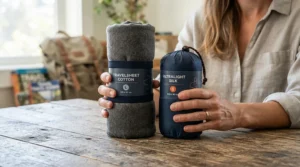
For anyone comparing a silk liner vs cotton liner for travel, the difference boils down to weight, bulk and price. A UK hill-walking test of Cocoon’s range called silk the lightest and most packable option, with the silk expedition liner weighing 125 g against 380 g for an organic cotton one. The same test noted that cotton is heavy, doesn’t pack small, and stays wet once it’s wet. Silk dries quickly.
| Type | Typical weight | Pack size | Drying | Best For |
|---|---|---|---|---|
| Silk | 110-150 g | Tiny | Fast | Weight-conscious travel |
| Silk-cotton | 140-180 g | Small | Moderate | Tougher everyday use |
| Cotton | 250-380 g | Larger | Slow | Car camping, budget |
| Thermolite / fleece | 370 g+ | Bulky | Moderate | Genuine warmth boost |
Analysis: in a silk liner vs cotton liner for travel comparison, silk wins on weight and drying, while cotton wins on price and toughness. If you’re counting grams, as on multi-week backpacking trips, silk is the logical choice. If you mostly travel by car or stay in hostels, a Cocoon MummyLiner Silk-Cotton or a plain cotton sheet is a reasonable compromise.
Another UK gear feature points out that silk is almost always pricier than cotton or polycotton. If your main aim is simply keeping your bag clean, a cheaper fabric will do the job. The full UK hill-walking test is worth reading if you want the weight figures in context.

Best Silk Sleeping Bag Liner for Hostels
The best silk sleeping bag liner for hostels is usually a rectangular or Traveller shape with a pillow sleeve, because dorm beds are about hygiene and ease of use, not warmth. That points to the Lifeventure Silk Ultimate Liner for its pillow sleeve and passport pocket, or the Sea to Summit Premium Silk Stretch Liner in the Traveller cut.
Think about what a hostel bed actually demands. You want to slide in quickly, avoid skin contact with unknown fabric, and keep a pillow barrier between your face and the pillow. Mummy shapes are fiddlier on a bunk, and the narrower cut can feel restrictive in a wide bed. A wider sheet, such as the Browint Silk Sleeping Bag Liner, gives more freedom if you can accept the budget trade-offs.
A word of caution on bed bugs. The NHS notes that bites often appear on skin exposed while sleeping, such as the face, neck and arms, and that bedbugs can hide in mattresses, bed frames, clothing and furniture. A liner adds a layer between you and the bedding, but it isn’t a guaranteed barrier, so check the mattress seams and keep your bag zipped up and off the floor.
When shopping for the best silk sleeping bag liner for hostels, also check care rules. You’ll be washing it more often, so a liner you can wash and dry in a day is a real convenience.
Pack Size vs Warmth Trade-Off
The pack size vs warmth trade-off is the heart of liner buying. One backpacking guide sums it up neatly: a fleece liner can add real warmth but eats your pack, while a silk liner saves grams but barely warms your bag.
Let’s put numbers on it using manufacturer claims, which are best-case. Cocoon MummyLiner Silk weighs 135 g and claims up to 5.3°C, or roughly 25 g per degree. In the same UK test, the Cocoon merino liner weighed 495 g and claimed 7°C, or roughly 70 g per degree. On paper, silk is the most weight-efficient way to add warmth, but only because it adds very little in absolute terms.
Independent reviewers suggest the real gain is closer to 2-3°C. A fleece or Thermolite liner at around 370 g will give a bigger boost, but it takes up far more of your pack.
My reading of the pack size vs warmth trade-off is simple. If your bag is already adequate for the conditions, a silk liner is nearly free. If your bag is marginal, silk helps a little, but a warmer bag or a heavier liner is the real fix. The Sea to Summit Silk Blend Liner sits sensibly in the middle for people who want a touch more warmth without a big bulk penalty.
Luxury Lightweight Fabrics: Silk and Its Rivals
Silk is the poster child of luxury lightweight fabrics, but it’s not the only contender. Silk-cotton blends add toughness. Thermolite-silk blends add insulation and grip. Merino adds real warmth but weighs far more.
Silk weight is measured in momme, a traditional Japanese unit. As Wikipedia’s habutai entry explains, a lightweight, sheer silk might be 8 momme, while 16 momme is considered quite thick. Sleeping bag liners tend to use lighter silks to keep weight and bulk down, which is why a precise momme figure isn’t always published.
Why does this matter? A higher momme generally means a heavier, denser and more durable fabric, but it also means more weight in your pack. For luxury lightweight fabrics, the sweet spot depends on your priorities. A liner for hostel use can afford a slightly heavier, more durable silk. A liner for multi-week backpacking trips benefits from the lightest practical weave, ideally with a ripstop structure.
The Cocoon MummyLiner Silk Ripstop is the clearest example of engineering around silk’s weakness, while the Sea to Summit Silk Blend Liner shows how blending can tame slipperiness. Whichever you choose, the luxury lightweight fabrics rule is the same: you pay for softness and low weight, and you give up some toughness.
Silk Sleeping Bag Liner for Multi-Week Backpacking Trips
On multi-week backpacking trips, a silk sleeping bag liner pays for itself in small ways: a cleaner bag, less laundry fuss and a nicer night’s sleep. But the demands on it are different from a weekend away.
First, durability. Over several weeks, snags and abrasion add up, which is why I’d lean towards the Cocoon MummyLiner Silk Ripstop for this use. Second, washing logistics. Silk dries quickly, but if you can’t wash it for days, an odour-control finish such as the one on the Sea to Summit Silk Blend Liner helps. Third, comfort. A liner you dislike is a liner you’ll leave behind, so a trial night at home is worth the effort.
Weight discipline matters too. On multi-week backpacking trips, every gram is carried for hundreds of miles, so the difference between a 135 g silk liner and a 380 g cotton one is real. And remember the pack size vs warmth trade-off: a silk liner won’t rescue an under-specced bag in cold conditions.
A practical routine: wash the liner whenever you get access to a sink and a clothesline, hang it to dry in the shade, and never stuff it away damp. That small habit extends its life far beyond what the spec sheet promises.
Long-Term Cost and Maintenance of a Silk Sleeping Bag Liner
Is a silk sleeping bag liner worth the money over time? Let’s do the arithmetic. A liner in the £60-£80 range used for 100 nights works out at roughly 60-80p per night. Used for 30 nights, it’s closer to £2-£2.50 per night. The more you use it, the better the value.
Compare that with cotton, which is cheaper upfront but heavier and slower to dry. If you mainly want to keep a bag clean and weight isn’t an issue, cotton may be the better financial choice. If you carry your kit on your back, the weight saving can justify the premium.
Maintenance costs are low but not zero. Cocoon recommends mild detergent and no bleach, and its own silk wash is sold as an optional extra. The real long-term cost is replacement, because silk is delicate. A ripstop version or a silk-cotton blend may last longer, which offsets a higher price.
My analytical take is that a mid-priced liner such as the Cocoon MummyLiner Silk or Lifeventure Silk Ultimate Liner offers the best balance of cost, durability and weight for most travellers.

FAQ: Silk Sleeping Bag Liner Questions
❓ How much does a silk sleeping bag liner weigh?
❓ Can you machine wash a silk sleeping bag liner?
❓ Is a silk sleeping bag liner better than cotton for backpacking?
❓ Should I buy a mummy or rectangular silk sleeping bag liner?
❓ Is a silk sleeping bag liner vegan?
Conclusion
The right silk sleeping bag liner depends on what you’ll actually do with it. If you want the safest all-rounder, the Cocoon MummyLiner Silk has the strongest track record. If you sleep cold or hate slippery fabric, the Sea to Summit Silk Blend Liner is the better bet. For hostels, the Lifeventure Silk Ultimate Liner and Sea to Summit Premium Silk Stretch Liner lead on features and freedom of movement. For rough, long trips, the Cocoon MummyLiner Silk Ripstop is worth the premium, while the Cocoon MummyLiner Silk-Cotton and Browint Silk Sleeping Bag Liner serve tighter budgets.
Whatever you choose, keep expectations realistic. A silk liner is a comfort and hygiene upgrade first and a warmth upgrade a distant second. Treat it that way and it’s one of the best weight-to-benefit trades in your pack.
✨ Ready to upgrade your sleep?
🛌 Click on any highlighted liner above to check current pricing and availability, and find the one that fits your next trip. Sweet dreams on the road! 🌍
Recommended for You
- Cotton Liner For Hostel Travel: 7 Best Picks For UK Trips (2026)
- Cotton Sleeping Bag Liner: 7 Best Picks Compared (2026)
- Compressible Pillow For Car Camping: 7 Best Picks UK (2026)
Disclaimer: This article contains affiliate links. As an Amazon Associate, I earn from qualifying purchases. If you purchase products through these links, we may earn a small commission at no additional cost to you.
✨ Found this helpful? Share it with your friends! 💬🤗
