
In This Article
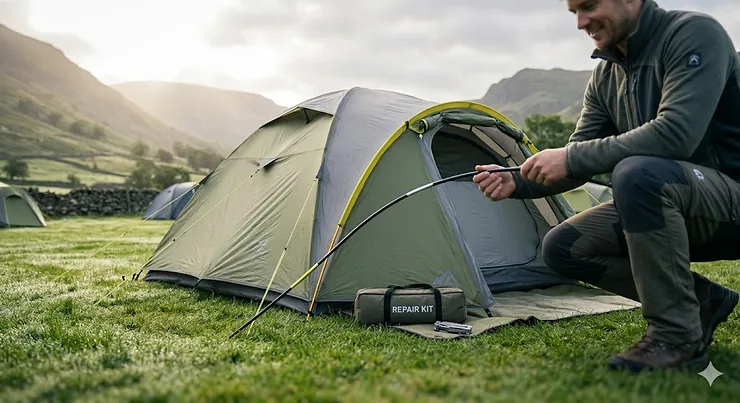
Picture this: you’ve just pitched your tent on a drizzly Saturday afternoon somewhere in the Lake District, settled in with a brew, when suddenly—crack—one of your fibreglass tent poles gives up the ghost. Rather deflating, isn’t it? Whether it’s succumbed to a particularly vigorous gust sweeping across the Brecon Beacons or simply reached the end of its natural life after seasons of British weather, a broken tent pole needn’t spell disaster for your camping trip or your wallet.
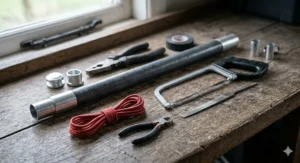
Fibreglass tent pole replacement has become something of an essential skill for British campers. With our climate’s fondness for delivering horizontal rain, unpredictable winds, and the occasional sunny spell that somehow manages to cause UV damage, tent poles take rather more punishment here than they might in sunnier climes. The good news? Fibreglass tent poles are universal—there’s no need to shop by tent brand, you just need to know the diameter and length including the ferrule. This means you’re not locked into expensive manufacturer replacements, and with prices ranging from around £8 to £35 for complete repair kits on Amazon.co.uk, fixing that broken pole costs considerably less than replacing your entire tent.
In this comprehensive guide, I’ll walk you through the best fibreglass tent pole replacement options available to UK buyers in 2026, from budget-friendly universal repair kits to premium pre-assembled pole runs for specific tent models. You’ll discover which diameter suits your tent, how British weather affects fibreglass longevity, and why sometimes a £10 repair kit offers better value than a £300 replacement tent.
Quick Comparison Table: Top Fibreglass Tent Pole Replacements
| Product | Diameter | Length | Best For | Price Range |
|---|---|---|---|---|
| TentSpares Easy Camp Palmdale Repair Kit | 13mm | 68.5cm sections | Easy Camp tents, emergency repairs | £10-£15 |
| Universal 11mm 5-Section Repair Pack | 11mm | 65cm sections | Most dome tents, family camping | £8-£12 |
| Kampa Travel Pod Midi Pole Run | 13mm | 573cm total | Kampa awnings, complete replacement | £25-£35 |
| Gelert Nemesis 6 Repair Kit | 11mm & 13mm mixed | 68.5cm sections | Gelert tents, mixed diameters | £12-£18 |
| Vango Fibreglass Pole Repair Pack | 7.9-12.7mm (various) | 65cm sections | Vango tents, multiple diameter options | £9-£16 |
| 7-Section Universal Flexible Kit | 7mm | 340cm total | 2-person tents, lightweight camping | £15-£22 |
| Coghlan’s Tent Pole Repair Kit | Universal | Various sections | Budget emergency repairs, festival camping | £6-£10 |
What stands out immediately is the price accessibility—even the most comprehensive pole runs sit comfortably under £40, which is considerably less than replacing a decent family tent. The diameter matters more than you might think: using an 11mm pole in a sleeve designed for 13mm creates slack that allows the pole to shift about in high winds, whilst forcing a 13mm pole into an 11mm sleeve is, well, simply not going to happen. For most family dome tents purchased in the UK over the past decade, you’re looking at either 11mm or 13mm diameter poles, with smaller backpacking tents often using 7.9mm or 9.5mm variants.
💬 Just one click—help others make better buying decisions too! 😊
Top 7 Fibreglass Tent Pole Replacement Options: Expert Analysis
1. TentSpares Easy Camp Palmdale Repair Kit
If you’re running an Easy Camp Palmdale 400, 500, or 600, this tent-specific repair kit represents outstanding value for money. What makes this particularly clever is that it includes everything you need for a proper field repair: three 13mm black fibreglass pole sections (each 68.5cm long including the metal ferrule), a pole threader (essentially a steel wire with a sharp hook for re-threading the elastic), and 4 metres of shock cord elastic that stretches to roughly 7 metres.
The real-world benefit here is peace of mind during those extended camping trips in places like the Yorkshire Dales or Scottish Highlands where popping to a camping shop isn’t exactly straightforward. The 13mm diameter is fairly robust—thick enough to handle moderate winds without excessive flex, yet not so heavy that it becomes unwieldy during setup. British campers appreciate that these sections arrive pre-fitted with ferrules, saving you the faff of sourcing the correct connector pieces separately.
Customer feedback from UK buyers consistently mentions the ease of installation, with several noting they’ve successfully repaired poles during active camping trips using nothing more than the included threader and a junior hacksaw to trim sections to length. One Lake District regular mentioned keeping this kit permanently in their camping box after a pole snapped during a particularly blustery May bank holiday weekend.
✅ Complete repair kit with threader and shock cord
✅ Pre-fitted ferrules save time and hassle
✅ Tent-specific sizing for Easy Camp models
❌ Sections supplied longer than needed—requires cutting
❌ Only suitable for 13mm diameter poles
Priced in the £10-£15 range on Amazon.co.uk, this kit costs about as much as a couple of pints at your local, yet could save a £250+ tent from early retirement. For Easy Camp owners, it’s rather difficult to argue against having one tucked away in your camping supplies.
2. Universal 11mm Fibreglass 5-Section Replacement Pack
This is the Swiss Army knife of tent pole repairs—the universal kit that works with most family dome tents sold in Britain. The 11mm diameter sits in that Goldilocks zone: common enough that it fits a vast range of tents from manufacturers like Gelert, Coleman, and countless own-brand supermarket offerings, yet robust enough to provide decent structural support for tents sleeping 4-6 people.
Each pack typically contains five pole sections at 65cm length, which means you’ve got enough material to replace multiple broken segments or even construct an entirely new pole run if you’re feeling ambitious. The fibreglass construction offers that characteristic flexibility that’s rather handy in British conditions—when a sudden gust rolls in off the Irish Sea, fibreglass bends rather than transferring all that force directly into your tent fabric or guy ropes.
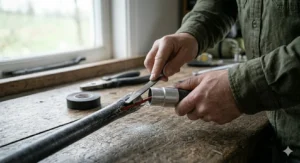
What most UK buyers overlook about this universal approach is the cost-per-repair value. At around £8-£12 for five sections, you’re paying roughly £2 per section. Compare that to manufacturer-specific replacements that can run £20+ for a single complete pole, and the economics become rather persuasive. The trade-off is that you’ll need to measure carefully, cut accurately with a junior hacksaw, and potentially source your own shock cord if the existing elastic has lost its spring.
Several camping forum users in Britain mention keeping a universal pack like this in their car boot year-round, particularly those who frequent music festivals or do regular family camping trips. The fibreglass won’t corrode sitting in a damp garage (unlike aluminium, which can develop that white powdery oxidation if stored wet), and the sections take up minimal space.
✅ Fits most common UK family tents
✅ Excellent value at roughly £2 per section
✅ Won’t corrode in damp storage conditions
❌ Requires DIY cutting and fitting
❌ Shock cord typically not included
For anyone camping more than a few weekends per year in Britain, this pack represents sound insurance for around the cost of a campsite pitch.
3. Kampa Travel Pod Midi Black Coded Fibreglass Main Pole Run
This is the premium option in our roundup—a complete, pre-assembled pole run specifically manufactured for the Kampa Travel Pod Midi awning. At 573cm total length using 13mm diameter sections, this isn’t a repair kit you’ll be trimming to fit; it’s a drop-in replacement engineered to exact specifications.
The “black coded” designation means the pole sections are colour-matched to help with assembly—rather useful when you’re setting up in fading light after a long drive to the Cotswolds. What British caravanners particularly appreciate is that this arrives fully strung with shock cord and ready to use immediately. No measuring, no cutting, no threading elastic through individual sections with increasingly frayed patience. You simply replace the damaged pole run with this one and you’re back in business.
The 13mm diameter provides substantial structural support for the Travel Pod Midi, which is important because awnings attached to caravans or motorhomes face different loading patterns than freestanding tents. They’re essentially cantilevers, meaning the poles bear significant lateral stress from wind. The thicker fibreglass resists that bending moment better than thinner alternatives, though it does add a bit of weight—not typically a concern for caravan owners who aren’t carrying kit on their backs.
TentSpares manufactures these as reproductions using what they describe as “the highest quality materials available,” and UK customer reviews support that claim. Several buyers mention these poles holding up well through Scottish winter storage and multiple seasons of use, including one review from someone who camps year-round in the Peak District and subjects their gear to proper punishment.
✅ Pre-assembled and ready to install immediately
✅ Exact fit for Kampa Travel Pod Midi
✅ Robust 13mm diameter for awning stability
❌ Premium pricing at £25-£35
❌ Only works for this specific Kampa model
If you own a Travel Pod Midi and value your time at more than £10 per hour, this pre-assembled option makes excellent sense despite the higher cost.
4. Gelert Nemesis 6 Fibreglass Tent Pole Repair Kit
Here’s where things get slightly more sophisticated: the Gelert Nemesis 6 uses poles of mixed diameters—both 11mm and 13mm—which is actually rather clever engineering. The larger 13mm poles typically form the main structural hoops that define the tent’s footprint, whilst the 11mm sections handle secondary support duties like ridge poles or cross-bracing.
This repair kit provides two sections of each diameter, all at the standard 68.5cm length that seems to be the industry norm for UK fibreglass tent poles. What this means in practice is you’ve got coverage for whichever pole decides to give up during your camping trip, without needing to purchase separate kits for different diameters.
British buyers who’ve used this kit particularly mention the quality of the ferrules—those metal connector pieces that join pole sections together. Cheap ferrules can slip or rotate under load, which creates weak points where poles are more likely to snap. The ones included here appear to be reasonably well-made, with several reviewers noting they’ve held up through multiple seasons including some properly challenging conditions in places like the Brecon Beacons during autumn storms.
The inclusion of the pole threader (that steel wire tool for re-threading shock cord) shows this is designed for actual field repairs rather than just emergency bodges. One customer review mentioned successfully replacing a broken section whilst camping in Cornwall during a “bit gusty” weekend, noting the pole “caused us no worries at all” and “you wouldn’t know the difference from the original one.”
✅ Covers both 11mm and 13mm diameters
✅ Includes quality ferrules and threader
✅ Gelert-specific fit ensures compatibility
❌ Sections need cutting to exact length
❌ Limited to this tent model
At around £12-£18, this sits in the middle ground between universal budget kits and premium pre-assembled options—reasonable value if you’re committed to keeping your Gelert tent in service.
5. Vango Fibreglass Pole Repair Pack (Multiple Diameter Options)
Vango takes a refreshingly practical approach by offering their fibreglass repair packs in multiple diameters: 6.9mm, 7.9mm, 11mm, and 12.7mm. This means you can match the replacement precisely to your specific tent model, which is particularly important for Vango’s range that spans everything from lightweight two-person backpacking tents to substantial family tunnel tents.
The 65cm section length is consistent across all diameters, arriving with five sections per pack. What’s particularly useful for British campers is Vango’s market position—they’re one of the dominant tent brands in the UK, meaning these repair packs work not just for Vango tents but for the numerous other manufacturers who’ve standardised on similar pole diameters.
The smaller diameter options (6.9mm and 7.9mm) suit backpacking tents and lightweight shelters, where every gram matters but you still need reasonable wind resistance. If you’re wild camping on Dartmoor or walking the West Highland Way, these thinner poles provide adequate strength without the weight penalty of 11mm or larger sections. The larger diameters (11mm and 12.7mm) belong in family tents and larger structures where weight is less critical than raw structural support.
UK buyers consistently mention Vango’s customer service and the availability of these packs through GO Outdoors and other high street retailers, not just Amazon.co.uk. This means if you’re camping somewhere civilised enough to have a retail park nearby, you can potentially source a replacement mid-trip rather than waiting for delivery.
✅ Multiple diameter options for different tent types
✅ Available through UK high street retailers
✅ Works with many non-Vango tents
❌ Five sections might be more than needed for single repair
❌ Shock cord sold separately
Priced around £9-£16 depending on diameter, these packs represent solid mid-range value with the advantage of easy accessibility across Britain.
6. 7-Section Universal Flexible Fibreglass Pole Kit (340cm Total)
This kit targets the lighter end of the camping spectrum—two-person tents, small dome shelters, and minimalist setups where weight and pack size actually matter. At 7mm diameter (with ferrules stepping up to 9mm), these poles are noticeably thinner than the 11mm and 13mm options dominating family camping, but that’s entirely the point.
The complete 340cm length when assembled, divided into seven sections of roughly 50cm each, means this kit provides a full pole replacement rather than just repair sections. For backpackers and bicycle tourers who count grams, this represents a complete solution without excess weight. The shock cord comes pre-threaded, and the foldable design collapses down to about 50cm for transport.
What British users particularly appreciate is the flexibility. The 7mm fibreglass bends considerably more than thicker poles, which sounds like a weakness until you remember that fibreglass poles are more flexible than aluminum poles, which can be useful in high winds as they can bend and flex without breaking. On a windy ridge in the Cairngorms, a pole that flexes with the gusts can actually outlast a more rigid design that’s fighting the wind rather than accommodating it.
That said, this flexibility has limits. Several reviews mention these poles are brilliant for summer wild camping in reasonable weather but can struggle if you’re pitching in exposed locations during autumn or winter. The thin diameter simply doesn’t have the rigidity for large loads, and attempting to use these for a family-sized tent would be asking for trouble.
✅ Pre-assembled with shock cord threaded
✅ Excellent flexibility for lightweight tents
✅ Complete pole replacement, not just sections
❌ 7mm diameter too thin for family tents
❌ Limited structural support in harsh conditions
At £15-£22, this kit costs more than basic repair sections but less than premium pre-assembled options—fair pricing for a complete lightweight pole replacement delivered to your door.
7. Coghlan’s Tent Pole Repair Kit
This is your emergency kit—the one you chuck in your rucksack for festival camping or keep in the car for “just in case” situations. Coghlan’s has been producing camping accessories since 1959, and their fibreglass tent pole repair kit embodies a certain pragmatic North American approach to outdoor gear: simple, affordable, and fit for purpose.
The kit includes replacement pole sections (both end pieces and middle sections with ferrules), shock cord, and a basic threader. What it doesn’t include is tent-specific sizing or premium materials—these are generic fibreglass sections you’ll need to measure, cut, and fit yourself. For a UK buyer, this represents old-school camping repair: a bit of hacksaw work, some careful threading, and the satisfaction of fixing something yourself rather than simply buying a replacement.
British buyers who frequent music festivals like Glastonbury, Download, or Reading mention this kit as excellent insurance against the inevitable tent carnage that follows a few days of dancing, drinking, and deplorable weather. When your tent pole snaps at 2am on Sunday morning and you’ve got to somehow keep the shelter standing until you can pack up Monday, you’re not fussed about premium materials or exact manufacturer specifications—you just need something that works well enough to get you through.
The price point of £6-£10 makes this genuinely disposable in the sense that buying two or three to keep in different locations (car, camping box, festival bag) doesn’t represent significant investment. One review mentioned keeping this kit unused in their camping supplies for over three years, then successfully using it to repair a split pole during a rainy weekend in the New Forest—testament to fibreglass’s shelf stability.
✅ Budget-friendly emergency solution
✅ Includes all basic repair components
✅ Long shelf life when stored properly
❌ Generic sizing requires careful measurement
❌ Basic materials, not premium quality
For around £8, Coghlan’s kit won’t revolutionise your camping experience, but it might well save a soggy weekend when your tent pole decides it’s had enough.
How to Choose the Right Diameter: Measure Twice, Buy Once
The single most important specification when buying fibreglass tent pole replacement sections is diameter—get this wrong and you’ve wasted your money on poles that simply won’t fit your tent. Here’s how to measure correctly and what those measurements actually mean for British campers.
Measuring Your Existing Pole
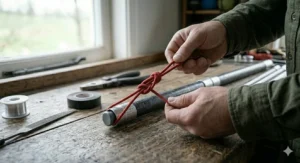
Pull out your damaged pole and measure the outer diameter of the fibreglass tube itself using either digital callipers (ideal) or a ruler (acceptable if you’re careful). Don’t include the ferrule in your measurement—that metal connector piece is always slightly larger than the pole shaft. Common diameters you’ll encounter in UK tents are:
6.9mm to 7.9mm: Lightweight backpacking tents, two-person shelters, minimalist setups. Think Vango Banshee, Terra Nova Laser, or generic festival tents from Argos that prioritise pack size over structural overkill.
9.5mm to 11mm: The sweet spot for family dome tents sleeping 4-6 people. Most Coleman, Gelert, Hi-Gear, and own-brand supermarket tents from the past 15 years use poles in this range. Fibreglass tent poles are universal—there’s no need to shop by tent brand, you just need to know the diameter and length including the ferrule, which explains why 11mm is so common.
12.7mm to 14.9mm: Larger family tunnel tents, awnings, and substantial structures designed to sleep 6+ people or withstand more serious weather. Vango Icarus, Outwell Montana, and similar premium family tents often use these thicker poles. Kampa awnings favour 13mm as a standard.
A half-millimetre either way generally doesn’t matter—an 11mm pole will work in a sleeve designed for 10.5mm or 11.5mm with no issues. But trying to force a 13mm pole into an 11mm sleeve, or expecting a 9mm pole to fit snugly in a 13mm sleeve, simply doesn’t work.
UK Climate Considerations
British weather influences which diameter makes sense beyond just tent size. Our prevailing westerlies, particularly in exposed coastal areas or mountain regions, place lateral stress on tent poles that campers in more sheltered climates might not experience. A 9.5mm pole adequate for calm summer camping in the Cotswolds might prove inadequate during a blustery October weekend on the North York Moors.
If you’re replacing poles in a tent you use primarily during spring and summer in relatively sheltered locations (woodland campsites, valley bottoms, inland sites), you can generally stick with the manufacturer’s original diameter specification. If you’re wild camping on exposed moorland, coastal sites, or mountain regions, consider whether stepping up one diameter size (say, from 11mm to 12.7mm) might provide extra peace of mind during those 3am wind sessions when you’re questioning all your life choices.
The trade-off is weight and flexibility. Thicker poles weigh more and bend less readily, which matters if you’re carrying your tent or if your tent design relies on pole flex to achieve its shape. For car camping and caravan awnings, this trade-off tilts heavily toward “go thicker” because you’re not carrying the weight and the extra rigidity provides better storm performance.
Fibreglass vs Aluminium: Which Material Survives British Weather?
Every camping forum eventually hosts this debate, so let’s address it head-on with data rather than dogma. Both materials have legitimate applications depending on your camping style, budget, and tolerance for maintenance.
Strength and Failure Modes
Aluminum tent poles are more rigid and durable, performing well under high tension and less likely to break or splinter than fiberglass. When aluminium does fail, it bends rather than shatters—you can often straighten a bent aluminium pole well enough to complete your camping trip, then properly repair or replace it at home. When fibreglass fails, it typically splinters and cracks, sometimes catastrophically if the break occurs near a ferrule where stress concentrates.
However, fiberglass poles are more flexible than aluminum poles, which can be useful in high winds as they can bend and flex without breaking. On an exposed pitch in the Highlands during a September gale, that flexibility can be the difference between a pole that survives by bending with the gusts and one that fights the wind until something gives.
The British climate sits in an interesting middle ground. We don’t typically experience the sustained high winds of coastal Scotland every weekend, nor the benign calm of Mediterranean summers. Most British camping happens in conditions where either material would perform adequately—moderate winds, occasional rain, temperatures between 5°C and 25°C. The material choice matters more at the extremes: winter wild camping in Snowdonia where sub-zero temperatures and serious wind occur simultaneously, or summer festival camping where the only stress comes from enthusiastic tent entry after a few ciders.
Weather Resistance and Longevity
Aluminum poles can develop corrosion and rust problems over time, particularly if the tent poles aren’t dried fully after a rainy night or if you’re camping by the beach. British campers know this pain intimately—we’re a damp island nation where “dried fully after camping” is more aspiration than reality. Even with the best intentions, poles stored in a garage or shed in Manchester, Cardiff, or Glasgow face higher humidity than their counterparts stored in Arizona.
Fibreglass, being non-metallic, doesn’t corrode. You can store fibreglass poles soaking wet in a shed for months (not recommended, but possible) and they’ll emerge structurally unchanged beyond some surface grime. This represents a genuine advantage for British campers who struggle with proper gear drying between trips or lack climate-controlled storage.
The counter-argument is UV degradation. Constant exposure to UV radiation can cause weakening of the glass fibers in fiberglass products, causing them to become exposed in a process known as fiber blooming. Whilst Britain isn’t exactly renowned for relentless sunshine, those long summer days when your tent sits pitched for a fortnight at a Scottish campsite do accumulate UV exposure. Over several seasons, fibreglass can become brittle, particularly near exposed areas like pole ends that aren’t protected by tent sleeves.
Aluminium alloys don’t suffer UV degradation—sunshine doesn’t weaken the metal structure. However, the protective anodising can wear off with use, exposing raw aluminium to moisture and accelerating corrosion. It’s a different failure mode, but a failure mode nonetheless.
Cost Reality Check
Here’s where fibreglass wins decisively for most British campers: Fiberglass poles are cheaper to produce than aluminum poles, making them a great choice for budget-conscious campers perfect for family camping trips or short weekend adventures. A complete fibreglass pole repair kit on Amazon.co.uk typically costs £8-£15. A comparable aluminium pole set runs £25-£50 or more.
When your £200 family tent develops a broken pole, spending £12 on fibreglass replacement makes economic sense. Spending £40 on premium aluminium poles approaches the point where you might question whether putting that money toward a new tent makes more sense, particularly if the tent fabric is also showing age.
For serious backpackers investing in a £400+ lightweight tent designed to handle Scottish winter conditions, aluminium poles are non-negotiable despite the cost. For weekend family campers doing half a dozen trips per year to established campsites in reasonable weather, fibreglass represents excellent value for money.
Common Mistakes When Replacing Fibreglass Tent Poles
Having observed (and made) various tent pole replacement errors over the years, here are the pitfalls British campers should avoid:
Buying the Wrong Diameter
This remains the most common error—purchasing 13mm poles for an 11mm tent because “13mm sounds stronger.” Pole diameter must match your tent’s pole sleeves and grommets. Measure your existing pole carefully, and when in doubt, go slightly under rather than over. A 10.5mm pole in an 11mm sleeve will function adequately; a 12mm pole simply won’t fit.
Ignoring Shock Cord Quality
That elastic cord running through pole sections isn’t decorative—it holds the assembly together and provides the tension that keeps poles properly aligned. Many cheaper repair kits include shock cord that’s barely adequate when new and loses elasticity quickly. If your shock cord feels loose or stretchy when you first install it, it’ll be useless within a season.
Quality shock cord should feel firm and springy, require genuine effort to stretch, and snap back crisply when released. British conditions don’t help here—damp storage can degrade elastic more quickly than dry conditions. Some experienced campers replace shock cord preventively every few seasons regardless of apparent condition, particularly if they camp frequently.
Cutting Sections Too Short
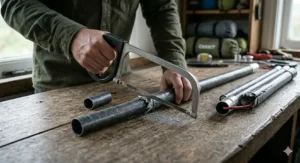
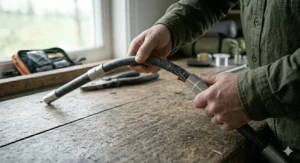
Replacement fibreglass tent pole sections are supplied at a length of 68.5cm including ferrule so you may need to cut them to size with a junior hacksaw. The temptation is to cut sections to match your broken piece exactly. The better approach is to cut slightly long, test fit, then trim again if necessary. You can always remove more material, but adding it back involves buying another section.
When cutting fibreglass, wrap the area in masking tape before sawing—this prevents the outer layers from splintering and creates a cleaner cut. Sand the cut edge smooth afterward to prevent sharp fibreglass strands from snagging on tent sleeves or, worse, your hands. British campers working in damp conditions should let cut sections dry thoroughly before installation, as moisture can weaken the resin bond in freshly cut fibreglass.
Overlooking Ferrule Condition
Those metal connector pieces (ferrules) that join pole sections together often survive broken poles and can be reused. However, ferrules develop stress cracks, dents, and corrosion that compromise their function. When replacing a pole section, examine the ferrules carefully. If they’re bent, cracked, or showing significant corrosion (common in British coastal camping areas with salt-laden air), replace them rather than reusing.
Quality replacement sections like those from TentSpares or Vango include new ferrules already fitted, eliminating this decision. Budget universal sections sometimes assume you’ll reuse existing ferrules, which is fine if they’re in good condition but problematic if they’re not.
Forgetting the Ferrule in Length Measurements
Pole length measurements should include the ferrule—that metal piece adds 2-3cm to the actual fibreglass tube length. When you measure a damaged section to determine what length replacement to cut, measure the entire piece from end to end including the ferrule. Then remember that your replacement section’s measurement also includes its ferrule. This seems obvious written down but causes endless confusion in practice, particularly when working by headtorch in a damp field trying to fix a collapsed tent.
Real-World Repair Scenarios: British Camping Conditions
Let me walk you through three typical situations UK campers face and the repair strategies that actually work under field conditions:
Scenario 1: Festival Camping Splinter
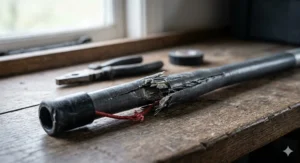
You’re at Glastonbury during the inevitable Thursday night windstorm when tent poles start snapping across the site like champagne corks. Your 11mm fibreglass main pole develops a 15cm splinter crack about halfway along its length. The tent’s still standing but sagging ominously.
Immediate Solution: If you packed Coghlan’s emergency repair kit, you can splice the damaged section. Cut the shock cord at one end, remove enough pole sections to access the damaged piece, slide on a repair sleeve (essentially a slightly larger diameter tube that fits over the break), secure with gaffer tape, reassemble. This takes about 20 minutes in the dark after a few drinks. Your tent won’t look pretty but it’ll stand.
Proper Fix: After the festival, order a TentSpares universal 11mm repair pack from Amazon.co.uk (around £8-£12). Measure the damaged section including ferrule, cut a replacement from the pack using a junior hacksaw, sand the edges smooth, thread onto your existing shock cord. Replace the entire shock cord if it feels slack—festivals stress the elastic considerably through repeated entry/exit cycles. For more information on camping equipment essentials, Wikipedia provides comprehensive background.
Scenario 2: Wild Camping Wind Damage
You’re three days into a West Highland Way walk when a proper Scottish gale develops overnight. By morning, your lightweight tent’s 7.9mm pole has snapped cleanly near a ferrule connection, presumably where stress concentrated during the night’s gymnastics.
Immediate Solution: This is where aluminium poles would bend rather than break, but that ship’s sailed. If you carry a pole repair sleeve in your emergency kit (you should—they weigh about 20g), you can bridge the break well enough to reach civilisation. Without one, carefully remove the broken section, tape the pole ends to prevent further splintering, and reconfigure your tent into a lower, less elegant shape using trekking poles or natural supports if necessary.
Proper Fix: Once you reach Fort William or similar civilisation, head to the nearest outdoor shop (Nevis Sport, if you’re in Fort William) and purchase a Vango 7.9mm repair pack. These aren’t always in stock at smaller shops, so you might need to order online and have it sent to your next accommodation. For thru-hikers, this is where having a support person willing to post supplies to remote post offices becomes valuable.
The lesson here is that lightweight fibreglass poles and serious mountain weather don’t always play nicely together. Many experienced wild campers accept this and carry emergency repair supplies as standard equipment, particularly during shoulder seasons when weather becomes less predictable.
Scenario 3: Family Camping Gradual Failure
Your Gelert Nemesis 6 has served faithfully for five summers of family camping in places like North Wales, the Lake District, and Devon. The poles still mostly work but you’ve noticed increasing splintering near ferrules, sections that no longer snap together crisply, and shock cord that’s lost its spring. Nothing’s broken yet, but it feels like borrowed time.
Preventive Solution: This is ideal territory for the Gelert Nemesis 6 specific repair kit mentioned earlier. Before your next big trip, order the kit (£12-£18), and spend a Sunday afternoon preventively replacing the most damaged sections and the entire shock cord. This costs less than £20 and potentially extends your tent’s usable life by several seasons.
Many British campers neglect preventive maintenance until something breaks during a trip, which invariably happens at the least convenient moment. Examining poles before each season and replacing obviously damaged sections costs minimal money and prevents far more expensive camping trip disasters.
Storage and Maintenance: Making Poles Last in British Climate
Our damp island climate poses specific challenges for fibreglass tent pole longevity. Here’s how to maximise lifespan despite our weather’s best efforts:
Proper Drying After Use
Make sure your tent poles are clean and dry when you store them to prevent mold and rust. In British conditions, this is easier said than done—you’ve just struck camp in drizzle, driven two hours home, and the prospect of unpacking everything for proper drying feels monumentally unappealing.
Resist that temptation. Even fibreglass, which won’t rust, suffers from damp storage. The shock cord elastic degrades faster in humid conditions, ferrules develop corrosion, and tent fabric touching damp poles can develop mildew. The minimum acceptable approach is to loosely unpack your tent and poles in a garage or spare room, allowing air circulation around everything for at least 24-48 hours before proper storage.
The gold standard involves wiping poles down with a dry cloth, checking for visible damage, and storing them separately from tent fabric in a dry location. If you camp frequently during British spring and autumn when rain is more likely than not, consider this drying routine standard procedure after every trip rather than something you do when you remember. For more guidance on camping safety and fire prevention, UK fire services provide helpful resources.
Shock Cord Management
Pole sections are held together with elastic, and if stored incorrectly, the elastic can dry out and loose its tension. The correct storage method involves separating pole sections starting from the middle rather than one end, which distributes tension more evenly along the elastic length.
In practice, many British campers store poles fully assembled or randomly separated, and wonder why shock cord seems to lose elasticity faster than expected. If you camp infrequently (a few weekends per summer), this lazy approach works adequately. If you’re camping monthly or more, proper shock cord care becomes worthwhile.
Quality shock cord should last several seasons under normal use, but “normal use” assumes reasonable care. British damp accelerates degradation, as does leaving poles assembled under tension during long storage periods. Budget £3-£5 every couple of years for replacement shock cord, available from camping shops or Amazon.co.uk, and factor the replacement time (about 30 minutes per pole) into your annual camping prep routine.
UV Protection
Store poles in a cool, dry place away from direct sunlight to prevent UV degradation. Whilst stored poles obviously aren’t exposed to weather, many British campers leave tents pitched for extended periods during summer camping trips—a fortnight at a Scottish campsite accumulates meaningful UV exposure.
If you’re planning extended pitched periods, consider this in your pole material choice. Aluminium resists UV damage entirely; fibreglass develops progressive weakening. For weekend camping where tents are pitched Saturday morning and struck Sunday afternoon, UV degradation is negligible. For month-long caravan awning use or seasonal pitch camping where structures stay up from May through September, UV becomes a legitimate consideration.
The practical solution involves rotating pole positions periodically during long pitches so the same section isn’t constantly exposed to peak sunlight, though this requires more dedication than most campers muster. More realistically, simply accept that poles used for extended pitching may need replacement more frequently, factor that £15 cost into your camping budget, and move on.
Understanding Tent Pole Compatibility: Diameter and Length Decoded
The fibreglass tent pole market appears bewilderingly complex until you understand the underlying logic. Here’s how to decode the specifications and ensure compatibility:
Diameter Standards Across UK Brands
Despite the variety of tent manufacturers selling into the British market, pole diameters have largely standardised around a few common sizes. This happened organically as manufacturers discovered that using standard diameters reduced costs (bulk purchasing from the same fibreglass suppliers) and improved customer satisfaction (easier replacements).
7.9mm: Vango backpacking tents, generic festival tents, ultra-lightweight shelters. This is the “small” standard that works across multiple brands despite not being officially coordinated.
9.5mm: Less common than it used to be, but still appears in some mid-weight tents that sit between backpacking and family camping. Coleman used this diameter in several models during the 2010s.
11mm: The dominant standard for family dome tents. If you own a Gelert, Hi-Gear, or supermarket own-brand tent purchased anytime in the past 15 years, you probably have 11mm poles. This diameter provides adequate structural support for 4-6 person tents whilst remaining light enough for reasonable handling.
12.7mm and 13mm: Premium family tents and awnings. Vango’s larger tunnel tents, Outwell family models, and most caravan awnings from Kampa, Isabella, and similar manufacturers use poles in this range.
The half-millimetre difference between 12.7mm and 13mm is essentially negligible for compatibility purposes—sleeves designed for one will accommodate the other. Similarly, 11mm poles work fine in tents specifying 10.5mm or 11.5mm.
Section Length: Why 65-68.5cm Dominates
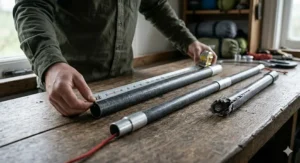
Nearly every fibreglass replacement pole section you’ll find on Amazon.co.uk measures between 65cm and 68.5cm in length including the ferrule. This isn’t coincidence—it’s the optimal trade-off between manufacturing efficiency, packed size, and assembled rigidity.
Shorter sections (say, 40cm) would create poles that fold more compactly but require more ferrule connections, each of which represents a potential weak point and adds weight. Longer sections (say, 100cm) would reduce connection points but become unwieldy to handle and difficult to pack in standard camping bags.
The 65-68.5cm sweet spot means a typical family tent main pole assembles from 6-8 sections, creating manageable packed length around 65cm that fits nicely in standard tent bags whilst providing adequate rigidity when assembled.
When you purchase replacement sections at this standard length, you’ll almost always need to cut them shorter to match your specific tent’s requirements. Replacement fibreglass tent pole sections are supplied at a length of 68.5cm including ferrule so you may need to cut them to size with a junior hacksaw. This universal-length approach means manufacturers can stock one product that serves multiple tent models rather than maintaining inventory of dozens of specific lengths.
Pre-Cut vs Universal Sections: Cost Analysis
Pre-cut, tent-specific pole sets like the Kampa Travel Pod Midi option cost roughly double what universal sections cost (£25-£35 vs £8-£15). What you’re paying for is convenience—no measuring, cutting, fitting, or troubleshooting. The poles arrive ready to install.
For British campers comfortable with basic DIY—and let’s be honest, if you camp regularly in Britain you’ve developed some measure of self-sufficiency—universal sections represent better value. Twenty minutes with a hacksaw and sandpaper saves £15+. If your time is worth more than £45/hour, pre-cut sections make economic sense. For most of us, the universal approach works fine.
The exception is complex tents with multiple pole types, pre-bent sections, or unusual configurations. Vango’s tunnel tents, for instance, sometimes use poles with specific bends engineered into the fibreglass. Trying to recreate those bends with universal sections ranges from difficult to impossible—you’re better off ordering manufacturer-specific replacements.
Budget Pole Options: When Cheap Makes Sense
Not every camping situation demands premium solutions. Here’s when budget fibreglass tent pole replacements represent smart value:
Festival and Occasional Use
If your tent sees action twice a year—Reading Festival and perhaps one summer weekend on the South Coast—investing heavily in pole replacement makes little sense. When a pole breaks, a £6-£10 Coghlan’s repair kit or universal section pack provides adequate performance for the limited stress your camping style imposes.
Festival camping is brutal on equipment through sheer chaos rather than genuine challenging conditions. Tent poles break because someone stumbled into them at 2am, not because of structural inadequacy. Budget replacements handle this use case perfectly adequately.
Emergency Backup Supplies
Many experienced British campers maintain a camping “emergency box” containing items they hope never to need: spare tent pegs, guy rope, gaffer tape, pole repair sections. For this application, budget universal fibreglass sections make perfect sense—they might sit unused for years, so spending £25 on premium options represents poor value.
The Coghlan’s kit or similar budget repair packs designed for exactly this use case cost under £10 and take up minimal space in a car boot or camping box. If you never need them, you’ve lost £10. If you do need them during a soggy weekend in the Pennines when the nearest camping shop is 40 miles away, they’re worth considerably more than their purchase price.
Kids’ Tents and Practice Camping
Children learning to camp often subject equipment to treatment that would horrify experienced outdoors folk. Tents pitched incorrectly, poles forced into wrong positions, guy ropes used for skipping—it’s educational but hard on gear.
For kids’ camping practice, budget tents with budget fibreglass poles make sense. When poles inevitably break, budget replacements continue the theme. Save the premium gear and expensive repairs for when camping technique has improved and equipment receives more respectful treatment.
The False Economy Threshold
Budget options stop making sense when you’re replacing the same pole for the third time in one season. If your tent requires frequent repairs, you’ve crossed into false economy territory where the aggregate cost of cheap replacements exceeds what you’d have spent on better-quality solutions initially.
Similarly, if you camp in genuinely challenging British conditions—wild camping on Scottish mountains, winter camping, exposed coastal sites—budget poles can become safety issues rather than just economic decisions. When pole failure could mean genuine exposure to dangerous conditions, the extra £10-£15 for quality replacements represents cheap insurance.
FAQ: Fibreglass Tent Pole Replacement Questions UK Buyers Ask
❓ Can I use fibreglass tent poles in winter camping conditions?
❓ How long do fibreglass tent poles typically last in the UK?
❓ Are 11mm and 11.5mm tent poles interchangeable?
❓ Do I need to replace the entire pole or just the broken section?
❓ Will Amazon.co.uk deliver tent poles to remote Scottish islands and Northern Ireland?
Conclusion: Smart Pole Replacement for British Campers
A broken tent pole needn’t signal the end of your tent’s useful life or the ruination of your camping trip. With fibreglass replacement options on Amazon.co.uk ranging from £6 emergency kits to £35 pre-assembled pole runs, repair costs significantly less than replacement.
The key is matching diameter precisely (measure carefully, buy correctly), choosing quality appropriate to your camping frequency and conditions (budget for occasional use, premium for regular challenging camping), and maintaining poles properly between trips despite British weather’s best efforts to complicate storage.
For most UK campers, universal 11mm repair kits represent the sweet spot—adequate for family tent repairs, widely compatible across brands, and priced around £8-£12 for five sections. More serious outdoors folk using tents in genuinely challenging British conditions might consider stepping up to manufacturer-specific kits or even aluminium alternatives, whilst festival campers and occasional users can comfortably rely on budget emergency repair kits.
The British camping season waits for no one. Order your replacement poles now, stick them in your camping box, and enjoy the peace of mind that comes from knowing a snapped pole won’t ruin your weekend in the Cotswolds or week in the Highlands.
Recommended for You
- 7 Best Places to Buy Aluminium Tent Poles UK 2026
- 7 Best Replacement Tent Poles UK: Expert Guide 2026
- 7 Best Waterproof Camping Tarps UK 2026
Disclaimer: This article contains affiliate links. As an Amazon Associate, I earn from qualifying purchases. If you purchase products through these links, we may earn a small commission at no additional cost to you.
✨ Found this helpful? Share it with your mates! 💬🤗
