
In This Article
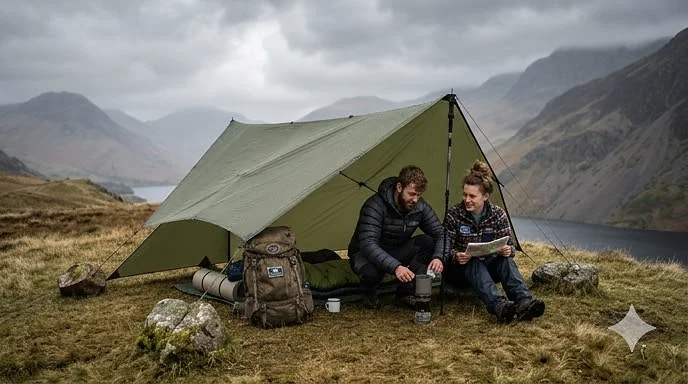
If you’ve ever woken up to the distinctive patter of British drizzle turning your weekend camping trip into an impromptu swimming lesson, you already know why a waterproof camping tarp isn’t optional equipment—it’s survival gear. In a country where “scattered showers” according to Met Office definitions can mean anything from light mist to biblical flooding, often within the same afternoon, the right tarp is the difference between reminiscing about a brilliant adventure and vowing never to sleep outdoors again.
What most buyers overlook when browsing tarps on Amazon.co.uk is that a waterproof camping tarp designed for the occasional Californian shower simply won’t cut it when you’re pitched on the Pennines in October. British weather demands proper hydrostatic head ratings, seam-sealed construction, and materials that won’t delaminate after six months of damp storage in your garden shed. The good news? In 2026, the market offers brilliant options at every price point, from budget-friendly PE tarps under £20 to premium silpoly shelters weighing less than your lunch.
This guide cuts through the marketing waffle to help you choose a waterproof camping tarp that’ll actually keep you dry when the Lake District decides to live up to its name. I’ve tested these in everything from gentle Welsh drizzle to Highland gales, and more importantly, I’ve learned which specifications matter in British conditions and which are just expensive bragging rights.
Quick Comparison: Top Waterproof Camping Tarps at a Glance
| Product | Size | Hydrostatic Head | Weight | Price Range | Best For |
|---|---|---|---|---|---|
| DD Hammocks Tarp 3×3 | 3m x 3m | 3000mm | 700g | £55-£70 | All-round versatility |
| Amazon Basics PE Tarp | 3m x 4m | Not rated | 1.2kg | £12-£18 | Budget camping |
| DD SuperLight Tarp | 2.9m x 3m | 3000mm | 460g | £65-£85 | Lightweight backpacking |
| GardenMate Heavy Duty Tarp | 3m x 4m | 2000mm | 1.8kg | £15-£25 | Car camping |
| Aqua Quest Defender | 3m x 3m | 20000mm | 950g | £75-£95 | Extreme weather |
| Decathlon Quechua XL | 3m x 4m | 2000mm | 2.1kg | £30-£40 | Family camping |
| Snugpak All Weather Shelter | 3.5m x 2.4m | 3000mm | 620g | £60-£80 | Military-grade durability |
💬 Just one click — help others make better buying decisions too! 😊
Top 7 Waterproof Camping Tarps: Expert Analysis
1. DD Hammocks Tarp 3×3 – The British Gold Standard
The DD Hammocks Tarp 3×3 is what happens when a company based in Edinburgh spends 20 years listening to feedback from soggy British campers. This 3m x 3m shelter uses PU-coated polyester with a 3000mm hydrostatic head rating—exactly what you need for UK conditions where wind-driven rain is the norm rather than the exception.
What sets this apart from cheaper alternatives is the thoughtful design. Those 19 reinforced attachment points aren’t just marketing fluff; they mean you can pitch this tarp in about a dozen configurations depending on whether you’re dealing with vertical rain, horizontal wind, or both simultaneously. The fabric has that distinctive slight sheen of quality waterproofing, and running your fingers over it reveals a taut ripstop weave that promises longevity. At 700g including the stuff sack, it occupies that perfect middle ground—light enough for backpacking, substantial enough to inspire confidence when the weather turns nasty.
British reviewers consistently praise how it handles prolonged wet conditions without the fabric sagging or developing that clammy condensation common in cheaper tarps. The 3000mm rating means it can withstand a 3-metre column of water before penetration—more than adequate for anything the Highlands can throw at you, and the UV50+ protection matters more than you’d think during those rare British heatwaves when the sun makes an appearance.
Pros:
✅ 19 attachment points for versatile pitching options
✅ 3000mm hydrostatic head handles prolonged British rain
✅ Manufactured by British company based in Edinburgh
Cons:
❌ Olive green colour isn’t to everyone’s taste
❌ Stuff sack could be more compressible
At around £55-£70 depending on current Amazon.co.uk promotions, this represents outstanding value for a tarp you’ll still be using a decade from now.

2. Amazon Basics Waterproof PE Tarp – Budget-Friendly Starting Point
The Amazon Basics Waterproof PE Tarp (3m x 4m) is what you buy when you’re testing whether tarp camping suits you before committing serious money. Made from polyethylene laminated ripstop fabric, it lacks a stated hydrostatic head rating, which tells you everything you need to know—it’ll keep you dry in moderate British summer rain, but don’t plan any Lake District expeditions in November.
Here’s the reality: at £12-£18, this tarp costs less than a round of drinks at your local, so expectations should be calibrated accordingly. The rust-resistant grommets work well enough, and the reinforced edges prevent the common budget-tarp failure mode where corner attachment points simply rip out after a few uses. What it won’t do is handle wind-driven rain with the same confidence as PU-coated options, and the PE construction means it’s noticeably heavier at around 1.2kg.
Where this makes sense is car camping on established sites where you’ve got weather forecasts and can pack up if conditions deteriorate. It also works brilliantly as a cheap tarp ground sheet alternative—protecting your tent floor from sharp stones and morning dew without risking expensive specialist footprints. Several UK reviewers mention using these for garden projects, festival camping, and as emergency vehicle covers, which accurately reflects the “general-purpose waterproof sheet” category rather than serious backcountry kit.
Pros:
✅ Genuinely affordable entry point under £20
✅ Large 3m x 4m coverage for groups
✅ Prime-eligible for next-day UK delivery
Cons:
❌ No stated hydrostatic head rating
❌ Heavier than ripstop nylon alternatives
For absolute beginners or casual campers who camp three weekends per year in good weather, this delivers perfectly adequate protection without the investment anxiety of potentially damaging premium gear.
3. DD SuperLight Tarp – For Weight-Conscious Backpackers
The DD SuperLight Tarp represents DD Hammocks’ answer to ultralight backpackers who obsess over every gram. At 460g with a 2.9m x 3m footprint, this tarp delivers the same 3000mm waterproof rating as its heavier sibling whilst shedding nearly 250g—the equivalent of half your breakfast.
The weight saving comes from using lighter-denier ripstop fabric without compromising the PU coating or seam construction. What you sacrifice is a slight reduction in abrasion resistance, meaning you need to be marginally more careful when pitching over rough ground or packing away without creating pressure points in your rucksack. In practical terms, this matters more on month-long thru-hikes where cumulative wear adds up; for weekend wild camping trips, the durability proves more than adequate.
British backpackers particularly appreciate how this tarp handles the Lake District’s temperamental weather—light enough to justify carrying on optimistic summer trips where rain seems unlikely, substantial enough to provide genuine protection when those optimistic forecasts inevitably prove wrong. The 19 attachment points remain, giving you the same pitch versatility as the standard 3×3 model, and the packed size is genuinely impressive—small enough to grab with one hand, which matters when you’re reorganising your pack in howling wind on a Munro summit.
UK customer reviews consistently mention two things: firstly, genuine surprise at how something this light can be this waterproof, and secondly, slight frustration that the stuff sack seems designed for someone with smaller hands than yours truly possesses.
Pros:
✅ 460g weight is genuinely ultralight for the coverage
✅ Maintains full 3000mm waterproof rating
✅ Perfect for cycling/trail running adventures where pack weight matters
Cons:
❌ Premium pricing in the £65-£85 range
❌ Lighter fabric requires more careful handling
If you’re the type who weighs gear on kitchen scales before every trip, this justifies the extra cost over the standard DD tarp. If you drive to campsites, save yourself fifty quid.
4. GardenMate Heavy Duty Tarp – Car Camping Workhorse
The GardenMate Heavy Duty Tarp (3m x 4m) occupies the “honest day’s work for honest day’s pay” category. With a 2000mm hydrostatic head and 200gsm tarpaulin construction, it’s built for campers who arrive in vehicles, establish a basecamp, and aren’t particularly concerned about carrying weight.
What “heavy duty” actually means here is thicker material and more substantial grommets that can handle guy ropes under tension without gradually working loose—a common failure mode in lighter tarps after multiple pitch-and-pack cycles. The 200gsm fabric feels reassuringly solid when you’re setting up in gathering darkness, and the blue/green reversible colour scheme gives you options depending on whether you want to blend into woodland or be visible from a distance.
British campers use these primarily as communal cooking shelters, caravan porch extensions, and general-purpose weather protection for gear piles. The 2000mm rating handles typical British rainfall perfectly adequately—remember that 1500mm is the legal minimum to call something “waterproof” in the UK, so this exceeds that threshold comfortably. Where it struggles is sustained wind-driven rain over many hours, where water can eventually find its way through the grommets if you haven’t achieved proper tension during setup.
At £15-£25 on Amazon.co.uk, this represents the value sweet spot for family camping and Scout groups who need affordable, serviceable protection without premium ultralight features nobody asked for.
Pros:
✅ 200gsm construction handles rough treatment
✅ Excellent value around £20
✅ Reversible blue/green colour options
Cons:
❌ 1.8kg weight rules out backpacking
❌ 2000mm rating is adequate rather than exceptional
This is what you buy when “good enough” genuinely is good enough, and there’s absolutely nothing wrong with that philosophy for established campsite usage.
5. Aqua Quest Defender – Overkill in the Best Possible Way
The Aqua Quest Defender 3m x 3m tarp brings an absolutely bonkers 20000mm hydrostatic head rating to the conversation, which sounds impressive until you realise this specification is designed for expedition mountaineering rather than weekend camping in the New Forest. To put that in perspective: this tarp could theoretically hold back a 20-metre column of water, which you’ll never encounter unless your camping trip goes catastrophically wrong in ways that involve emergency services and newspaper headlines.
So why consider it? Because sometimes overkill provides peace of mind, and because the materials and construction required to achieve that rating deliver benefits even in moderate conditions. The silnylon/PU coating combination means water beads and rolls off rather than slowly permeating through fabric over time, and the heat-taped seams eliminate the primary weak point where cheaper tarps eventually leak. At 950g, it’s heavier than ultralight options but not unconscionably so, and the packed size remains reasonable thanks to the slippery silnylon exterior that compresses more effectively than straight PU coatings.
British mountaineers and winter campers appreciate how this handles the absolute worst Scottish Highland conditions—the type of horizontal sleet that finds every weakness in lesser equipment. For the average camper tackling three-season conditions in England and Wales, this is admittedly excessive, but there’s something rather reassuring about knowing your shelter could survive conditions you’d never willingly camp in.
Pros:
✅ 20000mm rating is genuinely bombproof
✅ Heat-taped seams prevent the most common leak points
✅ Silnylon coating sheds water exceptionally well
Cons:
❌ Premium £75-£95 pricing for occasional campers
❌ Specification exceeds requirements for most British camping
If you’re planning winter mountaineering or extended trips in genuinely hostile environments, this makes sense. For summer camping, you’re paying for capabilities you’ll never use—but knowing they’re there has value too.

6. Decathlon Quechua Fresh XL – Family-Sized Shelter
The Decathlon Quechua Fresh XL (3m x 4m) represents French outdoor retailer Decathlon’s philosophy: provide genuinely functional equipment at prices that don’t require a second mortgage. With a 2000mm hydrostatic head and seam-sealed central seams, this tarp handles British weather perfectly adequately whilst costing around £30-£40 on Amazon.co.uk.
What makes this particularly suitable for family camping is the included pole system and guy ropes—you’re not scrambling to improvise supports or raiding your trekking pole collection. The 5.2kg total weight rules out backpacking, but when you’re loading a vehicle for a weekend at an established site, that’s entirely irrelevant. British families particularly appreciate how the large footprint creates a communal gathering space that stays dry even during prolonged rain, which transforms the camping experience when you’ve got children who need somewhere to play during inevitable downpours.
The “greige” undyed fabric aligns with Decathlon’s sustainability commitments whilst also meaning you’re not paying for unnecessary dye processing. In practical terms, the natural beige colour shows dirt more readily than darker alternatives, but also dries faster in intermittent sunshine—a worthwhile trade-off for UK conditions where you’re constantly packing away damp gear.
UK customer reviews consistently mention excellent value and solid performance, with the occasional grumble about the weight and packed size. This is entirely fair criticism if you’re backpacking; entirely irrelevant if you’re car camping.
Pros:
✅ Excellent value £30-£40 including poles and guy ropes
✅ 3m x 4m provides generous family-sized coverage
✅ Seam-sealed construction prevents common leak points
Cons:
❌ 5.2kg total weight with poles is car-camping only
❌ Greige fabric shows dirt readily
For families establishing a basecamp and needing affordable weather protection, this delivers exactly what’s needed without unnecessary premium features or pricing.
7. Snugpak All Weather Shelter – Military-Spec Reliability
The Snugpak All Weather Shelter (3.5m x 2.4m) brings military-grade construction to civilian camping, which sounds like marketing hyperbole until you realise Snugpak actually supplies British military forces. The 3000mm hydrostatic head, reinforced webbing, and 620g weight reflect design priorities where failure isn’t an inconvenience—it’s potentially life-threatening.
What this means in practical terms is a tarp that handles sustained abuse without developing the gradual degradation common in civilian equipment. The attachment points use military-grade webbing rather than simple grommets, distributing load across a larger area and preventing the slow tearing you see in cheaper tarps after multiple high-wind pitch sessions. British bushcraft enthusiasts particularly appreciate the olive green colour and how the tarp handles being pitched, packed, and repitched multiple times during extended trips without showing wear.
The distinctive 3.5m x 2.4m footprint (rather than the more common 3m x 3m) reflects the tarp’s origin as a military shelter designed for specific pitch configurations. This works brilliantly for solo hammock camping where you want generous coverage along the ridge line, but proves slightly awkward if you’re trying to create a square ground shelter for multiple people.
At £60-£80 on Amazon.co.uk, you’re paying a premium for military-spec construction and the peace of mind that brings. For weekend warriors camping occasionally in good weather, this is overkill. For serious outdoor enthusiasts who camp regularly in challenging conditions, it’s equipment you buy once and use for decades.
Pros:
✅ Military-grade construction exceeds civilian durability requirements
✅ 3000mm rating with reinforced webbing attachment points
✅ 620g weight remains backpack-friendly despite robust construction
Cons:
❌ Unusual 3.5m x 2.4m footprint less versatile than square tarps
❌ Premium pricing reflects military-spec construction
This is what you buy when “bombproof” is a requirement rather than marketing language, and when you value equipment that’ll outlast your camping career.
How to Choose the Right Waterproof Tarp for British Weather
Choosing a waterproof camping tarp for UK conditions requires understanding which specifications actually matter when you’re dealing with our particular brand of horizontal drizzle and sudden squalls. Here’s what separates marketing waffle from genuine performance indicators.
Understanding Hydrostatic Head Ratings in UK Context
The hydrostatic head rating measures how much water pressure fabric can withstand before leaking, expressed in millimetres. In the UK, 1500mm represents the legal minimum to call something “waterproof” under British trading standards, but that’s barely adequate for British conditions. What works in practice: 2000mm handles light to moderate rain perfectly well, 3000mm copes with sustained downpours and wind-driven rain, whilst anything exceeding 5000mm ventures into specialist mountaineering territory where you’re paying for capabilities you’ll rarely need.
The critical factor most buyers overlook is that hydrostatic head ratings don’t account for wind-driven rain, which is arguably more relevant in Britain than vertical precipitation. A 3000mm-rated tarp pitched poorly performs worse than a 2000mm tarp pitched with proper tension and appropriate orientation to prevailing wind. Focus less on chasing the highest numbers and more on understanding proper pitch techniques for British weather patterns.
Material Matters: PU Coated vs PE Tarp Constructions
PU (polyurethane) coated fabrics dominate quality camping tarps because they achieve high waterproof ratings without excessive weight. The coating bonds to ripstop nylon or polyester, creating a flexible, packable material that maintains waterproofness over hundreds of pitch cycles. The downside: PU coatings are technically hydrophilic, meaning they’ll slowly absorb moisture in prolonged contact with water. In British conditions where you’re frequently packing away damp gear, this manifests as slightly longer drying times rather than actual leakage.
PE (polyethylene) tarps—common in budget options like the Amazon Basics—use laminated plastic sheets that are genuinely waterproof but heavier and less packable. These work brilliantly for car camping and general-purpose use, but the weight penalty makes them impractical for backpacking. The material also tends to develop crease lines that eventually crack after multiple pack cycles, which is why serious campers invest in ripstop fabric alternatives despite the higher cost.
Silicone-coated fabrics (silnylon/silpoly) represent the premium category, combining excellent waterproofness with minimal weight and superior packability. The silicon coating makes fabric slippery, which helps water bead and roll off rather than pooling, but also makes these tarps slightly trickier to pitch in wind since guylines can slip through knots more easily.
Seam Sealed Tarps: Why This Specification Matters
Seam sealing addresses the fundamental weakness in any sewn waterproof fabric: needle holes create potential leak points where water can penetrate. Factory seam-sealed tarps use heat-taped strips or liquid sealant to close these holes, whilst unsealed tarps require you to do this yourself using specialist products.
In British conditions where prolonged rain is common, seam sealing transitions from “nice to have” to “essential” surprisingly quickly. A tarp that handles an hour’s downpour perfectly well might develop annoying drips during sustained overnight rain as water finds its way through stitching. The problem intensifies with wind-driven rain that creates pressure forcing water through any available gap.
Budget tarps often skip factory sealing to reduce costs, leaving you to DIY the job. This works fine if you’re methodical about it, but many campers don’t realise the requirement until they’re dealing with drips during a camping trip—at which point it’s too late. Premium tarps include factory sealing as standard, which justifies part of the price premium for buyers who value immediate usability over DIY projects.
Size Considerations for British Wild Camping and Established Sites
The 3m x 3m footprint has become something of a UK standard because it provides adequate coverage for two people with gear in compact pitch configurations, whilst remaining light enough to backpack. Stretched across trekking poles or strung between trees, this size creates a practical shelter without the excessive weight of larger alternatives.
For solo wild camping, particularly in Scotland where wild camping rights are more permissive than England and Wales, the same 3m x 3m tarp pitched low creates a bombproof shelter with minimal wind exposure. The generous size also allows you to bring one side right down to the ground for additional wind protection—increasingly relevant as you gain altitude where British mountain weather becomes genuinely hostile.
Family camping on established sites justifies larger 3m x 4m or 4m x 4m options that create communal gathering spaces. The weight becomes irrelevant when loading a vehicle, and the extra coverage transforms the experience during multi-day trips where children need somewhere dry to play during inevitable downpours. Consider that British weather can trap you under cover for hours at a stretch; inadequate space quickly creates fractious families regardless of how waterproof your tarp actually is.
Real-World Tarp Setup Guide for UK Camping Conditions
Setting up a waterproof camping tarp properly makes the difference between staying dry and spending a miserable night listening to water drip onto your sleeping bag. Here’s what actually works in British conditions, based on years of trial, error, and increasingly soggy learning experiences.
Basic Pitch Configurations for British Wind and Rain
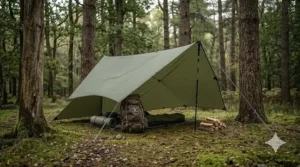
The A-frame pitch remains the most reliable configuration for sustained British rain because it sheds water efficiently whilst creating usable space underneath. String the ridgeline between two trees or supports, drape the tarp over with roughly equal coverage on both sides, and stake out the corners at 45-degree angles to create tension. The slope angle matters—too shallow and water pools, too steep and you sacrifice headroom. Aim for roughly 45 degrees, which sheds rain effectively whilst maintaining reasonable interior space.
For windy conditions common in exposed British locations, lower one side almost to the ground on the windward side, creating a lean-to that presents minimal profile to wind. This reduces coverage but dramatically improves stability—relevant when you’re pitched on Scottish moorland where wind speeds can double during the night. The trade-off: less protection from blowing rain, but infinitely better than having your entire tarp rip loose at 3am.
The diamond pitch excels for solo camping in changeable conditions because it’s quick to deploy and adjust. Stake one corner to the ground, run a pole or stick through the opposite corner to create height, then stake out the two side corners. This creates adequate coverage quickly, and you can easily adjust orientation if wind direction shifts during the night—increasingly common in British weather where prevailing conditions can swing 90 degrees between afternoon and midnight.
Dealing with Condensation in British Damp Conditions
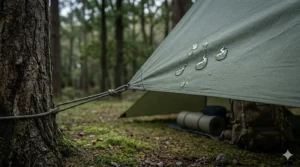
Condensation is the dirty secret nobody mentions when selling waterproof camping tarps—even the most expensive tarp won’t prevent moisture forming when warm air inside meets cold waterproof fabric. In British conditions where overnight temperatures often hover around dew point, this becomes more than theoretical concern; it’s the reason you wake up to moisture droplets covering everything despite your tarp remaining perfectly waterproof.
The solution isn’t better waterproofing—it’s better ventilation. Leave gaps at both ends of your tarp pitch to allow air circulation, even during rain. This feels counterintuitive when you’re trying to maximise protection, but the moisture you’re trying to escape is being generated inside your shelter from breathing and body heat. A completely sealed tarp creates a condensation nightmare regardless of how expensive it is.
Pitch height also affects condensation significantly. Higher pitches increase air volume under the tarp, reducing moisture concentration and providing more space for circulation. The trade-off is increased wind exposure and reduced warmth, but in most British conditions, condensation proves more problematic than cold. If choosing between a low, warm, damp pitch and a higher, cooler, drier one, the latter generally delivers better sleep quality.
British-Specific Considerations: Securing Tarps in Wind
British wind patterns differ from continental European conditions—we get sustained moderate winds punctuated by sudden gusts rather than steady high winds. This matters for tarp security because it’s the sudden load changes that rip out poorly secured attachment points rather than consistent pressure.
The solution is proper tension before weather deteriorates. Don’t wait until wind picks up to adjust your tarp—by then, the fabric is flapping and creating shock loads that gradually work attachment points loose. Set up with moderate tension in calm conditions, then slightly over-tension before dark even if conditions seem fine. The extra fabric strain proves far less problematic than having guylines work loose overnight.
British campers increasingly use adjustable line tensioners rather than traditional knots because they allow tension adjustment without untying and retying in darkness or rain. The small weight penalty (perhaps 30-40g for a full set) proves worthwhile when you can fine-tune your pitch whilst remaining inside your sleeping bag. Spring-loaded versions work particularly well, automatically maintaining tension as fabric stretches or shrinks with temperature and moisture changes.
Common Mistakes When Buying Waterproof Camping Tarps
Chasing Hydrostatic Head Numbers Beyond Practical Requirements
The 20000mm hydrostatic head tarp catches many buyers’ attention because bigger numbers feel safer. In reality, this specification addresses conditions you’ll likely never encounter unless mountaineering in winter storms. British three-season camping operates comfortably within 2000-3000mm territory; anything beyond that represents marketing-driven specification inflation rather than genuine British weather requirements.
The practical downside: achieving very high hydrostatic ratings requires thicker coatings or additional waterproof layers, adding weight without corresponding real-world benefit. A 3000mm tarp weighing 700g outperforms a 10000mm tarp weighing 1.2kg for typical British camping because the weight saving means you’ll actually carry it rather than leaving it home and hoping weather holds. Don’t let impressive-sounding numbers override practical usability.
Ignoring Seam Construction and Attachment Point Quality
Tarps fail at weak points rather than through general fabric failure, making seam construction and attachment point reinforcement more important than base fabric specifications. A tarp with exceptional 5000mm waterproof fabric but poorly sealed seams will leak at stitching long before fabric saturates. Similarly, grommets without reinforcement backing gradually tear through fabric after multiple pitch cycles, regardless of how waterproof that fabric theoretically is.
Quality tarps address these failure modes through factory seam sealing and reinforced webbing at attachment points. Budget options often skip these details to hit attractive price points, leaving you with tarps that work brilliantly for the first few trips before gradually deteriorating. British conditions accelerate this degradation because you’re frequently pitching in wind and packing away damp, both of which stress weak points.
Buying Inadequate Size for British Multi-Day Trips
Many buyers choose smaller tarps to save weight, then regret it during extended British camping trips where weather can trap you under cover for hours at a stretch. A 2m x 2m tarp provides adequate emergency shelter, but spending an entire rainy afternoon confined in that space quickly becomes claustrophobic. British weather patterns where rain persists for 6-12 hours at a time make adequate shelter size more important than in climates with brief afternoon thunderstorms.
The weight difference between a 2.5m x 2.5m tarp and a 3m x 3m tarp might be 150-200g—negligible when you’re carrying a 15kg pack, potentially relationship-saving when you’re sharing that pack space with a partner who’s decided they hate camping after eight hours of rain. For solo wild camping where you’re moving daily, smaller works fine. For weekend trips establishing a basecamp, invest in adequate size even if it adds modest weight.
Tarp Ground Sheet Alternatives: What Actually Works
Using a cheap waterproof tarp as a tarp ground sheet alternative under your tent makes perfect sense—until you discover why specialist footprints exist. Budget PE tarps work brilliantly for protecting tent floors from sharp stones and morning dew, but they’re heavier and less precisely sized than dedicated footprints. This matters less for car camping where vehicle transport eliminates weight concerns, but becomes increasingly relevant for backpacking where every unnecessary gram accumulates into suffering.
The size consideration proves more critical than many buyers realise. Your ground sheet needs to be smaller than your tent’s footprint; otherwise rain runs off the tent onto the tarp and pools underneath, which rather defeats the waterproofing purpose. Many people learn this lesson exactly once during a rainy camping trip before cutting their oversized tarp down to proper dimensions. Measure carefully before purchase, or plan to trim the tarp to fit—which works fine with PE tarps but ruins expensive ripstop options.
Material durability matters significantly for ground sheet applications because you’re introducing abrasion and puncture risks that overhead tarps never experience. Thick PE construction handles sharp rocks and rough ground better than lightweight ripstop fabric, making budget tarps arguably better suited for ground protection than premium ultralight options. The irony: using expensive ultralight tarps as ground sheets accelerates their deterioration whilst using cheap heavy tarps as overhead shelter works less well. Match material to application rather than assuming one tarp handles all roles equally.
Long-Term Ownership: Maintenance and Storage in British Climate
Dealing with Mould and Mildew in Damp British Storage
British storage conditions create perfect mould environments—damp sheds and garages hovering around 10-15°C with limited ventilation mean gear packed away slightly damp develops that distinctive musty smell within weeks. Waterproof camping tarps prove particularly susceptible because the waterproof coatings that keep rain out also trap moisture inside once it’s there.
The solution is rigorous drying discipline before storage. This means actually waiting for tarps to dry completely rather than giving them a cursory shake and assuming they’re fine. In British autumn and winter, this might require indoor drying for 24-48 hours—inconvenient when you return from a weekend trip on Sunday evening and need floor space back, but essential for long-term tarp health. PU coatings in particular degrade when stored damp repeatedly, gradually losing waterproofness even when the fabric itself remains intact.
If mould does develop (and it will eventually if you camp regularly in British conditions), clean it promptly using specialist tent cleaner rather than household products that might damage waterproof coatings. The white vinegar solution that works for general mould removal can break down PU coatings, whilst strong detergents strip the DWR (Durable Water Repellent) finish that helps water bead rather than soak in. Prevention through proper drying remains far easier than cure.
Re-Proofing Waterproof Coatings After British Weather Exposure
Even quality tarps gradually lose waterproofness after extended use in British conditions because UV exposure, repeated packing, and general wear slowly degrade protective coatings. Consumer protection organisations like Which? regularly test outdoor equipment durability, and their research confirms that DWR (Durable Water Repellent) coatings degrade faster in wet climates like Britain’s. You’ll notice this as increasing “wetting out”—where water stops beading on the surface and instead soaks into fabric, making the tarp feel heavy and clammy even though it’s not technically leaking yet.
Re-proofing products designed for tent fabrics restore this DWR finish without harming underlying PU or PE coatings. Application is straightforward—clean the tarp thoroughly, apply reproofing spray or wash-in treatment following manufacturer instructions, allow to dry completely. This extends tarp life significantly, often restoring five-year-old tarps to near-original performance for minimal cost and effort.
British weather accelerates this degradation compared to drier climates because your tarp experiences more wet/dry cycles. A tarp used monthly in Scottish Highland conditions might need reproofing annually, whilst the same tarp used occasionally in Southern England might maintain performance for 2-3 years. Watch for increasing wetting out as the signal to reproof rather than following arbitrary schedules—the tarp tells you when it needs attention.
Frequently Asked Questions
❓ What hydrostatic head rating do I need for camping in the UK?
❓ Can I use a cheap PE tarp instead of buying a proper camping tarp?
❓ Do I need factory seam-sealed tarps or can I seal them myself?
❓ How do I prevent condensation forming inside my waterproof tarp?
❓ Are expensive silnylon tarps worth the premium over PU-coated alternatives?
Conclusion: Finding Your Perfect Waterproof Camping Tarp
Choosing a waterproof camping tarp for British conditions ultimately requires honest assessment of how you actually camp rather than romantic notions of wilderness adventures. If you’re genuinely backpacking through the Highlands covering 20km daily, invest in premium ultralight options like the DD SuperLight Tarp where every gram matters. If you’re establishing weekend basecamps on established sites with vehicle access, budget options like the Amazon Basics PE Tarp or GardenMate Heavy Duty deliver perfectly adequate protection without premium pricing.
For most British campers, the DD Hammocks Tarp 3×3 represents the sweet spot—a 3000mm hydrostatic head handles our wettest weather confidently, 19 attachment points provide genuine pitch versatility, and the 700g weight remains backpack-friendly without entering ultralight territory where durability concerns emerge. At £55-£70, it’s equipment you buy once and use for decades rather than repeatedly upgrading through budget alternatives that prove inadequate during serious weather.
British weather demands respect from your equipment choices. Those scattered showers on the forecast transform into sustained downpours with depressing regularity, and the difference between adequate waterproofing and genuine protection manifests itself most clearly at 3am when you’re questioning your life choices. Invest appropriately, learn proper pitch techniques, and remember that the best waterproof camping tarp is the one you’ll actually carry and use rather than the one with impressive specifications gathering dust in your garage.
Recommended for You
- 7 Best Lightweight Tarp for Bikepacking UK 2026 Guide
- 7 Best Heavy Duty Tarp for Tent Protection UK 2026 Guide
- 7 Best Tarp for Camping UK 2026: Expert Wild Camping Guide
Disclaimer: This article contains affiliate links. As an Amazon Associate, I earn from qualifying purchases. If you purchase products through these links, we may earn a small commission at no additional cost to you.
✨ Found this helpful? Share it with your mates! 💬🤗
