
In This Article
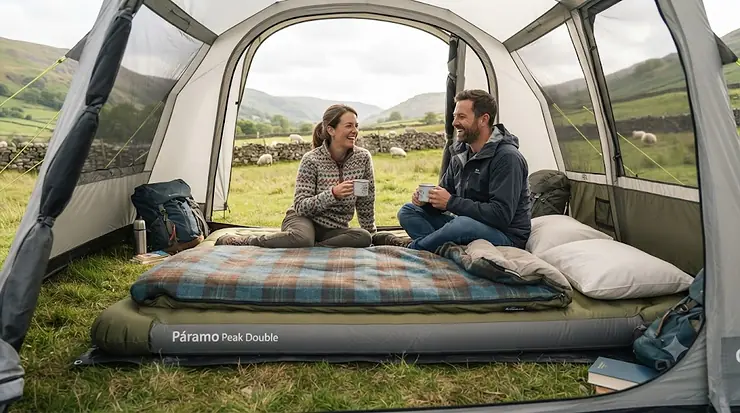
There’s a particular kind of camping argument that has nothing to do with tent pegs or who forgot the bottle opener. It happens at about 11pm, when two adults are trying to arrange themselves on mismatched sleeping mats that keep sliding apart in the middle of the night, leaving a canvas-cold gap right where a shoulder used to be. A proper double self-inflating mat for couples solves this before it starts. Instead of two single pads drifting apart on a groundsheet, you get one continuous sleeping surface, self-inflating foam-and-air construction, and enough width that neither of you spends the night clinging to the edge.
This guide is built around real products you can actually check on Amazon UK today, not vague “top picks” pulled from a spec sheet. We’ve dug into genuine specifications, aggregated review sentiment, and honest comparative analysis across budget, mid-range and premium double self-inflating mats, including options aimed specifically at winter camping. Whether you’re outfitting a first festival trip or upgrading a battered old airbed before a fortnight touring Scotland, you’ll find a mat matched to your budget, your tent, and how seriously you take a decent night’s sleep. As with any insulating layer, the way a mat performs comes down to its resistance to heat flow — what’s technically known as thermal resistance — and we’ll explain exactly what that means in practice rather than just quoting numbers at you.
Quick Comparison Table
| Mat | Thickness | Approx. Weight | Insulation | Price Range | Best For |
|---|---|---|---|---|---|
| Trail Double 5cm | 5cm | ~2.7kg | Basic | Around £45-£55 | Occasional couples, tight budgets |
| Highlander Base Double | 3cm | Lightweight | Entry-level | Typically under £45 | Backpacking couples, spare bed |
| Vango Odyssey Double 10cm | 10cm | ~5.5kg | Good | Around £120-£150 | All-round campsite comfort |
| Outwell Dreamcatcher Double 10cm | 10cm | 5.9kg | R-value ~6.7 | Around £110-£150 | Caravan and family campsite use |
| Alpkit Double Dozer | 7.5cm | Just over 5kg | R-value ~6.8 | Around £90-£110 | Genuinely double-bed-sized comfort |
| Sea to Summit Comfort Deluxe Double | 10cm | ~4.2kg | R-value 6.5 | Around £140-£180 | Couples who move differently in the night |
| Exped MegaMat Duo 10 | 10cm | Heaviest on test | R-value up to 9.5 | Premium, £300-plus | Best insulated mat for winter camping |
Even a quick scan of that table tells you most of what you need to know before diving deeper: thickness and R-value climb together with price, and weight climbs right alongside them. The Trail Double 5cm and Highlander Base Double win on affordability and packability but trade away winter-grade warmth, while the Exped MegaMat Duo 10 sits at the opposite extreme — supremely insulated, seriously heavy, and priced for campers who treat sleep quality as non-negotiable. For most couples doing three-season UK campsite trips, the middle of this table, around the Vango Odyssey Double 10cm or Alpkit Double Dozer, tends to offer the best balance of comfort per pound spent.
💬 Just one click — help others make better buying decisions too!😊
Top 7 Double Self-Inflating Mats for Couples: Expert Analysis
Choosing a mat isn’t just about thickness. Foam density, valve design, base fabric, and — crucially — how a mat performs once two different body weights are shifting around on it overnight all matter more than the headline number on the box. Here’s how these seven genuinely available products stack up.
1. Trail Double 5cm — best budget entry point for occasional couples
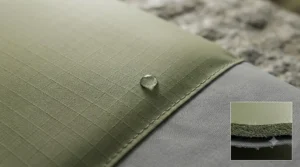
The Trail Double 5cm self-inflating mat is the mat most couples buy for their first proper camping trip, and it’s easy to see why. At L186cm x W110cm, it’s genuinely double-sized rather than two singles taped together, and the 190T water-resistant polyester shell means a damp groundsheet underneath won’t immediately become your problem. The 5cm foam core is twice the depth of the budget 2.5cm version Trail also sells, which on paper sounds like a small step up but in practice is the difference between “feeling every tent peg through the floor” and actually sleeping through the night. Quick Flow valves handle most of the inflation automatically, though nearly every reviewer notes you’ll want to top it up with a few breaths for real firmness. Based on the spec comparison with pricier options on this list, this is squarely a fair-weather, occasional-use mat rather than a long-term investment — the foam and shell simply aren’t built for weekly abuse. Reviewers consistently report that it copes well with a cool October night in the UK and stays inflated across multi-night trips, though a handful mention leaks developing after roughly a year of light use, and the carry handles coming loose during rolling. What most buyers overlook about a mat at this price is that the packed size — 55cm x 20cm x 20cm — genuinely does fit in a small car boot alongside a two-person tent, which matters more than people expect until they’re stood in a car park trying to fit everything in.
Pros:
- ✅ Genuinely double-bed sized at 186cm x 110cm, no gap down the middle
- ✅ Water-resistant 190T polyester copes with damp UK groundsheets
- ✅ Compact packed size fits easily alongside a small tent
Cons:
- ❌ Thin 5cm foam offers limited insulation for cold-ground nights
- ❌ Some reports of leaks developing after around a year of light use
Price range: around £45-£55, making it one of the most affordable genuine doubles on Amazon UK. If you’re camping two or three times a year and want to stop sliding apart on separate mats, it’s solid value; if you’re chasing four-season comfort, look further down this list.
2. Highlander Base Double — lightest packable option for weight-conscious couples
Where the Trail mat majors on thickness, the Highlander Base Double goes the other way: a 3cm foam core built to be light and quick to pack rather than plush. Highlander’s single Base mats are a well-established entry point into self-inflating sleeping gear, and the double simply scales that same construction up to a two-person width. What most buyers overlook about a mat this thin is that 3cm is still meaningfully warmer than sleeping directly on a groundsheet — it’s the compressed foam’s ability to trap dead air that does the insulating work, not raw depth alone, though thicker mats will always out-insulate thinner ones of similar foam density. Based on the spec comparison with the rest of this list, the Base Double is really aimed at couples who backpack, cycle-camp, or simply don’t own a car big enough for a bulkier mat, and who’d rather carry one double than two singles. Aggregated feedback on Highlander’s Base range (drawn from single-mat reviews, since verified double-specific customer reviews are thinner on the ground) suggests the self-inflation is reliable but rarely reaches full firmness without extra puffs, and sizing runs slightly smaller than expected — something worth double-checking against your own height before buying, since one single-mat reviewer found it fell notably short for a 6ft frame.
Pros:
- ✅ Noticeably lighter and more packable than thicker rivals
- ✅ Straightforward self-inflating valve, no special tools needed
- ✅ Genuinely budget-friendly for a first double mat purchase
Cons:
- ❌ 3cm depth gives limited comfort on stony or uneven pitches
- ❌ Verified double-specific customer reviews are harder to find than for bigger brands
Price range: typically under £45, based on Highlander’s single Base mat pricing and general market positioning for the range — always confirm the current double price before ordering. It’s a sensible pick for anyone prioritising pack size over plushness, though anyone wanting a genuine “home mattress” feel should budget for one of the thicker mats further down this guide.
3. Vango Odyssey Double 10cm — best all-round comfort for campsite regulars
The Vango Odyssey Double 10cm is an Amazon-exclusive line from one of the UK’s best-known outdoor brands, and it sits in the sweet spot most couples actually want: proper 10cm depth, a soft-touch flocked top that’s genuinely pleasant against bare skin, and a Cyclone-style flip valve that inflates and deflates faster than older screw valves. Reviewers frequently compare it directly with rival brands’ self-inflating mats (SIMs) and report the build quality feels more solid than a similarly priced Berghaus alternative, even if it takes slightly longer to reach full firmness without a manual top-up. Here’s what to weigh: at 10cm thick, this is genuinely comfortable on lumpy campsite grass, and one reviewer specifically noted using it in an 8-12°C mountain tent with zero complaints about cold from below. The non-slip polyester base keeps it planted on a groundsheet overnight, which matters more than people expect once one of you inevitably needs the loo at 2am and shuffles across the mat to get out. On the downside, the large single sleeping surface means, as one long-term reviewer put it, there’s no separating mid-night if your sleep schedules differ — a genuine consideration for couples with mismatched bedtimes, who might prefer two wide singles joined with a connector strap instead (more on that later in this guide).
Pros:
- ✅ Full 10cm depth delivers genuine campsite-grade comfort
- ✅ Soft-touch flocked top and non-slip base feel premium for the price
- ✅ Cyclone-style valve speeds up both inflation and deflation
Cons:
- ❌ Heavier and bulkier than thinner budget mats on this list
- ❌ One continuous mat means no separating if sleep schedules clash
Price range: commonly around £120-£150 on Amazon UK, positioning it firmly as a mid-range family-camping and touring choice rather than a budget buy. For couples who camp regularly enough to justify the step up from a £50 mat but aren’t ready to spend three figures on a premium brand, this is a strong middle-ground pick.
4. Outwell Dreamcatcher Double 10cm — best for caravan awnings and family pitches
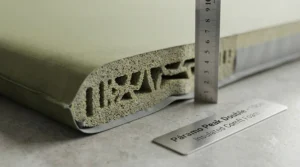
Outwell built its name on tents that dominate UK family campsites, and the Outwell Dreamcatcher Double 10cm mat is designed to match that ecosystem — its green tones are chosen deliberately to coordinate with Outwell’s tent ranges. Measuring 195cm x 130cm x 10cm, it’s slightly wider than several rivals on this list, which genuinely matters if either of you tends to sprawl. The wavy foam interior and horizontal air ducts are engineered to cut weight without sacrificing the surface area you actually sleep on, though at 5.9kg this is not a mat you’ll want to carry any distance from the car. An independently measured R-value of around 6.7 puts it comfortably ahead of the budget mats on this list for three-season insulation, translating in practice to a genuinely warm surface on cool spring and autumn nights rather than just “padding.” The Air Flow Control valve is designed for quick, one-handed inflation and deflation, which reviewers generally find easy to use, though aggregated feedback flags the outer material as thinner than expected on some units, with reports of the fabric being vulnerable to fingernail damage during rolling and packing — worth handling with a bit of care rather than roughly stuffing it away.
Pros:
- ✅ Wider-than-average 130cm width suits couples who move a lot in sleep
- ✅ R-value around 6.7 gives solid three-season insulation
- ✅ Coordinated styling works well alongside Outwell tents and caravan awnings
Cons:
- ❌ At 5.9kg, it’s genuinely a car-camping mat rather than a backpacking one
- ❌ Some reports of the outer fabric being thinner and more delicate than expected
Price range: around £110-£150, similar territory to the Vango Odyssey. Choose this one specifically if you already run an Outwell tent or caravan awning, or if the extra width matters more to you than ultimate insulation performance.
5. Alpkit Double Dozer — best for genuinely double-bed-sized comfort
Alpkit built a cult following with the single Dozer mat, and the Alpkit Double Dozer takes the same laterally-cored foam and scales it up into what independent reviewers describe as “the big mother of sleeping mats.” At 7.5cm thick and just over 5kg, it’s specifically engineered so two people share one continuous surface with no seam or gap down the middle — a deliberate design choice for couples who’d rather not feel every shift their partner makes through a dividing line. Based on the spec comparison with joined-single setups, the appeal here is simplicity: no straps, no connectors, just one mat that self-inflates and is ready to sleep on. An independently measured R-value of around 6.8 puts it firmly in three-season territory, and one detailed outdoor-forum review specifically recommends it as a smart alternative to two singles pushed together, since there’s “no gap down the middle, no two mats sliding apart in the night.” The trade-off, and it’s a real one, is bulk: packed dimensions of roughly 115cm long by 121cm circumference eat a serious chunk of boot space, and reviewers are consistent that this is a car-camping mat, not a backpacking one. It’s also worth noting that being one large mat, it’s genuinely harder to dry out fully if it gets damp than two separate mats would be, so a wet-weather pitch needs a bit more thought.
Pros:
- ✅ Single continuous surface eliminates the middle gap entirely
- ✅ Soft-touch polyester cover feels noticeably nicer against skin than base fabric
- ✅ Strong value versus buying two separate single mats
Cons:
- ❌ Bulky packed size takes up serious boot space
- ❌ Harder to dry out fully than two separate single mats if it gets wet
Price range: around £90-£110, having launched at roughly £90 with the range’s pricing shifting since. Reviewers are clear this only really makes sense if you’re driving to your pitch — walkers and cyclists should look at lighter options elsewhere on this list.
6. Sea to Summit Comfort Deluxe Double — best for couples who move differently in the night
The Sea to Summit Comfort Deluxe Double uses what the brand calls Air Frame (Delta Core) construction — triangular foam cores running both longitudinally and transversely through the mat, rather than a single uniform slab. What this means in practice, according to Sea to Summit’s own engineering explanation, is that one sleeper can turn over without disturbing the other, because the cross-core structure prevents the bounce that’s common in simpler PU foam mats. That’s a genuinely useful feature for couples where one person is a restless sleeper and the other is easily woken. At 10cm thick and rated to an R-value of 6.5, it’s suitable for three-season use with a supporting sleeping bag, and independent reviewers note that at 51 inches (around 130cm) wide, it “rivals a full-size bed.” The stretch-knit top fabric is genuinely soft and quiet, and the XPEL valve system makes topping up firmness straightforward. Here’s what to weigh before buying, though: one detailed independent review found the vacuum-packed foam took three full days to fully expand out of the box on first use, and even on subsequent trips it can take 30 minutes or more to self-inflate fully — patience is required. The same review flagged that, despite the premium price, it notably lacks a pump sack for quick topping-up, which competitors at a similar price point tend to include.
Pros:
- ✅ Cross-core Air Frame construction reduces disturbance from a restless sleeper
- ✅ Stretch-knit top fabric feels genuinely soft and home-mattress-like
- ✅ At around 130cm wide, it rivals the width of a full-size bed
Cons:
- ❌ First-time inflation can take several days to fully expand from vacuum-packed foam
- ❌ No pump sack included despite the premium price point
Price range: around £140-£180 based on current UK retailer listings, positioning it as a genuine premium buy. It’s the strongest pick on this list specifically for couples with mismatched sleep patterns, even if it demands a little patience on its first outing.
7. Exped MegaMat Duo 10 — best insulated self-inflating mat for winter camping
If insulation is your priority, the Exped MegaMat Duo 10 is the standout on this list, and it’s the mat we’d point most couples towards if “winter camping” or “shoulder-season van life” describes your actual use case. Exped’s own current testing rates the mat’s R-value at up to 9.5, while an independent US gear reviewer measured a slightly lower but still exceptional 8.1 on their test rig — the gap likely comes down to differing test methodologies, but either figure puts this mat at the very top of the insulation scale for a self-inflating double. The 10cm foam core uses horizontal air channels to keep weight and pack size down without compromising that warmth, and the 3D vertical sidewall construction maximises usable sleeping area right to the edges, rather than tapering off the way flatter mats do. Reviewers are consistent that comfort is exceptional — one long-term tester called it “one of the most comfortable mattresses we have slept on” — and the horizontal foam channels genuinely do smooth out uneven or lumpy pitches. The catch, and it’s a significant one, is weight and cost: this is comfortably the heaviest mat on this list, and pricing sits well into premium territory. Reviewers also flag that inflation and deflation are noticeably slower than lighter mats, and Exped’s own literature explicitly recommends investing in one of their electric pump accessories if you don’t want to spend 15 minutes topping it up by mouth every night.
Pros:
- ✅ Exceptional R-value puts it at the top of the insulation scale for a double mat
- ✅ 3D sidewall construction maximises usable sleeping width right to the edges
- ✅ Widely regarded by independent reviewers as one of the most comfortable mats tested
Cons:
- ❌ Comfortably the heaviest and bulkiest mat on this list
- ❌ Slow to inflate and deflate without an electric pump accessory
Price range: premium, commonly well into three figures and often £300-plus depending on size — always check current pricing before buying. For genuine winter or four-season use where warmth matters more than boot space, this is the mat that justifies its cost.
Setting Up and Maintaining Your Double Self-Inflating Mat: A Practical Guide
Getting the most out of any self-inflating mat comes down to a handful of habits most manufacturers bury in the small print. On first use, unroll the mat fully, open every valve, and — this is the step people skip — leave it for at least 30 to 60 minutes before topping it up by mouth. The foam needs time to recover from being compressed in its stuff sack, especially if it’s been stored rolled up for a while, which is why several of the mats above (notably the Sea to Summit Comfort Deluxe Double) can feel sluggish on their very first inflation. Once it’s expanded, close the valve and give it a gentle press-test: if it bottoms out easily under your hip, add a few more breaths.
The single biggest mistake in the first 30 days of ownership is over-inflating. A mat pumped drum-tight loses the give that makes it comfortable and puts extra strain on the seams — aim for “firm but with a little cushion” rather than rock hard. Deflation deserves the same care: open the valve fully, kneel on the mat from the far end and work towards the valve to push air out systematically, rather than trying to squeeze the whole thing at once. This is where mats like the Alpkit Double Dozer and Exped MegaMat Duo 10 genuinely test your patience, since more foam means more air to expel.
Long-term, store your mat loosely rolled or, better still, flat and slightly inflated in a dry cupboard between trips rather than fully compressed in its stuff sack for months at a time — permanent compression is the single biggest cause of foam losing its self-inflating “bounce” over the years. Check valves periodically for grit or sand, which is the most common cause of a mat that won’t hold air overnight, and keep the repair kit that comes with most premium mats somewhere you’ll actually find it at 11pm in a dark tent.
Real-World Scenarios: Which Mat Actually Suits Your Camping Style
Specs only tell half the story, so here’s how three different types of couple tend to land on very different mats from this list.
If you’re a couple who camps two or three weekends a year at established UK campsites, driving to the pitch and prioritising value over performance, the Trail Double 5cm or Highlander Base Double make the most sense — you’re not chasing a four-season R-value, you’re solving the “why do we keep sliding apart” problem cheaply.
If you’re touring regularly through spring, summer and early autumn, perhaps with a caravan awning or a family-sized tent, and comfort matters more now that you’re doing this every month rather than once a year, the Vango Odyssey Double 10cm or Outwell Dreamcatcher Double 10cm sit in the right price bracket for that upgrade — both genuinely warm enough for a cool September night without the premium price tag.
If one of you is a restless sleeper who wakes the other every time they roll over, or you’re planning genuine winter trips where a cold night could actually ruin the holiday, the Sea to Summit Comfort Deluxe Double and Exped MegaMat Duo 10 respectively solve those specific, real problems — at a cost that only makes sense once you’ve identified that the problem is worth solving.
How to Choose a Double Self-Inflating Mat for Couples
A double self-inflating mat for couples is a two-person sleeping pad combining an open-cell foam core with a self-inflating valve, designed to give two campers one continuous, insulated sleeping surface rather than two separate mats pushed together. Choosing the right one comes down to seven practical criteria:
- Decide how you’ll transport it. If you’re driving to a pitch, weight barely matters; if you’re carrying gear any distance, a lighter, thinner mat like the Highlander Base Double becomes far more appealing.
- Match thickness to your ground tolerance. 3-5cm suits soft grass and occasional use; 7.5-10cm is worth it for stony or uneven pitches, or if either of you has back or joint concerns.
- Check the R-value against your season. Anything below 4 is really a summer-only mat; 6-7 covers three seasons comfortably; anything above 8 is genuinely built for cold-ground winter camping.
- Measure your tent’s sleeping area before you buy. A double mat that’s wider than your tent’s inner floor will bunch against the walls — more on this below.
- Think about how you both actually sleep. If one of you tosses and turns, a cross-core design like the Sea to Summit Comfort Deluxe Double reduces disturbance more than a simple foam slab.
- Factor in packed size, not just weight. Some mats compress smaller than their weight suggests; check both figures, not one.
- Set a realistic budget band and stick to the products within it. The jump from £50 to £150 buys real comfort; the jump from £150 to £300-plus buys insulation performance most three-season campers will never actually need.
Shared Mat Sizing: Getting the Width and Length Right
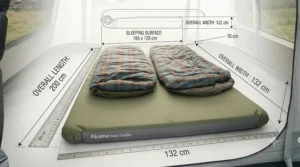
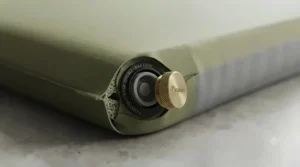
Shared mat sizing catches more couples out than any other spec on this list, because “double” isn’t a standardised measurement — it varies meaningfully between brands. Widths across the mats above range from around 110cm on the Trail Double 5cm up to roughly 132cm on the Sea to Summit Comfort Deluxe Double, a difference of over 20cm that genuinely changes how much personal space each of you gets. As a rough guide, allow at least 60-65cm of width per person if either of you moves around a lot in your sleep, which pushes you towards the wider end of this list rather than the narrower budget options.
Length matters just as much and gets overlooked more often. Most double mats sit around 185-195cm long, which is comfortable for anyone under roughly 5ft 10in but genuinely tight for taller campers, whose feet or head will end up on bare groundsheet rather than insulated foam. If either of you is over 6ft, check the exact length spec rather than assuming “double” automatically means “long enough” — several single-mat reviewers on this list specifically flagged this as a problem.
Tent Floor Space Planning for a Double Mat
Before you buy any of the mats above, measure your tent’s actual inner sleeping area, not the advertised “person capacity.” According to the Camping and Caravanning Club’s own tent buying guide, tent capacity ratings are based on how many sleeping pads can physically fit on the floor with essentially no spare room, which is exactly the trap that catches couples who buy a wide double mat for a snugly-rated “2-person” tent. A mat measuring 130cm wide needs a genuinely clear 130cm of unobstructed inner floor, and most compact 2-person backpacking tents simply don’t offer that once you account for the sloped walls and porch storage most designs include.
The practical fix is straightforward: if you already own your tent, measure the flat sleeping area with a tape measure before ordering a mat, not after. If you’re buying both together, look at “2+” or family-sized tents rather than snug 2-person backpacking designs whenever a double self-inflating mat is part of the plan — the extra floor space also gives you somewhere to actually store bags and boots without them ending up wedged against your feet overnight.
Best Insulated Self-Inflating Mat for Winter Camping: What the R-Values Actually Mean
| Mat | Rated R-Value | Practical Season |
|---|---|---|
| Trail Double 5cm | Not independently rated (thin foam) | Summer only |
| Outwell Dreamcatcher Double 10cm | Around 6.7 | 3-season, cool nights |
| Alpkit Double Dozer | Around 6.8 | 3-season, cool nights |
| Sea to Summit Comfort Deluxe Double | 6.5 | 3-season, dipping into shoulder winter with a warm bag |
| Exped MegaMat Duo 10 | Up to 9.5 (independently measured at 8.1) | Genuine winter and 4-season use |
The pattern here is worth spelling out: R-value roughly doubles between the mid-range mats on this list and the Exped MegaMat Duo 10, and that difference is far more noticeable in practice than the raw numbers suggest, because heat loss to cold ground is one of the biggest drains on warmth overnight even inside a good sleeping bag. If your camping season genuinely extends into November through February, or you’re planning trips at altitude where ground temperatures drop fast after dark, the Exped is the only mat on this list built for that brief — everything else here is a genuine three-season mat that will leave you cold on a proper winter night, however warm your sleeping bag is rated. Persistent cold overnight isn’t just uncomfortable; it’s worth knowing the warning signs of hypothermia if you’re camping in genuinely cold conditions, since prolonged exposure to cold ground compounds the risk faster than most people expect.
✨ Don’t Miss These Exclusive Deals!
🔍 Take your couples camping setup to the next level with these carefully selected mats. Click on any highlighted product to check current pricing and availability. The right mat turns a cold, restless night into the kind of sleep that makes the whole trip worth it!
Mat Straps and Connectors: Two Singles or One Genuine Double?
Not every couple wants — or needs — a single continuous mat. Some brands, including Therm-a-Rest, sell dedicated coupling kits that use hook-and-loop straps to join two wide single mats into a shared sleeping surface, and this genuinely solves a specific problem: it lets you use two mats independently on solo trips, then strap them together for shared ones, without buying twice. It also sidesteps the “no separating mid-night” complaint that comes up repeatedly in reviews of genuine one-piece doubles like the Vango Odyssey Double 10cm.
The trade-off is that straps and connectors rarely eliminate the middle gap as completely as a true double mat does — even a good connector kit leaves a seam where cold air can creep through and where you’ll feel your partner’s every movement more than on a continuous foam core. If minimising disturbance and cold spots is the priority, a purpose-built double like the Alpkit Double Dozer or Sea to Summit Comfort Deluxe Double genuinely outperforms two joined singles. If flexibility — being able to use mats separately as well as together — matters more than eliminating the gap entirely, a connector kit paired with two wide single mats is a legitimate, often cheaper, alternative worth considering before you commit to a dedicated double.
Common Mistakes When Buying a Double Self-Inflating Mat
The single most common mistake is buying on thickness alone. A 10cm mat with a low R-value can still leave you cold on a chilly night, because insulation depends on foam density and construction as much as raw depth — always check R-value alongside thickness, not instead of it. The second mistake is skipping the tent floor space check covered above; a mat that’s too wide for your tent isn’t returnable once it’s been inflated and used. Third, buyers frequently underestimate weight and packed size, assuming “double” scales linearly from a single mat they’ve used before, when in reality doubles are often disproportionately bulkier once genuinely wide foam is involved. Finally, plenty of first-time buyers skip the first-inflation patience test — expecting a mat to reach full loft within minutes when, as the Sea to Summit Comfort Deluxe Double review above demonstrates, some genuinely need days to fully recover from vacuum packing.
Double Self-Inflating Mat vs Two Single Mats: Which Actually Wins?
| Factor | Double Self-Inflating Mat | Two Single Mats |
|---|---|---|
| Comfort for couples | No gap, one continuous surface | Gap down the middle unless strapped together |
| Flexibility | Fixed to one shared configuration | Can be used separately on solo trips |
| Packed size | Usually one large, bulky roll | Two smaller, more manageable rolls |
| Typical cost | Often cheaper than two good singles combined | Can cost more for two quality mats |
| Disturbance from movement | Lower on cross-core designs like the Sea to Summit Comfort Deluxe Double | Higher, especially with basic foam singles |
Looking at the comparison above, a genuine double like the Alpkit Double Dozer wins decisively on shared comfort and often on price, since buying two decent single mats can easily cost more than one well-specified double. Two single mats win on flexibility, particularly for couples who sometimes camp solo or want the option to split up if one person runs hot and the other runs cold overnight. For most couples buying specifically for shared trips, the analysis favours a genuine double; it’s really only worth choosing separate singles if you have a concrete reason to need that flexibility.
Long-Term Cost & Maintenance
Thinking in terms of total cost of ownership rather than sticker price changes the calculus noticeably. A £50 mat like the Trail Double 5cm that needs replacing after two or three seasons of regular use works out more expensive over five years than a £150 mat built to last a decade, once you factor in the hassle of repurchasing and the risk of a leak ruining a trip. Premium foam and better fabric — the kind used in the Sea to Summit Comfort Deluxe Double and Exped MegaMat Duo 10 — genuinely does resist punctures and delamination better over years of use, based on the construction materials both brands specify. That said, for a couple who camps once or twice a year, the arithmetic flips: a £50 mat lasting three light-use seasons is simply better value than a £300 mat that would take a decade of infrequent trips to “earn out” its higher price. Maintenance costs are low across the board — most mats include a basic repair kit, and a puncture patch typically costs a few pounds — but storing any mat properly between trips, as covered in the practical guide above, does more to protect your investment than anything you can buy.
FAQ
❓ What size is a double self-inflating camping mat?
❓ Can two single sleeping mats be joined together instead of buying a double?
❓ What R-value do I need for winter camping as a couple?
❓ How long does a double self-inflating mat take to inflate?
❓ Do I need a footprint or groundsheet under a self-inflating mat?
Conclusion
A good double self-inflating mat for couples changes camping from something you endure to something you actually rest properly through, and the right choice genuinely depends on how you camp rather than which mat has the biggest number on the box. Budget campers doing the occasional weekend will get real value from the Trail Double 5cm or Highlander Base Double; regular campsite users touring through spring and summer are well served by the Vango Odyssey Double 10cm or Outwell Dreamcatcher Double 10cm; and anyone chasing genuine four-season comfort, or camping with a restless sleeper, should look hard at the Sea to Summit Comfort Deluxe Double or the Exped MegaMat Duo 10, our pick for the best insulated self-inflating mat for winter camping on this whole list.
Whichever you choose, match thickness and R-value to your actual season, measure your tent’s floor space before you order, and give any mat a proper chance to self-inflate before judging it. Do that, and the 11pm arguments about who’s falling into the gap should be over for good.
Recommended for You
- 7 Best lightweight self-inflating mat for backpacking Picks (2026)
- Self-Inflating Sleeping Mat: 7 Best Picks Tested for 2026
- Sleeping Bag for School Camping Trips: 7 Top Picks (2026)
Disclaimer: This article contains affiliate links. As an Amazon Associate, I earn from qualifying purchases. If you purchase products through these links, we may earn a small commission at no additional cost to you.
✨ Found this helpful? Share it with your friends! 💬🤗
