
In This Article
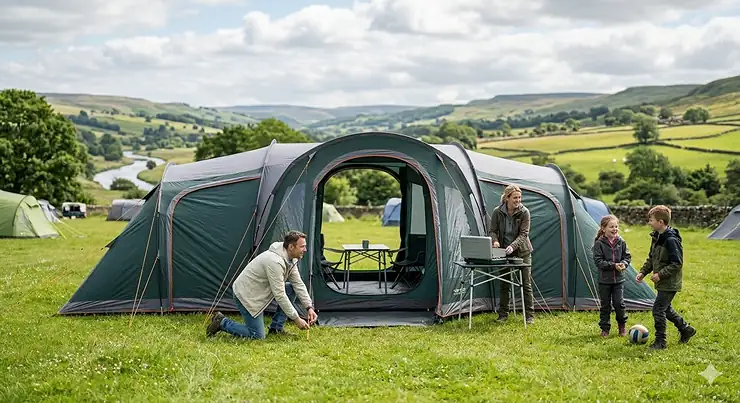
Picture this: you’re on a family camping trip in the Lake District, the kids are finally asleep after a day of adventure, and you’re settling into your own separate bedroom with a cup of tea. No stumbling over sleeping bags, no disturbing little ones – just the peaceful sound of rain on canvas. That’s the magic of the best vis a vis tent.
As someone who’s spent countless weekends camping across the UK – from the windswept coasts of Cornwall to the rugged Scottish Highlands – I can tell you that choosing the right tent makes all the difference. Vis a vis tents (also known as opposite bedroom tents or opposite door tent layout) have revolutionised family camping by offering privacy, space, and clever organisation that traditional single-room tents simply can’t match.
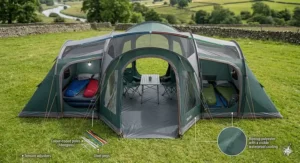
What exactly is a vis a vis tent? The term “vis-à-vis” comes from French, meaning “face to face.” In camping terms, it describes a tent layout with two separate bedrooms positioned on opposite sides of a central living area. Think of it as having your own miniature house under canvas – bedroom, lounge, and all the vis a vis tent living space you need for a comfortable outdoor experience.
According to the National Geographic guide to family camping in the UK, choosing appropriate accommodation is crucial for creating memorable outdoor experiences, and vis a vis tents tick every box. Whether you’re after a budget-friendly option for festival weekends or a premium vis a vis air tent for extended holidays, this guide covers everything you need to know.
Let’s dive into finding the best vis a vis tent for your 2026 adventures!
Quick Comparison Table
| Tent Model | Capacity | Type | Price Range | Water Rating | Best For |
|---|---|---|---|---|---|
| Coleman Spruce Falls 6 | 6 person | Poled | £340-£380 | 3000mm | Families, value |
| Regatta Kivu 4 V3 | 4 person | Poled | £100-£110 | 3000mm | Budget camping |
| 10T Mento 8 | 8 person | Tunnel | £450-£520 | 5000mm | Large groups |
| Alpkit Nocturne 4 | 4 person | Semi-geodesic | £280-£320 | 4000mm | Lightweight camping |
| Vango Longleat Air 800XL | 8 person | Inflatable | £650-£750 | 4500mm | Premium air tent |
| Halfords Vis A Vis 4 | 4 person | Poled | £85-£95 | 3000mm | Festivals, weekends |
| Kampa Watergate 6 | 6 person | Tunnel | £380-£450 | 3000mm | Spacious vis a vis tent 6 person |
💬 Just one click – help others make better buying decisions too!😊
Top 7 Vis a Vis Tents: Expert Analysis
1. Coleman Spruce Falls 6 – Best Overall Vis a Vis Tent 6 Person
If you’re searching for the best vis a vis tent that balances space, affordability, and reliability, the Coleman Spruce Falls 6 deserves serious consideration. This spacious family tent has become a campsite staple across the UK, and for good reason.
Key Specifications:
- Capacity: 6 person (comfortably sleeps 4 adults + 2 children)
- Water column: 3000mm hydrostatic head
- Standing height: Nearly 2 metres in central living area
- Weight: Approximately 18kg
The Spruce Falls features XXL-sized bedrooms on either end, creating that classic opposite bedroom tent layout. The central living space is bright and airy thanks to large windows, whilst the fully integrated groundsheet keeps moisture and insects firmly outside where they belong. I particularly appreciate the high side panels on the groundsheet – they provide excellent protection during those inevitable British downpours.
UK Customer Feedback: Families praise this tent’s straightforward setup and generous headroom. One reviewer mentioned pitching it successfully during a wet weekend in Snowdonia, noting “stood firm in 40mph winds and kept us completely dry.”
✅ Pros:
- Spacious vis a vis tent living space with standing height
- Excellent weather resistance for UK conditions
- XXL bedrooms accommodate families comfortably
❌ Cons:
- Heavier than some competitors (18kg)
- Requires decent pitch space
Price: £340-£380 | Rating: ★★★★☆ (4.5/5)
2. Regatta Kivu 4 V3 – Best Budget Opposite Bedroom Tent
Not everyone needs to spend a fortune to enjoy quality camping. The Regatta Kivu 4 V3 proves that brilliant design and solid construction can come at an accessible price point.
Key Specifications:
- Capacity: 4 person
- Water column: 3000mm Hydrafort 70D flysheet
- Pitch time: Approximately 10 minutes
- Weight: 5.3kg
- Dimensions: 310 x 270 x 140cm
What sets the Kivu apart is its darkened bedroom technology, which blocks early morning light – perfect for festival campers or families with teenagers who appreciate a lie-in. The colour-coded fibreglass poles make pitching genuinely stress-free, even for first-time campers. The spacious porch area provides practical storage for muddy boots and camping gear, keeping your living space tidy.
UK Customer Feedback: Buyers consistently highlight the Kivu’s exceptional value, with one camper noting “slept 2 adults, 2 kids, and a fox red Labrador comfortably.” Multiple reviews confirm excellent waterproofing after testing in persistent rain.
✅ Pros:
- Outstanding value for money
- Darkened bedrooms for better sleep
- Lightweight and easy to transport
❌ Cons:
- Lower ceiling height in bedrooms
- Basic ventilation compared to premium models
Price: £100-£110 | Rating: ★★★★☆ (4/5)
3. 10T Mento 8 – Best for Large Groups & Extended Families
When you need serious space, the 10T Mento 8 delivers. This tunnel-style vis a vis tent offers impressive waterproofing and clever internal organisation that makes group camping genuinely enjoyable rather than chaotic.
Key Specifications:
- Capacity: 8 person (3 separate sleeping compartments)
- Water column: 5000mm (exceptional UK weather protection)
- Tunnel tent design for stability
- Multiple ventilation points
- PVC transparent windows (lockable)
The Mento 8’s 5000mm water column rating is outstanding – significantly higher than the 3000mm standard. This tunnel tent features fibreglass poles with colour-coded markings, making setup surprisingly manageable despite its size. The three sleeping compartments can be configured differently depending on your group’s needs, offering flexible vis a vis tent privacy options.
UK Customer Feedback: Groups appreciate the robust construction and standing room throughout. One family mentioned using it for a week-long holiday in Scotland, praising how it “handled everything the Highlands threw at it.”
✅ Pros:
- Exceptional 5000mm waterproofing
- Three separate sleeping areas
- Stable tunnel design for windy conditions
❌ Cons:
- Requires two people for pitching
- Larger pack size (Ø 30 x 80cm)
Price: £450-£520 | Rating: ★★★★★ (4.8/5)
4. Alpkit Nocturne 4 – Best Lightweight Vis a Vis Tent
British outdoor brand Alpkit has created something special with the Nocturne 4. This freestanding semi-geodesic tent combines the vis a vis layout with genuinely impressive weather performance, all whilst remaining surprisingly packable.
Key Specifications:
- Capacity: 4 person, 3-season
- Weight: Just 8.2kg
- Hydrolysis-resistant TPU seam taping
- Standing height in central porch
- Bathtub groundsheet in each pod
What makes the Nocturne brilliant is its semi-geodesic structure – it stands firm in challenging weather without requiring traditional guy lines everywhere. The quick-pitch outer-first design means you can set up in poor weather without getting your inner tent soaked. Each sleeping pod can pitch independently, offering flexibility other tents can’t match.
UK Customer Feedback: Campers love the thoughtful design details. As one reviewer put it, “pitched it in pouring rain at 8pm, stayed bone dry inside, and the darkened bedrooms meant we all slept until 9am.” The TPU seam taping receives particular praise for long-term durability.
✅ Pros:
- Lightweight 8.2kg for a 4-person tent
- Excellent weather performance
- PFC-free materials (environmentally conscious)
❌ Cons:
- Premium price point
- Less living space than tunnel alternatives
Price: £280-£320 | Rating: ★★★★★ (4.7/5)
5. Vango Longleat Air 800XL – Best Vis a Vis Air Tent
For those who’ve experienced the frustration of wrestling with tent poles in howling wind and rain, the Vango Longleat Air 800XL offers a revolutionary alternative. This premium vis a vis air tent inflates in minutes, transforming camping setup from stressful chore to simple task.
Key Specifications:
- Capacity: 8 person
- AirBeam technology (no traditional poles)
- Water column: 4500mm
- Vango TBSII (Tension Band System II)
- Multiple entry points
Vango pioneered inflatable family tents, and the Longleat represents their expertise at its finest. Simply peg out the corners, connect the pump to the single inflation point, and watch your tent rise before your eyes. The AirBeams provide exceptional stability – they won’t snap like fibreglass poles and actually perform better in high winds.
UK Customer Feedback: Families rave about setup times, with multiple reviews mentioning “fully pitched in under 15 minutes, including pegging out.” The standing height throughout receives consistent praise, particularly for campers with mobility considerations.
✅ Pros:
- Incredibly fast setup with AirBeam system
- Superior stability in wind
- Spacious throughout with standing headroom
❌ Cons:
- Significant investment (£650-£750)
- Requires inflation pump (included)
Price: £650-£750 | Rating: ★★★★★ (4.9/5)
6. Halfords 4 Person Vis A Vis Tent – Best for Festival Camping
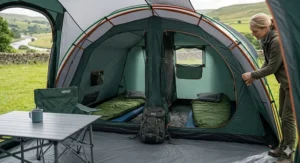
Halfords might surprise you with their camping range. The Halfords 4 Person Vis A Vis Tent offers solid construction and practical features at a price point that won’t make festival-goers wince.
Key Specifications:
- Capacity: 4 person
- Colour-coded poles for quick pitching
- Waterproof bathtub groundsheet
- Multiple ventilation points
- Compact when packed
This tent strikes a brilliant balance between quality and affordability. The colour-coded fibreglass pole system means even camping novices can pitch confidently. The bathtub groundsheet design keeps moisture out during those inevitable muddy festival fields, whilst the vis a vis layout provides privacy when camping with friends.
UK Customer Feedback: Festival campers appreciate the straightforward setup and decent waterproofing. One reviewer mentioned “survived Reading Festival in typical August weather – stayed dry inside despite surrounding tents flooding.”
✅ Pros:
- Budget-friendly for festivals
- Easy colour-coded setup
- Adequate space for gear storage
❌ Cons:
- Basic features compared to premium models
- Lower waterproof rating for extreme conditions
Price: £85-£95 | Rating: ★★★☆☆ (3.5/5)
7. Kampa Watergate 6 – Best Spacious Family Tunnel Tent
The Kampa Watergate 6 represents outstanding British tent engineering. This tunnel-style vis a vis tent 6 person model offers exceptional space and clever storage solutions that make extended family camping genuinely comfortable.
Key Specifications:
- Capacity: 6 person
- Tunnel tent design
- Water column: 3000mm
- Large panoramic windows
- Optional side porch available
Kampa understands UK camping. The Watergate features panoramic windows that flood the living area with natural light on sunny days, whilst robust construction handles the inevitable rainy spells. The tunnel design creates maximum internal space, and an optional side porch (sold separately) can add a dedicated cooking or wet room area.
UK Customer Feedback: Families highlight the generous space and build quality. One long-term user noted “five years of family holidays and it’s still going strong – withstood everything from Devon drizzle to Scottish gales.”
✅ Pros:
- Excellent space utilisation
- Robust tunnel construction
- Option to add side porch
❌ Cons:
- Requires larger pitch
- Best pitched by two people
Price: £380-£450 | Rating: ★★★★☆ (4.4/5)
✨ Don’t Miss These Exclusive Deals!
🔍 Take your family camping to the next level with these carefully selected tents. Click on any highlighted product to check current pricing and availability on Amazon.co.uk. These tents will help you create authentic outdoor memories your family will treasure!
Understanding Vis a Vis Tent Layouts: What Makes Them Special?
The opposite bedroom tent design isn’t just about aesthetics – it’s fundamentally practical architecture for family camping. Let me explain why this layout works brilliantly for UK campers.
The Anatomy of a Vis a Vis Tent
Traditional camping tents typically feature a single sleeping area with perhaps a porch. Vis a vis tents flip this concept, creating dedicated zones:
Bedroom Zone 1: Usually positioned at one end, often featuring darkened fabrics for better sleep. Perfect for adults or older children who value privacy.
Central Living Area: The heart of your temporary home. This is where you’ll eat breakfast whilst rain patters outside, play cards during downtime, and store camping gear. Standing height here transforms the camping experience – no more crouching to get dressed!
Bedroom Zone 2: Mirroring the opposite end, providing separate sleeping space for children, guests, or simply extra storage during shorter trips.
Connecting Corridors: Some premium models feature connecting pathways between zones, creating genuine room-to-room flow.
Why Opposite Door Tent Layouts Excel in UK Weather
Britain’s unpredictable climate demands smart tent design. The vis a vis configuration offers several weather-related advantages:
Cross-ventilation: With doors and windows at each end, you can create airflow that reduces condensation – a constant battle in British tents. On warmer summer evenings, opening both bedroom doors creates a cooling breeze through the living area.
Flexible access: Multiple entry points mean less disruption. Kids can exit for midnight loo trips without disturbing sleeping parents. The National Trust’s camping guide highlights how separate access points significantly improve family camping experiences.
Weather protection: The central living area acts as a buffer zone during storms. You can close off one bedroom completely whilst keeping the other accessible, protecting sleeping family members from wind and rain when doors need opening.
How to Choose the Best Vis a Vis Tent: Essential Buying Factors
Selecting your perfect tent requires considering several crucial factors. Here’s what I’ve learned from years of camping across the UK:
1. Determine Your Actual Capacity Needs
Here’s a camping truth: tent capacity ratings are optimistic. A “4 person” tent comfortably sleeps 3 adults with gear. My rule of thumb? Add 1-2 to your actual number.
For couples: A 4-person vis a vis tent provides ample space for two plus luggage, camping chairs, and a cosy living area.
For families of four: Look at 6-person models. Your kids will appreciate the extra space, and you’ll thank yourself when storing wet waterproofs and muddy boots.
For larger groups: An 8-person tent suits 5-6 adults comfortably, or families with teenagers who need genuine privacy.
2. Waterproofing: Understanding Hydrostatic Head Ratings
In the UK, waterproofing isn’t optional – it’s essential. The hydrostatic head rating indicates how much water pressure fabric withstands before leaking:
- 1500mm: Basic showerproof (avoid for UK camping)
- 3000mm: Standard waterproof, adequate for normal British summers
- 4000mm+: Excellent protection for exposed sites and extended trips
- 5000mm: Premium waterproofing for serious weather
I’ve camped in Wales during “atmospheric rivers” (what the Met Office calls sustained downpours), and tents rated 4000mm+ genuinely keep everything dry. The extra investment pays for itself the first time you’re not bailing water at 3am.
3. Poled vs Air Tents: The Great Debate
Traditional Poled Tents:
- Lighter and more affordable
- No puncture worries
- Familiar setup process
- Easier to repair in the field
Inflatable Air Tents:
- Dramatically faster setup (5-15 minutes)
- Superior wind resistance
- Heavier and more expensive
- Requires pump (usually included)
For families with young children or campers with mobility issues, vis a vis air tent options transform the experience. Watching grandparents effortlessly inflate their tent whilst we’re still wrestling with poles definitely creates envy!
4. Seasonality and UK Climate Considerations
Most family tents are “3-season” designs (spring, summer, autumn). For UK camping, this works perfectly. Key features for British weather:
Ventilation: Multiple mesh windows and vents prevent condensation buildup during humid nights.
Groundsheet design: Bathtub-style groundsheets with raised edges (15-20cm) stop water ingress during heavy rain.
Guy line anchor points: Proper storm guys distribute wind load, keeping your tent stable during those inevitable breezy nights.
5. Pack Size and Weight: Transport Realities
Check dimensions when packed. A tent that won’t fit in your car boot becomes problematic! Weights for vis a vis tents typically range:
- Lightweight options: 8-12kg (manageable for two people)
- Standard family tents: 15-20kg (require car transport)
- Large 8-person models: 25-35kg (definitely need help carrying)
Most UK campers drive to sites, making weight less critical than international backpackers. However, consider the journey from car park to pitch – some campsites involve considerable walks.
Vis a Vis Tent Privacy: Creating Personal Space Outdoors
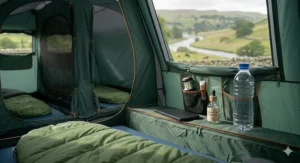
Privacy matters, especially during extended camping trips. The opposite bedroom tent layout excels here, but there are additional considerations:
Bedroom Separation Strategies
Hanging curtains or dividers: Many tents include internal hanging points. You can add fabric dividers for enhanced privacy, particularly useful when camping with teenagers or mixed groups.
Bedroom pod design: Look for tents where bedrooms are genuinely separate compartments with proper doors, not just fabric partitions. The Coleman Spruce Falls 6 and Alpkit Nocturne 4 both feature fully enclosed bedroom pods.
Sound insulation: Let’s be honest – tent walls don’t provide acoustic privacy! However, the physical separation of vis a vis layouts means less disturbance from movement and early morning stirring.
Living Space Optimisation
The central area becomes your family’s communal hub. Maximise this space by:
Using camping furniture wisely: Collapsible tables and chairs that stow away create flexible living areas. The National Trust recommends creating designated zones within your tent for cooking, dining, and relaxing.
Storage solutions: Hanging organisers, gear lofts, and designated “muddy boot zones” near entrances keep the living space clutter-free. Research from Outdoors Magic magazine shows that organised tent spaces significantly improve camping satisfaction ratings.
Lighting strategy: LED lanterns with dimmer switches allow different areas to have appropriate lighting levels. Reading in bed whilst others sleep becomes feasible.
Setup and Pitching: Mastering Your Vis a Vis Tent
Even the best vis a vis tent becomes frustrating if you can’t pitch it properly. Here’s my battle-tested approach:
Pre-Trip Practice
Never attempt first setup at the campsite! Pitch your tent in the garden or local park beforehand. You’ll:
- Verify all components are present
- Understand the pole/peg configuration
- Identify potential challenges
- Build confidence for actual camping
I learned this lesson the hard way during a torrential downpour in Northumberland. Fumbling with unfamiliar poles whilst rain hammered down remains a vivid (and soggy) memory.
The 7-Step Pitching Process
Step 1: Choose Your Spot Wisely Select level ground away from hollows that collect water. Check for rocks, roots, and ant nests. A few minutes of preparation saves hours of discomfort.
Step 2: Lay Out the Flysheet Position doors considering wind direction and views. In the UK, prevailing winds generally come from the southwest, so orient accordingly.
Step 3: Assemble Poles/Inflate Beams For poled tents, colour-coded systems make this straightforward. For air tents, ensure the pump connection is secure before inflating.
Step 4: Raise the Structure Work systematically, securing one end before moving to the other. Most vis a vis tents are easier with two people, though some designs allow solo pitching.
Step 5: Peg the Corners Drive pegs at 45-degree angles, pointing away from the tent. The golden rule: peg tension should be firm but not drum-tight – fabric needs slight movement.
Step 6: Add Guy Lines Essential for stability, especially in exposed locations. Brightly coloured guy lines (many UK tents feature these) prevent tripping accidents during night-time loo visits.
Step 7: Final Tension and Check Walk around adjusting pegs and guys for even tension. Add bedroom pods last to keep them dry during setup.
Maintenance and Care: Extending Your Tent’s Lifespan
Quality vis a vis tents represent significant investment, so proper care ensures years of service:
Post-Trip Cleaning
Never pack a wet tent for storage! This causes mildew and unpleasant odours. If you must pack wet, unpack and dry within 48 hours. I string ours across the garage or garden washing line.
Spot clean mud and stains using lukewarm water and mild soap. Avoid harsh detergents that damage waterproof coatings. A soft brush removes dried mud without abrading fabric.
Check zips and closures for debris. A stuck zip often means dirt in the mechanism – clean regularly with a toothbrush.
Storage Best Practices
Loose storage beats tight compression. Store tents in breathable bags in cool, dry locations. Avoid damp garages or lofts with extreme temperatures.
Annual waterproofing checks: After 2-3 seasons, you may notice reduced water resistance. Re-proofing sprays (available at outdoor retailers) restore performance. Test a small area first.
Pole inspection: Check fibreglass poles for cracks or splinters. Elastic shock cord loses tension over time – replace when poles feel loose. Air tent beams should hold pressure overnight; if not, locate and repair punctures.
Comparison: Vis a Vis Tents vs Alternative Designs
Understanding how vis a vis layouts compare to other tent styles helps confirm your choice:
| Feature | Vis a Vis Tent | Traditional Family Dome | Tunnel Tent | Bell Tent |
|---|---|---|---|---|
| Privacy | ★★★★★ Excellent | ★★☆☆☆ Limited | ★★★☆☆ Moderate | ★☆☆☆☆ Minimal |
| Living Space | ★★★★★ Generous central area | ★★★☆☆ Combined sleeping/living | ★★★★☆ Good linear space | ★★★★★ Circular space |
| Weather Resistance | ★★★★☆ Very good | ★★★★★ Excellent (lower profile) | ★★★☆☆ Good in line with wind | ★★☆☆☆ Fair |
| Setup Time | ★★★☆☆ 20-30 mins | ★★★★☆ 15-20 mins | ★★★☆☆ 20-35 mins | ★★★★★ 10-15 mins |
| Pack Size | ★★★☆☆ Moderate | ★★★★☆ Compact | ★★☆☆☆ Bulky | ★★★☆☆ Moderate |
| Price Range | £100-£750 | £80-£400 | £150-£600 | £200-£800 |
Ratings based on typical models in each category.
The vis a vis tent wins decisively for families prioritising privacy and living space. Dome tents offer better extreme weather performance but sacrifice internal organisation. Tunnel tents provide excellent space but require more setup expertise. Bell tents create atmospheric camping but lack privacy for groups.
Real-World Scenarios: Which Vis a Vis Tent Suits Your Camping Style?
Let me share some typical camping scenarios to help you identify your perfect match:
The Festival Crew (4 Friends, Budget-Conscious)
Recommendation: Halfords 4 Person Vis A Vis Tent or Regatta Kivu 4 V3
You’re heading to festivals, maybe a weekend camping trip in the Cotswolds, and need something affordable that won’t devastate you if damaged. The Halfords or Regatta models offer sufficient space, easy setup, and won’t break the bank. The opposite bedroom layout means couples can each have privacy without needing separate tents.
The Young Family (2 Adults, 2 Children Under 10)
Recommendation: Coleman Spruce Falls 6 or Kampa Watergate 6
With young children, you need space for toys, pushchairs, and all the paraphernalia family camping entails. The 6-person capacity provides room to grow, whilst standing height in the living area makes everything easier with toddlers. The darkened bedrooms help children (and exhausted parents!) sleep better during early summer mornings.
The Extended Family Trip (6-8 People, Mixed Ages)
Recommendation: 10T Mento 8 or Vango Longleat Air 800XL
Multigenerational camping requires serious space and organisation. The Mento 8’s three sleeping compartments allow flexible arrangements – perhaps grandparents in one, parents in another, and children in the third. For families with older members who might struggle with traditional setup, the Vango air tent’s effortless pitching transforms the experience.
The Adventure Campers (Lightweight, Exploring Remote Sites)
Recommendation: Alpkit Nocturne 4
You’re hiking into locations, perhaps wild camping (where permitted) in Scotland, and need genuinely portable accommodation without sacrificing the vis a vis layout. The Nocturne’s 8.2kg weight and semi-geodesic structure handles exposed mountain sites whilst remaining packable enough for proper adventures.
✨ Ready to Upgrade Your Family Camping Experience?
🏕️ Don’t settle for cramped, uncomfortable camping! These expertly selected vis a vis tents transform family holidays into adventures everyone actually enjoys. Click any highlighted tent name to view current prices and customer reviews on Amazon.co.uk. Your next camping memory starts here!
Budget Breakdown: Finding Value Across Price Ranges
Let’s examine what you get at different price points, helping you maximise value regardless of budget:
| Price Range | Key Features | Expected Lifespan | Best Value Models | Who It’s For |
|---|---|---|---|---|
| £85-£150 | Basic waterproofing (3000mm), fibreglass poles, functional layout | 3-5 years regular use | Halfords 4 Person, Regatta Kivu 4 | Festival campers, occasional users |
| £280-£450 | Enhanced waterproofing (3000-4000mm), better materials, thoughtful design | 7-10 years proper care | Coleman Spruce Falls 6, Kampa Watergate 6 | Regular family campers |
| £650-£750+ | AirBeam tech, superior waterproofing (4500mm+), advanced fabrics | 10+ years | Vango Longleat Air 800XL | Serious enthusiasts, frequent campers |
Entry-Level (£85-£150)
Examples: Halfords 4 Person, Regatta Kivu 4 V3
What you get:
- Basic waterproofing (3000mm)
- Fibreglass pole construction
- Functional vis a vis layout
- Adequate for UK summer camping
Best for: Festival campers, occasional users, first-time buyers testing whether camping suits them. These tents provide genuine value but expect 3-5 years of regular use rather than decade-long durability.
Mid-Range (£280-£450)
Examples: Alpkit Nocturne 4, Coleman Spruce Falls 6, Kampa Watergate 6
What you get:
- Enhanced waterproofing (3000-4000mm)
- Better materials and construction
- Thoughtful design features
- Improved pack quality
Best for: Regular campers, families planning multiple trips annually. This sweet spot delivers excellent performance without premium pricing. Expect 7-10 years of good service with proper care.
Premium (£650-£750+)
Examples: Vango Longleat Air 800XL, high-spec Coleman models
What you get:
- AirBeam technology (air tents)
- Superior waterproofing (4500mm+)
- Advanced fabrics and construction
- Comprehensive warranty coverage
Best for: Serious camping enthusiasts, families camping in challenging conditions, those prioritising convenience and longevity. These tents justify their cost through durability, innovation, and user experience.
Vis a Vis Tent Accessories: Enhancing Your Camping Experience
The tent itself is just the foundation. Smart accessories transform good camping into brilliant camping:
Essential Additions
Footprint Groundsheet (£25-£60): This protective layer sits beneath your tent, extending lifespan by preventing abrasion and punctures. Many manufacturers offer custom-fit options like the footprints included with Vango tents.
Carpet and Bedroom Mats (£30-£80): Transform hard groundsheets into comfortable floors. Particularly valuable for extended stays or camping with young children who spend time playing on the tent floor.
LED Lighting Systems (£15-£45): Modern LED strips with battery packs provide adjustable, energy-efficient lighting. Some feature remote controls, allowing you to adjust brightness without leaving your sleeping bag!
Hanging Organisers (£10-£25): Multi-pocket organisers that attach to tent walls keep phones, glasses, and essentials accessible whilst maintaining tidy living spaces.
Comfort Upgrades
Inflatable Furniture (£40-£120): Sofas and chairs designed for camping create genuine living room comfort. Some even pack remarkably small when deflated.
Portable Heaters (£35-£80): For spring and autumn camping, electric heaters (where hook-up available) or safe gas heaters extend the camping season. Always ensure proper ventilation.
Privacy Screens (£20-£50): Additional internal dividers or external windbreaks create extra private areas and protect from wind.
Seasonal Camping: Adapting Your Vis a Vis Tent Through the Year
UK camping isn’t restricted to July and August. Understanding seasonal adjustments helps you enjoy your tent year-round:
Spring Camping (March-May)
Challenges: Unpredictable weather, cold nights, occasional frost
Adaptations:
- Extra groundsheets for insulation
- Quality sleeping bags rated to 0°C
- Ventilation management to reduce condensation
- Consider sites with electric hook-ups for heating
Spring offers brilliant camping – fewer crowds, vibrant wildlife, and stunning landscapes as nature awakens across the UK’s national parks. Your vis a vis tent’s separate bedrooms allow some family members to hunker down early whilst others enjoy evening stargazing.
Summer Camping (June-August)
Challenges: Heat buildup, midges, crowded sites
Adaptations:
- Maximise cross-ventilation through bedroom and living area doors
- Mesh screens on all openings to exclude insects
- Darkened bedrooms become essential for lie-ins
- Consider coastal sites for cooling breezes
Peak season camping demands booking ahead, but summer’s long evenings and (theoretically!) warmer weather create magical family memories. The central living area becomes an outdoor lounge for games, meals, and socialising. According to Hipcamp’s UK camping guide, summer camping across Britain offers diverse experiences from Scottish Highlands to Cornish coasts.
Autumn Camping (September-November)
Challenges: Shorter days, wetter weather, leaf fall
Adaptations:
- Enhanced lighting systems compensate for early darkness
- Robust waterproofing essential as rainfall increases
- Extra guy lines for autumn winds
- Heating solutions for comfort
Autumn camping holds special charm – spectacular colours, quieter sites, and crisp air perfect for hiking. Your tent’s opposite bedroom layout allows couples to retreat early whilst keeping living areas available for evening activities.
FAQ
❓ Can you use a vis a vis tent in winter?
❓ How long does it take to pitch a vis a vis tent?
❓ Are vis a vis tents good for festivals?
❓ What's the difference between a vis a vis tent and a tunnel tent?
❓ How do you clean and maintain a vis a vis tent?
Conclusion: Finding Your Perfect Vis a Vis Tent for 2026 Adventures
After exploring the best vis a vis tent options available in the UK, one truth emerges: the perfect tent depends entirely on your specific camping style, family needs, and budget priorities.
For families seeking exceptional value, the Regatta Kivu 4 V3 delivers impressive quality at £100-£110, making camping accessible without compromising essential features. If you’re investing in years of regular camping, the Coleman Spruce Falls 6 offers outstanding space and reliability around £340-£380. And for those wanting the ultimate in convenience, the Vango Longleat Air 800XL transforms setup from chore to pleasure, justifying its premium £650-£750 price through innovation and ease.
Whatever your choice, the opposite bedroom tent layout fundamentally improves family camping by providing privacy, organisation, and genuine living space that traditional single-room tents can’t match. Whether you’re watching sunrise over the Lake District, exploring Scottish Highlands, or enjoying coastal Cornwall, your vis a vis tent becomes a genuine home away from home.
The UK camping community continues growing, with campsites across England, Scotland, Wales, and Northern Ireland offering diverse landscapes and experiences for every type of camper. Your tent choice unlocks all these adventures, creating memories that last far beyond the camping season.
So grab your chosen tent, check the weather forecast (it’s Britain, after all!), and get out there. The hills, coasts, and forests are waiting, and with the right vis a vis tent, you’re ready for whatever our brilliant, bonkers British weather throws at you.
Happy camping, and see you on the trail! 🏕️
Recommended for You
- 7 Best Instant Tent UK 2026: Quick Setup for Families
- 7 Best Tent Wild Camping Scotland 2026
- 7 Best Winter Camping Tents UK 2026
Disclaimer: This article contains affiliate links. If you purchase products through these links, we may earn a small commission at no additional cost to you. Prices shown are approximate and may vary.
✨ Found this helpful? Share it with your mates! 💬🤗
