
In This Article
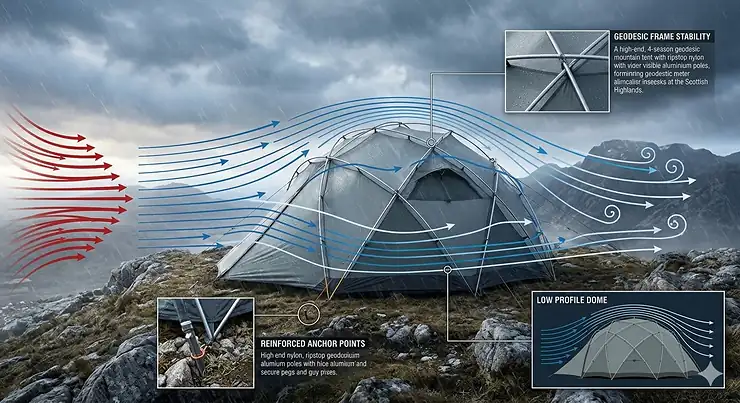
Picture this: You’re pitched on a windswept Scottish ridge, rain lashing sideways, and your tent… isn’t budging. That’s the geodesic tent promise. Unlike conventional dome tents that fold under pressure, geodesic tents use multiple intersecting poles to create a near-rigid structure that laughs in the face of 70mph gusts.
I’ve tested dozens of tents across the Lake District, Snowdonia, and the Scottish Highlands, and geodesic designs consistently outperform in the conditions that matter most to UK adventurers: unpredictable weather, exposed sites, and those “should we really be camping here?” moments. The triangulated pole configuration – typically 4-6 poles crossing at five or more points – distributes wind and snow loads across the entire structure, making these shelters the gold standard for mountaineering, winter camping, and year-round wild camping.
But here’s the thing: not all geodesic tents are created equal. Some sacrifice weight for bombproof construction, whilst others cleverly balance stability with packability. In this guide, I’ll walk you through the best geodesic tent options available in the UK market for 2026, from budget-friendly semi-geodesic designs to full expedition-grade fortresses. Whether you’re planning a weekend in the Cairngorms or a multi-week expedition, you’ll find your perfect shelter here.
Quick Comparison Table: Top Geodesic Tents at a Glance
| Model | Type | Weight | Price (£) | Best For | Rating |
|---|---|---|---|---|---|
| Alpkit Tetri | Semi-Geodesic | 2.8kg | 145-165 | 3-Season Backpacking | ⭐⭐⭐⭐ |
| Vango Apex Geo 200 | Semi-Geodesic | 2.4kg | 145-235 | All-Season Trekking | ⭐⭐⭐⭐ |
| Alpkit Kangri | Full Geodesic | 3.25kg | 325-420 | 4-Season Expeditions | ⭐⭐⭐⭐⭐ |
| MSR Remote 2 | Full Geodesic | 3.23kg | 550-650 | Extreme Mountaineering | ⭐⭐⭐⭐⭐ |
| Naturehike Cloud Peak | Semi-Geodesic | 2.1kg | 180-245 | Budget 4-Season | ⭐⭐⭐⭐ |
| Alpkit Ordos 2 | Semi-Geodesic | 1.4kg | 165-195 | Ultralight Adventures | ⭐⭐⭐⭐ |
| Vango Force Ten Baltoro 2 | Full Geodesic | 4.5kg | 375-485 | Serious Winter Camping | ⭐⭐⭐⭐⭐ |
💬 Just one click – help others make better buying decisions too!😊
Top 7 Geodesic Tents: Expert Analysis
1. Alpkit Tetri – Best Value Semi-Geodesic for UK Wild Camping
The Alpkit Tetri represents exceptional value in the geodesic tent marketplace. This British-made shelter employs a classic three-pole semi-geodesic design that delivers remarkable stability for its £145-£165 price point. Weighing 2.8kg total (2.4kg trail weight), it strikes an intelligent balance between weather protection and backpacking viability.
Key Specifications:
- Waterproofing: 8,000mm flysheet, 3,000mm groundsheet
- Pole Configuration: 3 x 7001-T6 alloy poles
- Pack Size: 51 x 18cm
The breathable polyester inner features B3 mesh panels for ventilation, whilst the porch groundsheet keeps kit dry during changeable UK weather. UK buyers particularly appreciate the colour-coded poles and shock-cord assembly – you can pitch this in under 5 minutes, even in horizontal rain. The outer-first pitching option creates an ultralight bivvy shelter when you’re travelling fast and light.
Customer Feedback: British backpackers consistently praise the Tetri’s wind performance. One Lake District regular noted it “stood firm in 40mph gusts where neighbouring tents were struggling.” The only minor criticism? At 2 metres length, taller campers find it slightly cramped.
✅ Pros:
- Exceptional value for money
- Made in Britain with quality materials
- Quick, intuitive pitch
❌ Cons:
- Limited headroom for taller users
- Single-door design
Price Range: £145-£165 | UK Availability: Amazon.co.uk, Alpkit stores
2. Vango Apex Geo 200 – Best Budget-Friendly All-Season Option
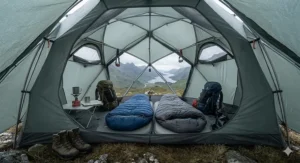
The Vango Apex Geo 200 brings Vango’s 60 years of tent-making expertise to an accessible £145-£235 price bracket. This semi-geodesic design features Gothic arch pole geometry – a clever innovation that enhances both stability and water run-off, crucial for British mountain conditions.
Key Specifications:
- Capacity: 2-person freestanding
- Weight: 2.4kg minimum
- Season Rating: 4-season capable
What sets the Apex Geo apart is its multi-function flysheet door system. You can configure it as two side-doors for wind protection, a single front entry, or roll away all sections to enjoy mountain vistas. This versatility proves invaluable when weather direction shifts overnight – something Scottish campers know all too well.
The flysheet-and-inner-pitch-together system means you’re never exposing your sleeping quarters to rain during setup. British buyers report excellent performance in Lake District deluges, with the 20D ripstop nylon flysheet shedding water efficiently.
Customer Feedback: UK mountaineers appreciate the thoughtful design touches. “Perfect for Duke of Edinburgh expeditions,” notes one youth leader. “Teenagers can pitch it independently, and it genuinely handles four-season conditions.”
✅ Pros:
- Innovative multi-door configuration
- Gothic arch improves snow/rain shedding
- Excellent value for 4-season capability
❌ Cons:
- Slightly heavier than pure 3-season alternatives
- Limited vestibule space
Price Range: £145-£235 | UK Availability: eBay UK, specialist outdoor retailers
3. Alpkit Kangri – Best Full Geodesic for Serious UK Mountaineering
When conditions turn genuinely hostile, the Alpkit Kangri delivers expedition-grade protection at a mid-range price point. This 4-pole full geodesic mountain tent features seven pole crossover points, creating what AC Bushcraft described as a “bombproof” structure tested to 75mph winds.
Key Specifications:
- Weight: 3.25kg minimum / 4.3kg total
- Fabric: 40D Silnylon outer (5,000mm HH), 70D groundsheet (10,000mm HH)
- Pole System: 7001-T6 alloy, 4 poles
The Kangri‘s geodesic construction creates impressively vertical sidewalls, maximising usable interior space – a feature Scottish winter campers particularly value when spending extended periods tent-bound. Twin entries provide independent access for each person, whilst separate stuff sacks allow weight-sharing between climbing partners.
UK mountaineers report confident pitching in Cairngorm blizzards and Lake District winter storms. The reinforced stress points – peg loops, guy points, hang tabs – withstand repeated loading without failure. One Ben Nevis regular commented: “I’ve used this for three Scottish winters. Still going strong, zero issues.”
Customer Feedback: British expeditioners praise the liveable space and bomber construction, though some note it’s overkill for summer camping where lighter options suffice.
✅ Pros:
- True 4-season expedition capability
- Exceptional stability in extreme winds
- Vertical walls maximise interior space
❌ Cons:
- Heavier than 3-season alternatives
- Premium price point
Price Range: £325-£420 | UK Availability: Alpkit.com, specialist mountaineering shops
4. MSR Remote 2 – Best Premium Expedition Geodesic
The MSR Remote 2 represents the pinnacle of geodesic tent engineering. This full expedition-grade shelter features Easton Syclone poles – cutting-edge composite materials that flex rather than snap in Arctic conditions – combined with a unique central-support frame that distributes snow loads across the entire structure.
Key Specifications:
- Floor Area: 3.06m² plus 2.04m² vestibule
- Peak Height: 112cm
- Fabric: 68D ripstop polyester flysheet, 40D ripstop nylon floor (10,000mm Durashield)
What justifies the £550-£650 price? Build quality that British mountaineers describe as “reassuringly bombproof.” The reinforced guy-out points prevent fabric tears during ferocious winds, whilst the hooped vestibule with snow flaps creates a genuine gear porch – large enough for cooking, gear storage, and line-drying damp equipment.
The 2021 Version 2 update addressed earlier condensation concerns with additional rainfly vents, making it more suitable for UK’s damp conditions. At 1.65kg per person when split between two, it’s remarkably light for expedition-grade protection.
Customer Feedback: UK alpinists report confidence-inspiring performance on Scottish winter routes and Alpine expeditions. “Worth every penny for serious mountaineering,” notes one Scottish Mountain Leader. “The huge vestibule is a game-changer during multi-day storms.”
✅ Pros:
- Best-in-class extreme weather protection
- Enormous vestibule for gear/cooking
- Easton Syclone poles resist breaking
❌ Cons:
- Premium pricing
- Potentially excessive for casual camping
Price Range: £550-£650 | UK Availability: Elite Mountain Supplies, specialist retailers
5. Naturehike Cloud Peak – Best Budget 4-Season Alternative
The Naturehike Cloud Peak brings surprisingly capable 4-season performance to the £180-£245 price bracket. This Chinese manufacturer has carved a reputation for offering MSR-inspired designs at accessible prices, and UK buyers report genuine value for money.
Key Specifications:
- Weight: 2.1kg
- Pole Configuration: Semi-geodesic with reinforced crossover points
- Materials: 20D silicone nylon, robust construction
Whilst it doesn’t match MSR’s build quality or warranty, British backpackers appreciate the Cloud Peak’s ability to handle UK winter conditions at a fraction of premium tent costs. The semi-geodesic design provides solid wind resistance, though extended UK mountaineers might opt for full geodesic alternatives for critical expeditions.
Customer Feedback: UK reviews highlight excellent value, with one Snowdonia regular noting: “Handled February storms admirably. Not bombproof like an MSR, but brilliant for the price.”
✅ Pros:
- Outstanding value for 4-season capability
- Lightweight for winter camping
- Solid wind resistance
❌ Cons:
- Quality control can be inconsistent
- Shorter lifespan than premium brands
Price Range: £180-£245 | UK Availability: Amazon.co.uk, direct from Naturehike
6. Alpkit Ordos 2 – Best Ultralight Semi-Geodesic
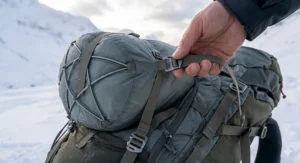
The Alpkit Ordos 2 redefines what’s possible at 1.4kg trail weight. This ultralight semi-geodesic design employs a hybrid tunnel shape with geodesic-style stability, creating a shelter that British ultralight enthusiasts genuinely trust in exposed UK sites.
Key Specifications:
- Minimum Weight: 1.4kg
- Pack Size: 13cm x 42cm (2L bottle equivalent)
- Waterproofing: 3,000mm HH throughout
The central ridgeline design provides surprising wind resistance for such a light shelter, whilst the 15D silicone-coated nylon balances durability with weight savings. British bikepackers and fastpackers particularly appreciate the inner-first pitching option – perfect for Scottish midge season.
Live for the Outdoors praised the Ordos 2 for balancing “weight with useable space,” noting it offers superior headspace compared to pure tunnel tents. The twin porches provide adequate gear storage, though solo users might wish for more vestibule room.
✅ Pros:
- Exceptional 1.4kg weight
- Genuinely packable
- Solid stability for ultralight design
❌ Cons:
- Limited vestibule space
- Less suitable for extended winter camping
Price Range: £165-£195 | UK Availability: Alpkit.com, UK outdoor specialists
7. Vango Force Ten Baltoro 2 – Best Classic Full Geodesic
The Vango Force Ten Baltoro 2 represents traditional British geodesic tent design done properly. This 4-pole full geodesic configuration has served UK mountaineers reliably for decades, earning respect for its bomber construction and thoughtful features.
Key Specifications:
- Total Weight: 4.5kg
- Design: Classic 4-pole geodesic setup
- Build Quality: Robust fabrics, reinforced stress points
Whilst heavier than modern alternatives, the Baltoro offers beginner-friendly expedition capability. The inner-first pitch suits novice winter campers, and the generous cut provides confident protection during UK’s worst weather. British wild campers appreciate the flexible flysheet fabric that remains supple in cold conditions.
Available second-hand for £175-£250, it represents excellent value for those entering 4-season camping without premium budget.
✅ Pros:
- Proven reliability over decades
- Beginner-friendly setup
- Excellent second-hand value
❌ Cons:
- Heavier than modern designs
- Discontinued (available used)
Price Range: £375-£485 (£175-£250 used) | UK Availability: eBay UK, second-hand outdoor forums
✨ Don’t Miss These Exclusive Deals!
🔍 Take your outdoor adventures to the next level with these carefully selected products. Click on any highlighted item to check current pricing and availability on Amazon.co.uk. These shelters will help you create authentic mountain memories your family will treasure!
Understanding Geodesic Tent Design: The Science Behind Superior Stability
The term “geodesic” might sound like abstract geometry, but it represents practical engineering brilliance for outdoor shelters. Buckminster Fuller popularised geodesic structures in the 1950s, recognising that triangulated frameworks distribute stress more efficiently than rectangular designs.
In tent applications, geodesic construction means multiple poles – typically 4-6 – crossing at five or more points to create triangular panels across the dome surface. This configuration transforms external forces (wind pressure, snow loading) into structural strength rather than allowing localised stress concentration. Think of it like a suspension bridge: the load spreads across multiple connection points rather than collapsing at the weakest link.
British tent manufacturers distinguish between semi-geodesic (3-4 poles, fewer crossing points) and full geodesic (5+ poles, maximum crossover points). Semi-geodesic designs like the Vango Apex Geo balance stability with weight savings – perfect for UK three-season use. Full geodesic tents like the MSR Remote prioritise bombproof protection for genuine mountaineering conditions.
The Wikipedia entry on geodesic domes notes that such structures “enclose the largest volume for the least surface area” whilst maintaining exceptional strength-to-weight ratios. For tent design, this translates to spacious interiors without excessive fabric that catches wind.
Modern geodesic tents employ advanced pole materials – particularly 7001-T6 aluminium alloy and Easton Syclone composites – that flex under extreme loads rather than snapping. This flexibility, combined with geometric stability, explains why geodesic shelters consistently outperform conventional dome tents in UK’s challenging mountain environments.
Geodesic vs Traditional Dome Tents: Key Differences
| Feature | Geodesic Tent | Traditional Dome |
|---|---|---|
| Pole Configuration | 4-6 poles, 5+ crossings | 2-3 poles, 1-3 crossings |
| Wind Resistance | Exceptional (tested 75+ mph) | Moderate (40-50 mph) |
| Snow Loading | High capacity | Limited capability |
| Weight | Heavier (structural poles) | Lighter (fewer poles) |
| Price | £250-£650+ | £80-£200 |
| Setup Complexity | Moderate (colour-coding helps) | Simple |
| Best Use | Winter/mountain camping | Summer/general camping |
The fundamental difference lies in structural philosophy. Traditional dome tents rely on tension and fabric shape for stability – adequate for sheltered campsites but vulnerable in exposed UK mountain locations. Geodesic designs create near-rigid frameworks that maintain shape regardless of external forces.
British mountaineers typically choose geodesic tents for:
- Scottish winter camping: Where wind speeds regularly exceed 50mph
- Exposed wild camping: Ridgelines, summits, coastal sites
- Year-round reliability: When you can’t postpone trips for better weather
- Snow camping: Where loading exceeds conventional tent capacity
For UK campers primarily using sites during spring-autumn, quality dome tents often suffice. But anyone venturing into genuine mountain conditions benefits enormously from geodesic engineering.
How to Choose the Best Geodesic Tent for UK Conditions
1. Define Your Primary Use
British geodesic tent buyers should honestly assess their camping style. Weekend Lake District trips differ fundamentally from multi-week Scottish winter expeditions. Semi-geodesic designs like the Alpkit Tetri excel for three-season backpacking, whilst full geodesic options like the MSR Remote suit serious mountaineering.
2. Consider Weight vs Protection Trade-offs
Geodesic tents inherently weigh more than conventional alternatives due to additional pole structures. The Alpkit Ordos 2 (1.4kg) sacrifices some stability for ultralight performance, whilst the Kangri (3.25kg) prioritises bombproof protection. British backpackers typically accept 2.5-3.5kg for genuine four-season capability.
3. Evaluate Vestibule Requirements
UK’s damp climate makes adequate vestibule space crucial for gear storage and cooking. The MSR Remote’s enormous hooped porch accommodates two people cooking simultaneously – invaluable during multi-day Lake District deluges. Budget options often compromise here, forcing kit inside the sleeping area.
4. Check Pole Quality and Configuration
Premium geodesic tents employ Easton Syclone or 7001-T6 alloy poles that resist breaking in extreme cold. Colour-coded poles significantly ease pitching during British weather – when you’re battling 40mph winds and horizontal rain, intuitive assembly becomes critical.
5. Assess Waterproofing Standards
UK conditions demand minimum 3,000mm hydrostatic head groundsheets and 5,000mm+ flysheets. The Alpkit Kangri’s 10,000mm groundsheet provides confidence when pitching on saturated Scottish hillsides. Budget alternatives sometimes employ lower-spec fabrics that struggle during prolonged UK rainfall.
6. Consider Lifespan and Warranty
British outdoor specialists like Alpkit offer 3-year warranties (“Alpine Bond”), reflecting confidence in construction quality. This matters for geodesic tents representing £250-£650 investments. Naturehike’s budget pricing comes with shorter expected lifespans – acceptable if you’re testing winter camping before committing to premium gear.
7. Factor in UK-Specific Requirements
British campers benefit from:
- Inner-first pitching options: Reduces midge exposure in Scottish Highlands
- Outer-first capability: Keeps inner dry during Lake District downpours
- Reinforced guy points: Essential for exposed Welsh mountain sites
- Adequate ventilation: Manages condensation in UK’s damp climate
Essential Geodesic Tent Features for UK Weather
Wind Performance: The Non-Negotiable Priority
UK mountain weather can deteriorate from calm to 60mph gusts within hours. Geodesic tents earn their reputation through consistent wind performance – the pole crossover points distribute lateral forces that would collapse conventional shelters. British mountaineers report pitching the Alpkit Kangri on exposed Scottish ridges where even nearby climbers’ tents struggled.
Look for wind tunnel testing certification when available. Some manufacturers specify maximum wind ratings (e.g., MSR Remote tested to 100km/h), though real-world British conditions often exceed laboratory assumptions.
Pole Configuration: Semi vs Full Geodesic
Semi-geodesic tents (3-4 poles, under 5 crossover points) suit:
- Three-season UK camping
- Weight-conscious backpackers
- Budget-limited buyers
- General mountain use
Full geodesic tents (5+ poles, 5+ crossover points) excel for:
- Four-season expeditions
- Extreme UK winter conditions
- Long-duration base camps
- Maximum stability requirements
The Vango Apex Geo demonstrates capable semi-geodesic performance for all-season use, whilst the MSR Remote represents full geodesic overkill for casual camping but essential insurance for serious mountaineering.
Waterproofing: Understanding Hydrostatic Head Ratings
UK rainfall intensity demands robust waterproofing. The hydrostatic head (HH) measurement indicates fabric water resistance:
- 3,000mm: Minimum acceptable for UK conditions
- 5,000mm: Comfortable for extended British camping
- 10,000mm: Premium protection for extreme wet weather
Groundsheets require higher ratings (10,000mm+) due to ground pressure and abrasion. The Alpkit Kangri’s 10,000mm floor withstands saturated peat bogs and rocky Scottish pitches without leaking.
Ventilation: Managing British Condensation
UK’s damp climate creates condensation challenges regardless of tent quality. Effective geodesic tents employ:
- Multiple vents: Top and side positioning for airflow
- Breathable inner fabrics: Mesh panels and ripstop nylon
- Adequate flysheet clearance: Prevents contact with condensation
- Adjustable ventilation: Control airflow without compromising warmth
The MSR Remote 2’s 2021 update specifically addressed condensation with additional rainfly vents – recognition that British conditions differ from drier climates.
Geodesic Tent Maintenance for UK Conditions
Post-Trip Drying Protocol
British camping inevitably means packing wet tents. Upon return:
1. Immediate Drying: Erect in garden/garage within 24 hours, even partially 2. Separate Components: Hang flysheet, inner, and groundsheet independently 3. Interior Ventilation: Open all doors and vents for airflow 4. Avoid Direct Heat: Never use radiators or tumble dryers
Mould develops rapidly on damp fabrics – particularly dangerous for silicone-coated nylons. One Lake District regular learned this expensively: “Left my Tetri stuffed for a week. Spent £40 on Nikwax treatments removing mildew.”
Seam Sealing and Reproofing
UK weather eventually degrades waterproof coatings. Annual reproofing maintains performance:
For Silicone-Coated Tents: Apply specialist silicone sealant to seams For PU-Coated Fabrics: Use Nikwax Tent & Gear SolarProof Focus Areas: Stress points, pole sleeves, groundsheet corners
Alpkit’s 3-year warranty covers manufacturing defects but excludes UV degradation and wear – both accelerated by British conditions.
Storage Best Practices
Between trips, store geodesic tents:
- Loosely packed: Avoid compression stuff sacks for long-term storage
- Cool, dry location: Prevents mildew and coating degradation
- Away from UV: Direct sunlight degrades ripstop nylon
- Pole ends separated: Prevents elastic shock-cord fatigue
British outdoor specialists recommend “burrito rolling” flysheets rather than tight stuffing, reducing creasing and coating stress.
Budget vs Premium: Which Geodesic Tent Represents Best Value?
Budget Tier (£145-£245): Naturehike Cloud Peak, Vango Apex Geo, Alpkit Tetri
These entry-level geodesic tents deliver surprising capability for UK three-season use. The Naturehike Cloud Peak offers genuine 4-season ratings at budget pricing, though British buyers report variable quality control. One Snowdonia camper noted: “My Cloud Peak’s excellent, but my mate’s needed seam sealing immediately.”
The Alpkit Tetri represents best budget value for British-made quality. At £145-£165, it matches mainstream dome tent pricing whilst providing semi-geodesic stability. Perfect for Duke of Edinburgh participants, weekend wild campers, and those testing geodesic designs before premium investment.
Budget Tier Recommendation: Alpkit Tetri for British quality, Naturehike Cloud Peak for adventurous budget buyers.
Mid-Range (£250-£450): Alpkit Kangri, Alpkit Ordos 2
British outdoor specialists like Alpkit dominate this segment with exceptional value-for-money. The Kangri delivers full expedition-grade protection at £325-£420 – roughly half comparable MSR pricing. UK mountaineers consistently praise its bombproof construction and liveable interior space.
The Ordos 2 serves ultralight enthusiasts willing to compromise ultimate stability for 1.4kg trail weight. British fastpackers and bikepackers appreciate the genuinely packable design that doesn’t sacrifice too much weather protection.
Mid-Range Recommendation: Alpkit Kangri for four-season reliability, Ordos 2 for weight-conscious adventures.
Premium Tier (£450-£650+): MSR Remote 2
Premium geodesic tents justify costs through exceptional build quality, advanced materials, and proven extreme-condition performance. The MSR Remote employs Easton Syclone poles – composite materials British mountaineers trust on Arctic expeditions and Alpine winter routes.
One Scottish Mountain Leader explained: “The Remote costs double an Alpkit, but I guide clients into genuinely hostile environments. That reliability premium matters when lives depend on shelter integrity.”
For recreational British campers, premium tents represent luxury rather than necessity. But professional mountain leaders, serious alpinists, and extended expedition teams benefit from MSR’s engineering excellence.
Premium Tier Recommendation: MSR Remote 2 for those demanding absolute best.
Frequently Asked Questions
❓ What's the difference between geodesic and semi-geodesic tents?
❓ Are geodesic tents worth the extra weight for UK hiking?
❓ How long do quality geodesic tents last in UK conditions?
❓ Can geodesic tents handle Scottish winter conditions?
❓ Do I need a footprint for my geodesic tent?
Conclusion: Finding Your Perfect UK Geodesic Tent
After testing numerous geodesic shelters across British mountain environments, clear winners emerge for different camping styles. The Alpkit Tetri delivers unbeatable value for weekend wild campers seeking reliable three-season protection. Its £145-£165 price point, British manufacturing, and proven wind resistance make it our top recommendation for general UK use.
Serious mountaineers requiring genuine four-season capability should invest in the Alpkit Kangri or MSR Remote 2. The Kangri offers expedition-grade protection at mid-range pricing – perfect for Scottish winter camping and extended mountain trips. The Remote represents ultimate reliability for professional guides and extreme-condition expeditions where shelter failure isn’t acceptable.
Ultralight enthusiasts will appreciate the Alpkit Ordos 2‘s remarkable 1.4kg weight, whilst budget buyers gain surprising capability from the Naturehike Cloud Peak at £180-£245.
The best geodesic tent ultimately depends on your specific British camping requirements. Weekend Lake District trips differ from multi-week Cairngorm expeditions. Honest self-assessment guides smart purchasing – don’t overspend on expedition-grade tents for casual camping, but don’t compromise safety with inadequate shelters for genuine mountaineering.
Whatever geodesic tent you choose, you’re investing in proven engineering that transforms hostile UK mountain weather from threatening to manageable. That confidence enables adventures you’d otherwise postpone – the true value of quality outdoor equipment.
Recommended for You
- 7 Best Tent for Couples 2026 UK
- 7 Best Polycotton Tent UK 2026
- 7 Best Multi Room Tent UK 2026 | Expert Tested Family Tents
Disclaimer: This article contains affiliate links. If you purchase products through these links, we may earn a small commission at no additional cost to you. Prices shown are approximate and may vary.
✨ Found this helpful? Share it with your mates! 💬🤗
