
In This Article
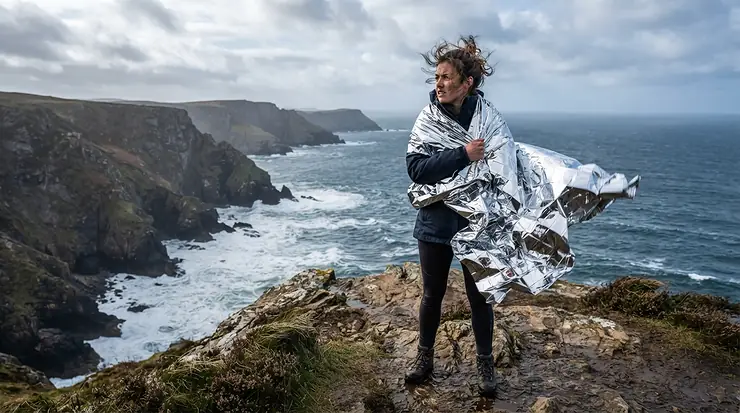
British camping has a branding problem. The postcards promise sun-dappled meadows. The reality is a Brecon field at 2am, dew soaking the flysheet, and a sleeping bag whose “comfort rating” was written by an optimist. A thermal blanket for camping is the cheap, packable fix for the gap between what your kit promises and what the night delivers.
What Is a Thermal Blanket for Camping?
A thermal blanket for camping is a lightweight cover that holds in body heat outdoors. It is either a reflective foil sheet that bounces radiated warmth back at you, or an insulating fleece or foam-backed throw that traps warm air around you. Foil versions weigh under 100g; fleece ones trade weight for comfort.
Cold isn’t only unpleasant. The NHS describes hypothermia as a drop in body temperature below 35C and treats it as a medical emergency. A camping trip rarely ends there, but the heat-loss physics that makes you miserable at 3am is the same physics a decent blanket tackles.
This guide compares seven real products using published specs and what reviewers report. It makes no claim of hands-on testing, and where reliable review data wasn’t available, it says so. Prices are ranges current at the time of research (October 2026), so always check current price and availability before buying.
Quick Comparison: 7 Thermal Blanket for Camping Options at a Glance
| Product | Type | Weight & Size | Price Range | Best For |
|---|---|---|---|---|
| Lifesystems Thermal Blanket | Foil sheet | ~55-62g; 210 x 140cm | Under £5 | Emergency backup |
| Lifesystems Heatshield Thermal Blanket (Double) | Tougher foil | 98g; 250 x 150cm | Around £6-£9 | Two people or groups |
| Milestone Camping Thermal Polar Fleece Blanket | 200gsm fleece | 150 x 120cm | Around £7-£11 | Campfire cosiness |
| Highlander Outdoor Fleece Blanket | 220gsm fleece | ~520g; 170 x 130cm | Mid-£10s | Roomier tent comfort |
| Highlander Outdoor Thermo Survival Blanket | Foam + aluminium | 195 x 140cm | High-£10s | Cold-ground insulation |
| Arcturus Heavy Duty Survival Blanket | Foil-tarp hybrid | ~0.6kg; ~152 x 208cm | Mid-£20s | Car camping and shelter |
| SOL Escape Lite Bivvy | Breathable bivvy | ~155g; ~208 x 81cm | Check current price (likely £35-£50) | Lightweight liner or backup |
Read the table as three families rather than seven rivals. The foil sheets (Lifesystems Thermal Blanket, Lifesystems Heatshield Thermal Blanket (Double)) are emergency insurance. The fleeces (Milestone Camping Thermal Polar Fleece Blanket, Highlander Outdoor Fleece Blanket) are comfort. The rest are hybrids that do a bit of both at a higher price.
Budget buyers should note that you can cover the first two families for roughly the price of a pub lunch. The hybrids earn their premium only if you’ll use their extra tricks, such as ground insulation, shelter-building or breathability.
💬 Just one click — help others make better buying decisions too!😊
Top 7 Thermal Blanket for Camping Picks: Expert Analysis
1. Lifesystems Thermal Blanket — lightest insurance policy in your pack
At roughly 55-62g depending on the listing, the Lifesystems Thermal Blanket weighs less than a bar of chocolate, and that is the whole appeal.
It unfolds to 210 x 140cm and packs to about 9 x 10 x 3cm. That is enough sheet to wrap your torso and legs, small enough to live permanently in a jacket pocket. The metallised polyester is windproof and waterproof, and the orange outer face is high-visibility and radar reflective. Retailers quote either “over 80%” or “over 90%” of radiated heat retained, so treat these as best-case “up to” figures.
Here’s what the spec sheet won’t say: a foil sheet is thin, so it stops radiant heat loss and wind chill but adds almost no insulation against cold ground. It’s a backup layer, not a bed. Its listing as Duke of Edinburgh recommended kit tells you the intended job: sitting out an unplanned delay without freezing.
Review evidence is thin but positive. One outdoor retailer shows 31 customer reviews, and a UK review site describes the material as tear-resistant after repeated repacking. Neither gives a verified aggregate rating, so read durability as “reportedly decent”.
Pros:
- ✅ Featherweight at roughly 55-62g
- ✅ Generous 210 x 140cm coverage
- ✅ Bright orange helps rescuers spot you
Cons:
- ❌ Crinkly, noisy and not breathable
- ❌ Little insulation against cold ground
Price: under £5, check current price. As a “never leave it behind” item, the value verdict is excellent.
2. Lifesystems Heatshield Thermal Blanket (Double) — room for two, tougher material
Where the single sheet is a loose wrap, the Lifesystems Heatshield Thermal Blanket (Double) is a proper shared shelter, at 250 x 150cm and 98g.
It packs to roughly 12 x 9 x 1.2cm. The material is metallised low-density polyethylene, which the maker describes as tear-resistant and reusable, a step up in toughness from flimsy foil. It is windproof and waterproof, radar reflective, and has survival tips printed on the outer face, a nice touch when fingers are numb and memory is shot.
On paper, the extra 40cm of length and 10cm of width matters more than it sounds. It lets two people sit shoulder to shoulder under one sheet, or lets one tall camper tuck the edges under their body to block draughts. Based on the spec comparison, this is the better “group kit” buy, since one blanket in the first-aid pouch covers two people.
Review data is sparse. The retailer pages I found show only a handful of ratings (three or four each), all five-star, which is far too small a sample to mean much. Manufacturer claims of reusability remain just that until more buyers weigh in.
Pros:
- ✅ Sized for one or two people
- ✅ Tear-resistant polyethylene is reusable
- ✅ Supplied in a compact carry bag
Cons:
- ❌ Still adds minimal ground insulation
- ❌ Few independent reviews to lean on
Price: around £6-£9 range, check current price. Still firmly in best thermal blanket under £10 territory, and arguably the better value of the two foil options.
3. Milestone Camping Thermal Polar Fleece Blanket — budget campfire comfort
The Milestone Camping Thermal Polar Fleece Blanket is the one you’ll reach for on purpose rather than in a panic.
It is a 200gsm polar fleece, roughly 150 x 120cm, that rolls to about 30cm x 12cm. That “200gsm” figure means 200 grams per square metre. It is a mid-weight fleece: warm enough for a campfire evening or a layer over your sleeping bag, but not a substitute for a winter bag. Fleece traps air in its fibres and, unlike cotton, absorbs very little water, so a splash of dew won’t turn it into a cold sponge.
The analytical catch is that it is not windproof or waterproof. A breeze passes straight through it, so it works best inside a tent or beneath a shelter, not draped over your shoulders on an exposed ridge.
Aggregated shopper sentiment, taken from a UK consumer round-up, is consistent: people describe it as compact and cosy rather than bulky. I couldn’t verify a large review count, so treat that as a pattern, not a rating.
Pros:
- ✅ Soft 200gsm fleece feels genuinely cosy
- ✅ Packs small for its warmth
- ✅ Inexpensive enough to buy several
Cons:
- ❌ Wind passes straight through the fabric
- ❌ Too thin to carry a cold night alone
Price: around £7-£11 range, and sometimes seen under £10, so check current price. Strong value for car campers and festival-goers.
4. Highlander Outdoor Fleece Blanket — bigger, thicker, and carries itself
Step up in size and you get the Highlander Outdoor Fleece Blanket: 170 x 130cm of 220gsm polyester fleece, weighing around 520g.
The slightly heavier 220gsm fabric and larger footprint mean you can tuck it around your feet and still pull it up to your chin. Removable carry straps are the sneaky hero feature. A blanket you can sling over a shoulder gets used more than one that has to be stuffed into a bag, and a packed size of roughly 30 x 14 x 10cm is comfortable to stow on car-camping trips.
Who should care? Families and couples, mostly. At around half a kilo it is a poor fit for weight-obsessed backpackers, but it suits anyone driving to the pitch. As with any plain fleece, it breathes and dries quickly but offers no wind or water protection, so pair it with a tent, not a ridgeline.
On reviews: I could not find a verifiable aggregate rating or review summary for this specific listing, so I won’t pretend otherwise. The spec sheet is solid; independent feedback is the missing piece.
Pros:
- ✅ Large 170 x 130cm size covers two laps
- ✅ Removable carry straps make transport easy
- ✅ Thicker 220gsm fleece feels warmer
Cons:
- ❌ Around 520g is heavy for backpacking
- ❌ No wind or waterproofing
Price: mid-£10s range, check current price. Fair value if you want something larger than the budget fleece.
5. Highlander Outdoor Thermo Survival Blanket — foam-backed shield for cold ground
Most blankets fight the air. The Highlander Outdoor Thermo Survival Blanket fights the floor.
It is built from EVA foam with a reflective aluminium layer, measuring 195 x 140cm, and folds to about 38 x 15cm. That foam layer matters because cold ground steals heat by conduction, which thin foil can’t stop. Used under your sleeping bag or as a tent-floor layer, this style of blanket adds a real insulating barrier, while the aluminium face sends some radiant heat back up at you.
The honest trade-off is bulk. At 38 x 15cm folded, it is far bigger than a foil sheet, so it earns its place in the car boot rather than the hip pocket. It is best treated as a multi-job mat: tent footprint, picnic base, extra insulation beneath a thin camping mat.
Review evidence: one European distributor lists a perfect score, but the sample size isn’t clear, so I wouldn’t lean on it. The material description is consistent across sellers, which at least suggests a stable product.
Pros:
- ✅ Foam core insulates against cold ground
- ✅ Reflective face adds radiant warmth
- ✅ Big enough to sit or lie on
Cons:
- ❌ Bulkier than any foil sheet
- ❌ Limited independent review data
Price: high-£10s range, check current price. Good value as a “second mat” for cold-weather camping.
6. Arcturus Heavy Duty Survival Blanket — tarp-tough and reusable
The Arcturus Heavy Duty Survival Blanket is what happens when a foil blanket and a tarp have a very sensible child.
It measures 60 x 82 inches (about 152 x 208cm) and weighs roughly 0.6kg. One face is a reflective Mylar layer; the other is two layers of polypropylene, giving a waterproof, tear-resistant outer. Four reinforced grommets let you stake it out as a windbreak, rig it as a lean-to, or lay it as a groundsheet. It ships with its own carry bag.
Here’s what to weigh: a thin foil sheet is disposable, but this one is built to be reused for years, which changes the cost-per-use sums completely. The price is bulk and noise. It crinkles like a crisp packet with every movement.
Aggregated reviewer sentiment is consistent: buyers praise toughness and versatility as a ground cover, windbreak and car-kit blanket. Common complaints are rustling, bulk compared with disposable foil, and a wish for thicker material. One reviewer noted it isn’t a warming blanket as such, more a wind and cold barrier that still needs layers. A US survival-instructor round-up from Outdoor Life also names it best durable emergency blanket.
Pros:
- ✅ Genuinely durable and reusable
- ✅ Grommets enable shelter and windbreak use
- ✅ Waterproof outer face blocks damp ground
Cons:
- ❌ Noisy and stiff when handled
- ❌ Heavier than disposable foil sheets
Price: mid-£20s range, check current price. Worthwhile if you’d use it as a multi-purpose shelter, not just a blanket.
7. SOL Escape Lite Bivvy — breathable backup that doubles as a liner
Foil’s secret shame is condensation. The SOL Escape Lite Bivvy is built to avoid it.
At roughly 155g and about 208 x 81cm (82 x 32 inches), it uses a breathable fabric that reflects around 70% of body heat while letting moisture escape. That is lower than the 80-90% claimed for plain foil, and it’s a deliberate trade: you stay a bit less “reflected” but a lot less clammy. Use it as a sleeping-bag liner, an ultralight summer bag, or an emergency bivvy.
What most buyers overlook is that this is a shell, not a blanket. You slide into it rather than draping it over you, and its warmth contribution is modest. It earns its keep in a three-season bag on a colder-than-forecast night, or as a lightweight emergency shelter on a long hike.
Reviews: I couldn’t verify review data specific to the Escape Lite. A handful of five-star ratings exist for the older Escape Bivvy, a different model, so I won’t transfer them across.
Pros:
- ✅ Breathable fabric reduces condensation
- ✅ Light at around 155g
- ✅ Works as liner, bag or bivvy
Cons:
- ❌ Costs far more than foil sheets
- ❌ Reflects less heat than plain foil
Price: I couldn’t confirm a UK price, but overseas retail listings sit around the upper end of this lineup, so expect roughly £35-£50 and check current price. Worth it only for lightweight or technical use.
| Product | Material | How It Keeps You Warm | Review Evidence | Best For |
|---|---|---|---|---|
| Lifesystems Thermal Blanket | Metallised polyester | Reflects radiant heat; blocks wind | 31 retailer reviews; no verified average | Emergency kit |
| Lifesystems Heatshield Thermal Blanket (Double) | Metallised polyethylene | Reflects heat; tear-resistant | Too few ratings to judge | Groups, shared shelter |
| Milestone Camping Thermal Polar Fleece Blanket | 200gsm fleece | Traps warm air | Consistent “compact and cosy” theme | Evenings at camp |
| Highlander Outdoor Fleece Blanket | 220gsm fleece | Traps warm air | None verified | Family car camping |
| Highlander Outdoor Thermo Survival Blanket | EVA foam + aluminium | Insulates from ground; reflects | Unclear sample | Under-bag insulation |
| Arcturus Heavy Duty Survival Blanket | Mylar + polypropylene | Reflects; blocks wind and wet | Widely reviewed; durable but noisy | Shelter, groundsheet |
| SOL Escape Lite Bivvy | Breathable reflective fabric | Reflects ~70%; breathes | Not verified for this model | Liner, light backup |
Looking at the comparison above, the clearest value splits are at the bottom and top. Under £10, the Lifesystems Heatshield Thermal Blanket (Double) and Milestone Camping Thermal Polar Fleece Blanket cover safety and comfort respectively. At the other end, the Arcturus Heavy Duty Survival Blanket is the only one that doubles as shelter. The thinnest review evidence sits behind the premium and mid-range picks, so lean on specs there and check recent buyer feedback before committing.
How to Use a Thermal Blanket for Camping: Your First-30-Days Playbook
Most people buy a thermal blanket, stuff it in a bag, and discover its quirks at midnight. Do the opposite.
Before your first trip, unfold it in the garden or lounge. Learn how big it really is and how noisy it gets. Re-fold foil sheets along new creases each time, because folding repeatedly on the same line is where thin metallised film tends to crack.
On the night, layer it in the right order:
- Put a foam or insulated mat down first, because the ground is the biggest heat thief.
- Lay a foam-backed blanket such as the Highlander Outdoor Thermo Survival Blanket beneath your bag for extra ground insulation.
- Drape a fleece such as the Milestone Camping Thermal Polar Fleece Blanket over the top of your sleeping bag. A cosy outer layer traps warm air against the bag’s shell.
- Keep a foil sheet such as the Lifesystems Thermal Blanket in your pocket for emergencies rather than as a sleeping layer.
Maintenance is simple. Wash fleece at a low temperature and air-dry it, because high heat can mat or melt polyester. Shake foil dry and store it loosely folded. Never dry any blanket close to a stove.
Common mistakes in the first 30 days include using foil as your only insulation, packing it damp, and buying one oversized blanket when two smaller layers would work better. Fix those and the kit starts to feel clever instead of cheap.
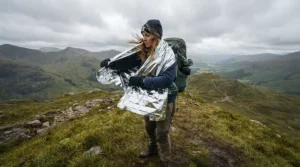
Real-World Scenarios: Which Thermal Blanket for Camping Suits You?
Specs are abstract; people aren’t. Here are three profiles matched to products, with reasoning.
The festival-goer on a shoestring. Three nights in a field, a modest tent, a £30 sleeping bag, and a budget well under £20. The best fit is the Milestone Camping Thermal Polar Fleece Blanket for evenings and as an extra layer on the bag. A spare Lifesystems Heatshield Thermal Blanket (Double) rides in the tent pocket. Total spend sits comfortably in best thermal blanket under £10 territory for each item.
The family car-camping weekend. Two adults, two kids, a drive-up pitch and a campfire. Weight doesn’t matter; comfort and versatility do. The Highlander Outdoor Fleece Blanket handles lap-warming at the fire, while the Arcturus Heavy Duty Survival Blanket doubles as a groundsheet under the awning or a windbreak on a gusty day.
The weekend hill-walker. One night out, pack weight tracked in grams, and shoulder-season conditions. The SOL Escape Lite Bivvy works as a breathable liner and emergency shelter. A Lifesystems Thermal Blanket weighs almost nothing and gives a cheap second layer of safety. Between them, extra insulation and an emergency option come in under 250g combined.
Match the product to your frequency, too. If you camp twice a year, buy the cheap fleece. If you camp monthly all winter, the sturdier hybrids repay their cost over many nights.
Common Cold-Night Problems (And the Blanket-Based Fix)
Camping complaints cluster into a handful of repeat offenders.
“My feet are freezing.” Cold feet usually mean cold ground. Slide a Highlander Outdoor Thermo Survival Blanket or folded fleece under the foot end of your mat, and keep a spare layer over your bag’s footbox.
“I woke up damp inside the foil.” Non-breathable materials trap moisture from your body. Either leave a gap at the neck or choose a breathable option like the SOL Escape Lite Bivvy.
“The wind keeps finding me at the tent door.” Rig an Arcturus Heavy Duty Survival Blanket across the windward side using its grommets. Its waterproof, tear-resistant outer deflects gusts better than flimsy foil.
“I’m cosy until I stand up.” Wrap-around fleece solves static warmth, so keep a Highlander Outdoor Fleece Blanket by the door and throw it over your shoulders when you get up.
“I forgot all of it.” Keep a Lifesystems Thermal Blanket permanently in your daypack. At around 55-62g, it costs you nothing to carry.
✨ Don’t Miss These Exclusive Deals!
🔍 Take your thermal blanket for camping setup to the next level with these carefully selected products. Click on any highlighted item to check current pricing and availability. These picks will help you create cosy, confident nights outdoors your whole crew will love!
How to Choose a Thermal Blanket for Camping
Choosing well takes a few minutes and saves a cold night.
- Decide the job first. Emergency backup, comfort at camp, or ground insulation? The answer narrows the field immediately, because foil, fleece and foam solve different problems.
- Check the size against your body. A 210 x 140cm foil wraps one person; a 250 x 150cm sheet fits two. Fleeces around 150-170cm wide are comfortable for laps and legs.
- Weigh the weight. If you walk to your pitch, anything over a few hundred grams is a decision. Car campers can ignore this entirely.
- Pick the material for the heat loss you’re fighting. Reflective films tackle radiant loss, fleece traps air, and foam stops conduction from the ground.
- Check wind and water protection. Foil and laminated sheets block both; plain fleece blocks neither.
- Think about reuse. Thicker polyethylene or polypropylene laminates survive repeated use; cheap film is often single-trip.
- Do the cost-per-use sum. A blanket that costs a little more but lasts 40 nights is cheaper per night than one you replace every season.
Insulating Blanket Materials: What Actually Keeps You Warm?
The phrase “insulating blanket materials” covers very different physics, and the marketing rarely explains it. Here’s the short version.
Space blankets were developed by NASA in 1964 and use a thin plastic film (often PET) coated in a reflective metal layer. That coating can reflect up to 97% of radiated heat, according to Wikipedia. Camping products usually quote lower figures (70-90%) because real-world conditions, thinner coatings and gaps all cut performance. Crucially, reflection only addresses radiant heat. It does nothing about conduction through cold ground or convection from wind, unless the sheet also blocks airflow.
| Material | Mechanism | Strength | Weakness | Best For |
|---|---|---|---|---|
| Metallised film (Lifesystems Thermal Blanket, Lifesystems Heatshield Thermal Blanket (Double)) | Reflects radiant heat | Tiny, light, windproof | Thin; not breathable | Emergencies |
| Polar fleece (Milestone Camping Thermal Polar Fleece Blanket, Highlander Outdoor Fleece Blanket) | Traps air in fibres | Soft, breathable, quick-drying | No wind or rain protection | Comfort at camp |
| Foam + aluminium (Highlander Outdoor Thermo Survival Blanket) | Insulates and reflects | Blocks ground cold | Bulky | Under-bag layer |
| Foil-polypropylene laminate (Arcturus Heavy Duty Survival Blanket) | Reflects; blocks wind/wet | Tough, reusable | Noisy, heavier | Shelter and groundsheet |
| Breathable reflective fabric (SOL Escape Lite Bivvy) | Reflects ~70%; vents moisture | Less condensation | Pricey; lower reflection | Liner or light shell |
Looking at the table, no single material wins. Foil excels at weight, fleece at comfort, foam at ground insulation, and laminates at durability. Traditional alternatives such as wool blankets offer warmth even when damp but are heavy and slow to dry, which is why modern campers tend to mix materials rather than choose a champion.
Thermal Blanket for Cold Weather Camping: What to Expect
Let’s be realistic about the phrase “thermal blanket for cold weather camping”. No blanket in this list turns a summer bag into a winter one. What they do is shave the edges off the cold.
On a near-freezing night, think in terms of heat sources and heat thieves. Your body is the source. The thieves are the ground (conduction), the wind (convection) and your own breath and sweat (moisture). A foil sheet slows radiant loss and wind. A fleece slows air movement around the bag. A foam layer such as the Highlander Outdoor Thermo Survival Blanket attacks the biggest thief, the ground.
What should you realistically expect? Based on the specs, a fleece plus a reflective layer can add a modest but noticeable comfort margin, perhaps the difference between “sleeping lightly” and “sleeping through”. They won’t rescue a sleeping bag rated for mild weather on a frosty night.
For truly cold conditions, build a system. Insulated mat first, appropriate bag second, blanket layers third. Heat cuts through any weak link, so spend your effort where the gap is largest. And remember the safety flip side: if someone is shivering uncontrollably, confused or slurring their words, that is a medical situation, not a gear problem.
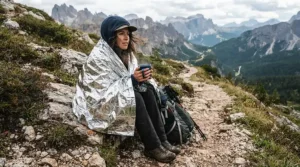
Layering for Warmth Outdoors: Where a Blanket Fits
Layering for warmth outdoors is the oldest trick in the book, and it still works. The idea is simple: several thin layers beat one thick one because trapped air between layers is the real insulation, and you can add or shed layers to regulate temperature.
A classic UK system uses a wicking base layer, a fleece or wool mid-layer, and a windproof or waterproof shell. The Ramblers’ guidance for new walkers recommends exactly this, and warns against cotton because it dries slowly. Mountaineering Scotland’s safety advisor has also warned that modern clothing doesn’t make hypothermia a non-issue. Risk rises when you sweat uphill, then stop without adding layers.
Where does a thermal blanket for camping fit? Think of it as a fourth, “static” layer for when you’re stationary at camp. A Milestone Camping Thermal Polar Fleece Blanket over your shoulders is a mid-layer you can take off in seconds. A Lifesystems Thermal Blanket is the emergency shell for when everything else is wet.
Practical rule: add layers before you feel cold, keep your head and hands covered, and change out of damp clothes quickly. A blanket helps most when it supplements a good layering system, not when it tries to replace one.
Best Thermal Blanket Under £10: Budget Breakdown
If you’re hunting for the best thermal blanket under £10, three products from this list typically sit at or under that mark, though you should check current price each time.
| Budget Pick | Price Range | What You Get | Best For |
|---|---|---|---|
| Lifesystems Thermal Blanket | Under £5 | 210 x 140cm foil, ~55-62g | Emergency backup |
| Lifesystems Heatshield Thermal Blanket (Double) | Around £6-£9 | 250 x 150cm, tougher film, fits two | Shared shelter |
| Milestone Camping Thermal Polar Fleece Blanket | Around £7-£11 | 200gsm fleece, compact | Cosy evenings |
Looking at the numbers, the cheapest option isn’t automatically the best buy. The Lifesystems Heatshield Thermal Blanket (Double) gives you more area and a sturdier material for a few pounds more than the single sheet. If comfort rather than safety is the goal, the Milestone Camping Thermal Polar Fleece Blanket is the budget pick.
Be cautious with multipacks of unbranded foil sheets. They look like bargains, but quality, size and durability are harder to verify. Branded options with published weights and dimensions let you compare like with like. Cost-per-use also favours a budget fleece: if it survives dozens of nights, each night costs pennies.
Common Mistakes When Buying a Thermal Blanket for Camping
Experience (other people’s, mainly) shows the same errors again and again.
Believing the headline percentage. “Reflects 90% of body heat” is a best-case lab-style claim. Real-world performance depends on fit, gaps and whether the sheet touches you.
Buying foil and expecting a duvet. Foil is thin. It slows heat loss; it doesn’t generate warmth or insulate against the ground.
Ignoring size. A blanket that doesn’t cover your shoulders and feet is a draught machine. Check dimensions, not just weight.
Forgetting breathability. Sealing yourself into non-breathable material overnight can leave you damp. If you plan to sleep in it, consider something like the SOL Escape Lite Bivvy.
Skipping the ground layer. Spending on blankets while using a cheap, thin mat is false economy.
Ignoring fire safety. Polyester fleece and plastic films melt near flames and embers. Keep every blanket well away from stoves and fire pits.
Choosing by price alone. The cheapest isn’t always the best value, and the priciest isn’t always the best fit. Match the job first, then the budget.
Safety, Regulations and Responsible Use
Blankets are simple kit, but a few safety points deserve space.
Hypothermia awareness. Know the warning signs: shivering, pale and cold skin, slurred speech, slow breathing, tiredness or confusion. The NHS says to get emergency help if you suspect it, and to move the person somewhere sheltered, remove wet clothing and wrap them up while waiting. Don’t rely on a thin foil sheet as treatment.
When things go wrong. The Ramblers recommend dialling 999, asking for the police and then Mountain Rescue if you need help on the hill, as outlined in their guidance for new walkers. They also note that wind chill, shown as “feels like” temperatures in Met Office forecasts, makes exposed conditions feel far colder.
Fire and stoves. Keep foil, fleece and polyester away from flames. Never use a stove inside a tent while wrapped in plastic sheeting, and be aware of carbon monoxide risks with any fuel-burning appliance in an enclosed space.
Wild camping rules. Rules vary across the UK, so check the local position and landowner permission before pitching anywhere informal.
Regulation note. These blankets are consumer outdoor kit, not medical devices, so there’s no special kitemark to look for. Check the manufacturer’s safety warnings and keep products away from fire.
Frequently Asked Questions
❓ Is a thermal blanket for camping warm enough for UK winter nights?
❓ Which side of a foil thermal blanket should face my body?
❓ Do foil blankets cause condensation inside a tent or sleeping bag?
❓ Can I machine-wash a polar fleece camping blanket?
❓ How many thermal blankets should I pack for a family camping weekend?
Conclusion
Camping warm isn’t about owning the most expensive kit. It’s about understanding what each piece does. A foil sheet like the Lifesystems Thermal Blanket is cheap insurance. A fleece like the Milestone Camping Thermal Polar Fleece Blanket or Highlander Outdoor Fleece Blanket is comfort you’ll actually use. The Highlander Outdoor Thermo Survival Blanket protects you from the cold floor, the Arcturus Heavy Duty Survival Blanket doubles as shelter, and the SOL Escape Lite Bivvy solves the condensation problem for lightweight trips.
If I had to boil the advice down: buy one reflective sheet for safety, one fleece for comfort, and spend any extra money on a better ground layer. For anyone chasing the best thermal blanket under £10, the Lifesystems Heatshield Thermal Blanket (Double) and Milestone Camping Thermal Polar Fleece Blanket cover safety and cosiness for roughly the price of a cup of coffee each. Combine them with smart layering for warmth outdoors and the next chilly night becomes a story rather than an ordeal.
Prices and availability change, so check current price before you buy, and treat the review-evidence notes as a guide to what’s verifiable rather than a final verdict.
🌟 Ready to stay warm on your next trip?
Click through to check current pricing and availability on the products that fit your plans. Your future self, snug at 3am, will thank you!
Recommended for You
- Fleece Blanket For Dog Camping: 7 Best Picks For UK Trips (2026)
- Fleece Camping Blanket: 7 Best Cosy Picks For UK Trips (2026)
- Thermal Liner For Mountaineering: 7 Best Picks For UK Climbers (2026)
Disclaimer: This article contains affiliate links. As an Amazon Associate, I earn from qualifying purchases. If you purchase products through these links, we may earn a small commission at no additional cost to you.
✨ Found this helpful? Share it with your friends! 💬🤗
