
In This Article
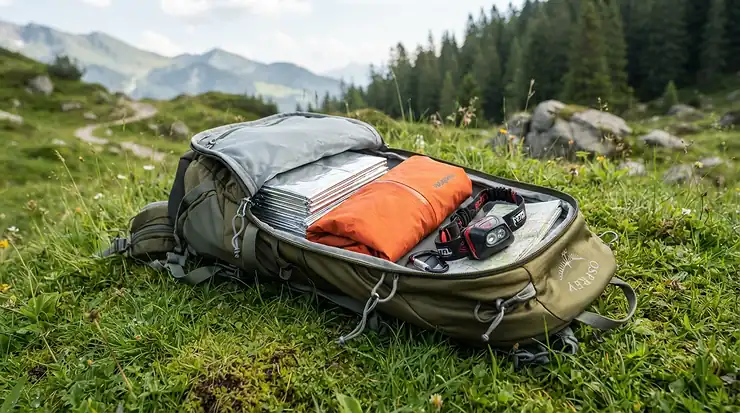
What is an emergency thermal blanket? It’s an ultra-thin sheet of metallised film that reflects radiated body heat back towards you while blocking wind and rain. It folds to the size of a deck of cards and opens out big enough to wrap an adult. It won’t warm you up from cold, but it can stop you getting colder.
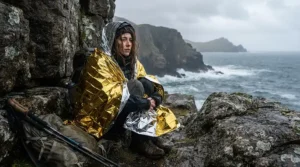
That distinction matters. Hypothermia is a drop in body temperature below 35°C, and the NHS 111 Wales hypothermia guidance calls it a medical emergency needing hospital treatment. It rarely arrives dramatically. A turned ankle on a moorland path at dusk, a wet jacket, a stiff breeze, and ninety minutes later you’re shivering, fumbling and making bad decisions. The gap between “uncomfortable” and “in trouble” can be a few grams of foil.
So this guide does what a spec sheet can’t. It takes seven real products and explains what their numbers mean on a cold hillside. It also covers who each one suits, what the weak spots are, and how to use the thing properly. Two honest notes first. I haven’t field-tested any of these, so every verdict comes from published specifications and the retailer review data I could verify. Where review evidence is thin, I say so. And prices appear as ranges only, so check current price and availability on amazon.co.uk before you buy.
Emergency Thermal Blanket Picks at a Glance
Short on time? This table sorts the seven picks into five common situations. The full analysis follows further down.
| Pick | Standout trait | Weight (approx.) | Price range | Best For |
|---|---|---|---|---|
| Lifesystems Thermal Blanket | Lightest, simplest option | 55–63 g | £3–£6 | Day walkers and DofE-style kit lists |
| Steroplast Emergency Foil Blanket | Cheap, first-aid-kit sized | Not stated (very light) | Roughly £1–£2 each | First aiders and club leaders |
| Lifesystems Heatshield Thermal Bag | Fully enclosed, taped seams | 110 g | £10–£15 | Waiting out an injury |
| SOL Emergency Bivvy | Whistle and tinder cord included | 99–164 g (listings vary) | Roughly £20–£30 | Backpackers who want one multi-tool item |
| Lifesystems Survival Shelter 2 | Shared-warmth group shelter | 345 g | £30–£45 | Pairs and small groups |
Look at the weight column first. The bare foil sheets cost almost nothing and weigh almost nothing, which is why the Lifesystems Thermal Blanket is the sensible default for a day walker. If you’re likely to be stationary for hours, say waiting with an injured friend, the enclosed Lifesystems Heatshield Thermal Bag or the SOL Emergency Bivvy earns its extra grams. For groups, the Lifesystems Survival Shelter 2 works on a different principle altogether, and it costs the most.
💬 Just one click — help others make better buying decisions too!😊
Top 7 Emergency Thermal Blanket Picks: Expert Analysis
These seven span the budget, mid-range and premium end of the market, from sub-£2 disposables to a group shelter. Each section interprets the specs rather than repeating them, and each review summary says plainly how much evidence sits behind it.
1. Lifesystems Thermal Blanket — lightest, simplest way to start
At roughly 55–63 g (retailers disagree by a few grams), this is the kind of kit that disappears into a lid pocket and stays there until needed. The sheet is metallised polyester measuring 210 × 140 cm, and it packs to about 9 × 10 × 3 cm. It’s described as windproof, waterproof and radar reflective, and it’s listed as DofE-recommended kit.
On paper, 210 cm covers a tall adult head to toe, and the 140 cm width lets you tuck the edges in. Retailers quote heat retention anywhere from “over 80%” to “over 90%”, so treat that as a manufacturer claim rather than a lab result. Based on the spec comparison, this suits day walkers and anyone who wants an emergency thermal blanket they’ll genuinely carry every time. Treat it as a one-or-two-use item, because thin film rarely refolds the way it came.
Review evidence is limited: the retailer page I checked showed a single, positive customer review, which isn’t enough to judge durability.
Pros:
- ✅ Among the lightest options in this round-up
- ✅ Generous 210 × 140 cm sheet
- ✅ Listed as DofE-recommended kit
Cons:
- ❌ Thin film can tear in rough handling
- ❌ Quoted heat-retention figures vary by retailer
Price: the £3–£6 range. At that price it’s hard to argue for leaving it at home.
2. Lifesystems Heatshield Thermal Blanket — oversized, tougher, reusable film
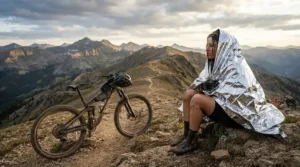
The double-size version is listed at 250 × 150 cm and about 98 g, packing to roughly 120 × 90 × 12 mm. It’s made from metallised low-density polyethylene, which the retailer describes as tear-resistant and suitable for repeated use. The printed emergency survival instructions are a thoughtful touch.
Why do those details matter? An extra 40 cm of length and 10 cm of width is the difference between wrapping yourself and wrapping yourself plus the insulating layer you’ve put underneath. Polyethylene film is typically more forgiving of snags than thin PET foil. And printed instructions help when cold hands and a foggy brain make recall unreliable, which is exactly when the Lifesystems Heatshield Thermal Blanket is needed.
I couldn’t verify customer reviews for this specific listing, so there’s no sentiment to report. The retailer’s description of it as reusable is the main durability evidence available.
Pros:
- ✅ Larger sheet wraps you plus an insulating layer
- ✅ Tear-resistant, reusable film
- ✅ Printed survival instructions on the blanket
Cons:
- ❌ Roughly 40 g heavier than the basic sheet
- ❌ Chunkier flat-pack shape
Price: typically in single figures at the time of research. For the extra size and toughness, it’s strong value.
3. Steroplast Emergency Foil Blanket — first-aid-kit staple, bulk-friendly
This is the classic: a 130 × 210 cm sheet of aluminised PET film, listed at 12 microns thick and folding to roughly 7.5 × 11.5 cm. It’s single-use, and the maker states it reflects up to 90% of body heat.
Twelve microns is very thin, which is why it costs pennies and why it rustles loudly. That makes it a casualty-wrapping tool more than a rugged hiking companion. Steroplast sells it singly and in packs of up to 25, so it suits first aiders, scout leaders and event teams who need many cheap sheets. Even the maker’s own page stresses that foil is a first step, not a substitute for medical treatment.
Buyer comments on a marketplace listing are the only review evidence I found. They liked the size for wrapping a person, and one reminded readers that foil only holds existing heat and won’t re-warm a hypothermic casualty.
Pros:
- ✅ Lowest cost per blanket here
- ✅ 130 × 210 cm covers an adult
- ✅ Pack sizes suit first-aid kits
Cons:
- ❌ Single-use design
- ❌ Rustles and tears easily
Price: roughly £1–£2 each in multi-packs. It’s the best per-unit value, as long as you accept it’s disposable.
4. HypaGuard Foil Blanket — individually wrapped six-pack for groups
The listing gives 210 × 130 cm, folding to 10 × 6 cm, individually wrapped, supplied as a box of six and quoted at over 90% radiant heat reflectance. The box is listed at 0.32 kg, which works out at around 53 g per blanket.
Individual wrapping is the clever bit. Open one sachet and the other five stay clean and dry, rather than exposing a whole bundle of foil to a damp rucksack. Six blankets also cover a family walk, a school trip or a scout patrol without anyone doing sums. The HypaGuard Foil Blanket is essentially the same type of product as the Steroplast Emergency Foil Blanket, so choose between them on pack size and price per unit rather than on spec.
I found no verifiable customer reviews for this product, only trade listings that repeat the specifications, so I won’t characterise sentiment.
Pros:
- ✅ Each blanket individually wrapped
- ✅ Six-pack covers a whole group
- ✅ Compact 10 × 6 cm fold
Cons:
- ❌ Disposable, so every use means a replacement
- ❌ Little brand-specific information available
Price: typically under £15 for the box of six. That’s sensible value for a group leader’s kit.
5. Lifesystems Heatshield Thermal Bag — full-body coverage with taped seams
This is a bag rather than a sheet: 210 × 90 cm, about 110 g, packing to 7 × 6 × 6 cm in its own sack. It’s metallised low-density polyethylene with taped seams, radar reflective and listed as DofE-recommended.
The difference in practice is huge. A blanket needs you to keep clutching it shut, and wind finds every gap. A bag closes around you, and the taped seams slow water ingress. At 90 cm wide it’s snug, so there isn’t much room for a puffy jacket. Because the film doesn’t breathe, expect condensation inside during a long wait. Overall, the Lifesystems Heatshield Thermal Bag suits someone likely to be stationary, such as a walker waiting with an injured friend.
A retailer listing shows 36 user reviews, but I couldn’t read enough of them to report reliable themes.
Pros:
- ✅ Taped seams and enclosed shape
- ✅ Reusable, with its own storage sack
- ✅ Still only about 110 g
Cons:
- ❌ Tight fit over bulky layers
- ❌ No breathability, so condensation builds
Price: the £10–£15 range. It’s good value as a first step up from a basic sheet.
6. SOL Emergency Bivvy — whistle and tinder cord in one
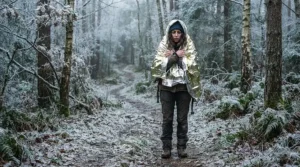
This bivvy measures 213 × 91 cm, with waterproof, windproof fabric and sealed seams. The stuff sack carries a rescue whistle and a drawcord with tinder cord, and the maker states it reflects 90% of radiant body heat. Weights quoted by retailers range from about 99 g to 164 g, so confirm the figure on the listing you’re buying from.
Combining a shelter, a whistle and a fire-starting aid means one purchase covers three jobs. The whistle matters more than it sounds. Mountain rescue guidance, including advice from the Met Office’s mountain rescue pages, stresses carrying a lightweight, reliable signalling and warmth kit. The SOL Emergency Bivvy is aimed squarely at backpackers who count every gram.
Reviewers on one retailer listing praised the compact size, the flat packing that suits a pocket, and a loud whistle. That’s a small sample, so treat it as indicative.
Pros:
- ✅ Integrated rescue whistle
- ✅ Sealed seams block wind and rain
- ✅ Tinder cord doubles as fire-starting aid
Cons:
- ❌ Listed weights vary between sellers
- ❌ Costs more than foil sheets
Price: roughly £20–£30, so check current price. It’s fair value given what’s included.
7. Lifesystems Survival Shelter 2 — group shelter that traps shared warmth
This one isn’t a blanket at all, and that’s the point. It’s a throw-over bothy in PU-coated ripstop nylon, weighing 345 g, packing to about 20 × 10 × 10 cm and measuring 140 × 90 × 45 cm in use. It has taped seams, a window, an air vent, waterproof seating panels and reflective strips. Retailers quote its waterproof rating anywhere between 2,000 and 5,000 mm, so confirm before buying.
Two or three people’s body heat warms the enclosed air, which is why mountain rescue teams and outdoor centres favour this design. The vent trades a little warmth for less condensation, a sensible compromise. It also lets you sit up, eat and check a map out of the wind, which a foil sheet can’t match. The Lifesystems Survival Shelter 2 is the heaviest pick here, so it only makes sense if you walk with others.
I found no verifiable review text, so I’m not reporting sentiment.
Pros:
- ✅ Genuine shelter for two people
- ✅ Vent and window aid comfort
- ✅ Reusable, with waterproof seating panels
Cons:
- ❌ Heaviest item in this round-up
- ❌ Best value only with multiple occupants
Price: in the £30–£45 range. It’s worthwhile for pairs and groups, and overkill for solo day walkers.
Before the comparison table, remember that these seven products sit in three families: sheets, bags and shelters. Choosing between them is the real decision, and the next section helps with that.
| Product | Type | Weight (approx.) | Open size | Reusable? | Price range | Best For |
|---|---|---|---|---|---|---|
| Lifesystems Thermal Blanket | Sheet | 55–63 g | 210 × 140 cm | Limited | £3–£6 | Everyday day-walk kit |
| Lifesystems Heatshield Thermal Blanket | Sheet | About 98 g | 250 × 150 cm | Yes (stated) | Under £10 | Taller walkers needing more coverage |
| Steroplast Emergency Foil Blanket | Sheet | Very light | 130 × 210 cm | No | £1–£2 each | First-aid kits and bulk stock |
| HypaGuard Foil Blanket | Sheet (6-pack) | About 53 g each | 210 × 130 cm | No | Under £15 per box | Families and groups |
| Lifesystems Heatshield Thermal Bag | Bag | 110 g | 210 × 90 cm | Yes | £10–£15 | Stationary waits |
| SOL Emergency Bivvy | Bag | 99–164 g | 213 × 91 cm | Yes | £20–£30 | Backpackers wanting a whistle |
| Lifesystems Survival Shelter 2 | Shelter | 345 g | 140 × 90 × 45 cm | Yes | £30–£45 | Pairs and small groups |
Looking at the table, the cheap sheets win on cost and weight, but only the bags and the shelter win on staying power. The Lifesystems Heatshield Thermal Blanket sits in a useful middle ground: sheet-light, but sturdier and bigger than the disposables. For anything resembling a planned overnight, budget for the SOL Emergency Bivvy or the Lifesystems Heatshield Thermal Bag rather than relying on a bare sheet.
How to Choose an Emergency Thermal Blanket
Picking well takes five minutes. These steps mirror how I’d weigh the specs.
- Match the type to the trip. Day walk, sheet. Overnight or remote, bag or bivvy. Group of three or more, shelter.
- Check the length. Aim for at least 210 cm so a tall adult is covered from head to toe, as with the Lifesystems Thermal Blanket.
- Decide between disposable and reusable. Single-use sheets suit first-aid kits, while reusable film suits your own rucksack.
- Look at seams and edges. Taped seams, as on the Lifesystems Heatshield Thermal Bag, keep wind and wet out far better than an open sheet.
- Weigh visibility. Orange or reflective trim helps searchers spot you, so a silver-only sheet gives you less to work with.
- Count the people. A six-pack like the HypaGuard Foil Blanket avoids carrying mismatched single sheets for a family.
- Verify the listing. Weights and waterproof ratings differ between sellers, so read the amazon.co.uk specification before you buy.
Foil Survival Blankets vs Bivvy Bags and Traditional Blankets
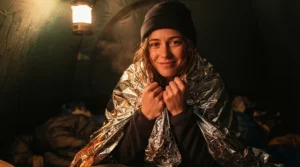
Foil survival blankets get all the attention because they’re cheap and everywhere. But they sit on a spectrum, and the right choice depends on how long you might wait. A foil sheet is a short-term heat-retention tool. A bivvy or thermal bag adds enclosure, and a shelter adds enough space to sit up and share warmth. A wool blanket is warm and forgiving but heavy and bulky, which is why it lives in the car boot rather than the rucksack.
| Option | Typical weight | Wind and rain protection | Reusable? | Best For |
|---|---|---|---|---|
| Foil sheet (e.g. Lifesystems Thermal Blanket) | About 55–63 g | Good, but needs holding shut | Limited | Day walks, first aid |
| Thermal bag (e.g. Lifesystems Heatshield Thermal Bag) | About 110 g | Better, because it’s enclosed | Yes | Long waits, injuries |
| Shelter (e.g. Lifesystems Survival Shelter 2) | About 345 g | Best, with room to sit up | Yes | Groups, mountain days |
| Wool or fleece blanket | Well over 1 kg | Poor, since it soaks up water | Yes | Car boot, camp base |
Foil wins on weight by a country mile, but loses on staying power. Wool wins on comfort, then loses it all once wet. The sweet spot for most UK walkers is a foil sheet in the lid pocket as a baseline, upgraded to a bag or bivvy for overnights. Keep the Lifesystems Survival Bag, a heavy-duty polyethylene option listed at around 290 g, in mind as a sturdier alternative if foil feels too flimsy.
Hiking Safety Kit Essentials: Where an Emergency Thermal Blanket Fits
Hiking safety kit essentials aren’t glamorous. Mountain rescue advice, such as the Met Office mountain rescue packing guidance, keeps returning to the same basics: waterproofs, a warm hat and gloves even in summer, a spare fleece, a torch, a map and compass, and a survival bag. The reasoning is blunt. If you can keep moving you can usually stay warm, but once you’re stationary with a sprained ankle you cool down alarmingly fast.
That’s the gap an emergency thermal blanket fills. It isn’t a replacement for a spare insulating layer, and a sheet of foil over a T-shirt will disappoint you. It’s the final wrapper, the thing that holds in the warmth your clothes are already generating. Think of your kit as layers of an onion: base layer, insulating layer, waterproof shell, then foil or a bag on the outside when you stop.
A realistic hiking safety kit for a day walk costs very little. Add a Lifesystems Thermal Blanket, a whistle, a head torch with spare batteries and a small first aid kit. For longer or more remote walks, upgrade the blanket to a bag or bivvy and carry spare layers.
Thermal Blanket for Hiking Emergencies: What to Expect on the Hill
A thermal blanket for hiking emergencies behaves differently from the way the packaging implies. Real-world performance depends heavily on what’s underneath it, how much wind there is and how long you’re out.
Wind is the first test. A loose sheet flaps and loses heat, so you’ll want to pin the edges under you or secure them with a strap. Ground contact is the second. Cold ground pulls heat from you faster than air does, so sit on your rucksack or spare clothes before wrapping up. Condensation is the third. Foil doesn’t breathe, so you’ll gradually dampen the inside, which is why a vented design like the Lifesystems Survival Shelter 2 feels more comfortable over several hours.
The harder lesson is about decisions. The Great Outdoors guide to mountain emergencies notes that getting benighted and unable to find the way off is a common cause of rescue call-outs, and that a head torch plus spares is essential. If you do need help, dial 999 or 112 and ask for the police, then mountain rescue. Stay where you are once you’ve called. Moving risks losing signal and complicates the search.
Lightweight Thermal Blanket for Backpacking: Weight Versus Protection
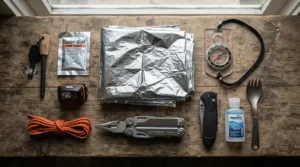
For a lightweight thermal blanket for backpacking, the numbers tell a clear story. The HypaGuard Foil Blanket works out at about 53 g each, the Lifesystems Thermal Blanket at roughly 55–63 g, and the Lifesystems Heatshield Thermal Blanket at around 98 g. The SOL Emergency Bivvy sits at roughly 99–164 g depending on the listing, the Lifesystems Heatshield Thermal Bag at 110 g, and the Lifesystems Survival Shelter 2 at 345 g.
Notice how little the difference between a sheet and a bag actually weighs. For an extra 50 g or so, a bag or bivvy converts a blanket you must hold into a shell you can lie inside. That’s the best weight-to-protection trade in the whole category. On a multi-day trip, where you can’t easily pop to a car or hut, I’d argue it’s worth the grams.
Backpackers should also think about redundancy. A foil sheet in the lid pocket for quick access and a bivvy in the pack for overnight protection together weigh less than a single bottle of water. Keep the quick-access item somewhere you can reach it with cold hands, ideally in the lid or a hip-belt pocket.
Practical Usage Guide: Getting the Most from an Emergency Thermal Blanket
Owning one isn’t the same as knowing how to use it. This is the handling guide the listing never gives you.
- Stop and shelter first. Get out of the wind behind a wall, rock or rucksack before you unpack anything.
- Insulate the ground. Sit or lie on your pack or spare clothes, since heat loss through the ground is brutal.
- Add dry layers. Foil retains heat, so give it heat to retain. Put on every spare layer you carry.
- Wrap shiny side in. Most manufacturers advise this, so the reflective surface faces your body.
- Cover the head, not the face. A lot of heat escapes from the head, but leave your nose and mouth clear.
- Secure the edges. Tuck them under you or tie them with a belt or strap.
- Keep it away from fire. The retailer listing for the Lifesystems Heatshield Thermal Blanket carries a fire-safety warning, and thin film melts and burns.
Maintenance is minimal but real. Check your kit at the start of each season. Replace single-use items like the Steroplast Emergency Foil Blanket if they’ve been opened or crushed, and refold reusable ones loosely so creases don’t become weak points. The biggest first-30-days mistake is never unpacking it. Do it once at home so you aren’t learning in the dark.
Real-World Scenarios: Matching the Right Blanket to Your Walking Style
Three typical UK profiles show how the buying logic works.
The weekend day walker. Imagine a walker on the Peak District edges, twice a month, with a modest budget. The Lifesystems Thermal Blanket is the obvious fit. It weighs next to nothing, costs only a few pounds and lives in the lid pocket. Add a whistle and a head torch, and the kit is done for under £20.
The group leader. Picture someone running monthly scout or DofE-style walks with six to eight people. Their priority is covering everyone cheaply. A box of HypaGuard Foil Blanket sachets or a bulk pack of the Steroplast Emergency Foil Blanket covers the numbers, and one Lifesystems Survival Shelter 2 gives a group of two or three a proper refuge.
The weekend backpacker. Think of a couple doing two-night Lake District trips, carrying everything on their backs. They want reusable, low-weight protection. A SOL Emergency Bivvy each, or a Lifesystems Heatshield Thermal Bag each, gives enclosed protection for around 100 g apiece. The whistle on the SOL is a bonus when weight is tight.
First Aid and Emergency Gear: Building a Kit Around Your Blanket
First aid and emergency gear works as a system, so the blanket is one part of a set. Adventure Smart guidance, as reflected by UK mountain rescue teams, recommends carrying an emergency shelter or survival bag alongside a small first aid kit.
A sensible kit has five parts: a thermal blanket or bag, a whistle, a torch, a basic first aid kit and a way to call for help, ideally a fully charged phone and a power bank. Add spare insulation, plus any personal medication.
The blanket also earns its place in first aid, not only survival. It can help treat shock and limit heat loss from a casualty while you wait for help. The British Red Cross hypothermia first aid page is a worthwhile read before you need it. It covers signs and symptoms and when to call 999, and it’s far easier to absorb on a sofa than on a hillside. A Steroplast Emergency Foil Blanket tucked into a first aid kit costs pennies and weighs next to nothing.
Features That Actually Matter (And Those That Don’t)
Cut through the marketing and a handful of features decide whether a product is worth carrying.
What matters:
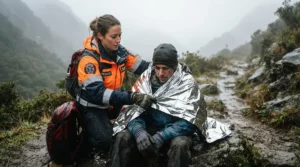
- Size and shape. An enclosed bag or a 210 cm sheet covers you, while a shorter sheet leaves feet exposed.
- Seam and edge construction. Taped seams, as on the Lifesystems Heatshield Thermal Bag, keep water out in a way bare edges cannot.
- Tear resistance. Reusable polyethylene film like the Lifesystems Heatshield Thermal Blanket typically survives better than thin foil.
- Visibility. Bright orange and reflective trim help searchers find you.
- Signalling extras. A whistle, as on the SOL Emergency Bivvy, is more useful than most people expect.
What matters less:
- The exact heat-reflection percentage. Retailers quote “over 80%” and “over 90%” for the same type of film, so don’t pay extra for a bigger number.
- Space-age branding. The material is the same family of metallised film everywhere.
- Gold versus silver. The colour affects looks and visibility more than warmth.
- Huge pack counts. A 25-pack is a first-aid supplier’s choice, not a hiker’s.
Common Mistakes When Buying an Emergency Thermal Blanket
Most mistakes come from treating all products as interchangeable. They aren’t.
The first is buying purely on price. The cheapest foil sheet suits a first-aid cupboard, but it’s a poor choice for repeated rucksack use. The second is expecting it to rewarm you. Foil only holds in the heat you’ve already got, so without spare layers you’ll stay cold. The third is ignoring size. A shorter or narrower sheet leaves gaps exactly where you lose most heat.
Then there’s the “buy once, forget forever” error. Film that’s been crushed in a hot car boot or a damp pack can weaken, so check your kit at the start of each season. Another is carrying only one item for a group: one Lifesystems Thermal Blanket doesn’t cover four people. Finally, skipping practice is a surprisingly common mistake. Unfolding a rustling sheet in a gale is much harder than it sounds, and one run-through at home saves fumbling later.
Long-Term Cost and Maintenance: What You Really Pay
A £1–£2 disposable and a £10–£15 reusable bag look worlds apart, but total cost depends on use. A Steroplast Emergency Foil Blanket is single-use, so every deployment means replacing it. For a first-aid cupboard that rarely deploys, that’s trivial. For a walker who opens their sheet every few trips, it adds up.
Reusable options flip the maths. A Lifesystems Heatshield Thermal Bag at £10–£15 is described as reusable and can cover many outings if you refold it carefully and check the seams. The Lifesystems Survival Shelter 2, at £30–£45, has the highest upfront cost but the longest working life, particularly if you share it with walking partners.
Maintenance is light. Inspect film for pinholes and tears each season. Repack loosely, store dry, and replace anything that’s been used in earnest. Keep a note of when you bought each item. As a rule of thumb, treat sub-£5 foil as consumable and anything above £10 as a multi-year investment.
Safety, Regulations and When to Call for Help
An emergency thermal blanket is a stop-gap, not a cure. The NHS guidance on hypothermia says symptoms include shivering, pale cold skin, slurred speech, slow breathing, tiredness or confusion, and it advises going to A&E or calling 999 if you suspect it. While waiting for help, the guidance is to move the person somewhere sheltered, remove wet clothing and wrap them up with the head covered. It also warns against hot baths and rubbing limbs.
The British Red Cross gives similar first aid steps, including taking the person to a sheltered place, calling 999 and continuing to reassure them. In the hills, dial 999 or 112 and ask for the police, then mountain rescue. A whistle helps: the commonly taught signal is six blasts in a minute, repeated.
On regulation, I couldn’t find a single UK standard governing basic foil blankets. Compliance information tends to appear in packaging and listings. One retailer lists a fire-safety warning for the Lifesystems Heatshield Thermal Blanket, and a trade supplier notes its CE-marked lines are UKCA compliant. Read the packaging, keep film away from flames and don’t treat any blanket as a medical device.
FAQs
❓ Does an emergency thermal blanket actually keep you warm?
❓ Which side of an emergency thermal blanket faces the body?
❓ Can you reuse foil survival blankets?
❓ How many emergency thermal blankets should I carry for a group hike?
❓ Is a bivvy bag better than an emergency thermal blanket?
Conclusion
The best emergency thermal blanket is the one you’ll actually carry, and ideally never use. For most day walkers, that’s the Lifesystems Thermal Blanket: light, cheap and easy to forget until the day it matters. If your walks involve first-aid duty, the Steroplast Emergency Foil Blanket or the HypaGuard Foil Blanket gives you affordable coverage by the box.
Step up to the Lifesystems Heatshield Thermal Blanket for a larger, tougher sheet, or to the Lifesystems Heatshield Thermal Bag or SOL Emergency Bivvy if you might be stationary for hours. And if you walk with others, the Lifesystems Survival Shelter 2 turns shared body heat into genuine protection.
Whatever you choose, remember what the research kept confirming: foil retains heat, it doesn’t create it. Pair it with spare layers, a whistle, a torch and a plan. Practise unpacking it once at home, and keep your kit checked each season.
✨ Ready to Build Your Kit?
🔍 Take your hiking safety to the next level with these carefully selected picks. Click on any highlighted product to check current pricing and availability on amazon.co.uk, and get a safer, warmer rucksack sorted before your next walk! 🥾
Recommended for You
- Thermal Blanket For Camping: 7 Best Warm Picks For UK (2026)
- Fleece Blanket For Dog Camping: 7 Best Picks For UK Trips (2026)
- Fleece Camping Blanket: 7 Best Cosy Picks For UK Trips (2026)
Disclaimer: This article contains affiliate links. As an Amazon Associate, I earn from qualifying purchases. If you purchase products through these links, we may earn a small commission at no additional cost to you.
✨ Found this helpful? Share it with your friends! 💬🤗
