
In This Article
There’s nothing worse than waking up to a soggy sleeping bag during a weekend camping trip in the Lake District. Trust me, I’ve been there—and it’s not pretty. Understanding your tent waterproof rating guide isn’t just about staying dry; it’s about transforming those potentially miserable nights into comfortable adventures, regardless of what the British weather throws at you.
With the UK’s notoriously unpredictable climate, where sunny mornings can transform into torrential downpours within hours, knowing your tent’s Hydrostatic Head (HH) rating becomes absolutely essential. Whether you’re planning a family camping holiday in the Cotswolds, a wild camping expedition in the Scottish Highlands, or a music festival weekend in Somerset, the waterproof rating of your tent can make or break your experience. This comprehensive tent waterproof rating guide will demystify those confusing numbers, explain what HH rating tent meaning actually is, compare tent waterproof 3000mm vs 5000mm options, and help you understand crucial details like tent flysheet HH rating, groundsheet waterproof rating, and even tent seam sealing tape applications. Let’s dive into everything you need to know about keeping dry in Britain’s great outdoors.
Quick Comparison Table: Waterproof Ratings at a Glance
| HH Rating | Performance Level | Best For | UK Suitability | Average Price Range |
|---|---|---|---|---|
| 1000mm | Water-resistant | Light drizzle only | Summer camping only | £40-£80 |
| 2000mm | Moderate waterproof | Light to moderate rain | Fair weather camping | £60-£120 |
| 3000mm | Good waterproof | Moderate to heavy rain | Most UK 3-season camping | £80-£200 |
| 5000mm | Excellent waterproof | Heavy rain & wind | All UK conditions | £150-£400 |
| 6000mm+ | Premium waterproof | Extreme weather | Scottish Highlands, winter | £300-£800+ |
💬 Just one click – help others make better buying decisions too!😊
Top 7 Tents: Expert Analysis of Waterproof Ratings
1. Coleman Darwin 3 Plus – Best Budget 3000mm Option
The Coleman Darwin 3 Plus has become a festival favourite for good reason. With its 3000mm HH rating across both flysheet and groundsheet, this compact dome tent offers reliable waterproof protection for weekend campers without breaking the bank.
Key Specifications:
- Flysheet & Groundsheet: 3000mm HH rating
- Sleeps: 3 persons (compact for 2)
- Weight: 4.2kg
- Pack size: 57 x 18 x 18cm
This tent performs admirably in typical British summer conditions. UK buyers consistently report staying dry during moderate rainfall, with one reviewer noting it survived Download Festival’s notoriously soggy conditions. The sewn-in groundsheet and bathtub floor design provide excellent ground-level protection, whilst the compact size makes it perfect for backpacking trips.
Price Range: £71.90-£89.99
✅ Pros:
- Excellent value for money
- Quick 10-minute setup
- Compact pack size for festivals
❌ Cons:
- Limited headroom for taller campers
- Struggles in prolonged heavy downpours
2. Vango Hydra 200 – Premium 5000mm Lightweight Tent
For serious hikers and wild campers, the Vango Hydra 200 represents outstanding engineering. Featuring Vango’s ProTex 70D fabric with a 5000mm HH rating on the flysheet and 6000mm on the groundsheet, this semi-geodesic tent is built to handle Scotland’s harshest conditions.
Key Specifications:
- Flysheet: 5000mm HH (ProTex 70D)
- Groundsheet: 6000mm HH
- Weight: 2.4kg
- PowerLite 7001-T6 alloy poles
The Hydra 200’s semi-geodesic design provides exceptional wind resistance, whilst the silicone-coated nylon ensures water beads off instantly. UK wild campers rave about its performance in Highland storms, with fully factory-taped seams ensuring zero leakage.
Price Range: £189.99-£229.00
✅ Pros:
- Outstanding waterproof performance
- Excellent wind stability
- Lightweight for backpacking
❌ Cons:
- Higher price point
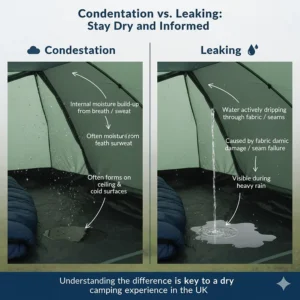
- Condensation in humid conditions
3. Naturehike Cloud Up 2 – Best Value 4000mm Ultralight
The Naturehike Cloud Up 2 punches well above its weight class. With a PU4000mm waterproof rating on its 20D silicone-coated nylon flysheet, this tent has revolutionised the budget ultralight market in the UK.
Key Specifications:
- Flysheet: 4000mm HH (20D silnylon)
- Groundsheet: 4000mm HH
- Weight: 1.75kg (complete)
- 7001 aluminium alloy poles
Despite its bargain price, this tent performs remarkably well. British hikers frequently compare it favourably to tents costing three times as much. The silicone coating provides better UV resistance than standard PU coatings, extending the tent’s waterproof lifespan significantly.
Price Range: £89.99-£139.99
✅ Pros:
- Exceptional value
- Ultralight for bikepacking
- Silicone coating durability
❌ Cons:
- Tight fit for two tall people
- Floor fabric thinner than premium brands
4. Berghaus Cheviot 2 – Robust 5000mm Four-Season Tent
The Berghaus Cheviot 2 is engineered for British mountaineers who refuse to compromise. With a 5000mm HH flysheet and tub-style bedroom design, this semi-geodesic tunnel tent handles everything from Welsh downpours to Scottish blizzards.
Key Specifications:
- Flysheet: 5000mm HH
- Semi-geodesic alloy pole construction
- Weight: 3.05kg
- Pack size: 50 x 16 x 16cm
UK buyers appreciate the tension straps that provide extra stability in high winds, whilst the mesh pole sleeves reduce setup time to just 7 minutes. The tub-style bedroom effectively keeps groundwater out, even when pitched on saturated ground.
Price Range: £179.99-£229.00
✅ Pros:
- Four-season capability
- Quick pitch time
- Excellent value for performance
❌ Cons:
- Snug interior space
- Heavier than ultralight alternatives
5. Coleman Cook 4 – Family-Friendly 3000mm Tunnel Tent
The Coleman Cook 4 brings family camping to life with its spacious design and reliable 3000mm waterproof protection. This tunnel tent offers separate sleeping and living areas, making it ideal for British campsite holidays.
Key Specifications:
- Flysheet & Groundsheet: 3000mm HH
- Sleeps: 4 persons comfortably
- Standing height in living area
- Sewn-in groundsheet
British families praise the generous headroom and the ability to cook undercover during rainy days. The separate living area provides essential breathing space when everyone’s confined indoors during typical UK summer showers.
Price Range: £159.99-£199.99
✅ Pros:
- Spacious family layout
- Standing headroom
- Budget-friendly
❌ Cons:
- Heavier pack weight
- Requires larger pitch space
6. Berghaus Air 400 Nightfall – Premium 6000mm Inflatable Tent
For families seeking luxury camping, the Berghaus Air 400 Nightfall sets the gold standard. With an impressive 6000mm HH rating on its 75D polyester fabric, this inflatable tent laughs in the face of British weather.
Key Specifications:
- Flysheet: 6000mm HH (75D polyester)
- Groundsheet: 6000mm HH
- Weight: 20.5kg
- Nightfall darkened bedrooms
The inflatable airbeam system transforms setup from a chore into a 15-minute breeze. UK campers particularly appreciate the Nightfall bedrooms that block early morning light—essential during British summer’s 5am sunrises. One Scottish reviewer reported staying completely dry through three days of Highland rain.
Price Range: £449.99-£549.00
✅ Pros:
- Exceptional waterproof performance
- Quick inflatable setup
- Luxury camping features
❌ Cons:
- Significant investment
- Heavy for transportation
7. Vango Orion 200 – Versatile 5000mm Tunnel Tent
The Vango Orion 200 combines lightweight design with serious weatherproofing. Featuring ProTex 70D 5000mm flysheet and 6000mm groundsheet, this tunnel tent excels at wild camping and backpacking across the UK.
Key Specifications:
- Flysheet: 5000mm HH (ProTex 70D)
- Groundsheet: 6000mm HH
- Weight: 2.3kg
- Tunnel structure for optimal space
This Amazon exclusive offers flysheet-first pitching—brilliant for those unexpected Lake District downpours when you need shelter fast. The tunnel design maximises internal space whilst maintaining a reasonable pack size for hikers.
Price Range: £107.81-£149.99
✅ Pros:
- Excellent space-to-weight ratio
- Flysheet-first pitching
- Premium waterproofing
❌ Cons:
- Requires careful tensioning
- Less stable in crosswinds than domes
✨ Don’t Miss These Exclusive Deals!
🔍 Take your camping adventures to the next level with these carefully selected tents. Click on any highlighted item to check current pricing and availability on Amazon.co.uk. These shelters will help you create authentic outdoor memories your family will cherish!
Understanding Hydrostatic Head: The Science Behind HH Ratings
What Is Hydrostatic Head?
The HH rating tent meaning centres around a surprisingly simple test. According to UK government safety standards, manufacturers clamp tent fabric beneath a sealed tube, then gradually fill it with water. The height (in millimetres) at which water finally seeps through becomes the tent’s waterproof rating.
Imagine a transparent column filled with water pressing down on your tent fabric. A 3000mm rating means the material withstands a 3-metre-tall column of water before leaking—that’s roughly equivalent to standing two average adults on each other’s shoulders! This measurement simulates the pressure exerted by wind-driven rain during British storms.
How HH Ratings Translate to Real-World Performance
Understanding what is hydrostatic head in practical terms helps you choose wisely:
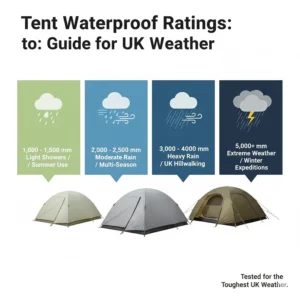
1000mm Rating: The legal minimum for manufacturers to claim “waterproof” in the UK. Suitable only for light drizzle or fair-weather camping. Think sunny bank holiday weekends in southern England.
2000mm Rating: Handles moderate rainfall but struggles during prolonged downpours. Acceptable for summer camping in drier regions, though risky for unpredictable British weather.
3000mm Rating: The sweet spot for most UK camping. This level handles heavy rain effectively, making it suitable for three-season camping across England, Wales, and lowland Scotland.
5000mm Rating: Premium protection for wild camping, mountain expeditions, and Scottish Highlands adventures. Withstands prolonged heavy rain and wind-driven precipitation.
6000mm+ Rating: Extreme weather protection rarely necessary for typical camping but essential for winter expeditions or extended stays in exposed locations.
Why Groundsheets Need Higher Ratings
Here’s something crucial that surprises many first-time campers: groundsheet waterproof rating requirements differ dramatically from flysheets. Why? Physics, mate.
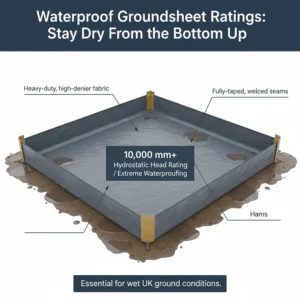
When you’re sleeping, your body weight concentrates enormous pressure on the tent floor. Kneeling whilst getting dressed can create pressure exceeding 3000mm. This explains why quality tents feature groundsheet ratings of 5000mm to 10,000mm—far exceeding their flysheet ratings.
British camping expert organisations recommend groundsheet ratings at least 2000mm higher than flysheet ratings for optimal protection against ground moisture.
Tent Waterproof 3000mm vs 5000mm: Which Do You Need?
This question dominates UK camping forums, and rightfully so. The difference between tent waterproof 3000mm vs 5000mm options significantly impacts both performance and budget.
When 3000mm Is Sufficient
Best For:
- Weekend campsite camping (April-September)
- Music festivals and events
- Lowland camping in southern England
- Protected woodland sites
- Budget-conscious campers
A well-designed 3000mm tent with proper seam sealing and bathtub groundsheet keeps you dry during typical British summer conditions. The Coleman Darwin series proves this consistently. However, expect condensation during humid weather, and avoid exposed hilltop pitches during storms.
When 5000mm Becomes Essential
Required For:
- Scottish Highland wild camping
- Exposed mountain campsites
- Spring/autumn camping (March-November)
- Coastal camping in Atlantic-facing regions
- Multi-day expeditions where failure isn’t an option
The Vango Hydra and Berghaus Cheviot demonstrate how 5000mm ratings provide peace of mind during British weather’s worst tantrums. One extra day’s rental car costs more than the premium you’ll pay for this upgrade—and you can’t rent dry sleeping bags.
The Hidden Trade-Offs
Higher waterproof ratings aren’t free lunches. They come with consequences:
Weight: Thicker coatings mean heavier fabrics. A 5000mm tent typically weighs 15-30% more than an equivalent 3000mm model.
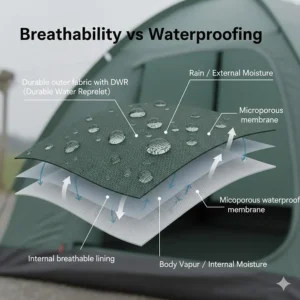
Breathability: Heavier PU coatings reduce breathability, potentially increasing condensation. This explains why premium tents use silicone coatings, which maintain breathability whilst improving waterproofing.
Durability: Polyurethane coatings degrade faster than silicone. A 3000mm silicone-treated tent often outlasts a 5000mm PU-coated tent by several years.
Cost: Expect to pay 40-60% more for 5000mm protection versus 3000mm equivalents.
Comparison Table: 3000mm vs 5000mm Performance
| Factor | 3000mm Rating | 5000mm Rating |
|---|---|---|
| Light rain (1-5mm/hr) | Excellent | Excellent |
| Moderate rain (5-15mm/hr) | Good | Excellent |
| Heavy rain (15-30mm/hr) | Fair | Excellent |
| Storm conditions (30mm+/hr) | Poor | Good |
| Wind-driven rain | Fair | Excellent |
| Multi-day exposure | Moderate | High |
| Weight penalty | Lower | Higher |
| Condensation risk | Lower | Moderate |
| Lifespan (years) | 3-5 | 5-8+ |
| Price range | £70-£200 | £150-£400 |
Flysheet vs Groundsheet: Understanding Different HH Requirements
Tent Flysheet HH Rating Explained
Your tent flysheet HH rating determines performance against vertical rain—the stuff falling from clouds. British weather specialists at the Met Office note that UK rainfall rarely exceeds 30mm per hour, even during severe storms. This explains why 3000mm flysheets suffice for most camping.
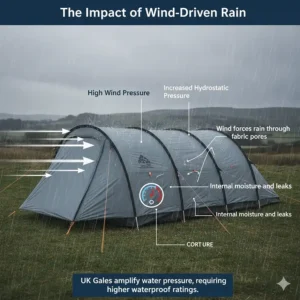
However, wind changes everything. When 40mph gusts drive rain horizontally, effective pressure on tent fabric multiplies dramatically. This phenomenon makes 5000mm ratings valuable for exposed campsites in Scotland, Wales, and coastal regions.
Groundsheet Waterproof Rating Requirements
Ground moisture attacks from multiple angles:
- Direct precipitation pooling beneath the tent
- Damp soil moisture wicking upwards
- Concentrated pressure from body weight and gear
Quality tents feature groundsheets rated 5000mm to 10,000mm—double or triple their flysheet ratings. The Berghaus Air series exemplifies this with 6000mm groundsheets paired with equally impressive flysheets.
Bathtub Floor Design: This critical feature extends groundsheet material 10-15cm up tent walls, creating a waterproof tub. Even if water pools around your tent, it can’t seep through floor seams. Every tent in our top seven incorporates this design.
The Role of Tent Seam Sealing Tape
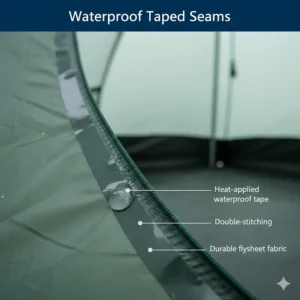
Even a 10,000mm HH rating fails if water leaks through seams. This makes tent seam sealing tape arguably more important than the fabric’s waterproof rating itself.
Factory Seam Sealing
Premium tents arrive with factory-taped seams—heat-sealed waterproof tape bonded over every stitched seam. The Vango and Berghaus models feature fully factory-taped seams, ensuring immediate waterproof protection.
Budget tents sometimes require manual seam sealing. If your tent’s product description doesn’t mention “fully taped seams” or “factory sealed seams,” budget for quality tent seam sealing tape:
- McNett Seam Grip (silicone-based for silnylon tents)
- Coleman Seam Sealer (PU-based for polyester tents)
- Gear Aid Seam Sure (universal application)
When to Reapply Seam Sealer
UV exposure and flexing gradually degrade seam tape. Inspect seams annually, particularly after:
- 50+ nights of use
- Extended sun exposure
- Storage in damp conditions
- Any visible peeling or cracking
British camping conditions accelerate degradation. Reapply seam sealer every 2-3 years for optimal protection, regardless of visual condition.
Beyond HH Ratings: Other Waterproofing Factors
Fabric Quality and Coating Types
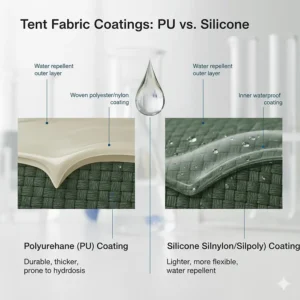
Polyurethane (PU) Coating:
- Most common in budget to mid-range tents
- Affordable and effective initially
- Degrades through hydrolysis (moisture reaction)
- Typical lifespan: 3-5 years
- Used in Coleman and budget Vango models
Silicone Coating:
- Premium option in high-end tents
- Superior UV resistance
- Maintains elasticity longer
- Lifespan: 8-10+ years
- Featured in Naturehike Cloud Up series
Combined Si/PU Coating:
- Silicone exterior for durability
- PU interior for ease of seam sealing
- Best of both worlds
- Increasingly common in premium tents
Fabric Denier and Thickness
Denier measures fabric thread thickness. Higher denier means heavier, more durable fabric:
20D Fabric: Ultra lightweight, suitable for fair weather and experienced users who handle gear carefully. Found in Naturehike Cloud Up models.
40D-70D Fabric: Sweet spot for three-season camping. Balances weight with durability. Most UK camping tents use this range.
75D+ Fabric: Heavy-duty for extreme conditions or family camping where weight isn’t critical. Berghaus Air series uses 75D for bulletproof reliability.
Tent Design and Construction
Geodesic Designs: Multiple pole crossings create stable structures that shed water and wind effectively. The Berghaus Cheviot’s semi-geodesic construction excels in Scottish Highland conditions.
Tunnel Tents: Offer maximum internal space but require careful pitching and tensioning. The Vango Orion 200 demonstrates how proper setup transforms performance.
Dome Tents: Freestanding stability with good water shedding. Coleman’s dome designs prove reliable for family camping.
Choosing the Right Waterproof Rating for UK Regions
England: Regional Variations
Southeast England (London, Kent, Sussex):
- Average annual rainfall: 600-700mm
- Recommended minimum: 2000mm flysheet, 3000mm groundsheet
- 3000mm provides comfortable safety margin
Southwest England (Cornwall, Devon, Somerset):
- Average annual rainfall: 900-1400mm
- Coastal exposure increases wind-driven rain
- Recommended: 3000mm flysheet, 5000mm groundsheet
Northern England (Lake District, Peak District, Yorkshire Dales):
- Average annual rainfall: 1200-2000mm+
- Exposed hilltop campsites common
- Recommended: 5000mm flysheet, 6000mm groundsheet
Wales: Mountains and Valleys
Snowdonia and Brecon Beacons:
- Among UK’s wettest regions (2000mm+ annually)
- Rapid weather changes common
- Minimum requirement: 3000mm flysheet
- Wild camping recommendation: 5000mm flysheet
Scotland: Prepare for Anything
Scottish Highlands:
- Extreme rainfall (3000mm+ in Western Highlands)
- Relentless wind exposure
- Essential minimum: 5000mm flysheet, 6000mm groundsheet
- Winter camping: Consider 6000mm+ ratings
Scottish Lowlands:
- Moderate rainfall (800-1200mm)
- Similar to Northern England
- 3000-5000mm adequate for three-season camping
Northern Ireland
- Variable rainfall (800-1400mm)
- Coastal winds significant factor
- 3000mm minimum, 5000mm for mountain camping
Maintaining Your Tent’s Waterproof Performance
Proper Storage Prevents Degradation
Never Store Wet Tents: Mildew destroys waterproof coatings irreversibly. Always dry completely before storage—even if this means hanging your tent indoors for several days.
Cool, Dry Storage: Heat accelerates PU coating degradation. Avoid garages, sheds, or attics experiencing temperature extremes. A bedroom wardrobe works brilliantly.
Loose Packing: Compression damages coatings. Store loosely in oversized bags or hung from rafters.
Cleaning Without Damaging Coatings
Avoid These:
- Washing machines (destroys coatings)
- Detergents (strip waterproof treatments)
- Harsh scrubbing (damages fabric)
Correct Method:
- Pitch tent fully
- Brush off loose dirt
- Sponge with lukewarm water only
- Allow complete air-drying
- Reapply waterproofing if needed
When to Reproof Your Tent
Modern tents require less frequent reproofing than traditional canvas, but degradation eventually occurs. Reproof when:
- Water no longer beads on fabric surface
- Fabric feels tacky or sticky
- Visible coating peeling
- After 100+ nights use
UK-Available Reproofing Products:
- Nikwax Tent & Gear SolarProof (spray-on)
- Grangers Fabsil Universal (brush/spray)
- Scotchgard Heavy Duty Water Shield
Price vs Performance: Finding Value
Budget Tents (£50-£150)
Typical Specs:
- 2000-3000mm HH rating
- PU-coated polyester
- Basic seam sealing
- 3-5 year lifespan
Best For: Fair-weather camping, festivals, occasional use
Top Pick: Coleman Darwin series offers exceptional value with reliable 3000mm protection.
Mid-Range Tents (£150-£350)
Typical Specs:
- 3000-5000mm HH rating
- Quality PU or Si/PU coatings
- Factory-sealed seams
- 5-8 year lifespan
Best For: Regular UK camping, three-season use, backpacking
Top Pick: Vango Hydra 200 balances performance, weight, and price brilliantly.
Premium Tents (£350-£800+)
Typical Specs:
- 5000-6000mm+ HH rating
- Silicone or advanced coatings
- Reinforced construction
- 10+ year lifespan
Best For: Wild camping, extreme weather, year-round use
Top Pick: Berghaus Air 400 Nightfall delivers luxury camping with bombproof waterproofing.
Comparison Table: Budget vs Premium Waterproofing
| Feature | Budget (£50-£150) | Mid-Range (£150-£350) | Premium (£350+) |
|---|---|---|---|
| HH Rating | 2000-3000mm | 3000-5000mm | 5000-6000mm+ |
| Coating Type | Basic PU | Quality PU/Si-PU | Silicone/Advanced |
| Seam Sealing | Manual/Basic | Factory-taped | Fully sealed |
| Fabric Weight | 190T-210T | 68D-75D | 20D-75D |
| Expected Lifespan | 3-5 years | 5-8 years | 10+ years |
| Weight Penalty | Moderate | Balanced | Optimised |
| Condensation Control | Basic | Good | Excellent |
| UV Resistance | Fair | Good | Excellent |
| Repair Options | Limited | Moderate | Extensive |
Common Waterproofing Mistakes to Avoid
Pitching Errors That Compromise Protection
Mistake #1: Loose Flysheet Sagging flysheets pool water rather than shedding it. Always tension guy lines properly, especially before rain arrives.
Mistake #2: Touching Inner Tent to Flysheet When inner and outer fabrics touch, water transfers through. Maintain air gaps by proper pitching and avoiding gear packed against walls.
Mistake #3: Poor Site Selection Even 6000mm tents struggle when pitched in depressions where water pools. Choose slightly elevated ground with natural drainage.
Storage Mistakes That Destroy Waterproofing
UK’s damp climate makes proper storage critical. One Scottish camper discovered their £400 tent ruined after a single winter stored damp in a garage. The entire PU coating peeled away like wallpaper.
Critical Rules:
- Dry completely before storage (may take 3-4 days indoors)
- Check for hidden moisture in seams and groundsheet
- Avoid compression stuff sacks for long-term storage
- Inspect and air out every 3-4 months during storage
Maintenance Mistakes
Using Wrong Cleaning Products: Detergents designed for clothing contain enzymes that attack waterproof coatings. One festival-goer washed their tent with biological detergent and watched the 3000mm HH rating drop to essentially zero.
Over-tensioning: Excessive tension stretches fabric, potentially creating micropores where water penetrates. Follow manufacturer tension recommendations.
Ignoring UV Damage: British summer sun, though seemingly gentle, degrades coatings over time. Consider using tent tarps during extended summer camping.
FAQs: Tent Waterproof Ratings Answered
❓ Is 3000mm waterproof enough for UK camping?
❓ What does HH 5000mm mean on a tent?
❓ How often should I reseal tent seams?
❓ Why is groundsheet HH higher than flysheet?
❓ Do silicone-coated tents need lower HH ratings?
Conclusion: Making Your Waterproof Rating Decision
Navigating the tent waterproof rating guide landscape needn’t feel overwhelming. The key lies in honestly assessing your camping style, typical UK destinations, and budget constraints. For most British campers enjoying weekend trips to established campsites, a well-constructed 3000mm tent like the Coleman Darwin series provides perfectly adequate protection without breaking the bank.
However, if you’re drawn to Scotland’s Munros, Wales’ mountain ridges, or year-round wild camping adventures, investing in 5000mm protection pays dividends. The Vango Hydra 200 and Berghaus Cheviot 2 demonstrate how premium waterproofing transforms challenging conditions into comfortable experiences. Remember that HH ratings represent just one piece of the waterproofing puzzle. Proper seam sealing, quality fabric construction, intelligent tent design, and diligent maintenance often matter more than raw numbers.
The British camping season stretches gloriously from March through October (and beyond for hardy souls), offering countless opportunities to test your tent’s mettle. Whatever waterproof rating you choose, complement it with smart site selection, proper pitching technique, and regular maintenance. Your tent is more than shelter—it’s your mobile home in Britain’s magnificent outdoors. Choose wisely, maintain diligently, and those soggy sleeping bag mornings become distant memories replaced by comfortable nights under canvas, regardless of what our unpredictable British weather delivers.
Recommended for You
- 7 Best Tent for UK Weather 2026 – Rain & Wind Tested
- Air Tent vs Poled Tent: 7 Best UK Options You Must Know (2026)
- 7 Best Family Tent UK 2026: Expert Buying Guide & Reviews
These articles provide expert insights to transform your outdoor adventures across Britain’s spectacular landscapes.
Disclaimer: This article contains affiliate links. If you purchase products through these links, we may earn a small commission at no additional cost to you. Prices shown are approximate and may vary.
✨ Found this helpful? Share it with your mates! 💬🤗
