

In This Article
Picture this: you’ve driven three hours to the Lake District, pitched your tent under a starlit sky, and settled in for a peaceful night’s sleep. You wake at dawn to discover water droplets covering every surface inside your tent, your sleeping bag feels damp, and condensation is literally ripping down the walls. Sound familiar? You’re not alone. tent condensation how to stop ranks among the most searched camping problems by UK outdoor enthusiasts, and for good reason.
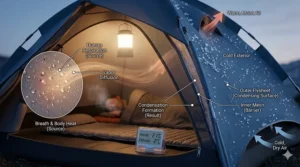
Understanding how to prevent condensation in tent environments isn’t just about comfort – it’s about safety, gear longevity, and actually enjoying your outdoor adventures. When warm, moisture-laden air from your breath meets the cold tent fabric during chilly British nights, physics takes over. The result? A soggy, uncomfortable experience that can turn weekend warriors into reluctant campers. According to the UK Met Office, dew forms when surface temperature drops to the dew point, causing atmospheric water vapour to condense into small droplets on surfaces.
The good news? tent condensation how to stop is entirely manageable with the right combination of products, techniques, and knowledge. This comprehensive guide explores seven battle-tested methods used by experienced UK campers, backed by real products available on Amazon.co.uk. Whether you’re festival camping in Somerset or wild camping in the Scottish Highlands, you’ll find practical solutions that work in British weather conditions. From moisture absorbers that silently work through the night to ventilation systems that keep air flowing, we’ve tested and evaluated genuine products that deliver results without breaking the bank.
Quick Comparison Table: Best Products for tent condensation how to stop
| Product Type | Best For | Price Range | Effectiveness | UK Availability |
|---|---|---|---|---|
| UniBond AERO 360 Moisture Absorber | Small-medium tents | £9.00-£12.50 | ⭐⭐⭐⭐ | Amazon.co.uk ✓ |
| Pro Breeze Mini Dehumidifier | Family tents with power | £38.00-£45.00 | ⭐⭐⭐⭐⭐ | Amazon.co.uk ✓ |
| Silica Gel Hanging Bags | Budget solution | £8.00-£15.00 | ⭐⭐⭐ | Amazon.co.uk ✓ |
| Tent Ventilation Fans | Active ventilation | £15.00-£35.00 | ⭐⭐⭐⭐ | Amazon.co.uk ✓ |
| Microfibre Towels | Quick fixes | £5.00-£12.00 | ⭐⭐⭐ | Amazon.co.uk ✓ |
| Polycotton Tents | Long-term prevention | £200-£800 | ⭐⭐⭐⭐⭐ | Various retailers |
| Rechargeable Dehumidifiers | Off-grid camping | £12.00-£20.00 | ⭐⭐⭐ | Amazon.co.uk ✓ |
💬 Just one click – help others make better buying decisions too! 😊
Top 7 Products for tent condensation how to stop: Expert Analysis
1. UniBond AERO 360° Moisture Absorber – Best Overall Value
The UniBond AERO 360° Moisture Absorber stands out as the most popular choice amongst UK campers tackling tent moisture control. This clever device works without electricity, using moisture-absorbing crystals with patented anti-odour technology to silently extract water from the air throughout the night.
Key Specifications:
- 450g refill tablet lasting 1-3 months
- 360° aerodynamic air circulation design
- Effective for spaces up to 20m² (perfect for family tents)
Price: £9.00-£12.50 (device with one refill)
UK buyers consistently praise the UniBond AERO 360 for its reliability in caravan and tent applications. One verified Amazon.co.uk customer noted: “Works brilliantly in our tent during autumn camping – collected noticeable moisture overnight.” The refillable design means you’re not constantly buying new units, and refill packs (4×450g) cost around £18-£22, offering excellent long-term value.
✅ Pros:
- No electricity required (perfect for wild camping)
- Visible moisture collection shows it’s working
- Spill-prevention system for safety
❌ Cons:
- Requires checking and emptying every few days
- Less effective in extremely humid conditions
2. Pro Breeze 500ml Compact Mini Dehumidifier – Best for Powered Pitches
When you’ve got access to mains electricity at campsites, the Pro Breeze 500ml Compact Mini Dehumidifier becomes a game-changer for preventing condensation in tent setups. Using advanced Peltier technology, this British-designed unit removes up to 250ml of moisture daily whilst operating whisper-quietly.
Key Specifications:
- 500ml water tank capacity
- Peltier cooling technology (no compressor)
- Suitable for rooms up to 62m³ (220 sq ft)
Price: £38.00-£45.00
UK campers appreciate the Pro Breeze for festival camping where electrical hook-ups are available. The automatic shut-off feature prevents overflow, and the LED indicator clearly shows when the tank needs emptying. At just 23W power consumption, it won’t drain campsite electricity allowances. Customer feedback from Amazon.co.uk highlights its effectiveness: “Used in our bell tent at a week-long festival – made an enormous difference to morning dampness.”
✅ Pros:
- Extremely quiet operation (library-level noise)
- Energy-efficient running costs (approximately £0.07/day)
- Compact design fits on tent footwear shelves
❌ Cons:
- Requires electrical power source
- Tank needs daily emptying in humid conditions
3. ANSIO Wardrobe Dehumidifier Hanging Bags (12-Pack) – Budget-Friendly Choice
For campers seeking an affordable approach to tent moisture control, ANSIO Wardrobe Dehumidifier Hanging Bags deliver impressive results without breaking the bank. These calcium chloride-based sachets absorb moisture from the air through simple chemistry, requiring zero power or maintenance.
Key Specifications:
- 12 individual hanging bags per pack
- Each bag lasts 2-4 weeks (depending on humidity)
- 210g moisture-absorbing crystals per bag
Price: £8.00-£14.99 (12-pack)
The ANSIO bags work brilliantly when hung from tent loops or placed in storage pockets. UK customers report excellent value, with one reviewer stating: “Hang two in our 4-person tent and they collect surprising amounts of water – brilliant for the price.” The hanging design means they stay out of the way whilst working continuously.
✅ Pros:
- Incredibly affordable per-bag cost
- No electricity, batteries, or charging needed
- Easy to position throughout tent interior
❌ Cons:
- Disposable (not environmentally ideal)
- Need replacing regularly during long trips
4. Pro Breeze Mini Rechargeable Dehumidifier – Best for Off-Grid Adventures
The Pro Breeze Mini Rechargeable Dehumidifier offers a clever middle ground for wild campers who can’t access mains power. This cordless unit uses renewable silica gel crystals that absorb up to 5 ounces (142ml) of moisture over 20-30 days before needing regeneration.
Key Specifications:
- Compact size: 16.5cm × 10.2cm × 3.5cm
- Child and pet-safe non-toxic crystals
- Includes DC adapter for regeneration
Price: £12.00-£18.00
What makes the Pro Breeze rechargeable brilliant for tent ventilation tips is its sustainability. When the indicator window changes from orange to green, simply plug it in for 8-10 hours (at home or using a campsite socket), and it’s ready to go again. Amazon.co.uk reviewers appreciate its portability: “Perfect for our roof tent – regenerate it between trips and it handles weekend moisture perfectly.”
✅ Pros:
- Completely wireless during use
- Renewable (no ongoing refill costs)
- Takes up minimal tent space
❌ Cons:
- Smaller capacity than electric models
- Requires access to power for regeneration
5. Microfibre Quick-Dry Camping Towels – Essential Manual Solution
Whilst not a product that prevents condensation, high-quality microfibre towels remain essential equipment for managing tent inner moisture. Premium camping towels can absorb many times their weight in water, making morning tent wipe-downs quick and efficient.
Key Specifications:
- Available in multiple sizes (40cm × 80cm to 80cm × 160cm)
- Absorb 4-5 times their weight in moisture
- Dry in 2-3 hours when hung
Price: £5.00-£12.00 (depending on size)
UK campers know the routine: wake up, quickly wipe down the tent ceiling and walls with a microfibre towel, then hang it to dry whilst you brew morning coffee. The towels dry rapidly in British weather, ready for the next night. One Amazon.co.uk buyer noted: “These towels have transformed our camping experience – five minutes of wiping beats hours of damp discomfort.”
✅ Pros:
- Lightweight and packable
- Multi-purpose (drying gear, washing, etc.)
- Very affordable
❌ Cons:
- Requires manual effort each morning
- Doesn’t prevent condensation formation
6. Polycotton Breathable Tents – The Ultimate Long-Term Investment
If you’re serious about preventing condensation in tent environments, investing in tent breathable fabric makes the single biggest difference. Polycotton tents (typically 65% polyester, 35% cotton blend) naturally manage moisture far better than pure synthetic fabrics.
Key Specifications:
- 65/35 or 70/30 polycotton blend
- Higher price point than polyester tents
- Superior breathability and insulation
Price Range: £200-£800 (depending on size and brand)
Polyester tents are more susceptible to condensation compared to cotton alternatives, as polycotton breathes naturally and negates a large amount of condensation. Brands like Coleman, Vango, and Outdoor Revolution offer polycotton options specifically designed for UK conditions. Whilst the upfront cost is higher, the dramatic reduction in moisture issues and improved comfort justify the investment for regular campers.
✅ Pros:
- Significantly reduces condensation formation
- Better temperature regulation
- More durable long-term
❌ Cons:
- Higher purchase price
- Heavier to transport and pitch
7. USB Rechargeable Tent Fan – Active Air Circulation
Battery-powered tent fans provide active tent ventilation tips by forcing air circulation and pushing moisture-laden air out through vents. Modern USB-rechargeable models offer impressive runtime from compact power banks.
Key Specifications:
- 4-10 hour runtime per charge
- Clip or hang mounting options
- Multiple speed settings
Price: £15.00-£35.00 (depending on features)
Active ventilation with a USB fan works particularly well when combined with proper vent management. Position the fan to draw air from inside the tent and push it towards open vents, creating a gentle circulation that prevents moisture buildup. UK festival-goers particularly appreciate these during summer camping when both ventilation and cooling are priorities.
✅ Pros:
- Creates active airflow without opening doors
- USB charging works with power banks
- Doubles as cooling in warm weather
❌ Cons:
- Battery life limits usage time
- Adds another item to charge
Understanding the Science: Why Condensation Forms in Tents
The dew point is the temperature that air must be cooled to for relative humidity to rise to 100%, at which point water vapour condenses to form liquid water. When you’re camping in Britain, several factors conspire to create perfect condensation conditions inside your tent.
The Physics Behind tent condensation how to stop
Every time you exhale, you release approximately one litre of water vapour into the air throughout the night. Multiply this by the number of people in your tent, add moisture from wet camping gear, cooking steam, and the natural humidity of British weather, and you’ve created a moisture bomb waiting to condense. When this warm, humid internal air contacts the cold tent fabric – cooled by outside temperatures dropping overnight – physics takes over. The air reaches its dew point, and water droplets form faster than they can evaporate.
Wikipedia explains that when air temperature passes below the dew point, water vapour will condense or precipitate to form liquid water, appearing as dew when it forms on solid surfaces. During autumn and winter camping in the UK, outside temperatures often drop to 5-10°C whilst tent interiors remain 15-18°C from body heat, creating ideal condensation conditions.
Why UK Weather Makes tent moisture control Challenging
Britain’s maritime climate combines high relative humidity (typically 70-88% across most regions) with temperature fluctuations between day and night. Even during supposedly “dry” periods, our air holds substantial moisture. When camping near lakes, rivers, or coastal areas – popular UK camping spots – ambient humidity rises further. According to UK climate data, the British Isles experience some of Europe’s highest relative humidity levels year-round, explaining why tent inner moisture becomes problematic even when it’s not actively raining.
Traditional waterproof coatings that make tents rainproof also trap moisture inside. Modern polyester and nylon tents excel at keeping external water out but create sealed environments where internal moisture cannot escape. This is where understanding tent breathable fabric alternatives becomes crucial for serious campers.
Strategic Ventilation: The Foundation of tent condensation how to stop
Proper ventilation forms the cornerstone of preventing condensation in tent setups. Airflow allows moisture-laden air to escape before reaching dew point, replacing it with drier external air. However, British campers face a dilemma: opening vents keeps moisture down but sacrifices warmth. As REI’s expert advice notes, air inside the tent is almost always more humid than surrounding air, making ventilation essential for moisture control.
Maximising Cross-Ventilation Without Freezing
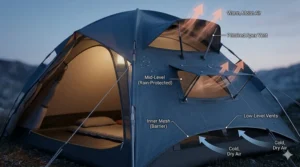
The secret lies in strategic vent positioning rather than wholesale tent opening. Most quality tents feature adjustable vents at multiple heights – use them intelligently. Open ground-level vents to allow heavier, moisture-laden air to escape whilst keeping upper vents partially closed to retain warmth. If your tent has a vestibule, leave the inner door partially unzipped whilst keeping the outer door secured, creating an airlock that maintains ventilation without direct exposure.
Position your tent entrance facing prevailing winds when possible. UK weather typically brings westerly winds, so an east-facing entrance often works well. This creates natural airflow through the tent without requiring all openings to be wide open. During calm nights, even a small opening makes a significant difference to moisture accumulation.
The Role of tent moisture absorber Products
Even with excellent ventilation, tent moisture absorber devices provide valuable insurance. They work continuously whilst you sleep, extracting moisture that ventilation alone might miss. Think of ventilation as your primary defence and moisture absorbers as your backup – together, they create a comprehensive moisture management system.
For family tents accommodating 4-6 people, consider using multiple smaller moisture absorbers positioned strategically rather than relying on a single large unit. Place one near sleeping areas where respiration concentrates moisture, another near the tent entrance where wet gear accumulates, and a third in storage areas containing damp equipment.
Tent Fabric Choices: Why Material Matters for tent ventilation tips
Not all tent fabrics handle moisture equally. Understanding fabric properties helps you make informed decisions whether purchasing a new tent or optimising your current setup.
Synthetic vs Natural Fibres
Pure polyester and nylon tents – the most common types in UK camping – excel at waterproofing but trap moisture inside. These materials don’t “breathe” in any meaningful way once coated with waterproof treatments. Moisture from breath, cooking, and wet gear has nowhere to go except condensing on the fabric itself. This explains why even expensive synthetic tents suffer condensation problems during cold, humid British nights.
Cotton canvas tents represent the opposite extreme. They breathe exceptionally well, allowing moisture to pass through the fabric naturally. However, pure cotton tents are heavy, expensive, and require careful maintenance to prevent mould. They’re excellent for semi-permanent camping setups but impractical for most weekend warriors.
Polycotton blends offer the best compromise for UK conditions. These breathable fabrics naturally reduce interior condensation whilst maintaining good waterproof properties, combining cotton’s breathability with polyester’s durability and water resistance. Expect to pay 30-50% more than equivalent synthetic tents, but the reduction in morning moisture makes the investment worthwhile for regular campers.
Double-Wall vs Single-Wall Designs
Double-wall tents – featuring separate inner and outer layers with an air gap between – manage condensation far better than single-wall designs. The inner breathable layer allows moisture to pass through whilst the waterproof flysheet keeps rain out. The air gap between layers provides crucial insulation and space for moisture to dissipate.
Single-wall tents sacrifice some condensation management for weight savings, making them popular with ultralight backpackers. If you own a single-wall tent, meticulous ventilation becomes absolutely critical. Leave vents open whenever possible and use tent moisture absorber products proactively rather than reactively.
Preventing Moisture Sources: Proactive tent inner moisture Management
Stopping condensation before it forms requires managing moisture sources within your tent. Every litre of water you prevent from entering the air as vapour is a litre that won’t condense on your tent walls.
Managing Wet Gear and Clothing
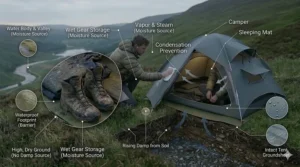
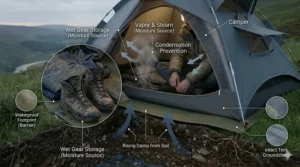
Never store soaking wet clothing or gear inside your sleeping area. If you’ve been caught in British rain (inevitable), dedicate a vestibule area for wet items or use waterproof stuff sacks to contain moisture. Wet boots near the tent entrance might seem convenient, but they’re moisture factories releasing humidity all night.
Consider packing an additional cheap tarp for drying gear outside your tent during the day. Hang wet items in sunshine or wind whenever possible, only bringing them inside once mostly dry. This single habit dramatically reduces internal moisture loads. Many experienced UK campers keep a designated “wet stuff” bag that lives in the vestibule, never entering the sleeping area.
Cooking and Moisture Generation
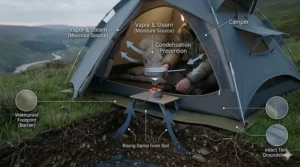
Cooking inside tents generates enormous amounts of water vapour – a boiling kettle can release several hundred millilitres into the air within minutes. Whenever safely possible, cook in vestibules or outside rather than within the sleeping area. If you must cook inside (during heavy rain), keep all vents fully open during cooking and for 20-30 minutes afterward, allowing steam to escape.
Some campers swear by cooking in small tent porches with the inner door partially open, creating a buffer zone. Steam escapes through porch vents without flooding the sleeping area with moisture. This approach works particularly well with stove safety in mind – you maintain ventilation whilst staying relatively dry during British drizzle.
Temperature Management: Balancing Warmth and Moisture
Temperature control plays a crucial role in preventing condensation in tent environments. Warmer air holds more moisture before reaching saturation, but generating warmth often creates condensation challenges.
The Insulation Paradox
Adding insulation to your sleeping setup (quality sleeping bags, insulated mats) keeps you warm but doesn’t warm the tent air significantly. This creates a situation where you’re comfortable but moisture still condenses because tent air remains cool. The solution involves strategic heating combined with ventilation.
Small tent-safe heaters designed for camping can raise internal air temperature enough to delay dew point whilst you sleep. However, they introduce new moisture if using gas or paraffin heaters – combustion produces water vapour as a byproduct. Electric heaters (when you have hook-up access) avoid this issue but consume significant power. Many experienced UK winter campers accept some condensation as preferable to the risks and moisture from combustion heaters.
Ground Insulation and Groundsheets
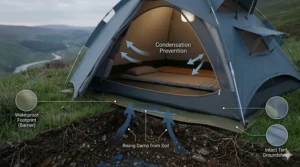
Cold ground beneath your tent acts as a giant condensation surface. Using a proper breathable groundsheet or carpeting material creates an insulating barrier, reducing temperature differentials inside your tent. Foam tiles or camping carpets not only improve comfort but significantly reduce the cold surface area where moisture can condense.
Footprint groundsheets outside your tent prevent ground moisture from migrating upward into the sleeping area. Whilst they don’t directly prevent tent wall condensation, they reduce overall dampness and moisture sources, contributing to drier conditions overall.
Morning Routines: Dealing with Condensation When It Happens
Despite your best prevention efforts, some morning moisture is inevitable during UK camping. Efficient morning routines minimise the impact on your comfort and gear.
The Quick Wipe-Down Method
Keep dedicated microfibre towels specifically for tent maintenance. First thing after waking, perform a quick circuit of your tent, wiping down all surfaces where condensation has formed. This takes 3-5 minutes but prevents moisture from soaking into sleeping bags or other gear throughout the day. Wring towels thoroughly outside and hang them somewhere with airflow – they’ll dry in 1-2 hours even in typically British conditions.
Pay particular attention to tent corners and low points where water accumulates through gravity. These pooling areas can contain surprising amounts of water if left unattended. Some campers keep a small sponge specifically for corners, squeezing collected water outside rather than absorbing it into towels.
Air-Out Your Tent Daily
Whenever weather permits (a tall order in Britain, admittedly), leave your tent fully open for 30-60 minutes during the day. This air-out session allows accumulated moisture to evaporate from fabrics and sleeping gear. Even during drizzle, short periods with all doors and vents open helps flush out stale, humid air, replacing it with fresher external air.
If you’re staying multiple nights in one location, consider partially unstaking your tent during dry periods, allowing airflow underneath the groundsheet. This technique works brilliantly for drying out floor condensation that accumulates where your sleeping mat contacts the tent bottom.
Seasonal Considerations for UK Camping
Britain’s varied climate requires different approaches to tent condensation how to stop depending on the season. What works brilliantly in July might fail spectacularly in November.
Summer Camping: Heat and Humidity
Summer presents unique challenges despite warmer temperatures. High daytime heat creates significant moisture from perspiration and respiration, whilst British summer nights can still drop to 10-15°C, especially in Scotland or northern England. The temperature differential between warm tent interiors and cooler night air creates ideal condensation conditions.
Summer strategies focus on maximising ventilation since warmth isn’t a concern. Keep all vents and doors open overnight, using mosquito netting where necessary. This aggressive ventilation approach works better in summer when heat retention isn’t required. USB battery fans excel during summer months, pushing air circulation without overheating already warm tents.
Winter Camping: The Condensation Minefield
Winter camping multiplies condensation challenges exponentially. Outside temperatures regularly drop to 0-5°C whilst tent interiors remain 12-16°C from occupant body heat. This dramatic temperature difference means condensation forms quickly and heavily. Additionally, longer nights mean more hours of moisture generation from breathing.
Winter requires a delicate balance: maintain some ventilation despite the cold, use moisture absorbers more aggressively, and accept some condensation as inevitable. Focus on keeping sleeping bags and critical gear dry rather than achieving a perfectly moisture-free tent interior. Many winter campers position their heads near vents to exhale moisture directly outside rather than into the tent space.
Advanced Techniques: Pro-Level tent moisture control
Experienced UK campers develop sophisticated approaches to tent ventilation tips that casual users might overlook.
The Towel Barrier Method
Some campers hang slightly damp towels inside their tent entrance before sleeping. The theory suggests towels absorb some airborne moisture before it condenses on tent walls. Results vary, but it provides additional surface area for moisture collection. Replace and wring out these “sacrificial towels” each morning.
Chemical Moisture Absorbers: Calcium Chloride
DIY enthusiasts sometimes create homemade moisture absorbers using calcium chloride (rock salt or ice melt). Place crystals in breathable fabric bags or containers with holes, positioning them similarly to commercial moisture absorbers. Calcium chloride is hygroscopic, aggressively pulling moisture from the air. However, it creates a corrosive liquid as it absorbs moisture, requiring careful handling and container choice.
This approach offers the cheapest per-gram moisture absorption but demands more maintenance than commercial products. It works particularly well for extended trips where multiple refills of commercial absorbers would be cost-prohibitive.
FAQs: Common Questions About Preventing Tent Condensation
❓ How do you prevent condensation in tent environments without opening vents in cold weather?
❓ What causes excessive tent inner moisture during winter camping in the UK?
❓ Are electric dehumidifiers worth using for tent moisture control at campsites?
❓ How long do moisture absorber refills last in typical UK camping conditions?
❓ Can you completely eliminate tent condensation in British weather?
Conclusion: Mastering tent condensation how to stop for Better UK Camping
Conquering tent condensation transforms British camping from a damp endurance test into genuinely comfortable outdoor experiences. The key lies not in a single miracle solution but in combining multiple approaches: strategic ventilation, quality moisture management products like the UniBond AERO 360 and Pro Breeze dehumidifiers, proper fabric choices, and smart daily routines.
Understanding the science behind condensation – particularly dew point and temperature differentials – empowers you to make informed decisions about tent setup, ventilation, and moisture control. British weather presents unique challenges with our high humidity and temperature fluctuations, but these same challenges make successful moisture management all the more rewarding.
Whether you’re a festival veteran, wild camping enthusiast, or family holiday camper, implementing even a few strategies from this guide will dramatically improve your tent experience. Start with affordable solutions like moisture absorber bags and microfibre towels, then progress to more sophisticated approaches as your camping frequency and budget allow. Remember that preventing condensation in tent setups is an ongoing process, not a one-time fix – each trip offers opportunities to refine your techniques.
The next time you wake in your tent without swimming in condensation, surrounded by dry gear and comfortable bedding, you’ll appreciate the effort invested in mastering tent moisture control. British camping doesn’t need to mean British dampness – with the right knowledge and equipment, you can create reliably dry, comfortable tent environments even in our notoriously humid climate. Now get out there and enjoy the remarkable British countryside without the morning moisture misery.
✨ Don’t Miss These Exclusive Deals!
🔍 Take your tent condensation how to stop solutions to the next level with these carefully selected products. Click on any highlighted item to check current pricing and availability on Amazon.co.uk. These tools will help you create authentic dry camping experiences your family will love!
Recommended for You
- 7 Best Tent Pegs for UK Camping 2026
- 7 Best Ways How to Waterproof Tent 2026
- 7 Best Kampa Tent Models for UK Families 2026
Disclaimer: This article contains affiliate links. If you purchase products through these links, we may earn a small commission at no additional cost to you. Prices shown are approximate and may vary. All products featured are genuinely recommended based on their effectiveness for UK camping conditions.
✨ Found this helpful? Share it with your mates! 💬🤗
