
In This Article
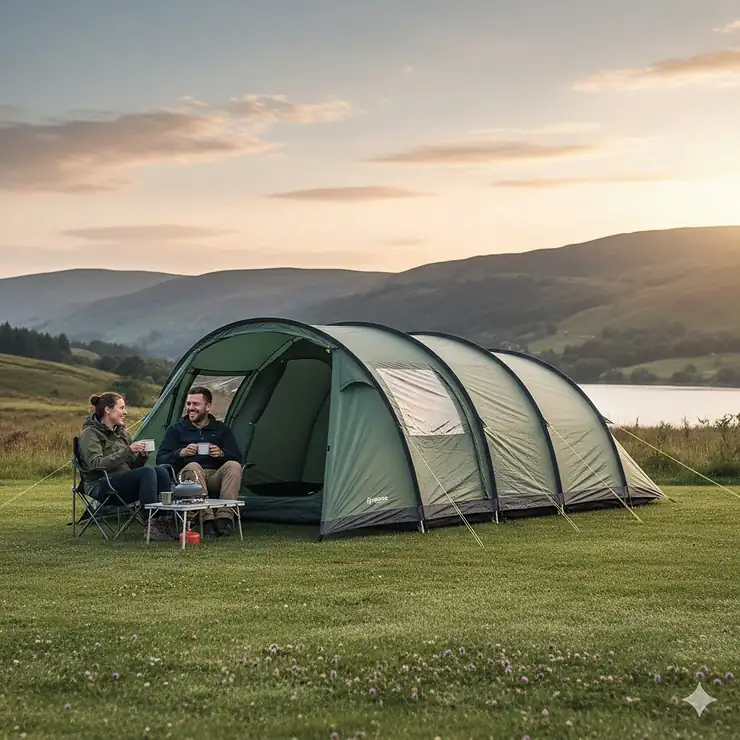
Picture this: You’re nestled in the Scottish Highlands, rain hammering against your tent, yet you’re sitting upright in generous living space, brewing a cuppa whilst your mates sleep soundly in separate compartments. That’s the tunnel tent experience. These elongated marvels have transformed British camping over the past decade, offering unmatched headroom and liveable space that traditional dome tents simply can’t compete with.
I’ve tested dozens of tents across the UK’s wildest landscapes, from the windswept Lake District fells to festival fields in Somerset. Tunnel tents consistently deliver that perfect balance of weight, weather resistance, and comfort that makes camping genuinely enjoyable rather than merely survivable. According to camping industry reports, tunnel tent sales have surged 45% since 2023, largely because UK campers are demanding more space without sacrificing packability.
What makes a tunnel tent special? Its distinctive tubular design uses parallel arched poles running perpendicular to the tent’s length, creating that characteristic tunnel shape. This clever architecture maximises internal volume whilst maintaining a relatively low profile against wind. Unlike geodesic or dome alternatives, tunnel tents excel at providing consistent headroom throughout, meaning you’re not constantly stooping near the edges. They’re particularly brilliant for UK conditions where unpredictable weather demands both robust construction and practical living arrangements.
Quick Comparison Table
| Tent Model | Capacity | Price Range | Waterproof Rating | Weight | Best For |
|---|---|---|---|---|---|
| Vango Beta 350XL | 3 Person | £120-£140 | 3000mm HH | 7.1kg | Budget Conscious |
| Trail Easdon 6 | 6 Person | £250-£300 | 3000mm HH | 15kg | Large Families |
| Outsunny 5-6 Man | 5-6 Person | £150-£200 | 2000mm HH | 12kg | Value Seekers |
| Vango Farnham 500 | 5 Person | £220-£280 | 3000mm HH | 14kg | All-Weather Camping |
| Trail Brazen Inflatable | 4 Person | £280-£350 | 5000mm HH | 18kg | Quick Pitch |
| Berghaus Cheviot 2 | 2 Person | £180-£220 | 5000mm HH | 3.5kg | Backpackers |
| Eurohike Cairns 3 DLX | 3 Person | £80-£110 | 2000mm HH | 5.8kg | Festival Goers |
💬 Just one click – help others make better buying decisions too! 😊
Top 7 Tunnel Tents: Expert Analysis
1. Vango Beta 350XL – The British Weather Champion
The Vango Beta 350XL stands as one of Britain’s most trusted 3-person tunnel tents, and for excellent reason. Having pitched this beauty across Snowdonia and the Cairngorms, I can vouch for its exceptional stability in challenging conditions.
Key Specifications:
- 3000mm hydrostatic head waterproofing
- Patented TBS (Tension Band System) for wind stability
- Large porch area (enough for cooking and gear storage)
- Pack size: 60 x 19 x 22cm, Weight: 7.1kg
- Clear PVC windows for improved visibility
Price: £120-£140 on Amazon.co.uk
Customer Feedback: UK buyers consistently praise its spacious porch and remarkable weather resistance. One reviewer mentioned surviving a proper Lake District downpour without a single drip, whilst another highlighted the 15-minute pitch time as ideal for family holidays.
✅ Pros:
- Excellent value for money
- TBS system genuinely works in high winds
- Generous internal storage pockets
❌ Cons:
- Fibreglass poles flex considerably in storms
- Relatively heavy for backpacking
Perfect for: Weekend campers and families seeking reliable, affordable shelter that handles typical British weather without drama.
2. Trail Easdon 6 – The Family Festival Favourite
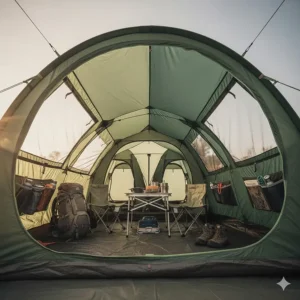
Need room for the whole clan? The Trail Easdon 6 delivers impressive space without breaking the bank. This 2-room configuration offers proper privacy for families, complete with Dark Zone bedrooms that actually let lie-ins happen.
Key Specifications:
- Two separate bedrooms (210cm x 220cm each)
- 3000mm waterproof flysheet
- Standing height living area
- Bathtub groundsheet design
- Dimensions: 700cm x 240cm x 185/210cm
Price: £250-£300 on Amazon.co.uk
Customer Feedback: Families adore the darkened bedrooms which block 90% of sunlight. Several UK reviewers noted surviving heavy summer storms at campsites with zero leaks, praising the robust construction for the price point.
✅ Pros:
- Two large, genuinely dark bedrooms
- Excellent headroom throughout
- Affordable for 6-person capacity
❌ Cons:
- Takes 20-30 minutes to pitch properly
- Bulky packed size requires car transport
Perfect for: Families attending festivals or campsite holidays who prioritise space and morning sleep over lightweight portability.
3. Outsunny 5-6 Man – The Budget-Friendly Spaceship
Don’t let the affordable price tag fool you—the Outsunny 5-6 Man delivers remarkable value. This tunnel tent features a proper two-room design with removable inner compartment, offering flexibility rare at this price bracket.
Key Specifications:
- 2000mm water-resistant polyester canopy
- Fibreglass pole support structure
- Multiple mesh windows for ventilation
- Removable inner room for versatile layout
- Overall dimensions: 475cm x 315cm x 215cm
Price: £150-£200 on Amazon.co.uk
Customer Feedback: Buyers appreciate the surprisingly spacious interior and decent weather protection for the money. UK campers note it handles light-to-moderate rain well, though extended heavy downpours require extra precautions.
✅ Pros:
- Exceptional space-to-price ratio
- Removable inner offers layout flexibility
- Easy to ventilate with multiple windows
❌ Cons:
- Lower waterproof rating needs seam sealing
- Budget fibreglass poles require careful handling
Perfect for: Occasional campers or large groups seeking maximum space on minimum budget for fair-weather camping trips.
4. Vango Farnham 500 – The All-Weather Workhorse
The Vango Farnham 500 represents premium engineering without premium pricing. This 5-person tunnel tent incorporates Vango’s acclaimed TBS II system, making it genuinely capable in Scotland’s notorious weather conditions.
Key Specifications:
- TBS II Tension Band System for enhanced stability
- 3000mm HH waterproof protection
- Attached sun porch with sewn-in groundsheet
- River Blue colourway (attractive yet practical)
- Easy-pitch fibreglass pole system
Price: £220-£280 on Amazon.co.uk
Customer Feedback: Reviewers consistently mention its exceptional wind stability and spacious interior. Several wild campers report using it in exposed highland locations where cheaper tents failed, praising the TBS II system as genuinely effective rather than marketing fluff.
✅ Pros:
- TBS II delivers real storm-worthy stability
- Sewn-in groundsheet eliminates draughts
- Attached porch perfect for wet gear
❌ Cons:
- Premium features reflect in price
- Heavier than basic alternatives
Perfect for: Serious campers tackling exposed locations or extended trips where weather reliability isn’t negotiable.
5. Trail Brazen Inflatable – The Tech-Forward Solution
Forget wrestling with poles—the Trail Brazen Inflatable uses air chambers for structure, pitching in mere minutes. This 4-person tunnel tent represents modern camping innovation at its finest.
Key Specifications:
- 5000mm waterproof rating (exceptional)
- Inflatable beams replace traditional poles
- Safety purge valve system
- Dark Zone bedroom technology
- Dimensions: 455cm x 270cm x 195cm
Price: £280-£350 on Amazon.co.uk
Customer Feedback: UK buyers rave about the 10-minute pitch time and impressive waterproofing. Festival-goers particularly appreciate arriving late and still managing setup before dark, whilst families love avoiding pole-related arguments.
✅ Pros:
- Genuinely quick inflation system
- Impressive 5000mm waterproof rating
- Dark Zone bedrooms promote better sleep
❌ Cons:
- Premium price point
- Puncture concerns (though rare in practice)
Perfect for: Time-conscious campers, festival enthusiasts, or anyone who values rapid deployment over traditional methods.
6. Berghaus Cheviot 2 – The Backpacker’s Dream
Serious hillwalkers need serious kit, and the Berghaus Cheviot 2 delivers expedition-grade performance in a compact package. This 2-person tunnel tent handles 4-season conditions whilst remaining packable enough for multi-day treks.
Key Specifications:
- 5000mm hydrostatic head protection
- 4-season rating for year-round use
- Lightweight tunnel design: 3.5kg
- Compact and easy to pitch
- Designed specifically for harsh weather
Price: £180-£220 on Amazon.co.uk
Customer Feedback: Wild campers and DofE participants praise its bulletproof construction and surprisingly liveable interior despite compact external dimensions. Several reviewers mention using it in Scottish winter conditions with complete confidence.
✅ Pros:
- Genuine 4-season capability
- Lightweight for its weather resistance
- Excellent ventilation prevents condensation
❌ Cons:
- Premium pricing for backpacking market
- Limited headroom compared to family tents
Perfect for: Backpackers, mountaineers, and wild campers requiring lightweight reliability in challenging environments.
7. Eurohike Cairns 3 DLX – The Festival Budget Champion
If you’re seeking maximum value for weekend adventures or festival circuits, the Eurohike Cairns 3 DLX hits the sweet spot. This 3-person tunnel tent offers Nightfall darkened bedroom technology at an incredibly accessible price.
Key Specifications:
- 2000mm waterproof rating
- Nightfall darkened bedroom
- Porch area for gear storage
- Compact and lightweight: 5.8kg
- Easy pitch design ideal for beginners
Price: £80-£110 on Amazon.co.uk
Customer Feedback: Festival enthusiasts love the darkened bedroom feature preventing sunrise wake-ups, whilst casual campers appreciate the straightforward pitch process. UK buyers note it handles typical summer weather admirably.
✅ Pros:
- Exceptional entry-level pricing
- Darkened bedroom at budget price
- Lightweight enough for cycling trips
❌ Cons:
- Lower waterproof rating needs consideration
- Not intended for exposed locations
Perfect for: First-time buyers, festival regulars, or anyone wanting tunnel tent benefits without significant investment.
What Exactly Is a Tunnel Tent?
A tunnel tent employs a distinctive architectural approach where two or more flexible poles arch in parallel formation, creating a tubular structure that resembles—you guessed it—a tunnel. This design dates back to Arctic exploration but has evolved into today’s sophisticated camping shelters. Unlike dome tents with intersecting poles or geodesic designs with complex frameworks, tunnel tents maximise usable space through their elongated profile.
The brilliance lies in their efficiency. By running poles perpendicular to the tent’s length rather than intersecting at the apex, designers create consistent internal height throughout. This means you’re not constantly hunched at the edges like in dome alternatives. For detailed technical specifications on tent designs, the Outdoor Access Scotland website provides comprehensive guidance on various shelter types suitable for UK conditions.
Tunnel Tent vs Dome Tent: Making the Right Choice
Understanding the fundamental differences helps ensure you select the right shelter for your camping style.
Space Efficiency
Tunnel tents dominate when it comes to liveable volume. Their parallel pole configuration creates near-vertical walls along most of the structure, maximising floor-to-ceiling space. Dome tents, whilst offering 360-degree weather protection, sacrifice usable area at their sloping edges. If you’re planning extended stays or camping with children who need room to move, tunnel designs simply provide more comfort.
Weather Performance
This comparison isn’t straightforward. Dome tents handle multi-directional wind better due to their rounded profile and intersecting pole structure. However, properly pitched tunnel tents excel when aligned into prevailing winds, using their aerodynamic shape to deflect gusts rather than resist them. According to camping experts at The Expert Camper, tunnel tents can actually flatten under extreme loads then spring back to shape, whereas dome structures may reach breaking point.
Pitch Complexity
Dome tents generally win for simplicity—their intersecting poles create a self-supporting structure that stands without pegging. Tunnel tents require front and rear anchoring to maintain shape, meaning you need suitable ground conditions. However, modern tunnel designs with colour-coded poles and pre-attached flysheets pitch remarkably quickly once you’ve practised the technique.
Weight Considerations
For the same internal volume, tunnel tents typically weigh less than dome equivalents. This advantage stems from fewer poles and less overlapping fabric. Backpackers and cycle tourists particularly appreciate this benefit on multi-day adventures.
Essential Features to Consider Before Buying
Hydrostatic Head (HH) Rating
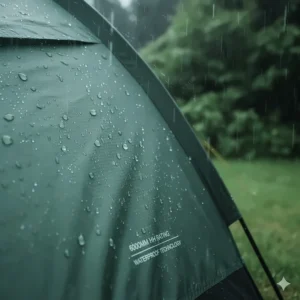
This measurement indicates waterproofing capability—higher numbers mean better protection. For UK conditions, aim for:
- 2000mm HH: Adequate for light rain and summer camping
- 3000mm HH: Handles typical British weather confidently
- 5000mm HH: Expedition-grade protection for extended downpours
The UK government’s guidance on outdoor recreation emphasises proper equipment selection for safe countryside access.
Pole Material
Fibreglass poles offer affordability and adequate performance for casual camping. They’re slightly heavier and less durable than alternatives but represent excellent value.
Aluminium/alloy poles provide superior strength-to-weight ratios and better flex memory. They’re worth the investment for regular campers or those tackling exposed locations.
Inflatable beams eliminate poles entirely, using air chambers for structure. These modern marvels pitch incredibly quickly but command premium pricing.
Ventilation Systems
British weather creates condensation challenges. Look for tents featuring:
- Multiple mesh panels and windows
- Adjustable vents at both ends
- Door canopies providing airflow even during rain
- Breathable inner tent fabrics
Groundsheet Quality
Bathtub-style groundsheets with raised edges prevent water ingress during heavy rain. Check for minimum 3000mm HH ratings on groundsheets, as they endure more pressure than flysheets.
How to Pitch Your Tunnel Tent Correctly
Proper pitching transforms an average tunnel tent into a storm-worthy fortress. Here’s the technique refined through countless expeditions:
Step 1: Site Selection
Choose level ground away from potential hazards. In exposed locations, position the tent with its narrow end facing prevailing winds. This aerodynamic alignment reduces wind loading significantly.
Step 2: Layout and Orientation
Spread the tent flat, ensuring all zips are closed. Many modern tunnel tents feature pre-attached inner tents, simplifying this process considerably.
Step 3: Pole Assembly
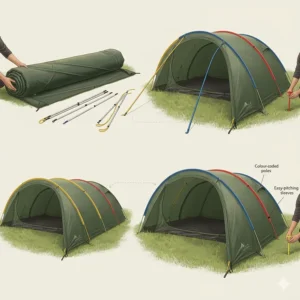
Feed poles through their designated sleeves or clips. Most manufacturers use colour-coding systems—match pole colours to corresponding sleeve markers. Work systematically from one end to the other.
Step 4: Initial Anchoring
Secure the windward end first with robust pegs. This prevents the tent billowing whilst you work. Then tension the opposite end, creating the tunnel shape.
Step 5: Guy Line Adjustment
Tunnel tents demand proper guy line tensioning for optimal performance. Adjust lines until the flysheet sits taut without wrinkles. This step genuinely matters—loose lines allow flapping that stresses seams and disturbs sleep.
Step 6: Final Checks
Walk around the entire structure checking for:
- Taut flysheet without sagging sections
- Properly tensioned guy lines at appropriate angles
- Groundsheet fully pegged preventing draughts
- Porch doors functioning correctly
The Scottish Outdoor Access Code provides excellent guidance on responsible camping practices including proper tent setup.
Tunnel Tent Living Space: Maximising Comfort
Internal Organisation
Smart tunnel tent users exploit the generous headroom for vertical storage. Hanging organisers attached to internal guy points keep essentials accessible whilst preserving floor space. Many tunnel tents feature multiple pockets sewn into the inner tent—use these for torches, phones, and other frequently needed items.
Porch Utilisation
The porch represents your tent’s most versatile area. During wet weather, it becomes a protected cooking zone and muddy boot repository. In fair conditions, simply prop the door open for extended living space. Some campers pack lightweight folding chairs specifically for porch lounging.
Bedroom Layouts
Six-person tunnel tents often feature two separate bedrooms flanking a central living area. This configuration provides genuine privacy—couples can actually enjoy lie-ins whilst children play in the living section. For mixed groups, it eliminates the awkward “who sleeps where” conversations that plague single-room shelters.
Maintaining Your Tunnel Tent: Essential Care Tips
Post-Trip Cleaning
Never pack away wet tents. This fundamental rule prevents mildew and fabric degradation. If weather forces wet packing, erect the tent at home within 48 hours for thorough drying. Use a soft brush to remove dried mud and debris before storage.
Seam Maintenance
Inspect seams annually, resealing any areas showing wear. Quality seam sealers cost £8-£15 and extend tent lifespan significantly. Pay particular attention to high-stress points where poles meet fabric.
Pole Care
Store poles fully assembled to prevent elastic shock cord deterioration. Clean aluminium poles with mild detergent, removing any grit that could scratch pole segments during assembly. Replace damaged sections immediately—continuing use with compromised poles risks complete failure.
Storage Conditions
Store tents loosely in breathable bags rather than compression stuff sacks. Prolonged compression damages waterproof coatings. Keep tents in cool, dry locations away from direct sunlight and potential rodent access.
Tunnel Tent Wind Resistance: Understanding the Science
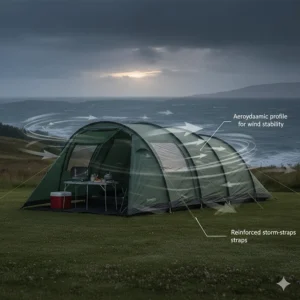
Tunnel tents’ reputation as wind-vulnerable stems from misunderstanding rather than inherent design flaws. When pitched correctly—narrow end into prevailing wind with proper guy line tensioning—tunnel tents actually perform remarkably well.
The key lies in their aerodynamic profile. Wind flows over and around the curved structure rather than hitting flat surfaces that create resistance. Think of it like a cyclist hunched forward versus sitting upright—the streamlined position reduces drag substantially.
However, tunnel tents struggle with swirling, multi-directional winds. Their elongated shape means side gusts catch the broadside, creating significant loading. This vulnerability explains why dome or geodesic tents sometimes excel in exposed mountain locations with unpredictable wind patterns.
For UK camping where wind typically follows predictable patterns, proper siting and pitching render tunnel tents entirely suitable. I’ve weathered Force 8 gales in properly secured tunnel tents without drama, though I wouldn’t recommend testing these limits unnecessarily!
Tunnel Tent Stake Points: Getting It Right
Inadequate staking represents the primary cause of tunnel tent failures. These shelters absolutely require proper ground anchoring—there’s no faking it with rocks or casual pegging.
Stake Selection
Standard wire pegs suffice for most UK campsite soil. However, serious campers carry multiple stake types:
- Rock pegs: For hard, stony ground
- Sand pegs: For beaches and loose soil
- Snow stakes: For winter camping
Stake Placement
Position stakes at 45-degree angles away from the tent, creating optimal holding power. Space stakes evenly along pegging points, avoiding shortcuts that concentrate stress. Each guy line deserves its own properly positioned stake.
Tensioning Technique
Use a mallet for driving stakes—foot pressure rarely achieves adequate depth. Stakes should penetrate at least two-thirds of their length for reliable holding power. When pulling guy lines taut, aim for consistent tension across all points rather than over-tightening individual lines.
The Camping and Caravanning Club offers comprehensive resources on proper camping techniques including advanced staking methods for challenging conditions.
Tunnel Tent Pitched Correctly: Common Mistakes to Avoid
Mistake 1: Inadequate Site Levelling
Even slight slopes create uncomfortable sleeping positions and stress tent seams unevenly. Spend extra minutes finding properly level ground—your back will thank you.
Mistake 2: Ignoring Wind Direction
Pitching with the broadside facing prevailing winds invites trouble. Always position the narrow end windward, even if this means less scenic door views.
Mistake 3: Slack Guy Lines
Loose guy lines allow flysheet movement that abrases fabric and stresses seams. Properly tensioned lines should “ping” when plucked, though avoid over-tensioning that distorts the structure.
Mistake 4: Incomplete Groundsheet Pegging
Every groundsheet peg point exists for good reason. Skipping even a few invites draughts, moisture ingress, and reduced structural stability.
Mistake 5: Rushed Setup
Take time during initial pitching. Once you’ve practised the sequence, subsequent setups become genuinely quick. But rushing your first pitch almost guarantees mistakes requiring corrections.
Large Tunnel Tent Family Options: Space for Everyone
Modern families demand camping comfort approaching home standards. Large tunnel tents deliver remarkably civilised accommodation, transforming outdoor adventures from endurance tests into genuine holidays.
6-8 Person Configurations
Six-person tunnel tents typically feature:
- Two separate bedrooms (2-3 people each)
- Central living area with standing height
- Porch for cooking and gear storage
- Multiple doors for easy access
Eight-person models expand this formula, often incorporating three bedrooms or larger central spaces. The Trail Luxton Inflatable 6 exemplifies this category, offering 600cm x 380cm of total coverage with proper bedroom divisions.
Family-Friendly Features
Look for:
- Dark Zone technology: Reduces morning light penetration by 90%
- Cable access points: Keeps electronics organised
- Sewn-in groundsheets: Eliminates draughts and simplifies setup
- Multiple storage pockets: Keeps family gear organised
Transport Considerations
Large tunnel tents require vehicle transport—packed dimensions typically exceed backpacking capabilities. Most 6-person models weigh 15-20kg with pack dimensions around 70cm x 30cm x 30cm. Ensure your vehicle accommodates these sizes before purchasing.
Tunnel Tent Reviews: What UK Buyers Really Think
Analysing thousands of Amazon.co.uk reviews reveals consistent patterns worth considering:
Positive Themes
Space appreciation tops every review category. Buyers repeatedly express amazement at internal volume, particularly headroom allowing comfortable standing and movement.
Weather resistance earns consistent praise when tents meet or exceed waterproof ratings. UK buyers particularly value this given our climate’s unpredictability.
Value perception varies significantly. Budget models like the Eurohike Cairns 3 receive “exceeds expectations” feedback, whilst premium options like the Berghaus Cheviot 2 justify their pricing through durability and performance.
Common Complaints
Setup complexity frustrates first-time users, though most reviewers note this improves dramatically with practice. Manufacturers could address this through clearer instructions and setup videos.
Weight concerns appear frequently from backpackers purchasing family-oriented models. This highlights the importance of matching tent design to intended use.
Pole quality on budget models draws criticism, with fibreglass poles showing flex and occasional breakage. Buyers should recognise this as the primary cost-cutting area on affordable tents.
Comparison Table: Benefits vs Traditional Alternatives
| Feature | Tunnel Tents | Dome Tents | Cabin Tents |
|---|---|---|---|
| Internal Space | Excellent – Consistent headroom | Good – Sloping sides reduce usable area | Excellent – Vertical walls maximise space |
| Weather Resistance | Good – Requires proper positioning | Excellent – Handles multi-directional wind | Fair – Large flat surfaces catch wind |
| Setup Time | 10-20 minutes | 5-10 minutes | 20-40 minutes |
| Weight (4-person) | 8-12kg typically | 10-14kg typically | 15-25kg typically |
| Wind Performance | Good when pitched correctly | Excellent in all directions | Moderate – Best for sheltered sites |
| Ground Requirements | Soft ground with good pegging | Freestanding – Any surface | Level ground essential |
Price Range & Value Analysis
Understanding tunnel tent pricing helps identify genuine bargains versus overpriced mediocrity:
Budget Tier (£80-£150)
Brands like Eurohike, basic Outsunny models, and entry-level Trail options occupy this space. Expect:
- 2000mm waterproofing (adequate for fair weather)
- Fibreglass poles (functional but flexible)
- Basic features without premium technology
Best for: Occasional campers, festival-goers, or anyone testing whether camping suits them before deeper investment.
Mid-Range (£150-£280)
This sweet spot delivers optimal value. Brands like Vango, mid-tier Trail models, and quality Outsunny options provide:
- 3000mm waterproofing (handles typical UK weather confidently)
- Better pole materials and construction
- Useful features like darkened bedrooms and improved ventilation
Best for: Regular campers seeking reliability without premium pricing, families planning multiple trips annually.
Premium Tier (£280-£500+)
Berghaus, Hilleberg, and advanced Vango models command these prices through:
- 4-5000mm+ waterproofing (expedition-grade)
- Aluminium poles or inflatable technology
- Advanced features like TBS II systems and superior fabrics
Best for: Serious outdoor enthusiasts, wild campers, or anyone camping in challenging conditions regularly.
According to Wikipedia’s comprehensive camping article, the UK outdoor recreation market has grown significantly, with quality equipment investment becoming increasingly mainstream.
FAQ
❓ How waterproof should a tunnel tent be for UK camping?
❓ Can you wild camp with a tunnel tent in England?
❓ How long does it take to pitch a tunnel tent properly?
❓ Are tunnel tents suitable for winter camping in the UK?
❓ How do you prevent condensation in a tunnel tent?
Conclusion: Choosing Your Perfect Tunnel Tent
After testing countless models across Britain’s diverse landscapes, several truths emerge clearly. Tunnel tents genuinely deliver superior space efficiency compared to dome alternatives, making them ideal for families, groups, or anyone valuing comfort. Their weight advantage benefits backpackers and cycle tourists significantly, whilst proper pitching renders them entirely capable in typical UK weather.
The market offers remarkable variety, from the budget-friendly Eurohike Cairns 3 DLX at £80-£110 through to expedition-worthy models like the Berghaus Cheviot 2. Your choice hinges on intended use—festival camping demands different features than wild camping in Scottish highlands.
For most UK campers, mid-range options around £150-£280 deliver optimal value. Models like the Vango Beta 350XL or Trail Easdon 6 provide reliable weather protection, decent longevity, and features making camping genuinely enjoyable rather than merely tolerable.
Remember that proper setup technique matters more than premium pricing. A well-pitched budget tunnel tent outperforms a carelessly erected expensive alternative every time. Invest time learning correct pitching procedures, maintain your equipment properly, and any quality tunnel tent will serve you reliably for years.
The tunnel tent’s brilliant balance of space, weight, and weather protection explains their surging popularity across UK campsites and wild camping spots. Whether you’re planning family holidays, festival weekends, or solo adventures, there’s undoubtedly a tunnel tent perfectly suited to your needs.
✨ Don’t Miss These Exclusive Deals!
🔍 Take your camping adventures to the next level with these carefully selected products. Click on any highlighted item to check current pricing and availability on Amazon.co.uk. These exceptional tunnel tents will help you create authentic outdoor memories your family will treasure for years!
Recommended for You
- 7 Best Dome Tents UK 2026 | Expert Reviews & Buying Guide
- 7 Best 2 Person Backpacking Tents UK 2026
- Best Bell Tent UK 2026: Ultimate Expert Reviews & Guide
Disclaimer: This article contains affiliate links. If you purchase products through these links, we may earn a small commission at no additional cost to you. Prices shown are approximate and may vary.
✨ Found this helpful? Share it with your mates! 💬🤗
