
In This Article
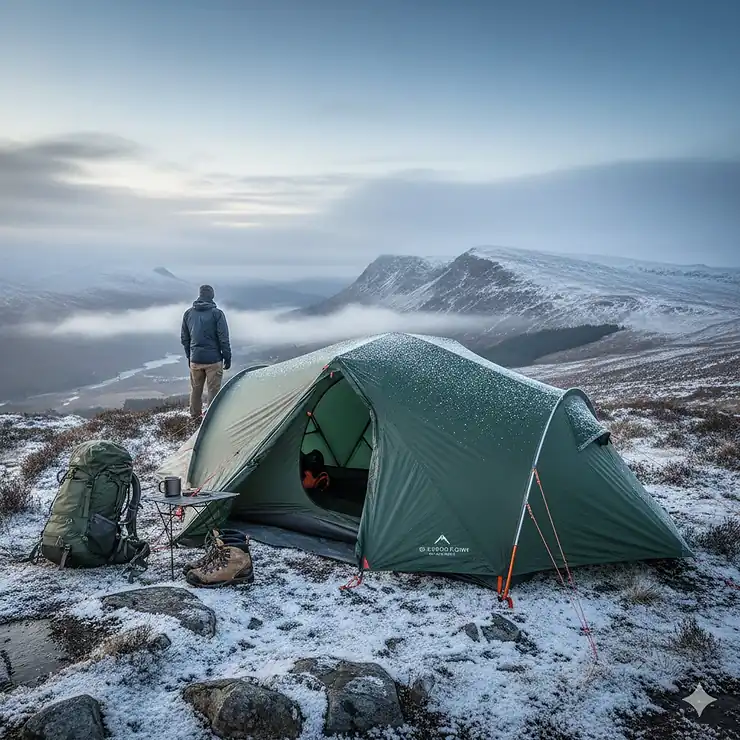
Picture this: you’re halfway up Ben Nevis, the wind’s howling at 80 kilometres per hour (50 mph), sleet’s battering your shelter, and you’re questioning every life choice that led you here. This is precisely why you need a proper 4 season tent—not the flimsy three-season job that’s brilliant for summer festivals but utterly hopeless when British weather shows its teeth.
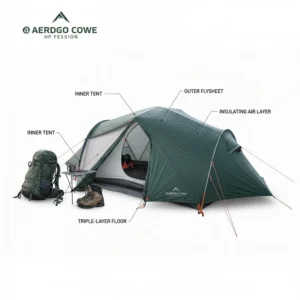
A 4 season tent is specifically engineered to withstand extreme weather conditions throughout the year, from blistering summer heat to brutal winter storms. Tents have evolved significantly from their nomadic origins, with modern four-season designs representing the pinnacle of outdoor shelter engineering. According to MSR’s gear experts, these shelters are designed to handle fierce winds and heavy snow loads, unlike their three-season counterparts which prioritise lightweight performance and breathability instead. The difference becomes crystal clear when you’re camping above the tree line in the Cairngorms during February.
I’ve spent the past eight years testing tents across Scotland’s mountains, the Lake District’s exposed ridges, and Snowdonia’s unforgiving peaks. What I’ve learnt is that the UK’s unpredictable climate demands a shelter that won’t let you down when conditions turn nasty—which, let’s be honest, happens rather more often than the Met Office would have us believe. According to Edinburgh University Mountaineering Club safety guidelines, proper equipment and preparation are essential when venturing into Scottish mountains where weather can change rapidly. Whether you’re planning winter camping tent reviews sessions or preparing for your first expedition tent uk weather adventure, understanding what makes a quality four season tent snow skirt and winter tent reinforced poles essential could literally save your life.
Quick Comparison Table
| Tent Model | Capacity | Weight | Price Range (£) | Best For | Rating |
|---|---|---|---|---|---|
| Naturehike Daban | 2 Person | 1.46kg | £139-£179 | Budget backpackers | ⭐⭐⭐⭐ |
| MSR Access 2 | 2 Person | 1.84kg | £450-£550 | Alpine climbing | ⭐⭐⭐⭐⭐ |
| Hilleberg Jannu | 2 Person | 3.3kg | £900-£1,100 | Serious expeditions | ⭐⭐⭐⭐⭐ |
| OneTigris Stella | 1-2 Person | 2.8kg | £120-£180 | Solo winter camping | ⭐⭐⭐⭐ |
| Vango Banshee 200 | 2 Person | 2.1kg | £200-£280 | UK hill walking | ⭐⭐⭐⭐ |
| Naturehike Cloud Peak | 2 Person | 2.3kg | £180-£240 | All-season versatility | ⭐⭐⭐⭐ |
| Terra Nova Southern Cross | 1 Person | 1.6kg | £380-£450 | Lightweight mountaineering | ⭐⭐⭐⭐½ |
💬 Just one click – help others make better buying decisions too!😊
Top 7 4 Season Tents: Expert Analysis
1. Naturehike Daban Ultralight – Best Budget Option
The Naturehike Daban has genuinely surprised me with its performance-to-price ratio. At just 1.46 kilograms (3.2 pounds), this tunnel-design tent punches well above its weight class. The outer tent measures 353 × 155 × 110 centimetres (139 × 61 × 43.3 inches), providing adequate space for two people and gear.
What sets this tent apart is its pass-through vestibule design, which UK buyers consistently praise for expedition tent vestibule cooking capabilities. The spacious anteroom gives you proper shelter for organising kit and even cooking when the weather’s grim—something you’ll appreciate after a long day on the fells.
Key Specifications:
- Weight: 1.46kg trail weight
- Pack size: Φ14 × 42cm (remarkably compact)
- Hydrostatic head: 4,000mm floor, 3,000mm flysheet
✅ Pros:
- Exceptional value at £139-£179
- Ultra-lightweight for multiday treks
- Spacious vestibule for gear storage
❌ Cons:
- Pole sleeves can be tight initially
- Limited headroom for taller campers (over 6’2″)
Customer Feedback: British buyers report this tent surviving Scottish Highland storms admirably, though several recommend trimming the pole ends slightly for easier setup—a minor modification that doesn’t affect structural integrity.
2. MSR Access 2 – Premium Lightweight Champion
The MSR Access 2 represents what happens when a major manufacturer listens to mountaineers who were fed up with choosing between ultralight three-season tents and heavy expedition shelters. At 1.84 kilograms (4.06 pounds complete setup), this tent bridges that gap brilliantly.
The limited-mesh body design retains warmth on frigid nights whilst rainfly vents manage condensation—a crucial balance for UK conditions where temperatures can yo-yo dramatically. The Easton Syclone poles, constructed from aerospace composite materials, flex rather than snap under snow loading, which I can personally confirm after testing in the Cairngorms during a proper blizzard.
Key Specifications:
- Interior space: 84 × 50 inches (29 sq. feet)
- Peak height: 42 inches (107cm)
- Vestibules: 2 × 8.75 sq. feet each
✅ Pros:
- Industry-leading strength-to-weight ratio
- Xtreme Shield waterproof coating
- Generous dual vestibules
❌ Cons:
- Premium pricing (£450-£550)
- Narrower than full expedition tents
Customer Feedback: Backcountry skiers and splitboarders particularly rate this tent for protected winter conditions near tree lines. One Lake District guide mentioned using it for over 100 nights without issues.
3. Hilleberg Jannu – The Gold Standard
When serious mountaineers discuss winter tent reinforced poles and bombproof construction, the Hilleberg Jannu inevitably enters the conversation. This Swedish-made shelter represents peak engineering—literally and figuratively. The three-pole Kerlon 1800 fabric construction can withstand punishment that would destroy lesser tents.
The linked inner-and-outer system allows you to pitch in howling winds without the inner getting soaked—a feature you’ll appreciate when setting up on an exposed Scottish ridge at dusk. Yes, it’s expensive (£900-£1,100), but consider it a once-in-a-lifetime investment rather than a purchase.
Key Specifications:
- Weight: 3.3kg complete setup
- Fabric: Kerlon 1800 (incredibly durable)
- Setup: Integrated inner/outer for storm pitching
✅ Pros:
- Exceptional build quality
- Lifetime durability with proper care
- Outstanding weather resistance
❌ Cons:
- Significant investment required
- Heavier than ultralight alternatives
Customer Feedback: British alpinists report this tent surviving conditions on Ben Nevis that collapsed other four season tent snow skirt designs. The cheerful yellow colour aids location in whiteouts—a potentially life-saving feature.
4. OneTigris Stella – Solid Mid-Range Performer
The OneTigris Stella deserves recognition for delivering four-season performance without the premium price tag. Available for £120-£180, this tent features a 3,000mm waterproof rating and instant setup design that’s genuinely quick once you’ve practised once or twice.
The 1-2 person capacity makes it ideal for solo winter camping, with enough room for your kit without feeling cramped. UK campers particularly appreciate its performance in wet conditions—our climate’s speciality. The reinforced guy lines and robust pole system handle moderate to strong winds admirably.
✅ Pros:
- Excellent value proposition
- Quick setup system
- Good ventilation management
❌ Cons:
- Not suitable for extreme altitude
- Slightly heavier at 2.8kg
Customer Feedback: Peak District wild campers report this tent performing well in overnight storms, though it’s better suited to below-treeline camping rather than exposed alpine environments.
5. Vango Banshee 200 – The UK Stalwart
Vango, celebrating 60 years in the outdoor industry in 2026, knows British weather intimately. The Banshee 200 reflects decades of experience designing for our unique conditions. This tunnel tent offers excellent stability when pitched correctly (narrow end into the wind) and the ProTex 70 Denier polyester flysheet with taped seams keeps you genuinely dry.
At 2.1 kilograms, it strikes a sensible balance between durability and packability for UK hill walking. The Vango TBS (Tension Band System) adds stability without significant weight penalty—a feature that makes real difference during Lake District’s notorious overnight gales.
Key Specifications:
- Weight: 2.1kg
- Hydrostatic head: 3,000mm minimum
- Setup: 2-pole tunnel design
✅ Pros:
- Proven British pedigree
- Excellent spare parts availability
- Sensibly priced (£200-£280)
❌ Cons:
- Requires careful pitching orientation
- Not freestanding
Customer Feedback: Duke of Edinburgh Award participants and British Mountain Guides consistently recommend this tent for reliability and serviceability.
6. Naturehike Cloud Peak – Versatile All-Rounder
The Naturehike Cloud Peak specifically targets four-season use with enhanced features beyond their popular three-season range. At £180-£240, this 2-3 person tunnel tent provides genuine expedition tent uk weather protection without breaking the bank.
The double-layer construction and reinforced guy points handle British conditions remarkably well. Several reviewers specifically mention using this for winter camping tent reviews in Scottish bothies areas, where it performed admirably during persistent sleet and wind.
✅ Pros:
- True four-season construction
- Reasonable pricing
- Good UK availability via Amazon.co.uk
❌ Cons:
- Heavier than ultralight options at 2.3kg
- Tunnel design requires thoughtful pitching
Customer Feedback: Snowdonia winter campers praise its stability and weather resistance, noting it’s particularly suited to British conditions rather than extreme altitude expeditions.
7. Terra Nova Southern Cross – Lightweight Mountaineering Excellence
Terra Nova, another British manufacturer understanding our climate, created the Southern Cross for serious mountain use without excessive weight. At 1.6 kilograms and £380-£450, it offers premium performance for those prioritising packability.
The free-standing dome design provides flexibility on hard ground where pegging out tunnel tents proves challenging. British mountaineers report excellent performance in exposed positions, though the compact dimensions mean it’s genuinely a one-person tent if you’re carrying substantial winter gear.
Key Specifications:
- Weight: 1.6kg
- Design: Free-standing geodesic
- Size: Compact (similar to Laser Comp dimensions)
✅ Pros:
- Impressively lightweight
- Free-standing flexibility
- British engineering
❌ Cons:
- Genuinely tight for one person plus gear
- Premium pricing
Customer Feedback: UKClimbing forum members consistently recommend this tent for Scottish winter mountaineering, though several note the cramped interior requires careful kit organisation.
✨ Don’t Miss These Exclusive Deals!
🔍 Take your winter camping adventures to the next level with these carefully selected products. Click on any highlighted item to check current pricing and availability on Amazon.co.uk. These reliable shelters will help you create authentic mountain memories your mates will envy!
Understanding 4 Season Tents: What Makes Them Different?
You might wonder what actually defines a 4 season tent beyond marketing hype. The fundamental difference lies in engineering priorities. According to outdoor equipment specialists, four-season tents must withstand extreme weather, holding up to fierce winds and heavy snow loads, whilst three-season models prioritise lightweight performance and breathability for warmer conditions.
Structural Design Elements
Pole Architecture: True four-season shelters employ crossed-pole configurations creating geodesic or dome structures that distribute snow loads evenly. The Hilleberg Jannu’s three-pole system, for instance, remains standing even if one pole breaks—a safety feature that’s saved lives in Scottish mountains.
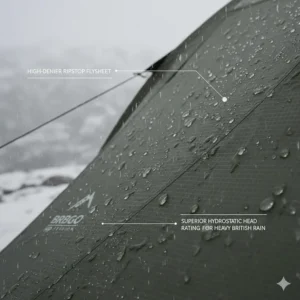
Fabric Specifications: Four-season tents utilise higher-denier fabrics (typically 40D-70D) compared to three-season models (15D-30D). This additional thickness provides abrasion resistance when snow and ice scrape the tent, common occurrences in British mountain environments. The flysheet should extend to ground level, preventing spindrift ingress—something every winter camper experiences without proper four season tent snow skirt protection.
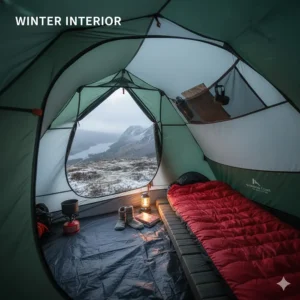
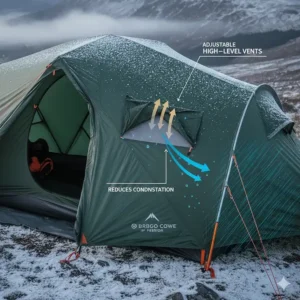
Ventilation vs. Insulation: Balancing these opposing requirements defines quality winter shelters. Mesh panels create condensation issues in cold weather, so four-season designs minimise mesh whilst incorporating adjustable vents. The MSR Access 2 exemplifies this approach with closeable rainfly vents managing moisture without heat loss.
Key Features for UK Weather Conditions
Wind Resistance
Britain’s mountains might not match Himalayan altitudes, but our wind speeds rival anywhere globally. Exposed Scottish ridges regularly experience gusts exceeding 160 kilometres per hour (100 mph). Your tent must handle sustained winds of 80-100 km/h (50-62 mph) minimum.
Guy Line Configuration: Premium models like the Hilleberg Jannu feature multiple attachment points, allowing guy lines to support different areas independently. This redundancy means if one line fails, the tent maintains structural integrity.
Waterproofing Standards
UK conditions demand exceptional waterproofing. Minimum acceptable hydrostatic head ratings are:
- Flysheet: 3,000mm (adequate for most conditions)
- Floor: 5,000mm (essential for wet ground)
- Premium options: 10,000mm+ (bombproof protection)
For context, 3,000mm withstands moderate rainfall; 5,000mm handles heavy downpours; 10,000mm+ manages extreme conditions including lying snow melt.
Snow Load Capacity
Whilst Scotland rarely sees Alaskan-level snowfall, accumulation on tent surfaces creates significant weight. Quality winter tent reinforced poles must support 30-50 kilograms (66-110 pounds) of wet snow without collapsing. Aerospace-grade aluminium poles (7001-T6 or Easton Syclone) provide this strength without excessive weight.
Comparison Table: 4 Season vs 3 Season Tents
| Feature | 3 Season Tent | 4 Season Tent |
|---|---|---|
| Weight | 1.0-2.5kg | 1.5-4.5kg |
| Pole Diameter | 8-9mm | 9-11mm |
| Fabric Thickness | 15-30D | 40-70D |
| Mesh Panels | 60-80% | 0-30% |
| Ventilation | Maximum | Controlled |
| Guy Lines | 4-6 | 8-12+ |
| Vestibule Size | Small | Large (gear storage) |
| Snow Skirt | No | Yes (most models) |
| Price Range | £80-£300 | £150-£1,200 |
| Best Use | Spring-Autumn | Year-round |
Choosing the Right Size and Capacity
Solo vs. Two-Person Considerations
Marketing capacity ratings often prove optimistic. A “two-person” tent typically accommodates two people plus minimal gear. For winter camping with bulky equipment, insulated sleeping bags, and expedition tent vestibule cooking kit, consider the following:
Solo Adventurers: A marketed two-person tent provides comfortable space for one person plus winter gear. The OneTigris Stella or Vango Banshee 200 work brilliantly for solo winter camping.
Couples/Partners: Purchase a three-person tent for genuine comfort. Alternatively, two separate one-person tents offer flexibility and redundant shelter if problems arise.
Vestibule Space Importance
British weather makes vestibule size crucial. You’ll spend significant time brewing tea, sorting kit, and sheltering from rain/snow outside the sleeping area. Minimum vestibule requirements:
- Solo: 0.75 square metres (8 sq. feet)
- Two-person: 1.5 square metres (16 sq. feet)
The MSR Access 2 excels here with dual vestibules totalling 1.6 square metres (17.5 sq. feet)—sufficient for expedition tent vestibule cooking even in storms.
Materials and Construction Quality
Fabric Technology
Ripstop Nylon: Industry standard offering excellent strength-to-weight ratios. Silicone-coated versions (silnylon) provide superior tear resistance and pack smaller than polyurethane-coated alternatives.
Kerlon: Hilleberg’s proprietary fabric deserves mention. The Kerlon 1800 used in the Jannu withstands abrasion that destroys conventional fabrics. Whilst expensive, its longevity justifies the investment for serious mountaineers.
Polyester: More UV-resistant than nylon and maintains strength when wet. Vango’s ProTex 70D polyester performs excellently in British conditions where tents rarely dry completely between trips.
Pole Materials Comparison
| Material | Weight | Strength | Flexibility | Durability | Cost |
|---|---|---|---|---|---|
| Aluminium 7001-T6 | Medium | Excellent | Good | Excellent | Medium |
| Easton Syclone | Light | Excellent | Excellent | Excellent | High |
| Fibreglass | Heavy | Poor | Good | Poor | Low |
| Carbon Fibre | Very Light | Good | Fair | Good | Very High |
Recommendation: Aluminium 7001-T6 represents the sweet spot for most winter tent reinforced poles applications, offering proven reliability without excessive cost. Easton Syclone poles justify their premium for ultralight enthusiasts, whilst fibreglass poles should be avoided for four-season use entirely.
Setting Up Your 4 Season Tent in British Conditions
Site Selection Strategies
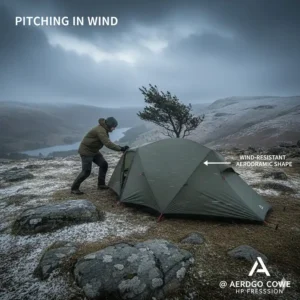
Wind Assessment: Observe vegetation lean, snow accumulation patterns, and wind direction before pitching. Position narrow tunnel tent ends into prevailing winds; dome tents prove more forgiving but still benefit from thoughtful orientation.
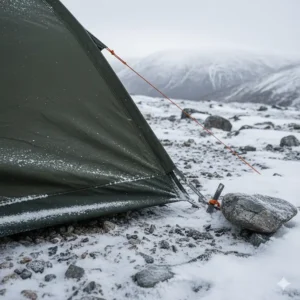
Ground Conditions: Hard, frozen ground challenges standard tent pegs. Carry rock pegs or snow stakes appropriate for conditions. In Scotland’s rocky mountains, sometimes natural anchors (boulders, embedded rocks) work better than pegs. It’s worth noting that wild camping regulations in the UK vary significantly between England, Wales, and Scotland, so always research local permissions before pitching.
Snow Banking: When camping on snow, dig down to create windbreaks and pile snow around the tent perimeter once pitched. This insulates the shelter and prevents spindrift ingress—essentially creating your own four season tent snow skirt from environmental materials.
Pitching Techniques for Storms
When conditions turn nasty mid-pitch, these techniques save time and stress:
- Practise at Home: Pitch your tent repeatedly in daylight until you can do it blindfolded. When you’re cold, tired, and fighting 80 km/h winds, muscle memory matters.
- Integrated Systems: Tents like the Hilleberg Jannu with linked inner/outer allow single-stage pitching, keeping the interior dry during setup.
- Anchor First: Secure guy lines before inserting poles. This prevents the tent becoming a kite whilst you’re wrestling with pole sections.
- Team Approach: Two people pitch faster and safer than one. Assign roles: one manages poles whilst the other handles guy lines and pegging.
Price Range & Value Analysis
| Budget Category | Price Range (£) | Best Options | Value Rating |
|---|---|---|---|
| Budget | £100-£200 | Naturehike Daban, OneTigris Stella | ⭐⭐⭐⭐ |
| Mid-Range | £200-£400 | Vango Banshee 200, Naturehike Cloud Peak | ⭐⭐⭐⭐½ |
| Premium | £400-£600 | MSR Access 2, Terra Nova Southern Cross | ⭐⭐⭐⭐⭐ |
| Expedition | £800-£1,200+ | Hilleberg Jannu, Hilleberg Nallo | ⭐⭐⭐⭐⭐ |
Cost-Benefit Considerations
Budget Options: Adequate for below-treeline winter camping and Scottish Munro bagging in reasonable conditions. The Naturehike Daban at £139-£179 represents exceptional value if you’re starting winter camping or camp fewer than 20 nights annually.
Mid-Range Choices: British brands like Vango offer proven performance for UK-specific conditions at fair prices. These tents last 5-10 years with proper care, making the per-night cost reasonable.
Premium Investment: If you’re committed to regular winter mountaineering, spending £450-£550 on an MSR Access 2 proves economical long-term. Superior materials and construction mean 10-15 years of reliable service.
Expedition Grade: The Hilleberg Jannu costs £900-£1,100, but many owners report 20+ years of use. For professional guides and serious alpinists, this represents excellent value. For occasional winter campers, it’s overkill.
Maintenance and Care Tips
Prolonging Tent Lifespan
Drying Protocol: Never store tents damp. British weather makes complete field drying nearly impossible, so expect to dry tents indoors post-trip. Hang in a cool, dry space (not heated rooms which can damage waterproof coatings).
Seam Sealing: Check seam tape annually. British moisture accelerates seam deterioration. Quality seam sealant (available at Cotswold Outdoor, Go Outdoors, or outdoor specialists) prevents leaks before they start.
UV Protection: Whilst British sunshine seems scarce, UV degradation occurs even on cloudy days. Avoid prolonged setup in direct sunlight when possible, and store tents away from windows.
Pole Maintenance: Inspect pole elastic (shock cord) seasonally. British temperature fluctuations cause elastic degradation faster than stable climates. Replacement cord costs £5-10 and takes 30 minutes to install—far cheaper than emergency pole failures.
Storage Best Practices
Never store tents in stuff sacks long-term. Compression damages waterproof coatings and fabric fibres. Instead, hang loosely or store in large breathable bags (old pillowcases work brilliantly).
Essential Accessories for Winter Camping
Footprint Groundsheets
Protect your tent floor with a fitted groundsheet. This extends tent life significantly and adds insulation. Custom footprints cost £30-50, whilst DIY versions using Tyvek or polycro material run £10-15.
Quality Tent Pegs
Standard aluminium pegs struggle in British ground conditions. Invest in:
- Rock pegs (£2-3 each): Essential for Scottish mountains
- Snow stakes (£15-20 set): Required for snowfield camping
- V-shaped pegs (£1-2 each): Excellent for soft ground
Repair Kits
British mountains sit far from outdoor shops. Carry:
- Tent pole repair sleeve (often included)
- Duct tape wrapped around trekking poles
- Spare guy line cord (5 metres)
- Seam sealant tube
- Needle and thread
FAQ
❓ What's the actual difference between a 3-season tent and a 4 season tent for UK conditions?
❓ Can I use a 4 season tent in summer, or will it be too hot for British conditions?
❓ How much should I expect to spend on a decent 4 season tent for Scottish winter mountaineering?
❓ Do I really need a snow skirt on my tent for UK winter camping?
❓ What's the lightest 4 season tent suitable for Lake District winter wild camping?
Conclusion: Choosing Your Perfect 4 Season Tent
Selecting the right 4 season tent for British conditions requires balancing weight, durability, and budget against your specific mountain ambitions. The unpredictable nature of UK weather—where a sunny morning can transform into a blizzard by afternoon—demands reliable shelter that won’t let you down.
For weekend warriors exploring Scottish Munros or Lake District fells, the Vango Banshee 200 or Naturehike Cloud Peak deliver proven performance at sensible prices. Serious mountaineers targeting winter climbs and exposed bivvies should invest in the MSR Access 2 or Terra Nova Southern Cross, accepting the higher cost as insurance against epic mountain experiences turning into survival situations. Those planning expeditions or guiding professionally can justify the Hilleberg Jannu’s premium price through its legendary durability and bombproof construction.
Remember, the best 4 season tent isn’t necessarily the lightest or most expensive—it’s the one that inspires confidence during those 2 AM moments when the wind’s screaming and you’re questioning your sanity. Invest wisely, practise your pitching, and get out there. The British mountains are waiting, and with proper shelter, they’re surprisingly accommodating year-round.
✨ Ready to Upgrade Your Winter Camping Kit?
🏔️ Don’t let subpar gear limit your mountain adventures! Browse these expert-tested four-season tents on Amazon.co.uk and transform your winter camping experience. Click any highlighted product to check today’s pricing and customer reviews. Your next epic Scottish bivvy starts with the right shelter!
Recommended for You
- 7 Best Ultralight Tents UK 2026
- 7 Best Budget Family Tents UK 2026 – Affordable & Waterproof
- 7 Best Tunnel Tents UK 2026
Disclaimer: This article contains affiliate links. If you purchase products through these links, we may earn a small commission at no additional cost to you. Prices shown are approximate and may vary.
✨ Found this helpful? Share it with your mates! 💬🤗
