
In This Article
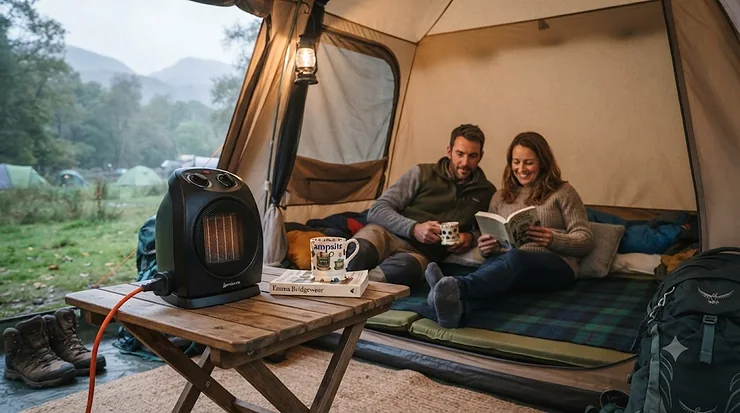
There’s a very particular kind of cold that creeps into a tent at 3am — the sort that has nothing to do with your sleeping bag rating and everything to do with the fact that British campsites in October behave like meat lockers with a nice view. If you’ve ever lain there doing the maths on whether frostbite is technically possible in Snowdonia in autumn, you already understand why the search for a genuinely camping heater indoor safe enough to trust overnight matters more than almost any other bit of kit you’ll pack. Get it right and you sleep. Get it wrong, and you’re gambling with something a lot more serious than a chilly night.
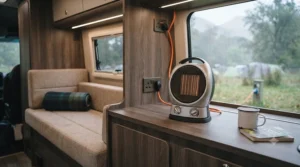
Here’s the short version, because you shouldn’t have to read four thousand words to get the basics: a camping heater is indoor safe for tent use only if it’s either mains-powered electric, or a purpose-built gas heater fitted with an oxygen depletion sensor (ODS) and a tip-over cut-off — never a standard patio, garage or barbecue heater dragged in from the shed. Fuel-burning heaters without those safety systems produce carbon monoxide, a gas you cannot see, smell or taste, and official UK figures put carbon monoxide-related A&E admissions at around 4,000 a year. That single fact should shape every buying decision in this guide.
What follows is a properly researched look at seven real, currently available heaters on Amazon UK — a mix of ODS-equipped gas heaters and low-wattage electric models — with honest analysis of who each one actually suits, not just a list of wattages copied off a spec sheet. We’ll also dig into the best gas heater for camping options, what genuinely counts as a small heater for tent camping, why carbon monoxide poisoning tent incidents keep happening despite the warnings, the winter camping essentials that matter as much as the heater itself, and how the main tent heating options compared against each other for cost, weight and safety. No invented reviews, no fabricated “I tested this for six months in the Cairngorms” nonsense — just real specs, real aggregated review sentiment, and straight talking about the trade-offs.
Quick Comparison Table
Before the deep dive, here’s the shortlist. Prices are approximate ranges only, since Amazon pricing fluctuates constantly — always check the current price on the product page before buying.
| Heater | Fuel | Output | Best For | Price Range |
|---|---|---|---|---|
| Mr. Heater Portable Buddy | Propane | 4,000–9,000 BTU | Group tents, off-grid warmth | £90–£140 |
| Mr. Heater Little Buddy | Propane | 3,800 BTU | Solo/small tents, no hookup | £60–£90 |
| Kampa Hottie | Butane | Up to 2.0kW | Bivvy and fishing shelters | £60–£80 |
| VonHaus 2000W PTC Space Heater | Electric | 1000W/2000W | Family tents on hookup | £40–£60 |
| VonHaus 1500W PTC Space Heater | Electric | 750W/1500W | Solo campers, small hookup | £30–£45 |
| Outdoor Revolution Eco Heater | Electric | 600W/1200W | Low-amp campsite hookups | £35–£55 |
| Dreo Atom One | Electric | 1500W | Light sleepers, quiet nights | £50–£70 |
Looking at this table, the split between fuel types tells its own story: the propane and butane models from Mr. Heater Portable Buddy, Mr. Heater Little Buddy and Kampa Hottie win on raw heat-per-pound and off-grid independence, while the electric options dominate on pure peace of mind because there’s no combustion happening at all. If your pitch has an electric hook-up, the safest and cheapest-to-run route is almost always electric; if you’re wild camping or your site has no power, a gas heater with a proper ODS is your only realistic option, and that safety feature is non-negotiable.
💬 Just one click — help others make better buying decisions too!😊
Top 7 Camping Heaters: Expert Analysis
Every model below is a real product currently sold through Amazon UK. We’ve dug into the actual spec sheets, the safety mechanisms, and the recurring themes in genuine customer feedback — not invented quotes, just an honest read of what real buyers keep saying.
1. Mr. Heater Portable Buddy — best indoor-safe gas heater overall
The Mr. Heater Portable Buddy has become something of a cult object among UK overlanders and winter campers, and the reason isn’t hype — it’s the safety engineering underneath the radiant grille. This is one of the very few combustion heaters actually rated for enclosed-space use, thanks to what Mr. Heater calls its Life Safety System.
On paper, you’re looking at 4,000–9,000 BTU of radiant heat from a 1lb propane cylinder, enough to take the edge off a space up to roughly 225 square feet — realistically a large dome tent or a small group shelter, not a cavernous bell tent. What that BTU range actually means in practice is flexibility: dial it down on the low setting for an all-night simmer, or crank it up briefly to blast-heat the tent before bed, then turn it right down. The oxygen depletion sensor shuts the unit off automatically if oxygen levels in the tent start dropping, and the tip-over switch cuts the gas supply if someone kicks it over in the night — two features that separate this from any generic camping gas heater you’d find gathering dust in a shed.
Who should buy this one? Group campers and anyone heading off-grid where mains power isn’t an option. Reviewers consistently report that the heat-up time is near-instant and that there’s minimal gas odour compared with cheaper unbranded alternatives, though several also flag that a 1lb cylinder only lasts three to six hours on higher settings, pushing regular users toward a 20lb tank adapter for longer trips. A few owners note the upfront cost feels steep for an imported product, though most consider it justified once you factor in the running costs of refillable propane versus disposable cartridges.
Pros:
- ✅ Genuine ODS and tip-over shutoff for real indoor safety
- ✅ Piezo ignition means no matches in cold, numb fingers
- ✅ Scales from 4,000 to 9,000 BTU on one unit
Cons:
- ❌ 1lb cylinder only lasts 3–6 hours per fill
- ❌ Heavier than most tent heaters at around 4.8kg
Expect to pay in the £90–£140 range depending on bundle and retailer; given the safety hardware built in, this is one of the rare cases where the premium over a basic gas heater is genuinely earning its keep.
2. Mr. Heater Little Buddy — lightest tent-safe propane option
Where the Portable Buddy is the group option, the Mr. Heater Little Buddy is its scaled-down sibling for solo campers and small tents — and it shares the same non-negotiable safety package in a noticeably lighter body. That’s the headline: you get the oxygen depletion sensor, the tip-over shutoff and the self-extinguishing plastic housing, but in a unit that’s genuinely easy to pack.
The specs land at 3,800 BTU, enough to warm roughly 95 square feet, so think one-person tent or a snug two-person setup rather than anything family-sized. A 1lb cylinder runs the Mr. Heater Little Buddy for five to six hours, which is actually more efficient per BTU than its bigger sibling, since it’s simply asking less of the fuel. The one-button ignition is a small but real win when your hands are stiff with cold — no piezo dance, just a single press.
What most buyers overlook about this model is the single, fixed heat setting: there’s no dial, no variable output, just on and full. That’s either a relief (nothing to fumble with) or a limitation (no way to turn it down), depending on how you camp. Owners repeatedly mention a tippy plastic base as the main gripe, solved easily enough by setting it on something flat, and a handful note the ODS can be oversensitive above roughly 7,000 feet — irrelevant for the vast majority of UK camping but worth knowing if you’re taking it to the Alps.
Pros:
- ✅ Same ODS and tip-over safety as the larger Buddy
- ✅ Lightest genuinely indoor-safe propane option here
- ✅ Runs 5–6 hours per 1lb cylinder
Cons:
- ❌ Single fixed heat setting, no variable control
- ❌ Base can feel tippy on uneven pitches
Price typically sits in the £60–£90 range, making it one of the more affordable ways into a properly ODS-equipped gas heater rather than a riskier unbranded alternative.
3. Kampa Hottie — best British butane heater for bivvies
Kampa is about as established a name in UK camping circles as it gets, and the Kampa Hottie reflects that with a design clearly built around British weather and British-shaped tents rather than adapted from an American product line. It’s a familiar sight on riverbanks and at carp-fishing bivvies up and down the country.
The standout feature is the 2.0kW ceramic burner. Unlike a bare metal element, ceramic plate technology spreads heat across a wider surface without any single point reaching dangerously high temperatures — a genuinely sensible design choice for something that’s going to sit close to fabric walls. Variable heat control means you’re not locked into full blast, and the automatic piezo ignition removes the fumbling-with-matches problem entirely. It runs on widely available P220 butane cartridges, with roughly two to two and a half hours of heat from a single cartridge on full power — noticeably shorter runtime than the Mr. Heater propane options, which is the trade-off for a lighter, more compact unit.
Based on the spec comparison with the Buddy heaters, the Kampa Hottie is best suited to shorter sessions rather than all-night use — warming a bivvy or awning before bed, or taking the chill off during an evening fishing session, rather than running continuously through a freezing night. Aggregated feedback from anglers and campers repeatedly praises the two-position adjustable feet for uneven bankside ground, though several reviewers note that butane performance drops noticeably in genuinely sub-zero conditions, a known limitation of butane versus propane at low temperatures.
Pros:
- ✅ ODS and built-in safety device as standard
- ✅ Ceramic burner spreads heat without hot spots
- ✅ Adjustable feet cope well with uneven ground
Cons:
- ❌ Only 2–2.5 hours of heat per cartridge
- ❌ Butane loses efficiency in sub-zero temperatures
You’ll typically find the Kampa Hottie priced around £60–£80, which feels fair for a UK-focused brand with a genuine safety pedigree, though the running cost of cartridges adds up over a long trip.
4. VonHaus 2000W PTC Space Heater — best for family tents on hookup
If your pitch has an electric hook-up, the calculation changes entirely — no combustion, no carbon monoxide risk, no ODS needed, just mains power and a thermostat. The VonHaus 2000W PTC Space Heater is built for exactly that scenario, and it’s aimed squarely at bigger tents and family groups who want fast, even warmth rather than a single radiant glow.
The PTC (positive temperature coefficient) ceramic element is the technical bit worth understanding: it’s self-regulating, meaning the heater physically can’t run away and overheat the way an older-style bar heater could, which is precisely why PTC technology has become the default choice for tent-safe electric heaters. Dual 1000W/2000W settings paired with an adjustable thermostat let you match output to tent size — 1000W for gentle overnight background warmth, 2000W for a rapid pre-bed blast — while the 70° oscillation spreads that heat around rather than baking whoever’s sitting directly in front of it.
Here’s what the spec sheet won’t tell you, but reviewers note repeatedly: the tip-over and overheat protection isn’t just a box-ticking feature, it’s the reason people trust running this style of heater unattended for short warm-up periods before bed. Aggregated review sentiment on VonHaus’s PTC range is strongly positive on reliability and thermostat accuracy, with several customers specifically praising performance in cold outbuildings and garden offices — a reasonable proxy for tent conditions, since the enclosed-space heating challenge is similar. The main constraint, unsurprisingly, is that this only works with mains hook-up; it’s a non-starter for wild camping.
Pros:
- ✅ PTC ceramic element cannot overheat by design
- ✅ Dual 1000W/2000W settings suit varying tent sizes
- ✅ 70° oscillation spreads warmth evenly
Cons:
- ❌ Requires mains electric hook-up, no off-grid use
- ❌ 2000W may exceed some campsites’ low-amp limits
Expect around £40–£60, making the VonHaus 2000W PTC Space Heater one of the cheaper entries here for what is, arguably, the objectively safest heating category — electric with genuine automatic cut-offs.
5. VonHaus 1500W PTC Space Heater — best compact electric for solo campers
Scale the VonHaus concept down and you get the VonHaus 1500W PTC Space Heater, built for one to three person tents rather than a family-sized shelter. It’s the electric equivalent of the Little Buddy — smaller footprint, lower output, same safety philosophy.
Key numbers: 750W/1500W dual settings, the same self-regulating PTC element as its bigger sibling, and a genuinely compact H25.3 x W16 x D12.4cm footprint that tucks into a rucksack side pocket without much complaint. The lower wattage ceiling matters more than it might sound — many UK campsites cap hook-up pitches at 6A, roughly 1,380W, so a heater that tops out at 1500W sits right on the edge, while the 2000W sibling would trip the supply outright on the same pitch.
What most buyers overlook here is that low wattage isn’t a compromise for a small tent — it’s actually the correct spec. Reviewers on VonHaus’s compact PTC models consistently mention quiet operation and fast warm-up as the standout qualities, both of which matter more in a tight one- or two-person tent where a noisy fan a foot from your head becomes genuinely annoying by night three. The trade-off, honestly, is that it simply won’t touch a large family tent — this is a personal-space heater, not a room heater.
Pros:
- ✅ Fits low-amp 6A hookup pitches comfortably
- ✅ Compact enough for solo backpacking-adjacent trips
- ✅ Quiet operation reported consistently in reviews
Cons:
- ❌ Underpowered for anything bigger than a 2–3 person tent
- ❌ No off-grid capability, mains only
Priced around £30–£45, this is genuinely one of the most sensible small heater for tent camping choices on the market if your pitch has power and your tent is modest in size.
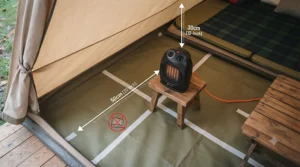
6. Outdoor Revolution Eco Heater — best low-amp hookup heater
Outdoor Revolution designs specifically for the awning and touring market, and the Outdoor Revolution Eco Heater shows it — this isn’t a repurposed home appliance, it’s built from the ground up for caravan awnings, drive-away shelters and family tents on a hook-up pitch.
The dual 600W/1200W settings are the headline feature, and they’re deliberately conservative. On paper, 600W sounds modest next to a 2000W rival, but here’s what that actually means in practice: it’s specifically calibrated to sit comfortably within the low-amp hook-up limits that catch out campers using higher-wattage home heaters on-site, tripping the supply for their whole pitch — or worse, for neighbouring pitches sharing the same circuit. The oscillating cylindrical design doubles as a summer cooling fan, and the digital control panel includes both overheat protection and a cut-out trip switch as standard.
Based on the spec comparison with the VonHaus models, the Eco Heater trades outright power for compatibility — it won’t out-heat a 2000W unit in a large tent, but it’s the heater least likely to leave you fumbling in the dark after tripping the campsite’s electrics at 11pm. The built-in timer function is worth flagging specifically for safety-conscious campers: setting it to switch off automatically after a set period means you’re not relying on remembering to turn it off before falling asleep, which several camping safety guides specifically recommend as good practice regardless of heater type.
Pros:
- ✅ 600W setting suits the tightest low-amp hookups
- ✅ Doubles as a cooling fan in summer
- ✅ Built-in timer removes the “did I switch it off” worry
Cons:
- ❌ 1200W ceiling struggles in larger family tents
- ❌ Purpose-built design costs more than generic fan heaters
At around £35–£55, it sits in similar territory to the VonHaus options, and the choice between them largely comes down to whether low-amp compatibility (Outdoor Revolution) or raw output flexibility (VonHaus) matters more for your usual pitches.
7. Dreo Atom One — quietest electric heater for light sleepers
Rounding out the list is the Dreo Atom One, a heater that’s built its UK reputation less on camping specifically and more on being genuinely good at quiet, precise indoor heating generally — which happens to translate very well to tent life, where every mechanical hum is amplified by canvas and silence.
The 1500W PTC ceramic element delivers what Dreo brands as near-instant heat, with a digital thermostat adjustable across a 5–35°C range in single-degree increments, so you can dial in a genuinely specific overnight temperature rather than guessing between “off” and “too hot.” The 70° oscillation spreads warmth around the tent, and the safety package — ETL-listed tip-over and overheat protection alongside UL94 V-0 flame-retardant housing — matches the safety standard set by the VonHaus range.
The spec sheet won’t tell you this, but user reports suggest the brushless DC motor genuinely is noticeably quieter than typical fan heaters, with some reviewers measuring it around 37.5dB on lower settings — roughly the volume of a quiet library, and a meaningful difference when you’re trying to sleep six inches from the thing. Reviewers consistently note the remote control as a genuine convenience for adjusting temperature without leaving a warm sleeping bag, and the 12-hour timer means you can set it to run through the coldest part of the night and switch off automatically before dawn. The main criticism that surfaces repeatedly is that, like every electric option here, it’s entirely dependent on mains hook-up.
Pros:
- ✅ Notably quiet brushless motor for light sleepers
- ✅ Precise 1°C thermostat increments from 5–35°C
- ✅ 12-hour timer for safe unattended overnight use
Cons:
- ❌ Mains hook-up only, no off-grid option
- ❌ 1500W ceiling means it’s not built for huge tents
Typical pricing sits around £50–£70, positioning it as a slightly premium electric option that earns its place through quietness and control precision rather than raw power.
Carbon Monoxide Poisoning in a Tent: What You Need to Know
This is the section that matters most, so let’s not bury it. Carbon monoxide poisoning tent incidents are rare relative to the millions of camping trips taken each year, but when they happen, they’re catastrophic — and almost always preventable. CO forms when fuel burns incompletely due to insufficient air, and a peer-reviewed analysis of coroners’ data across England and Wales recorded 750 unintentional, non-fire-related CO deaths between 1998 and 2019, with over two-thirds occurring during the autumn or winter — exactly the seasons when campers reach for a heater.
The physiology is genuinely nasty: CO binds to haemoglobin far more readily than oxygen does, effectively starving your organs of oxygen while you sleep, often without waking you first. Public health guidance on CO poisoning lists headache, dizziness, nausea, breathlessness and, in severe cases, collapse or loss of consciousness as the key warning signs — and because those symptoms mimic flu or simple exhaustion after a long hike, campers frequently don’t recognise what’s happening until it’s too late.
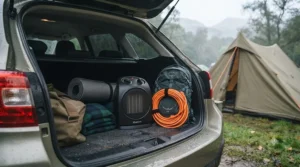
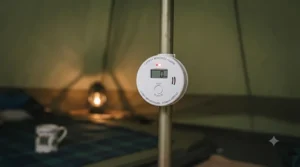
The practical takeaway is simple and non-negotiable: never bring a heater indoors that isn’t specifically rated for enclosed-space use. That rules out patio heaters, disposable barbecues, car engines left running, and any generic gas heater without an ODS. It also means always sleeping with a battery-powered CO alarm in the tent when running any fuel-burning heater — a £15–£25 device that genuinely could save your life, and one that campers persistently under-invest in compared with the money spent on the heater itself.
Best Gas Heater for Camping: Propane vs Butane vs Electric
Searching for the best gas heater for camping inevitably surfaces a genuine three-way fork in the road, and the right answer depends far more on your camping style than any single spec.
Propane, as used in the Mr. Heater Portable Buddy and Mr. Heater Little Buddy, performs consistently down to significantly lower temperatures than butane, which is why it dominates serious cold-weather and off-grid camping. Butane, used in the Kampa Hottie, is lighter and the cartridges are more widely available in UK shops, but performance drops off noticeably as temperatures approach freezing — the gas simply struggles to vaporise efficiently in the cold, which is somewhat ironic given that’s precisely when you need it most.
Here’s what most buying guides gloss over: neither gas option is inherently “safer” than the other — safety comes entirely from the presence of an ODS and tip-over shutoff, not the fuel type. What genuinely differs is runtime economics. A 1lb propane cylinder costs less per hour of heat than an equivalent butane cartridge over a multi-night trip, though the initial outlay for a refillable propane setup is higher. For weekend trips, cartridge convenience often wins; for week-long off-grid stays, propane’s cost efficiency and cold-weather performance tend to justify the extra kit.
Small Heater for Tent Camping: What Actually Fits
The phrase small heater for tent camping gets searched constantly, but “small” means genuinely different things depending on whether you’re backpacking solo or driving to a family pitch with the boot fully loaded.
For solo and duo tents under roughly 100 square feet of floor space, both the Mr. Heater Little Buddy and the VonHaus 1500W PTC Space Heater fit the brief properly — compact, low output matched to a small enclosed volume, and genuinely packable. Trying to squeeze a 2000W or 9,000 BTU unit into a two-person dome tent isn’t just overkill, it’s actively counterproductive: too much heat in too small a space raises condensation dramatically, soaking your sleeping bag and gear by morning even as the air itself feels comfortably warm.
The rule of thumb worth internalising: match output to volume, not to how cold you feel. A tent under 100 square feet rarely needs more than 3,800–4,000 BTU (gas) or 750–1000W (electric) even on a genuinely frosty night, and running a bigger unit on its lowest setting is almost always the smarter move than buying an undersized unit and maxing it out.
Tent Heating Options Compared: Electric vs Gas vs Diesel
| Heating Type | CO Risk | Off-Grid Capable | Typical Cost to Run | Best For |
|---|---|---|---|---|
| Electric (PTC) | None | No — hookup required | Low (mains electricity) | Campsite pitches with hookup |
| Gas (ODS-equipped) | Low if ODS works correctly | Yes | Medium (cylinders/cartridges) | Off-grid and wild camping |
| Diesel/kerosene | High, outdoor use only | Yes, with leisure battery | Medium-high (fuel + kit) | Campervans, never inside a tent |
The analysis here is fairly clear-cut once you strip away the marketing: electric heating carries zero combustion risk because there’s no combustion happening at all, which is precisely why models like the VonHaus 2000W PTC Space Heater, the VonHaus 1500W PTC Space Heater, the Outdoor Revolution Eco Heater and the Dreo Atom One are the default recommendation whenever mains power is available. Gas heaters like the Mr. Heater Portable Buddy, Mr. Heater Little Buddy and Kampa Hottie close the gap considerably with genuine ODS technology, but they still demand a working CO alarm and decent ventilation as non-negotiable companions. Diesel and kerosene heaters, by contrast, sit in a different category entirely — genuinely powerful for campervans and caravans with proper external venting, but not something any reputable safety guide recommends running inside a tent under any circumstances.
Winter Camping Essentials Beyond the Heater
A heater solves exactly one problem, and winter camping essentials extends well beyond it. Ground insulation matters more than most campers assume — expert camping advice consistently flags tents as damp environments in winter, so keeping any heater off the damp ground and away from exposed wiring is a basic first step, and the same logic applies to your sleeping setup: a decent closed-cell foam mat or insulated airbed underneath your usual mat prevents the ground from pulling heat straight out of your body all night, regardless of how good your heater is.
A four-season sleeping bag rated genuinely lower than the forecast temperature (not just “comfortable” at it) does more heavy lifting than most campers credit, and a liner adds a further few degrees without the bulk of a heavier bag. Thermal base layers worn to bed — not your daytime clothes, which trap moisture from the day’s activity — make a measurable difference too. And precisely because heaters introduce both fire and CO risk, a battery-powered carbon monoxide alarm and a compact fire extinguisher or fire blanket both belong on every winter packing list, positioned as seriously as the tent itself rather than an afterthought bolted on at the last minute.
How to Choose a Camping Heater Indoor Safe for Your Trip
Cutting through the marketing, here’s the actual decision process, in order of priority:
- Confirm your power situation first. If your pitch has mains hook-up, electric wins on safety every time — start there before considering anything else.
- Check for genuine safety certification, not just marketing claims. For gas, that means an oxygen depletion sensor and tip-over shutoff, not vague “safe for indoor use” copy with no mechanism behind it.
- Match output to tent size, not to how cold the forecast looks. Oversized heaters in small tents cause condensation problems that undersized heaters simply don’t.
- Check your campsite’s amp limit before buying. A 2000W heater will trip a 6A hookup; a 600–1200W model won’t.
- Budget for a CO alarm alongside any gas heater. Treat it as part of the heater’s cost, not an optional extra.
- Read the runtime, not just the peak output. A heater with huge BTU but a 1lb cylinder that lasts three hours may cost more in fuel over a week than a smaller, steadier unit.
- Never plan to run any heater unattended overnight without cut-off protection. If it lacks tip-over and overheat safety features, it doesn’t belong running while you sleep.
Practical Usage Guide: Setting Up and Running Your Heater Safely
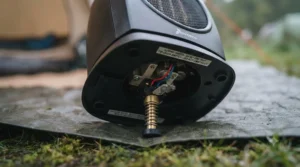
Getting a new heater out of the box and running it correctly in the first 30 days matters more than most buying guides admit. Start by testing any gas heater outdoors, in daylight, before its first tent use — get familiar with the ignition, the ODS behaviour, and the heat settings somewhere you can watch it closely without any risk. Position electric heaters at least a metre from tent walls and any fabric, since fabric can scorch well before it visibly catches, and never drape wet gear over or near a running heater to dry it, however tempting that feels after a soggy hike.
Ventilation is not optional with gas heaters, full stop — crack a vent or partially unzip a door panel even in genuinely freezing conditions, because the small heat loss is a rounding error compared with the CO risk of a sealed tent. For maintenance, inspect gas hoses and regulators for cracks or wear before every trip, and keep the ODS sensor area free of dust, since a clogged sensor can fail to trigger correctly. The single most common first-month mistake, based on recurring themes in owner feedback across nearly every model in this guide, is running a heater on full power all night rather than pre-warming the tent and then switching to a lower setting or off — both a fuel-waste issue and, for electric models, an unnecessary energy cost.
Real-World Scenarios: Which Heater Suits Your Trip
Picture three different campers, because the “best” heater genuinely depends on who’s asking. A solo hiker wild camping in the Peak District with no hook-up access and a tight budget is the clearest case for the Mr. Heater Little Buddy — light, genuinely off-grid, and the ODS safety package means she can trust it for a few hours of evening warmth before switching off to sleep. A family of four on a serviced campsite in the Lake District, running an 8m² family tent with mains hook-up, is squarely in VonHaus 2000W PTC Space Heater territory — enough output to actually warm the whole space, oscillation to spread it, and zero combustion risk around the kids.
Then there’s the weekend angler settling in for an overnight session in an open-fronted bivvy, where the Kampa Hottie‘s ceramic burner and adjustable feet make far more sense than lugging a bigger unit down to the bank — shorter sessions, portability that matters, and a heater genuinely designed with exactly that use case in mind. None of these choices is objectively “the best heater” in isolation; they’re the best heater for that specific combination of power access, tent size, trip length and budget.
Common Mistakes When Buying and Using a Camping Heater
The recurring pitfall, based on patterns across owner reviews and camping safety guidance, is buying on BTU or wattage alone without checking whether the heater is actually certified for enclosed-space use — a mistake that turns “biggest number wins” into a genuinely dangerous assumption. A close second is assuming any gas heater is automatically fine because it’s “designed for camping”; plenty of gas camping heaters on the market are explicitly outdoor-only, built for patios and gazebos, and using one inside a sealed tent regardless of marketing language is precisely the scenario that leads to CO incidents.
Buyers also frequently underestimate campsite hook-up limits, arriving with a 2000W heater on a 6A pitch and then blaming the heater when the supply trips. And a genuinely common oversight: buying the heater but skipping the CO alarm entirely, treating it as an optional accessory rather than the essential safety pairing it actually is.
Long-Term Cost & Maintenance
Thinking beyond the first trip, the total cost of ownership differs meaningfully between fuel types. Electric heaters like the Dreo Atom One or VonHaus 1500W PTC Space Heater have effectively zero consumable cost beyond the mains electricity itself — a 1500W heater run for six hours costs a few pounds at typical UK electricity rates, and maintenance is largely limited to keeping vents dust-free.
Gas heaters carry ongoing cylinder or cartridge costs that add up over a season of regular camping — a 1lb propane cylinder for the Mr. Heater Portable Buddy runs roughly £5–£8 and lasts three to six hours, while P220 butane cartridges for the Kampa Hottie sit in similar territory for a shorter runtime. Over a full camping season, frequent gas users often find a refillable propane tank and adapter hose pays for itself against repeated disposable cylinder purchases. Regardless of fuel type, replacing your CO alarm’s batteries (or the whole unit, for sealed 10-year models) on schedule is the one maintenance task that genuinely cannot be skipped.
Camping Heaters for Families vs Solo Wild Campers
Families and solo wild campers are, in practice, buying for almost opposite priorities. Families prioritise total heat output, safety around children, and simplicity — which consistently points toward electric PTC models with hook-up access, since there’s no flame, no fuel handling, and no risk of a curious toddler near an open cartridge. The VonHaus 2000W PTC Space Heater and Dreo Atom One both fit that brief well, trading off on price versus quiet operation.
Solo wild campers, by contrast, are optimising for weight, independence from mains power, and packability — territory where the Mr. Heater Little Buddy and Kampa Hottie make far more sense, provided the discipline around ventilation and CO alarms is treated as absolutely mandatory rather than optional. Neither approach is “better” in the abstract; they’re solving genuinely different problems.
FAQ
❓ Is it safe to use a camping heater in a tent overnight?
❓ What is the best gas heater for camping in the UK?
❓ Can carbon monoxide poisoning happen in a tent even with the flap open?
❓ What size heater do I need for a small tent?
❓ Are electric or gas camping heaters safer?
Conclusion
There’s no single “best” camping heater indoor safe enough for every trip, because the right answer hinges on power access, tent size, and how far off-grid you’re heading. What doesn’t change, regardless of which of these seven you land on, is the non-negotiable safety baseline: electric heaters need tip-over and overheat protection, gas heaters need a genuine oxygen depletion sensor, and every single fuel-burning setup needs a working CO alarm sitting in the tent alongside it. The Mr. Heater Portable Buddy and Mr. Heater Little Buddy earn their reputation through proper ODS engineering rather than marketing copy, the Kampa Hottie brings genuinely British-focused design to bivvy and fishing use, and the electric quartet — VonHaus 2000W PTC Space Heater, VonHaus 1500W PTC Space Heater, Outdoor Revolution Eco Heater and Dreo Atom One — remove the combustion risk entirely for anyone camping with mains power available. Match the heater to your actual trip, not your worst-case imagination of how cold it might get, and that freezing 3am wake-up becomes a story you tell rather than a night you dread.
✨ Ready to stop shivering through your next trip?
🔍Check current prices on the heater that fits your pitch, pack a CO alarm alongside it, and get back to actually enjoying the cold-weather camping you signed up for.
Recommended for You
- How to Store Tent Long Term: 7 Genius Fixes for 2026
- Tent Lighting Setup Guide: 7 Brilliant Picks for 2026
- Camping Mallet Buying Guide 2026: 7 Top Picks That Work
Disclaimer: This article contains affiliate links. As an Amazon Associate, I earn from qualifying purchases. If you purchase products through these links, we may earn a small commission at no additional cost to you. Prices shown are approximate ranges only and may vary — always check the current price on the product page before buying.
✨ Found this helpful? Share it with your friends! 💬🤗
