
In This Article
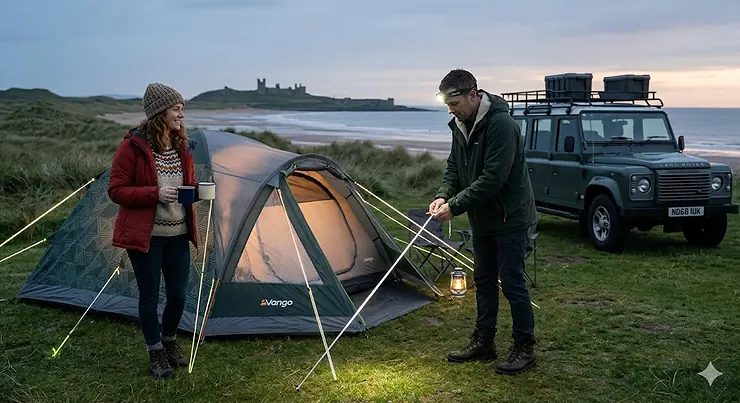
Picture this: it’s 2am at a Lake District campsite, you’ve just finished a rather urgent trip to the toilet block, and you’re navigating back to your tent armed only with a fading head torch and questionable spatial awareness. Then it happens—your foot catches an invisible wire, you perform an impressive forward somersault, and suddenly you’re intimately acquainted with the wet grass whilst your tent neighbour’s dog starts barking. Welcome to the annual tradition of tripping over guy ropes that plagues roughly 1,500 UK campers each year according to the Royal Society for the Prevention of Accidents.
The reflective guy rope isn’t just a fancy camping accessory—it’s the difference between a peaceful midnight wander and an A&E visit that requires explaining to the triage nurse exactly how you managed to face-plant whilst standing still. With British campsites requiring a six-metre gap between tents (thanks to fire safety regulations from the Camping and Caravanning Club), you’re navigating an obstacle course of near-invisible trip wires every time the sun goes down. Standard guy lines become practically invisible in low light, turning your campsite into something resembling a poorly lit steeplechase course.
Here’s the thing most camping blogs won’t tell you: the cheap grey ropes that came with your tent are basically designed to injure you. They blend perfectly with British mud, disappear completely after sunset, and stretch more than an overcooked pasta strand in our perpetual drizzle. Reflective guy lines, by contrast, catch even the faintest torch beam or moonlight and glow like safety beacons, giving you a fighting chance of keeping your dignity intact during those inevitable 3am bathroom runs. For UK campers dealing with short winter days, persistent rain, and campsites that look like military training grounds after dark, upgrading to proper reflective cord isn’t optional—it’s essential survival equipment.
Quick Comparison: Top Reflective Guy Ropes for UK Conditions
| Product | Diameter | Length | Load Capacity | Price Range (£) | Best For |
|---|---|---|---|---|---|
| BROTREE Heavy Duty | 4mm | 30m | 300kg | £11-14 | Budget-conscious campers needing bulk length |
| nuosen 6-Pack | 4mm | 4m each | 200kg | £8-12 | Quick tent setup with pre-cut lengths |
| RainbowStone Enhanced | 4mm | 4m each (6-pack) | 250kg | £10-15 | Families wanting luminescent tensioners |
| Mountain Warehouse Reflective | 3mm | 12m total | 180kg | £6-10 | Festival-goers on tight budgets |
| HIKEMAN Professional | 3mm | 50m | 194kg | £13-18 | Serious campers needing maximum length |
| ESW LEISURE Paracord | 4mm | 2.4m each (4-pack) | 220kg | £9-13 | Lightweight backpackers prioritising pack weight |
| Dadabig 8-Pack | 4mm | 4m each | 250kg | £12-16 | Large families with multiple tents |
From the comparison above, the BROTREE Heavy Duty offers exceptional value for money if you’re planning to replace all your guy lines—30 metres gives you enough cord to outfit several tents with some left over for repairs. However, if you’re camping in Scotland during winter where daylight barely reaches eight hours, the RainbowStone Enhanced with its luminescent tensioners provides that extra visibility margin when you’re battling 4pm sunsets. Budget buyers should note that the Mountain Warehouse option sacrifices some load capacity for its lower price point—acceptable for summer festival camping in gentle weather, but questionable when the Met Office is forecasting gale-force winds across Snowdonia.
💬 Just one click — help others make better buying decisions too!😊
Top 7 Reflective Guy Ropes: Expert Analysis for British Campers
1. BROTREE Tent Guy Rope — The Workhorse Champion
The BROTREE Tent Guy Rope delivers 30 metres of 4mm reflective cord wound on a convenient plastic spool, making it the go-to choice for UK campers who’d rather buy once and be done with it. This isn’t delicate ultralight gear—it’s proper bombproof cord with a 300kg breaking strength that laughs at British weather whilst the woven reflective threads catch torch light from surprising distances.
What makes this particularly clever for UK conditions is the army green colourway that actually shows up well against our predominantly brown/grey campsite landscapes whilst the reflective element handles the night-time visibility. The 300kg tensile strength means you’re not re-tensioning every morning after the tent fabric has soaked up its weight in overnight condensation—a perpetual problem with stretchy inferior ropes in our damp climate. Each spool includes six aluminium tensioners with a bent-runner design that grips properly even when the cord gets wet, unlike those useless plastic triangular adjusters that slip the moment moisture appears.
UK campers consistently report this rope performs admirably in persistent rain without developing that horrible stiffness that cheaper nylon guy lines get when waterlogged. The polyester outer sheath resists UV degradation and mildew—both critical considerations when your camping season runs from March through October and “putting things away dry” remains a delightfully theoretical concept. At around £11-14 for 30 metres plus tensioners, you’re getting enough cord to completely re-guy a family tent with substantial lengths left over for improvised repairs, clotheslines, or emergency dog leads.
Pros:
- Exceptional length-to-price ratio ideal for outfitting multiple tents
- 300kg load capacity handles everything British weather throws at it
- Spool storage prevents the tangled nightmare of loose rope storage
Cons:
- 4mm diameter slightly bulkier than ultralight options for backpackers
- Reflective element adequate but not as bright as premium competitors
Best for: Car campers, families with multiple tents, or anyone sensible enough to buy guy rope in bulk rather than replacing individual lines. Price range: around £11-14 depending on length variant.
2. nuosen Guy Ropes 6-Pack — The Ready-to-Deploy Solution
The nuosen 6-Pack takes a different approach—rather than providing bulk cord, you get six pre-cut 4-metre lengths, each pre-fitted with an aluminium tensioner and ready to deploy straight from the package. For UK campers who’d rather be setting up their tent than measuring and cutting cord in horizontal rain, this convenience factor alone justifies the purchase.
Each 4mm line incorporates dual reflective wires (not just single strand like budget competitors), providing genuinely impressive visibility even under weak moonlight. The 200kg breaking strength comfortably exceeds the requirements for standard family tents, though weekend warriors heading to exposed Scottish coastal sites might want something beefier. What’s particularly well-suited for British conditions is the fluorescent element that remains visible during our famously grey daytime conditions—you can actually spot these guy lines at midday, which matters more than you’d think when you’re trying to avoid tripping whilst carrying a cool box full of Tesco meal deals.
The included carry pouch prevents the inevitable tangle that afflicts loose guy ropes in your camping box, though being realistic, most of us will lose that pouch approximately three minutes after arriving at the campsite. UK customer reviews specifically mention these performing well through Lake District downpours and Welsh wind, with the tensioners maintaining grip even when soaked. The 4-metre pre-cut length works perfectly for standard family tents but might run slightly short for larger bell tents or when you’re trying to guy out to distant anchor points on hard ground.
Pros:
- Dual reflective wires provide superior night visibility
- Pre-cut lengths eliminate measuring faff in poor weather
- Fluorescent colouring visible during grey British daytime
Cons:
- Fixed 4m length lacks versatility for different tent sizes
- Slightly pricier per metre than buying bulk cord
Best for: Weekend campers who value convenience, families wanting hassle-free setup, or anyone who loses patience with measuring tape. Price range: around £8-12 for the six-pack.
3. RainbowStone Enhanced — The Luminescent Upgrade
The RainbowStone Enhanced distinguishes itself through luminescent tensioners that genuinely glow in the dark after absorbing daylight—not just reflective, but actually phosphorescent. For UK campers contending with 4pm winter sunsets or heavily wooded campsites where torch light barely penetrates, this additional visibility layer transforms night-time navigation from hazardous to merely mildly treacherous.
The 1.5mm reflective strips woven into the 4mm cord provide noticeably brighter reflection than standard 1.0mm options, catching even weak LED torch beams from considerable distances. What’s particularly valuable for British conditions is how well these perform in persistent drizzle—the water droplets on the cord actually enhance the reflective effect rather than diminishing it, creating a kind of wet-weather advantage. Each 4-metre length comes pre-fitted with those clever luminescent tensioners that charge up during the day and glow for several hours after sunset, providing orientation markers even when you’ve forgotten your torch.
UK reviewers specifically mention these being “much better seeing than the grey ones that came with my awning”—high praise from the traditionally understated British camping community. The golden yellow colourway offers excellent daytime visibility against mud and grass whilst the reflective element handles night-time duties. The package includes six lengths totalling 24 metres, which adequately serves most family tents though larger canvas bell tents might need supplementary lines. The combination of regular reflective elements plus luminescent tensioners essentially gives you two visibility systems, which matters considerably when navigating campsites during Scotland’s famously dim summer evenings or winter’s perpetual twilight.
Pros:
- Luminescent tensioners glow independently of external light sources
- Enhanced 1.5mm reflective strips brighter than standard options
- Performs exceptionally well in wet conditions where reflection amplifies
Cons:
- Golden yellow colour polarises opinion (visible but not everyone’s aesthetic)
- Luminescent effect fades over time requiring periodic sunlight recharging
Best for: Winter campers dealing with extended darkness, families with young children who need extra visibility, or Scottish Highlands campers where daylight remains theoretical. Price range: around £10-15.
4. Mountain Warehouse Reflective Guy Rope — The Festival Budget Pick
The Mountain Warehouse Reflective Guy Rope represents the absolute minimum viable reflective cord for UK camping—three 3mm diameter ropes, each 3 metres long, providing 12 metres total for somewhere in the £6-10 range depending on sales. This is genuinely entry-level kit, but entry-level done reasonably well by a brand with actual British outdoor credentials rather than random Amazon third-party sellers.
The 3mm diameter feels noticeably thinner than 4mm alternatives, which matters when you’re trying to grip wet cord with cold fingers during a Yorkshire Dales setup in horizontal rain. The 180kg load capacity technically suffices for small family tents in reasonable conditions, though anyone venturing to exposed coastal sites or Scottish mountains should probably invest in something more substantial. What it does offer is lightweight portability—the entire 12-metre bundle weighs barely anything, making this ideal for festival campers who’ll be carrying everything from the car park through muddy fields.
The reflective flecking woven into the nylon catches torch light adequately if not spectacularly, though several UK reviewers mention “expected a little more having seen other examples.” Translation: it works but don’t expect searchlight-level visibility. For weekend festival camping at established sites like Glastonbury or Reading where you’re unlikely to face genuinely hostile weather, this represents acceptable value. For serious Lake District or Scottish camping where your tent might be the only thing between you and hypothermia, spend more. The Mountain Warehouse brand offers the reassurance of being able to return faulty items to UK high street shops rather than navigating Amazon’s returns labyrinth, which has value when quality control occasionally falters.
Pros:
- Genuine budget option from established UK outdoor brand
- Lightweight suitable for festivals and casual camping
- High street returns available if quality issues arise
Cons:
- 3mm diameter offers less grip and durability than 4mm
- 180kg capacity marginal for exposed locations or large tents
- Reflective element adequate but unimpressive
Best for: Festival campers, budget-conscious beginners, or casual fair-weather campers who won’t stress-test the equipment. Price range: around £6-10.
5. HIKEMAN Professional 50m Spool — The Serious Camper’s Choice
The HIKEMAN Professional delivers a full 50 metres of 3mm reflective cord wound on a practical plastic spool, targeting campers who view guy rope as essential safety equipment rather than optional tent accessories. The 194kg breaking strength from the 3mm nylon core provides substantial holding power whilst keeping pack weight reasonable—important consideration for UK backpackers tackling multi-day routes across Pennine Way or West Highland Way.
What separates this from cheaper alternatives is the triple-layer construction: inner nylon core for strength, polyester outer sheath for abrasion resistance, and integrated reflective thread that actually works rather than being decorative theatre. The cord resists moisture, UV degradation, and mildew—the unholy trinity that destroys camping equipment in British storage sheds. Ten aluminium tensioners come included, featuring that bent anodized design that grips properly even when wet, eliminating the midnight re-tensioning sessions that plague campers using inferior adjustment systems.
UK customers specifically mention using this for “tarp ridge-line for camping tarp tent”—revealing its popularity among tarp-camping enthusiasts who need reliable cordage for various configurations. The 50-metre length provides enough cord for multiple complex setups or enough spare line that you’re never precious about cutting off sections for repairs or auxiliary purposes. At around £13-18, you’re paying premium pricing, but cost-per-metre remains competitive with shorter lengths whilst the included tensioners add genuine value. The army green colourway suits stealth camping scenarios whilst the reflective element ensures you won’t accidentally garrot yourself on your own guy lines during nocturnal wanderings.
Pros:
- Premium 50m length suits multiple setups or group camping
- Triple-layer construction genuinely weather-resistant
- Substantial 194kg strength from relatively thin 3mm cord
Cons:
- 3mm diameter provides less tactile grip than 4mm in wet conditions
- Premium price point though cost-per-metre competitive
Best for: Serious backpackers, tarp camping enthusiasts, or groups needing to outfit multiple tents from one spool. Price range: around £13-18.
6. ESW LEISURE Paracord Guy Rope — The Lightweight Specialist
The ESW LEISURE Paracord comes as a four-pack of 2.4-metre lengths in fluorescent green, specifically targeting ultralight backpackers and fastpackers who measure tent weight in grams rather than kilograms. The 4mm diameter paracord construction offers 220kg breaking strength whilst remaining genuinely packable—this is cord you can stuff in a jacket pocket without noticing the weight.
The fluorescent green colour provides exceptional daytime visibility across British landscapes, standing out dramatically against mud, grass, and heather whilst the integrated reflective threads handle night-time duties. For UK conditions where you’re frequently setting up in less-than-ideal light (Scottish glens at 4pm in winter, or Lake District forests where tree canopy blocks what little sun exists), that aggressive visibility proves invaluable. The 2.4-metre pre-cut length works perfectly for lightweight one-person or two-person backpacking tents where you’re not staking out elaborate guy line configurations.
What’s less ideal is the fixed length limiting versatility—fine for your ultralight Hilleberg but potentially too short for larger tents or when ground conditions force you to stake further from the tent. UK backpackers report these performing admirably across Scottish Highlands and Welsh mountain routes, with the paracord construction maintaining flexibility even when frozen or soaked. The four-pack configuration suits solo or duo camping perfectly but falls short for family setups requiring eight or more guy lines. At around £9-13 for four lengths, you’re paying slightly more per metre than bulk options, trading economy for convenience and weight savings.
Pros:
- Genuinely lightweight without sacrificing 220kg strength
- Fluorescent green exceptionally visible across UK landscapes
- 2.4m lengths perfect for backpacking tent configurations
Cons:
- Fixed short lengths limit use for larger tents
- Four-pack inadequate for family camping setups
Best for: Solo backpackers, lightweight camping enthusiasts, or fastpackers prioritising pack weight over bulk quantity. Price range: around £9-13.
7. Dadabig 8-Pack — The Family Camping Solution
The Dadabig 8-Pack delivers eight 4-metre lengths of 4mm reflective cord, each pre-fitted with aluminium tensioners—specifically designed for families running multiple tents or larger family tents requiring comprehensive guy line systems. The 250kg breaking strength provides reassuring overkill for standard camping whilst the eight-line quantity handles most family tent configurations plus spare capacity for auxiliary guy points.
The green reflective cord incorporates proper reflective threading rather than simply being fluorescent, ensuring genuine night-time visibility rather than relying on daytime colour alone. For UK family camping where you’re typically dealing with children who treat guy ropes as impromptu skipping ropes during daylight and trip hazards after dark, that reflective element becomes essential safety equipment. The pre-fitted aluminium tensioners eliminate setup faff—particularly valuable when you’re trying to pitch whilst simultaneously preventing your youngest from eating tent pegs.
What’s particularly suited to British family camping is the 4-metre length providing enough reach to accommodate various ground conditions without excessive waste. When you’re camping on those rock-hard summer campsites where pegs barely penetrate, having that extra length to reach softer ground or alternative anchor points makes the difference between a stable tent and a midnight collapse. UK reviewers mention these being “ideal for outdoor camping hiking awning tents”—the kind of multi-purpose camping families actually do rather than Instagram-perfect wilderness scenarios.
The eight-pack quantity slightly exceeds most single tent requirements, providing welcome redundancy when that one guy line inevitably gets misplaced or damaged. At around £12-16, you’re paying more than budget four-packs but gaining crucial extra lines and peace of mind that you won’t be fashioning emergency guy ropes from shoelaces at midnight. The pre-fitted tensioners add genuine convenience value, though as with all pre-assembled options, you’re locked into 4-metre lengths without customisation flexibility.
Pros:
- Eight lines provide complete coverage for family tents plus spares
- 250kg strength handles British weather with confidence
- Pre-fitted tensioners eliminate setup complexity
Cons:
- Fixed 4m lengths lack versatility for different applications
- Slight premium over bulk cord though convenience justifies cost
Best for: Families camping with multiple tents, large family tent owners, or groups wanting comprehensive guy line systems without measurement hassle. Price range: around £12-16.
Understanding the Science Behind Trip Hazard Prevention
Here’s something the camping equipment industry doesn’t advertise loudly: the majority of campsite injuries in the UK stem not from dramatic wilderness survival scenarios but from prosaic trips over guy ropes. According to the Royal Society for the Prevention of Accidents, approximately 1,500 UK campers annually end up in emergency departments after discovering guy ropes the hard way—face first. These aren’t dramatic mountaineering accidents requiring helicopter rescue; they’re embarrassing tumbles that happen thirty seconds from your own tent when you’ve popped out for a midnight wee.
The physics of why standard guy ropes become invisible after dark is straightforward: they’re deliberately low-contrast to avoid visual clutter during daylight, meaning they blend perfectly with night-time darkness. British campsites compound this problem spectacularly. Our perpetual cloud cover means moonlight remains theoretical rather than practical, whilst campsite lighting typically consists of one flickering bulb near the toilet block and someone’s solar garden light that stopped charging properly in 2019. Navigation relies on head torches with dying batteries, creating narrow beams that miss guy ropes positioned at ankle height.
Reflective guy rope works through retroreflection—microscopic glass beads or prismatic structures woven into the cord that bounce light directly back toward its source. When your torch beam (or even distant car headlights) hits reflective guy lines, they glow like luminous safety markers, creating visible trip warnings from surprising distances. The effectiveness depends on the density and quality of reflective material used. Budget options might incorporate a single thin reflective thread that provides marginal improvement, whilst premium choices weave multiple strands of high-grade reflective material throughout the cord, creating genuinely bright visibility. Understanding basic camping safety principles helps put these trip hazards in context—simple precautions prevent the majority of outdoor accidents.
For UK camping conditions where you’re contending with persistent drizzle, the wet-weather performance of reflective elements becomes critical. Quality reflective materials actually enhance visibility when wet—water droplets on the surface amplify the retroreflective effect, making soaked guy lines paradoxically more visible than dry ones. Cheaper alternatives use reflective treatments that deteriorate rapidly when exposed to moisture, meaning your safety equipment loses effectiveness precisely when British weather makes it most necessary. The practical difference manifests during those classic Lake District evenings where everything’s soaked, visibility barely extends beyond your nose, and avoiding face-plants whilst carrying toilet roll becomes a genuine navigation challenge.
The Hidden Cost of Cheap Guy Ropes
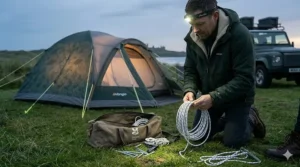
Beyond the obvious trip hazard risk, inferior guy ropes extract hidden costs that compound over time. Standard non-reflective cord requires supplementary safety measures—tying bright ribbons to lines, placing solar lights near pegs, or simply accepting that someone will definitely trip and hoping it’s not you. These workarounds add setup time, create additional items to transport and lose, and ultimately prove less effective than simply investing in proper reflective cord from the outset.
The stretching problem with cheap guy lines particularly plagues UK campers dealing with persistent moisture. Cotton and inferior nylon ropes absorb water, becoming heavier and stretchier whilst wet—precisely when British weather demands maximum tension to shed rainwater. This creates the miserable cycle of re-tensioning guy lines every few hours, stumbling around in darkness to adjust slack lines whilst rain drips down your neck. Quality reflective guy rope using polyester or premium nylon maintains tension even when waterlogged, eliminating this tedious maintenance ritual.
How to Choose Reflective Guy Lines for British Conditions
1. Diameter Matters More Than Marketing Claims
Guy rope diameter directly impacts durability, grip, and weather performance. The UK camping market primarily offers 3mm, 4mm, and occasionally 5mm or 6mm options, each suited to different scenarios. For lightweight solo backpacking across Scottish Highlands or Welsh mountains, 3mm cord provides adequate 150-200kg strength whilst minimising pack weight. Weekend car camping with family tents demands 4mm diameter offering 200-300kg capacity and better grip when handling wet cord with cold fingers during typical British setup conditions.
That 1mm diameter difference proves more significant than specifications suggest. Try gripping wet 3mm cord whilst wearing gloves in February Lake District drizzle, then compare with 4mm—the latter provides substantially better purchase when your hands are numb and coordination questionable. Diameter also affects knot security and tensioner compatibility. Aluminium line-locks designed for 4mm cord can slip on 3mm lines when wet, whilst 3mm tensioners grip inadequately on 4mm cord, creating mechanical incompatibility frustrations discovered at precisely the wrong moment.
2. Breaking Strength: Overkill Is Exactly Right
Manufacturers advertise breaking strengths ranging from 150kg to 300kg+, prompting rational questions about necessity—your tent weighs perhaps 5kg, so why need cord rated to 300kg? British weather answers that question emphatically. When horizontal rain combines with gale-force winds battering exposed campsites, guy lines experience dynamic loading far exceeding the tent’s static weight. Wind creates oscillating forces that stress fibres repeatedly, whilst moisture reduces effective strength by 10-20% depending on material.
The practical guideline for UK conditions: multiply your tent’s weight by 20 to determine minimum breaking strength per guy line. A 10kg family tent requires lines rated minimum 200kg, providing safety margin when weather deteriorates from “bit breezy” to “horizontal rain that removes facial features.” Coastal camping in Scotland or Cornwall where wind consistently exceeds forecast predictions demands even higher ratings—300kg capacity provides confidence rather than concerning whether your shelter will still exist come morning.
3. Material Selection for Wet Weather Performance
British camping means wet camping—there’s no avoiding moisture exposure spanning months rather than isolated incidents. Guy rope material selection determines whether your equipment survives or deteriorates into useless soggy string. Natural fibres (cotton, manila) absorb water enthusiastically, becoming heavy, stretchy, and prone to mildew in our damp climate. These belong in historical camping museums, not modern British campsites.
Synthetic options divide into nylon and polyester, each with distinct characteristics. Nylon offers exceptional strength-to-weight ratios and remains the ultralight backpacker’s choice, though it stretches approximately 10-15% when wet—problematic for maintaining tent tension through persistent British drizzle. Polyester stretches roughly half as much as nylon when soaked, maintaining better tension consistency through multi-day rain exposure. For car camping where weight matters less than reliable performance, polyester-core guy lines with nylon sheaths provide ideal UK compromise—polyester minimises stretch whilst nylon sheath offers abrasion resistance.
The reflective element material equally impacts longevity. Quality reflective guy lines use Scotchlite or equivalent high-grade retroreflective materials woven throughout the cord rather than applied as surface treatments. Surface treatments deteriorate rapidly under UV exposure and abrasion, losing effectiveness within one season. Integrated reflective threads maintain visibility for years even with intensive use, justifying higher initial cost through extended service life.
4. Colour Psychology and Practical Visibility
The reflective element handles night-time visibility, but daytime colour dramatically affects trip hazard prevention during those crucial twilight periods and overcast days where reflection hasn’t activated but visibility remains poor. Fluorescent colours (neon green, orange, yellow) stand out dramatically across British landscapes dominated by browns, greens, and greys. These aggressive colours trigger psychological alertness—your brain subconsciously registers “hazard” and adjusts navigation accordingly.
Conservative colour choices (black, grey, army green) appeal aesthetically but blend dangerously with campsite environments during marginal light conditions—precisely when most trips occur. That awkward period between sunset and full darkness where reflective elements haven’t activated yet standard visibility falters claims more victims than midnight hours when everyone moves cautiously. For family camping where children charge around obliviously, fluorescent guy lines provide essential passive safety—they literally cannot miss seeing bright orange ropes even whilst being distracted.
5. Pre-Cut Convenience vs Bulk Flexibility
The market offers two distinct approaches: pre-cut lengths (typically 2-4 metres) with fitted tensioners, or bulk spools (20-50 metres) requiring DIY cutting and tensioner attachment. Pre-cut options eliminate measurement and assembly faff, particularly valuable when setting up during British weather that transforms simple tasks into endurance tests. Grab a pre-cut set, clip on tensioners, deploy—you’re done in minutes rather than wrestling with cold cord and slippery knots.
Bulk spools provide flexibility and better cost-per-metre economics. Purchase 30-50 metres once and custom-cut lengths matching your specific tent configuration, terrain requirements, or multiple tent setups. This approach suits experienced campers confident with knots and tensioner attachment, or those outfitting several tents from one purchase. For families rotating between different camping scenarios—short festival lines one weekend, extended mountain tent guys the next—bulk cord adapts accordingly.
The practical recommendation for most UK campers: buy both. Acquire a pre-cut set for your primary tent providing instant deployment capability, then supplement with a 30-metre spool for custom lengths, repairs, and auxiliary applications. This hybrid approach costs perhaps £20-25 total whilst providing comprehensive coverage for varied camping scenarios and inevitable field repairs when something inevitably goes wrong at the least convenient moment.
Real-World British Camping Scenarios: Which Guy Rope Suits You?
The Weekend Festival Camper (Reading, Glastonbury, Download)
You’re hauling everything from a distant car park through ankle-deep mud whilst balancing beer crates and questionable festival fashion choices. Your tent stays pitched for three days maximum, faces minimal weather extremes (usually), and shares space with thousands of similarly optimistic campers. Weight and bulk matter because you’re physically carrying everything; cost matters because festivals already devastate your wallet; and visibility matters because navigating a sea of identical tents at 3am whilst somewhat refreshed tests even sober navigation.
Ideal choice: Mountain Warehouse Reflective Guy Rope or ESW LEISURE Paracord. The lightweight profiles won’t add meaningful bulk to your already overstuffed rucksack, the fluorescent colours help locate your tent amongst the festival masses, and the modest price points won’t cause financial guilt on top of your £250 ticket cost. The reflective element prevents trips during those infamous festival midnight wanderings between stages and campsite. You’re not facing genuine wilderness conditions—you’re facing crowded fields with marginal toilet facilities and overpriced burgers.
The Family Car Campers (Lake District, New Forest, Cornwall)
You’ve got a substantial family tent, possibly supplementary children’s pop-up tents, and enough camping equipment to stock a small outdoor shop. You arrive by car, setup takes an hour including negotiating with children who insist on “helping,” and you’re staying 4-7 days potentially facing whatever British weather decides to throw at you. Weight becomes irrelevant because the car carries everything; quantity matters because you need comprehensive guy line coverage; and durability matters because you’re genuinely exposed to weather for extended periods.
Ideal choice: BROTREE Heavy Duty or Dadabig 8-Pack. The BROTREE’s 30-metre spool provides enough cord to properly guy every attachment point on your family tent plus outfit children’s tents with spare capacity for clotheslines and random field repairs. The 300kg strength handles British weather confidently whilst the bulk spool eliminates concerns about running short. Alternatively, the Dadabig 8-pack provides comprehensive pre-cut coverage for family tents without measurement hassle—grab, clip, deploy whilst simultaneously preventing your youngest from inserting tent pegs into inappropriate places.
The Solo Backpacker (Pennine Way, West Highland Way, Coast to Coast)
Every gram matters when you’re carrying 15kg across 30 kilometres daily. Your tent weighs under 2kg total, pitches in minutes, and needs to survive whatever Scottish or Welsh weather manifests. You’re wild camping or using basic campsites, carrying everything on your back, and probably eating reconstituted meals that vaguely remember being food. Guy ropes need to be lightweight, packable, and genuinely strong—this isn’t decorative equipment, it’s essential shelter security.
Ideal choice: HIKEMAN Professional or ESW LEISURE Paracord. The HIKEMAN’s 3mm diameter provides genuine 194kg strength whilst remaining genuinely packable—50 metres weighs perhaps 300 grams yet provides enough cord for complex tarp setups or multiple basic configurations. The triple-layer construction survives intensive multi-day use through Scottish glens or Welsh mountains. For even more weight-conscious fastpackers, the ESW LEISURE’s 2.4-metre pre-cut lengths suit ultralight one-person tents whilst the fluorescent green visibility proves invaluable when you’re pitching in deteriorating light conditions after a long day’s walk.
The Coastal/Exposed Site Specialists (Scottish Islands, Cornish Cliffs, Welsh Coast)
You specifically seek dramatic coastal locations where wind represents a constant companion rather than occasional nuisance. Your tent faces sustained winds, salt spray, and weather that changes from pleasant to apocalyptic within twenty minutes. Standard guy lines stretch, tensioners slip, and inadequate breaking strengths mean watching your tent gradually transform into a kite. You need proper heavy-duty equipment because “good enough” means midnight tent collapse followed by miserable car sleeping.
Ideal choice: BROTREE Heavy Duty or HIKEMAN Professional in maximum diameter/strength configurations. The BROTREE’s 300kg capacity provides essential strength margin when 40mph winds become your baseline condition rather than emergency scenario. The polyester construction resists UV degradation from extended sun exposure between weather systems whilst maintaining tension consistency through persistent moisture. Multiple guy lines per attachment point become standard practice (double-guying windward corners), making that 30-50 metre bulk length essential rather than excessive. The reflective element proves particularly valuable on exposed sites where torch beams struggle against wind whilst navigation between tent and facilities requires genuine caution.
The Winter/Highland Campers (Cairngorms, Lake District, Snowdonia)
You’re camping when sensible people stay indoors, facing conditions where “bracing” understates reality and “character-building” means “genuinely unpleasant.” Short winter days mean 4pm sunsets, snow loading on tent fabric, ground that alternates between frozen solid and boot-sucking bog, and visibility that rarely exceeds “moderately terrible.” Your guy ropes need maximum visibility because you’re operating in extended darkness, serious strength because winter storms test equipment limits, and reliable performance when everything’s either frozen or waterlogged.
Ideal choice: RainbowStone Enhanced or premium BROTREE options. The RainbowStone’s luminescent tensioners provide orientation markers during Scotland’s 16-hour winter nights when batteries die, torches get lost, and you’re navigating by primitive compass and optimism. The enhanced reflective strips catch even weak torch beams during those common “complete whiteout” conditions. Combine with maximum-strength cord (300kg capacity) and double-guy critical attachment points because winter storms don’t offer second chances. The bulk spool approach makes sense here—you’re likely using more guy lines than summer camping (additional storm guys, snow-shedding guy configurations), and extended darkness means losing individual pre-cut lines in snow becomes frustratingly probable.
Reflective vs Luminous Guy Lines: Understanding the Difference
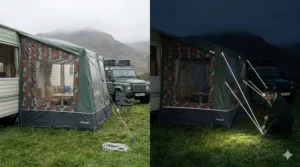
The camping equipment market uses “reflective” and “luminous” almost interchangeably, creating confusion about what you’re actually purchasing. They’re fundamentally different technologies with distinct performance characteristics, both valuable but suited to different scenarios and British camping conditions.
Reflective guy lines use retroreflective materials (typically microscopic glass beads or prismatic structures) woven into the cord that bounce light directly back toward its source. Shine your torch at reflective cord and it glows brightly, but remove the light source and it immediately disappears into darkness. Think of road signs or high-visibility jackets—they work brilliantly when illuminated but offer zero visibility without external light. For UK camping, reflective cord performs excellently when you’re actively using head torches or campsite lighting exists, but becomes invisible during those awkward moments when you’ve set down your torch to wrestle with tent pegs.
Luminous (phosphorescent) guy lines incorporate materials that absorb and store light energy, then slowly release it as a visible glow over several hours. Expose luminous cord to daylight or torch light for 10-15 minutes and it charges up, then glows independently for 4-8 hours afterward without requiring external illumination. This passive visibility provides orientation markers even when your torch batteries die, you’ve lost your head torch, or you’re simply trying to navigate without waking neighbouring campers. The glow intensity gradually fades—bright initially, then diminishing to subtle marking—but remains visible to dark-adapted eyes throughout the night.
For British camping conditions, the ideal solution combines both technologies: reflective threads for active visibility when using torches, plus luminous elements (tensioners or cord sections) providing passive orientation markers. The RainbowStone Enhanced exemplifies this approach with reflective cord plus luminescent tensioners, offering dual-mode visibility suited to our extended darkness periods and unpredictable light availability. Budget considerations might force choosing one technology, in which case reflective proves more practical for general camping—luminous elements lose charge faster in our cloudy conditions where bright sunlight appears sporadically, whilst reflective materials work consistently regardless of charging requirements.
The 3M Reflective Thread Advantage
Some premium guy lines specifically advertise incorporating 3M Scotchlite or similar high-grade reflective materials, whilst budget options vaguely mention “reflective threads” without material specification. This distinction matters considerably for long-term UK camping performance and visibility effectiveness.
3M Scotchlite uses precision-manufactured glass bead technology that reflects up to 500 times more light than standard materials, creating dramatically brighter visibility from longer distances. For practical UK camping scenarios, this translates to spotting guy lines from 10-15 metres away with a standard head torch versus 2-3 metres for budget reflective materials. That extended visibility range provides crucial additional reaction time when navigating unfamiliar campsites after dark or during those inevitable midnight toilet runs when your brain hasn’t fully engaged.
The durability difference proves equally significant. Quality 3M materials maintain reflective performance through years of UV exposure, abrasion, and weather exposure—the reflective element remains effective long after the cord itself shows wear. Budget reflective treatments deteriorate within a season or two of intensive use, losing effectiveness precisely when the cord otherwise remains serviceable. For UK campers using equipment across multiple seasons and diverse weather conditions, paying premium for proven reflective materials delivers better long-term value than repeatedly replacing degraded budget options.
Common Mistakes When Buying Reflective Guy Rope
Mistake 1: Assuming All “Reflective” Cord Performs Equally
The reflective guy rope market spans products ranging from genuinely high-performance safety equipment to barely-better-than-standard cord with token reflective elements. Marketing descriptions rarely clarify where products sit on this spectrum—everything gets labelled “highly reflective” regardless of actual performance. The practical difference between premium reflective cord using Scotchlite materials and budget options with single thin reflective thread proves dramatic when you’re relying on visibility for trip prevention.
Verify reflective thread density before purchasing. Quality cord incorporates multiple reflective strands woven throughout, visible as distinct threads running the cord’s length. Budget options might include a single barely-visible reflective strand that provides marginal improvement over standard cord. Customer reviews often reveal true performance—search for specific mentions of “can’t miss seeing these at night” versus vague “visible in low light” descriptions suggesting disappointing results. For UK conditions where you’re navigating campsites in genuine darkness rather than romantic twilight, inadequate reflective performance means your safety equipment fails precisely when most needed.
Mistake 2: Prioritising Price Over Performance for Safety Equipment
Guy ropes occupy that awkward equipment category where they’re essential for tent stability and personal safety yet cost relatively little, tempting budget purchases that prove penny-wise and pound-foolish. Saving £5 by purchasing the cheapest available option might seem sensible until you’re re-tensioning stretched cord every few hours during Lake District rain, or explaining to A&E staff exactly how you managed to trip over invisible guy lines and headbutt a cool box.
The economics of quality guy rope become compelling over time. Premium options costing £12-18 reliably serve 5+ seasons of regular use whilst maintaining reflective performance, working out to perhaps £3 annually for genuinely dependable safety equipment. Budget alternatives at £6-10 might require replacement after 1-2 seasons when reflective elements degrade or cord stretches excessively, ultimately costing more whilst providing inferior performance during their brief service life. For equipment directly preventing injuries and tent damage during expensive camping holidays, the premium investment represents genuine insurance rather than optional luxury.
Mistake 3: Ignoring UV and Weather Resistance Specifications
British camping means extended UV exposure (yes, even through persistent cloud cover), persistent moisture from rain and condensation, and seasonal storage in damp garden sheds that approximate tropical greenhouse conditions. Guy rope material specifications often mention “UV resistant” or “weatherproof” without quantifying what this actually means for UK durability. Standard nylon degrades surprisingly quickly under UV exposure, losing perhaps 20-30% strength annually if left pitched for extended periods. Your summer tent left erected for a week receives more UV exposure than it seems because British sunshine packs surprising UV intensity despite frequent cloud cover.
Quality polyester cord resists UV degradation more effectively than nylon, maintaining strength and flexibility for extended periods. The practical test: quality cord remains supple and strong after a full camping season, whilst inferior materials become stiff, discoloured, and noticeably weaker. The reflective elements equally face UV degradation—surface treatments fade rapidly, whilst integrated reflective threads maintain performance. For UK campers using equipment intensively during our condensed camping season (essentially March through October with weather that ranges from tolerable to character-building), UV and weather resistance determines whether equipment remains serviceable for multiple seasons or requires premature replacement.
Mistake 4: Neglecting Tensioner Quality and Compatibility
Many reflective guy rope packages include tensioners (also called line-locks, adjusters, or runners) that theoretically allow quick length adjustment without knot tying. These range from excellent precision devices that grip reliably even when soaked, to useless plastic triangular disasters that slip constantly, frustrating everyone and potentially contributing to tent collapse. The included tensioners significantly impact whether your guy rope package proves pleasure or punishment to use.
Premium aluminium tensioners with bent-runner or cam-lock designs grip properly even when wet, release easily when you want adjustment, and survive years of intensive use without degrading. Budget plastic tensioners might work adequately in dry conditions but slip embarrassingly when moisture appears—precisely when British camping makes tensioner reliability most critical. If purchasing bulk cord rather than pre-fitted lengths, invest in quality aluminium tensioners separately rather than accepting whatever cheap options the manufacturer includes. The £5-8 premium for proper tensioners proves worthwhile the first time you’re adjusting tent tension during persistent rain without wrestling slipping adjusters that refuse to hold.
Mistake 5: Buying Insufficient Quantity for Your Actual Requirements
First-time reflective guy rope buyers often underestimate requirements, purchasing a four-pack of pre-cut ropes for a family tent that actually needs eight or more guy points properly secured. This creates the uncomfortable situation of having excellent reflective cord on some guy points whilst using whatever inferior alternatives remain for others, negating much of the safety benefit. British camping emphasises properly guying your tent—our weather punishes inadequate attachment points mercilessly.
Calculate guy line requirements generously: count every attachment point on your tent (typically 6-12 for family tents), add auxiliary storm guys for windward corners (2-4 additional), include guy points for porches or awnings if applicable, then add 20% spare capacity for replacements and field repairs. That family tent nominally needing six guy lines actually requires 8-10 lines for proper UK weather security. Purchasing bulk cord (30-50 metres) alongside pre-cut convenience packs provides comprehensive coverage without risking mid-trip shortages when you discover that yes, you really did need those extra storm guys after the Met Office upgrades their warning from “breezy” to “hold onto your children.”
Maintenance and Storage Tips for Maximum Longevity
Proper Cleaning Extends Service Life
Guy ropes endure remarkable abuse during camping trips—ground contact, mud exposure, abrasion against tent fabric and pegs, plus whatever mysterious substances coat British campsite grass (sheep residue, thistle sap, unidentified festival contributions). Neglecting post-trip cleaning accelerates degradation whilst reducing reflective performance. Mud and organic matter harbour moisture, encouraging mildew growth during storage. Abrasive particles embedded in dirty cord gradually wear the outer sheath, exposing core fibres to accelerated degradation.
Clean guy ropes after every camping trip, particularly following muddy festivals or coastal camping where salt exposure occurs. Lukewarm water and mild detergent suffice—submerge coils in a sink or bucket, agitate gently to release dirt, then rinse thoroughly. Avoid washing machines despite temptation; the mechanical action tangles cord into Gordian knots and aggressive spinning damages reflective threads. For particularly stubborn contamination (Festival mud develops legendary adhesion properties), a soft brush removes particles without abrading the sheath. Hang cleaned cord loosely to air dry completely before storage—damp cord stored in sealed containers or bags rapidly develops mildew in British humidity.
Storage Conditions Matter More Than Expected
Guy rope storage seems trivial until you retrieve last year’s carefully coiled cord to discover it’s transformed into a stiff, tangled mess that’s lost flexibility and reflective performance. British storage conditions—damp sheds, garage temperature fluctuations, UV exposure through windows—silently degrade camping equipment between uses. Proper storage protects your investment whilst maintaining performance for next season.
Store dried guy ropes loosely coiled or wound on spools in breathable bags (cotton or mesh) rather than sealed plastic containers. Breathable storage permits residual moisture evaporation whilst preventing condensation accumulation. Keep storage location cool, dry, and away from direct sunlight—UV exposure continues degrading materials even during storage. Avoid storing guy ropes compressed under heavy items; this creates permanent kinks and deforms the weave structure, reducing strength and flexibility. The ideal storage solution: dedicated rope bags hung in a dry location (spare bedroom wardrobe, airing cupboard) where temperature remains relatively stable and UV exposure doesn’t occur.
Inspection Protocols Prevent Field Failures
Conduct thorough guy rope inspection before each camping trip, examining every metre for damage indicators that might cause failure. Look for fraying where cord passes through tensioners (high-friction areas subject to accelerated wear), checking both entry and exit points. Inspect reflective threads specifically—if they’re breaking or pulling away from the main cord, reflective performance will be compromised. Run the cord between your fingers feeling for rough sections, thin spots, or areas where the sheath has separated from the core—these indicate structural damage requiring replacement.
Test tensioner function before relying on them in the field. Attach the guy line through the tensioner and pull firmly—properly functioning tensioners should hold fast without slipping. If they slide even slightly under load, they’ll definitely fail during actual camping when moisture and tension combine. Bent or damaged tensioners can usually be replaced individually rather than discarding the entire guy line, making repair economical. Replace any questionable cord or tensioners rather than hoping they’ll survive one more trip—field failures always occur during the worst possible weather conditions and typically at night when replacement becomes maximally difficult.
Repair Strategies for Extended Service
Quality reflective guy rope justifies field repair rather than disposal when damage occurs. Small frayed sections can be whipped (wrapped tightly with cord) to prevent further deterioration, though this reduces flexibility at the repair point. More significant damage requires cutting out the affected section and joining the remaining pieces—reducing length but maintaining structural integrity. Use fisherman’s knots or double fisherman’s bends for joining, which maintain high percentage of the cord’s original strength whilst remaining relatively compact.
For seriously shortened guy lines that remain structurally sound, repurpose them for shorter applications rather than discarding. That 4-metre line cut down to 2.5 metres after removing damaged sections still works perfectly for awning guy points or supplementary storm guys on smaller tents. The British camping philosophy of waste-not-want-not extends naturally to extending equipment service life through repair and repurposing. One substantial repair kit addition: carry 5-10 metres of spare reflective cord plus extra tensioners in your camping box, enabling field repairs that maintain safety rather than improvising with inadequate alternatives when problems inevitably arise during trips.
FAQ: Your Reflective Guy Rope Questions Answered
❓ Do reflective guy ropes actually work in complete darkness?
❓ Are reflective guy ropes available on Amazon.co.uk suitable for UK weather conditions?
❓ What length reflective guy rope do I need for a standard family tent?
❓ Can I wash reflective guy ropes without damaging them?
❓ How long do reflective guy ropes maintain their visibility?
Conclusion: Investing in Visibility Saves More Than Just Embarrassment
The reflective guy rope decision ultimately hinges on whether you value trip-hazard prevention and setup convenience over saving perhaps £5-10 on camping equipment. Given that roughly 1,500 UK campers annually discover the hard way why visible guy lines matter, investing in proper reflective cord represents genuine insurance against embarrassing injuries and potential tent damage. British camping conditions—persistent rain, extended darkness, frequent wind—stress equipment and navigation in ways that weekend festival camping in Mediterranean climates never approaches.
For most UK campers, the sweet spot sits around £12-18 for comprehensive guy line coverage: either a quality 30-50 metre spool of 4mm reflective cord with aluminium tensioners (BROTREE or HIKEMAN), or multiple pre-cut sets providing sufficient quantity for your tent configuration plus spares. This investment delivers years of reliable service whilst preventing trips, simplifying night-time navigation, and providing confidence that your tent attachment points won’t fail when British weather tests them. The alternative—cheap non-reflective alternatives supplemented with improvised visibility solutions—ultimately costs more through replacements, convenience compromises, and the lingering possibility of midnight face-plants that require explaining to unsympathetic A&E staff.
The transformation from standard guy ropes to reflective alternatives manifests immediately during your first night-time campsite navigation. Instead of tentatively shuffling while scanning the ground with dying torch batteries, you confidently walk toward your tent whilst glowing guy lines mark safe paths like miniature runway lights. That confidence extends to children who can navigate independently without constant supervision, partners who can access facilities without waking you for guided expeditions, and your own midnight wanderings that no longer require military-grade navigation skills. For equipment costing less than a Wetherspoons meal deal, reflective guy ropes deliver disproportionate safety improvements and convenience gains that justify themselves within a single camping weekend.
Recommended for You: Essential UK Camping Safety Guides
- 7 Best Heavy Duty Steel Tent Pegs UK 2026
- 7 Best Lightweight Titanium Tent Pegs UK 2026
- Best V Shaped Tent Pegs UK 2026: 7 Expert Picks (Under £50)
Disclaimer: This article contains affiliate links. As an Amazon Associate, I earn from qualifying purchases. If you purchase products through these links, we may earn a small commission at no additional cost to you.
✨ Found this helpful? Share it with your mates! 💬🤗
