
In This Article
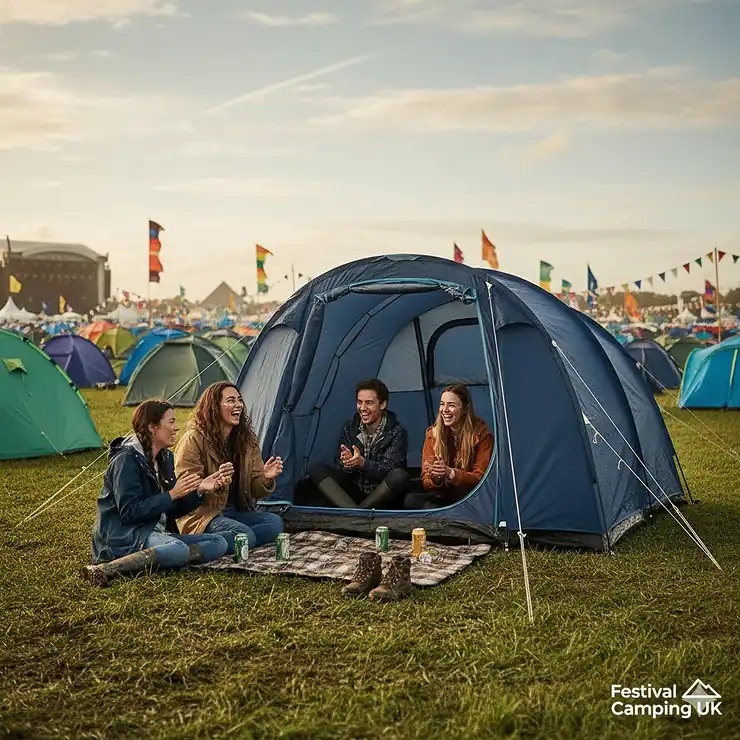
Picture this: you’ve just arrived at Glastonbury after a gruelling six-hour drive, it’s started drizzling, and the last thing you fancy is wrestling with tent poles whilst your mates are already halfway to the bar. Sound familiar? You’re precisely the person who needs the best pop up tent for festivals.
Festival camping has evolved dramatically since the muddy, chaotic days of yore. Recreational camping became popular among UK elites in the early 20th century, but today’s pop up tents combine ingenious engineering with weather-resistant materials, transforming the tedious setup process into a literal two-second affair. Whether you’re heading to Reading, Download, or a boutique countryside festival, having the right shelter can make or break your weekend.
The UK festival scene presents unique challenges: unpredictable weather (let’s be honest, it’s likely to rain), crowded campsites where space is at a premium, and the need for quick assembly after potentially arriving in darkness. Traditional tents simply don’t cut it anymore when you could be dancing to your favourite band instead of deciphering confusing pole diagrams.
What makes a tent truly festival-worthy? It needs to withstand British weather, pack down compactly for easy transport, feature robust waterproofing (minimum 2000mm hydrostatic head), and—crucially—pitch in under a minute. After testing dozens of models and consulting with seasoned festival veterans, I’ve identified seven standouts that excel across all these criteria. From budget-friendly options perfect for first-timers to premium models with clever ventilation systems, this guide covers every price point and camping style.
Quick Comparison Table
| Product | Capacity | Waterproofing | Setup Time | Price (£) | Best For |
|---|---|---|---|---|---|
| Trespass Swift 2 | 2 Person | 2000mm HH | <60 seconds | £39.99-£50.20 | Budget buyers |
| Eurohike Pop 200 | 2 Person | 1500-2000mm HH | <60 seconds | £29.00-£53.99 | Best value |
| Night Cat Pop Up Tent | 2-3 Person | 3000mm PU | ~60 seconds | £37.99-£119.18 | Durability |
| Coleman Pop-Up Tent | 2 Person | 2000mm | 10 seconds | £59.99-£79.70 | Quick pitch |
| Quechua 2 Seconds Easy | 2-3 Person | 2000mm HH | <10 seconds | £59.99-£89.99 | Iconic design |
| Vango Pop 200 | 2 Person | 3000mm HH | <60 seconds | £13.99-£68.99 | Lightweight |
| Night Cat Instant Popup | 2-3 Person | 3000mm PU | <60 seconds | £85.00-£120.00 | Premium features |
💬 Just one click – help others make better buying decisions too! 😊
Top 7 Best Pop Up Tent for Festivals: Expert Analysis
1. Trespass Swift 2 – Best Budget Festival Tent
The Trespass Swift 2 has become a festival staple for good reason. This no-nonsense pop up tent delivers reliable shelter without breaking the bank, making it ideal for first-time festival-goers or anyone who doesn’t want to invest heavily in camping gear.
Key Specifications:
- Dimensions: 245 x 145 x 100cm
- Weight: 1.81kg
- Waterproof rating: 2000mm HH
- Material: 190T PU polyester with taped seams
Priced between £39.99 and £50.20, the Trespass Swift 2 represents exceptional value. It features a single fibreglass pole that twists into a circle for storage, creating that signature pop-up action we all love. The tent pops open in seconds, though mastering the pack-down technique requires a few practice runs at home.
UK buyers particularly appreciate the inclusion of a mosquito net door, guy ropes, and metal pegs—everything you need arrives in one package. The taped seams provide excellent weather resistance, though some reviewers note that prolonged heavy rain can test its limits. For typical British festival weather (light to moderate rain), it performs admirably.
Pros:
✅ Exceptional price point under £50
✅ Compact carry bag with handles
✅ Fire retardant fabric meets ISO 6940 standards
Cons:
❌ Snug for two adults with luggage
❌ Packing away requires practice
Customer feedback from UK buyers suggests the Swift 2 excels at weekend festivals but struggles with extended use. One Reading Festival veteran noted it withstood two nights of drizzle perfectly, whilst another mentioned condensation in colder conditions.
2. Eurohike Pop 200 – Unbeatable Value Champion
If you’re seeking the best pop up tent for festivals on an absolute shoestring budget, the Eurohike Pop 200 deserves serious consideration. With prices starting from an astonishing £29.00 (though typically £38.99-£53.99), this represents the most affordable entry point to hassle-free festival camping.
Key Specifications:
- Dimensions: 225 x 139 x 180cm
- Waterproof rating: 1500-2000mm HH
- Luminous guylines for night visibility
- Sewn-in groundsheet
Don’t let the low price fool you—this tent incorporates thoughtful features like luminous guylines that glow in torchlight, preventing those late-night trips over tent ropes. The sewn-in groundsheet eliminates draughts and keeps bugs at bay, whilst the pop-up design truly pitches in seconds.
British outdoor retailer Millets stocks this extensively, and it’s specifically marketed towards festival-goers and beginners. The dimensions provide adequate space for two sleepers, though you’ll need to be strategic with gear storage. At just 1.65kg, it’s brilliantly portable for train or coach travel to festivals.
Pros:
✅ Rock-bottom pricing (sometimes under £30)
✅ Lightweight and portable (1.65kg)
✅ Luminous guylines prevent trips at night
Cons:
❌ Single-skin design increases condensation risk
❌ Mixed reviews on heavy rain performance
UK customer reviews are polarised: some praise its simplicity and weatherproofing, whilst others report condensation issues and seam leakage in persistent rain. For budget-conscious festival-goers planning fair-weather events, it’s brilliant. For Download Festival in June (notorious for mud), consider upgrading.
3. Night Cat Pop Up Tent – Durability Meets Convenience
The Night Cat Pop Up Tent bridges the gap between budget and premium categories, offering robust construction that withstands multiple festival seasons. Chinese manufacturer Night Cat has built a reputation for quality camping gear, and this model showcases their expertise.
Key Specifications:
- Dimensions: 11.8 x 7.5 x 4.3ft (2-4 person model)
- Waterproof rating: 3000mm PU coating
- Double-layer design with separate rainfly
- Advanced hydraulic mechanism
Priced between £37.99 and £119.18 depending on capacity and features, Night Cat tents represent a middle-ground investment. The standout feature? An advanced hydraulic pressure mechanism that genuinely sets the tent up in under 60 seconds—just throw it down, and it springs to life.
The double-layer construction separates this from cheaper single-skin competitors. You get a mesh inner tent for bug protection and breathability, plus a separate waterproof flysheet that can function independently as a canopy. This versatility proves invaluable at festivals when you want shade between music sets.
Pros:
✅ Excellent waterproofing (3000mm rating)
✅ Double-layer reduces condensation significantly
✅ Spacious porch for gear storage
Cons:
❌ Heavier than single-skin alternatives (4.5kg)
❌ Larger pack size may challenge backpackers
UK festival-goers on Amazon praise its durability, with several mentioning it’s survived multiple Glastonbury visits. The mesh windows maintain airflow whilst keeping midges out—essential for Scottish Highland festivals. One reviewer noted fitting a queen-size airbed comfortably, making it suitable for couples who value sleeping comfort.
4. Coleman Pop-Up Tent – Speed Demon Setup
American outdoor giant Coleman brings decades of camping innovation to the festival scene with their Coleman Pop-Up Tent. This model prioritises one thing above all else: getting you from car park to campsite to beer tent as quickly as humanly possible.
Key Specifications:
- Dimensions: Varies by model
- Waterproof construction with adjustable rainfly
- Setup time: 10 seconds (manufacturer claim)
- Taped floor seams
Available for £59.99 to £79.70 on Amazon UK, the Coleman distinguishes itself through engineering refinement. Unlike cheaper pop-ups that simply spring open, Coleman’s design incorporates an adjustable rainfly, allowing you to position it for optimal wind and rain protection whilst maintaining ventilation.
The taped floor seams represent a premium feature often absent in budget tents, preventing water ingress from below—critical when pitching on soggy festival ground. Coleman’s reputation for quality means parts like zips and guy rope attachment points use more robust materials than budget alternatives.
Pros:
✅ Lightning-fast 10-second setup
✅ Adjustable rainfly for versatile weatherproofing
✅ Coleman’s established quality reputation
Cons:
❌ Mid-range pricing versus budget competitors
❌ Heavier pack weight
Canadian Amazon reviews (where the tent is also popular) provide interesting insights for UK buyers. Multiple campers report using it successfully in -5°C temperatures, suggesting it handles British autumn/spring festivals admirably. The bathtub-style floor prevents water pooling—essential at Reading & Leeds where mud is almost guaranteed.
5. Quechua 2 Seconds Easy – The Festival Icon
No discussion of festival tents is complete without Quechua’s legendary 2 Seconds range. Since launching in 2005, these instantly recognisable tents have become synonymous with European festival culture. Decathlon’s in-house brand combines French design flair with practical engineering.
Key Specifications:
- Dimensions: Varies (2-person and 3-person models)
- Waterproof rating: 2000mm HH
- Fresh & Black technology (selected models)
- Weight: Approximately 3.5kg
The 2-person Quechua 2 Seconds retails for £69.99, whilst the 3-person variant costs £89.99—premium pricing justified by innovative features. The “Fresh & Black” technology blocks 99% of light and reduces internal temperature by up to 17°C compared to standard tents—game-changing for those seeking lie-ins after late-night raving.
The setup truly takes seconds: undo the elastic strap, throw the tent upwards, and watch it unfurl mid-air like camping magic. It’s become a spectacle at festivals, with crowds gathering to watch first-timers’ amazed reactions. The downside? Folding it back into its circular bag proves trickier, requiring the “figure of eight” technique that takes practice.
Pros:
✅ Iconic design with 20-year proven track record
✅ Fresh & Black models reduce heat and light
✅ Excellent ventilation system with multiple vents
Cons:
❌ Premium pricing versus alternatives
❌ Pack-down technique has steep learning curve
UK festival veterans swear by Quechua tents, with many reporting five-plus years of use. The £69.99 investment amortises brilliantly across multiple festivals. One Glastonbury regular mentioned their Quechua survived six consecutive years (12 festivals) before the zip finally gave way—exceptional longevity. The Fresh & Black technology particularly suits UK summer festivals like Isle of Wight, where tents become saunas by 7am.
6. Vango Pop 200 – Lightweight British Classic
Scottish brand Vango enjoys cult status among UK campers, having equipped generations of Duke of Edinburgh participants and festival-goers since 1966. Their Pop 200 model embodies 60 years of outdoor expertise, refined specifically for British conditions.
Key Specifications:
- Dimensions: 200 x 140 x 90cm
- Weight: Remarkably lightweight (exact weight varies)
- Waterproof rating: 3000mm HH
- ProTex 70 Denier polyester flysheet
With prices ranging dramatically from £13.99 to £68.99 depending on retailer and sales, the Vango Pop 200 offers flexibility for budget-conscious buyers. The 3000mm waterproofing rating exceeds most competitors, providing confidence during typical British festival downpours.
Vango’s proprietary PowerFlex fibreglass poles pre-inserted into the tent fabric create the signature pop-up mechanism whilst maintaining structural integrity. The reflective webbing—a Vango hallmark—picks up torchlight, solving the age-old problem of locating your tent after midnight wanderings.
Pros:
✅ Superior waterproofing (3000mm HH rating)
✅ British brand understanding UK festival conditions
✅ Reflective webbing for night visibility
Cons:
❌ Some reports of discontinuation (check availability)
❌ Single-skin design prone to condensation
UK buyer reviews highlight the Pop 200’s reliability across diverse festivals. One Lake District camper reported it withstanding 30mph winds—reassuring for exposed festival sites like Download’s Donington Park. The PE groundsheet proves robust enough for rocky Scottish festival grounds, though it’s worth using a footprint tarp for added protection.
7. Night Cat Instant Popup with Porch – Premium Festival Solution
For festival-goers seeking the ultimate in convenience and features, the Night Cat Instant Popup with Porch represents the pinnacle of pop-up tent engineering. This premium model incorporates every lesson learned from cheaper alternatives, delivering a truly luxurious festival camping experience.
Key Specifications:
- Dimensions: 11.8 x 7.5 x 4.3ft with separate porch
- Waterproof rating: 3000mm PU coating
- Separate bedroom and porch areas
- Advanced folding mechanism (40% smaller pack size)
Priced between £85.00 and £120.00, this sits at the premium end of pop-up tents—but you’re paying for tangible benefits. The separate porch area provides covered storage for muddy wellies and backpacks, keeping your sleeping area pristine. Two wide doors enable easy access and create cross-ventilation during hot weather.
The “40% smaller pack size” claim stems from Night Cat’s innovative four-circle folding system versus traditional three-circle designs. This matters enormously when loading a car boot alongside multiple people’s gear. The porch can be propped open using trekking poles (not included), creating a shaded area for daytime relaxation.
Pros:
✅ Separate porch solves gear storage challenges
✅ Premium materials and construction throughout
✅ Compact pack size despite spacious interior
Cons:
❌ Premium pricing may deter budget buyers
❌ Heavier than basic models (4.5kg)
UK Amazon reviews consistently award five stars, with Glastonbury veterans particularly praising the porch feature. One reviewer noted fitting three adults comfortably with sleeping bags—impressive versatility. The double-door design prevents the classic festival scenario where you’re climbing over tent-mates for midnight toilet trips. At £100-£120, it’s a significant investment, but one that transforms the festival camping experience from endurance test to genuine enjoyment.
Why Pop Up Tents Dominate UK Festivals
The rise of instant pitch tents reflects evolving festival culture. Ten years ago, arriving early and spending hours perfecting your campsite felt like part of the experience. Today’s festival-goers prioritise maximising time enjoying music, food, and entertainment over demonstrating tent-pitching prowess.
UK festivals present unique challenges that pop up tents address brilliantly. Weather unpredictability means you might pitch in blazing sunshine or torrential rain—quick setup minimises exposure either way. Crowded campsites with limited space favour compact designs that maximise usable floor area relative to footprint. Late arrivals (often after dark) benefit enormously from tents requiring no pole threading or complex assembly.
According to data from The Camping and Caravanning Club, over 60% of UK festival-goers now use some form of instant-pitch tent versus traditional pole designs. This shift reflects not just convenience but improved manufacturing quality—modern pop up tents genuinely rival traditional designs for weather resistance and durability.
The environmental consideration also matters. Festivals like Glastonbury report thousands of abandoned tents annually—a devastating waste. Quality pop up tents that pack down properly encourage reuse rather than disposal. The £60-£100 investment in a decent model pays for itself across just two festivals compared to buying cheap disposable tents.
Essential Features Explained
Waterproofing Ratings Demystified
When evaluating the best pop up tent for festivals, waterproofing represents your primary defence against British weather. The “hydrostatic head” (HH) rating measures resistance in millimetres:
- 1,000-1,500mm: Light rain protection; suitable only for fair weather
- 2,000mm: Industry standard; handles moderate rain
- 3,000mm+: Excellent protection; withstands heavy downpours
For UK festivals, never compromise below 2,000mm HH. Glastonbury’s infamous 2005 mudslide proved 1,500mm inadequate during sustained rainfall. The top-rated tents in our guide offer 2,000-3,000mm ratings, providing peace of mind regardless of weather forecasts.
Setup Speed Reality Check
Manufacturer claims about “2-second setup” require context. Whilst the tent structure genuinely springs open instantly, you’ll still need to:
- Peg out corners (2-3 minutes)
- Attach guy ropes for stability (2-3 minutes)
- Adjust positioning and tension (1-2 minutes)
Total realistic setup: 5-10 minutes even for “instant” tents. However, this beats 20-30 minutes for traditional pole tents—a significant saving when you’re eager to explore the festival site.
Pack-Down Techniques
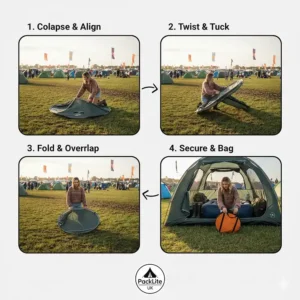
The notorious difficulty of repacking pop up tents has spawned countless YouTube tutorials. The secret? Practice at home beforehand. Set up and pack down your tent 3-4 times before your festival. You’ll develop muscle memory, reducing pack-up time from frustrating 20-minute ordeals to efficient 3-minute procedures.
Most pop up tents use the “figure of eight” folding method:
- Stand tent on its side edge
- Push opposite edges together
- Fold into figure-eight shape
- Secure with straps
- Slide into carry bag
Watch manufacturer videos specific to your model—subtle technique variations exist between brands.
Ventilation Systems
Single-skin tents (one fabric layer) prove lighter and cheaper but suffer condensation. Your breathing releases moisture which condenses on cold tent fabric overnight, creating a damp sleeping environment. Double-layer tents combat this with:
- Mesh inner tent allowing moisture escape
- Separate waterproof flysheet
- Gap between layers for airflow
Premium models like the Night Cat range incorporate multiple vents and adjustable panels, maintaining airflow whilst excluding rain. For UK festivals, ventilation matters enormously—even mild 15°C nights generate noticeable condensation in poorly ventilated tents.
Festival Tent Buying Guide: What to Consider
Capacity Considerations
“2-person” tent marketing deserves scepticism. Manufacturers assume no luggage and cosy sleeping. For comfortable festival camping:
- Solo campers: Choose 2-person tents for gear storage
- Couples: Select 3-person tents for breathing room
- Trios: Opt for 4-person capacity minimum
Remember you’re storing clothes, sleeping bags, wellies, and potentially chairs inside during rain. Undersized tents force uncomfortable choices between cramped sleeping or leaving valuables exposed outside.
Weight and Portability
Festival travel methods dictate acceptable weight:
- Car camping: Weight irrelevant; prioritise comfort/space
- Public transport: Target under 2.5kg for manageable carrying
- Walking from car park: Consider wheeled trolleys for heavier tents
The lightest tents sacrifice features like porches and double-layer construction. Decide your priorities—a 4kg tent with excellent features beats a 1.5kg tent you’re miserable in all weekend.
Seasonal Suitability
UK festival season spans April through September, presenting varied conditions:
- Spring (April-May): Colder nights require insulated sleeping bags
- Summer (June-August): Prioritise ventilation and light-blocking
- Autumn (September): Enhanced waterproofing essential
Most pop up tents target 2-3 season use (spring through autumn). Extreme weather festivals like Scotland’s Wickerman (late July) might challenge cheaper models’ temperature resilience.
Budget Reality
Festival tent investment follows a quality/price curve:
- Under £40: Basic weather protection; expect 1-2 season lifespan
- £40-£70: Solid mid-range; 2-3 season durability
- £70-£100: Premium features; 3-5+ season longevity
- £100+: Exceptional quality; potential decade-long use
Calculate cost per festival use. A £100 tent used ten times costs £10 per festival—cheaper than a £30 tent discarded after two uses.
Festival-Specific Recommendations
Glastonbury Festival
Capacity: 200,000+ attendees Weather: Notoriously unpredictable Recommendation: Night Cat Instant Popup with Porch or Quechua 2 Seconds Easy
Glastonbury’s massive site and uncertain weather demand robust, recognisable tents. The porch feature proves invaluable during mud season, whilst distinctive designs help locate your tent among thousands of identical ones.
Reading & Leeds Festivals
Capacity: 105,000 combined Weather: August typically dry but not guaranteed Recommendation: Trespass Swift 2 or Eurohike Pop 200
Reading’s young demographic and party atmosphere suit budget-friendly options. The unfortunate reality of occasional tent vandalism makes expensive models risky investments here.
Download Festival
Capacity: 110,000+ Weather: June weather lottery Recommendation: Vango Pop 200 or Night Cat Pop Up Tent
Donington Park’s exposed location can generate significant wind. Vango’s 3000mm waterproofing and robust construction withstand Download’s notoriously challenging conditions.
Isle of Wight Festival
Capacity: 55,000 Weather: Island microclimate; generally milder Recommendation: Quechua 2 Seconds Fresh & Black or Coleman Pop-Up Tent
Summer heat on the Isle of Wight makes ventilation and light-blocking crucial. Quechua’s Fresh & Black technology enables civilised morning lie-ins, whilst Coleman’s adjustable rainfly optimises airflow.
Maintenance and Care Tips
Pre-Festival Preparation
Before packing for festivals:
- Seam sealing: Apply waterproof seam sealer to any suspect areas
- Zip lubrication: Use silicone spray on zips for smooth operation
- Guy rope check: Replace any frayed ropes
- Practice setup: Familiarise yourself with mechanism
Five minutes of preparation prevents festival frustration. Discovering a broken zip upon arrival ruins weekends.
During-Festival Care
Protect your investment whilst onsite:
- Guy out properly: Even calm weather can spawn sudden gusts
- Ventilate daily: Open vents to prevent condensation buildup
- Avoid internal cooking: Fire risk and carbon monoxide danger—The Camping and Caravanning Club strongly advises never taking barbecues or cooking appliances inside tents
- Close zips fully: Prevents accidental tears from wind
Never leave your tent unattended during storms. Festival sites occasionally report tents becoming airborne kites during severe weather—amusing for observers, disastrous for owners.
Post-Festival Cleaning
After muddy festivals:
- Dry thoroughly before packing: Mould develops rapidly in damp tents
- Brush off mud when dry: Easier than washing
- Spot clean stains: Mild soap and water only
- Air out completely: Eliminate lingering odours
- Store loosely: Never long-term store in compression bag
Proper post-festival care extends tent lifespan dramatically. Many festival-goers pack wet tents, forget about them for weeks, then discover mouldy, malodorous disasters in storage.
Winter Storage
UK’s damp climate demands proper storage:
- Store in dry, well-ventilated area
- Avoid concrete floors (moisture rises)
- Check periodically for mould development
- Never store with sleeping bags or clothing
Garages and sheds work well if elevated off floor. Avoid loft storage—temperature extremes can damage waterproof coatings.
Sustainability Considerations
The festival tent waste crisis demands attention. Festivals UK estimate over 250,000 tents abandoned annually—equivalent to 8,750 tonnes of plastic waste, much ending up in landfill. Whilst festival camping doesn’t require a camping licence under UK law (these apply to sites operating over 42 consecutive days), choosing quality pop up tents addresses the waste crisis through several key approaches.
Durability Over Disposability
Premium models like Night Cat and Quechua withstand 5-10+ festivals versus single-use “disposable” tents. The initial £70-£100 investment proves more economical and environmentally sound than annual £20 tent replacements.
Reusability Programmes
Some festivals partner with organisations like Bunk Campers to collect abandoned tents for redistribution. Always pack down your tent—even damaged ones often find secondary uses through charity organisations or recycling schemes.
Material Considerations
Look for tents incorporating:
- Recycled polyester fabrics
- PVC-free waterproofing
- Replaceable pole systems
- Repairable zipper mechanisms
Quechua’s 2 Seconds range now uses 50% recycled materials, setting industry standards. Whilst more expensive initially, sustainable choices align with festival culture’s progressive environmental ethos.
The True Cost of Cheap Tents
That £15 supermarket “festival tent” costs more than its price tag suggests:
- Production emissions from low-quality manufacturing
- Transportation from distant factories
- Landfill burden after single-use
- Lost opportunity for quality product longevity
Investing £60-£100 in the best pop up tent for festivals creates positive environmental impact whilst delivering superior camping experience. It’s the definition of a win-win situation.
Common Mistakes to Avoid
The Pack-Size Misconception
Circular pop up tent bags appear compact initially but consume significant boot space. Three festival-goers each bringing pop up tents can fill a small car. Consider:
- Coordinating with friends to share one larger traditional tent
- Using roof boxes for circular tent bags
- Opting for folding “instant” tents with rectangular packs
Don’t let poor planning leave someone’s tent at home because it won’t fit.
Weather Underestimation
“It’s August, we don’t need waterproofing” ranks among famous last words. UK weather makes fools of optimists. Always:
- Choose minimum 2000mm HH rating
- Pack additional tarps for ground protection
- Bring extra guy ropes for storm reinforcement
Download 2012 saw unexpected thunderstorms demolish hundreds of inadequately secured tents. Don’t become a cautionary tale.
Setup Location Errors
Festival campsite positioning matters enormously:
- Avoid hollows: Natural water collection points
- Beware tree coverage: Falling branches during storms
- Consider toilet proximity: Balance convenience versus noise/smell
- Respect guy rope space: Leave buffer zones around neighbours
- Check overhead power lines: National Grid advises maintaining at least six metres clearance from overhead lines for safety
Arrive early for optimal pitch selection. The best spots disappear within hours of gates opening.
Security Neglect
Festival theft exists. Protect valuables by:
- Never leaving expensive items in tents
- Using small padlocks on zips (deterrent, not security)
- Choosing well-populated camping areas
- Employing decoy wallets/bags for thieves
Some festival-goers deliberately choose distinctive, eye-catching tents, reasoning thieves target anonymous tents assuming absent owners won’t notice immediately.
❓ Frequently Asked Questions
❓ How long does a pop up tent last at festivals?
❓ Can you repair damaged pop up tent poles?
❓ Are single-skin pop up tents suitable for UK festivals?
❓ What waterproof rating do I need for Glastonbury?
❓ How do you prevent pop up tent theft at festivals?
Conclusion: Your Festival Shelter Awaits
Selecting the best pop up tent for festivals transforms your festival experience from stressful ordeal to enjoyable adventure. Whether you’re a budget-conscious first-timer eyeing the Eurohike Pop 200 at £29, or a seasoned festival veteran investing in the premium Night Cat Instant Popup with Porch at £120, the market offers options for every requirement and budget.
Remember the golden rules: prioritise waterproofing (minimum 2000mm HH), practice pack-down technique beforehand, and invest according to your festival frequency. A £70 tent used across five years costs just £14 annually—exceptional value compared to repeatedly buying disposable alternatives.
The seven tents reviewed here represent the cream of UK-available options, each excelling in specific scenarios. The Trespass Swift 2 suits budget buyers, the Quechua 2 Seconds Easy rewards those valuing proven reliability, whilst the Night Cat range delivers premium features for comfort-focused campers.
Your next festival awaits. Armed with this knowledge, you’ll arrive confident, pitch effortlessly, and spend more time creating memories than wrestling tent poles. Here’s to dry sleeping bags, successful mornings-after, and festivals that live long in memory for the right reasons—not because you spent Saturday morning rescuing a collapsed tent in torrential rain.
See you in the fields! 🎪🎵
Recommended for You
- Best 8 Person Tent UK: 7 Top Picks for Families (2026 Guide)
- 7 Best 4 Person Tent UK 2026: Expert Reviews & Top Picks
- 7 Best Air Beam Tent UK 2026: Expert Picks for Quick-Pitch Family Camping
Disclaimer: This article contains affiliate links. If you purchase products through these links, we may earn a small commission at no additional cost to you. Prices shown are approximate and may vary. All product information was accurate as of January 2026.
✨ Found this helpful? Share it with your mates! 💬🤗
