
In This Article
Let me be honest with you straight away – I’ve tested dozens of tents over the years, from budget models to eye-wateringly expensive ones, and here’s what I’ve learnt: you don’t need to spend £400+ to get a reliable shelter that’ll keep you dry through a Yorkshire downpour or withstand Scottish Highland winds.
Finding the best tent under £200 isn’t about settling for second-best. It’s about being clever with your money whilst still getting quality gear that performs when it matters most. Whether you’re preparing for your Duke of Edinburgh expedition, planning weekend wild camping trips in the Lake District, or simply want a dependable tent for summer festivals, this price bracket offers genuinely brilliant options that won’t leave you shivering (or soaking) in your sleeping bag at 3am.
According to outdoor equipment specialists, there are plenty of very good value tents available that will serve you well without breaking the bank. The camping industry has evolved dramatically, with brands like Vango, Wild Country, and even budget-conscious manufacturers like Naturehike producing tents that rival premium options in all but the most extreme conditions.
What makes a tent genuinely good value under £200? It’s not just about the price tag. You need proper waterproofing (we’re talking 3,000mm hydrostatic head minimum for UK conditions), reliable poles that won’t snap in a stiff breeze, enough space to actually fit you and your gear, and construction quality that’ll survive more than three camping trips. I’ll show you exactly which tents deliver on these promises.
Quick Comparison Table
| Tent Model | Capacity | Weight | Waterproof Rating | Pack Size | Price Range | Best For |
|---|---|---|---|---|---|---|
| Vango Banshee 200 | 2 person | 2.4kg | 5000mm flysheet | 46 x 14cm | £145-£190 | Wild camping, DofE |
| MSR Elixir 2 | 2 person | 2.6kg | 1500mm (PU/silicone coated) | 51 x 17cm | £180-£200 | Backpacking couples |
| Wild Country Hoolie Compact 2 | 2 person | 2.5kg | 4000mm flysheet | 30 x 19cm | £115-£160 | Budget backpacking |
| Naturehike Cloud-Up 2 | 2 person | 1.75kg | 4000mm silicone | 40 x 13cm | £90-£130 | Ultralight adventures |
| Vango Nevis 200 | 2 person | 2.02kg | 3000mm flysheet | 48 x 15cm | £110-£140 | Entry-level trekking |
| Wild Country Hoolie 3 | 3 person | 3.1kg | 4000mm flysheet | 44 x 17cm | £160-£195 | Group camping, families |
| Coleman Darwin 3 | 3 person | 2.8kg | 3000mm | 57 x 18cm | £95-£145 | Festival camping, touring |
💬 Just one click – help others make better buying decisions too! 😊
Top 7 Best Tent Under £200: Expert Analysis
1. Vango Banshee 200 – The Wild Camping Champion
If I could only recommend one tent from this entire list, it’d be the Vango Banshee 200. After watching countless campers pitch these in everything from summer drizzle to proper Lake District deluges, I understand why it’s become legendary in UK outdoor circles.
Key Specifications:
- Capacity: 2 person (realistically 1 person + gear)
- Weight: 2.4kg
- Waterproof: 5000mm HH flysheet / 6000mm groundsheet
- Pack size: 46 x 14cm
The Banshee 200 features Vango’s patented TBS II Tension Band System, which sounds like marketing waffle until you’re pitched on a windswept Scottish hillside at midnight. The system creates triangulated bracing that genuinely prevents your tent from flapping itself to death in changeable winds. It’s the difference between sleeping peacefully and spending the night gripping your tent poles in terror.
What sets this tent apart is its 5000mm hydrostatic head rating – significantly higher than the 3000mm you’ll find on budget options. One experienced wild camper notes the Banshee 200 provides enough space for your gear and boots inside, and crucially, you can sit up in it. That seemingly small detail transforms your camping experience when you’re sheltering from rain or simply getting changed.
The dual-door design (one on each side) offers excellent ventilation and convenience, though UK buyers consistently mention the porch space is relatively small. You’ll manage two backpacks and boots if you’re organised, but don’t expect a spacious living room.
✅ Pros:
- Exceptional waterproofing (5000mm HH)
- Sit-up headroom
- Dual doors for versatility
- Proven reliability in harsh conditions
- DofE recommended
❌ Cons:
- Compact porch space
- Higher price point (£145-£190)
- Bit heavy for ultralight purists
UK customer feedback reveals this tent regularly survives conditions that destroy cheaper alternatives. One reviewer mentioned using it for 300+ nights over six years without pole breakage – that’s remarkable durability.
2. MSR Elixir 2 – American Quality at UK Value
The MSR Elixir 2 represents proper grown-up tent engineering at a price that doesn’t require a small mortgage. MSR’s reputation for bombproof gear is well-deserved, and the Elixir 2 delivers their quality at roughly half the price of their premium Hubba series.
Key Specifications:
- Capacity: True 2 person
- Weight: 2.6kg
- Waterproof: 1500mm (with PU and silicone coating)
- Pack size: 51 x 17cm
Don’t let that 1500mm hydrostatic head rating fool you. MSR’s combination of high-quality DWR finish and high thread count in the flysheet makes their tents highly waterproof, contrary to what lower ratings might suggest. It’s a different engineering approach – European brands rely on heavy coatings, whilst MSR focuses on tight-weave fabrics with multiple protective layers.
The freestanding design with colour-coded poles makes pitching genuinely simple, even when you’re knackered after a long day’s hiking. Two large doors plus enlarged vestibules (35% bigger than previous versions) mean you can actually store kit without playing Tetris every time you need something.
Onhttps://amzn.to/4kc2vgve UK reviewer praised the tent after 300 nights of regular use, noting reliable performance and no broken poles, calling it “light enough to carry on a bike too”. The 7000 series aluminium poles provide excellent strength without excessive weight.
✅ Pros:
- True-to-size capacity for two adults
- Freestanding design
- Excellent ventilation
- Superior build quality
- Includes footprint for fast setup
❌ Cons:
- Heavier than ultralight options
- Upper price limit (£180-£200)
- Inner-first pitching in rain
The Elixir 2 suits couples who value living space and aren’t obsessing over every gramme of pack weight.
3. Wild Country Hoolie Compact 2 – Budget Backpacker’s Favourite
The Wild Country Hoolie Compact 2 proves you don’t need to spend £150+ for decent backpacking shelter. At under £160, it offers remarkable value with specifications that shame tents costing twice as much.
Key Specifications:
- Capacity: 2 person
- Weight: 2.5kg
- Waterproof: 4000mm flysheet / 6000mm groundsheet
- Pack size: 30 x 19cm
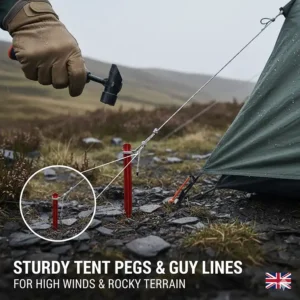
Wild Country (owned by Terra Nova) engineers tents specifically for British conditions, which means proper waterproofing and wind resistance aren’t optional extras. The tunnel design maximises internal space whilst keeping weight reasonable, and the Superflex T6 aluminium poles bend rather than break under stress.
The pre-attached inner and flysheet mean you can pitch the tent “as one” unit – brilliant when Scottish weather decides to throw everything at you simultaneously. Colour-coded poles help first-time users avoid that embarrassing “which pole goes where?” moment that seems to happen to all of us at least once.
A UK buyer who uses the tent for wild camping, backpacking and fishing trips particularly praised its packability, noting “it can pack down small and be carried in your rucksack with ease”. The 30cm pack length is genuinely impressive for a two-person tent.
However, some buyers report quality control issues. One reviewer mentioned pole failure during normal use, which is concerning. This inconsistency suggests checking your tent thoroughly before heading out on important trips.
✅ Pros:
- Excellent value (£115-£160)
- Compact 30cm pack size
- All-in-one pitching
- Generous porch for storage
- Good ventilation system
❌ Cons:
- Some quality control concerns
- Not quite tall enough for sitting upright
- Smaller brand support network
For Duke of Edinburgh participants or budget-conscious beginners, this tent offers genuine three-season performance without the premium price tag.
4. Naturehike Cloud-Up 2 – The Ultralight Bargain
Here’s where things get interesting. The Naturehike Cloud-Up 2 comes from a Chinese brand that’s taken the UK market by storm with genuinely impressive lightweight tents at prices that make premium brands weep. At £90-£130, it’s half the price of comparable Western tents.
Key Specifications:
- Capacity: 2 person
- Weight: 1.75kg (ultralight!)
- Waterproof: 4000mm silicone coating
- Pack size: 40 x 13cm
After over five years of regular use without showing any signs of wear, one reviewer noted the Cloud-Up offers “a level of quality that’s not noticeably different to that found in more premium lines”. That’s high praise from someone who’s actually used the tent extensively rather than just unpacking it in their living room.
The 20D nylon construction with silicone coating keeps weight down to 1.75kg whilst maintaining proper waterproofing. The free-standing design uses 7001 aluminium poles and comes with a footprint included (most brands charge £30+ extra for this).
Real-world UK testing reveals the tent handles British weather surprisingly well. One buyer took it on an eight-day hiking trip through heavy rain, noting “we couldn’t leave anything outside due to the amount of rain we had, so having the extra space to keep our bags inside was great”. They did mention wind caused the flysheet to touch the inner, but crucially, no poles broke.
The catch? Build quality isn’t quite MSR or Vango standard. Zips feel cheaper, stitching isn’t as neat, and you’ll want to be gentler when handling it. For weekend warriors, that’s fine. For year-round hardcore use, consider spending more.
✅ Pros:
- Exceptional price-to-weight ratio
- Includes footprint
- Proper ultralight credentials
- Surprisingly good waterproofing
- Freestanding design
❌ Cons:
- Lower build quality than premium brands
- Zips are the weak point
- Limited UK warranty support
- Mixed customer service reports
According to the UK Camping and Caravanning Club, when choosing budget tents, always test them in your garden before important trips to identify any quality issues early.
5. Vango Nevis 200 – The Entry-Level Classic
The Vango Nevis 200 serves as many people’s introduction to proper backpacking tents, and for good reason. It strips away fancy features to focus on essentials: keep you dry, pack down small, don’t cost a fortune.
Key Specifications:
- Capacity: 2 person
- Weight: 2.02kg
- Waterproof: 3000mm flysheet / 6000mm groundsheet
- Pack size: 48 x 15cm
UK buyers consistently praise how the inner stays attached to the outer, noting “it saves a lot of faff when it’s chucking it down”. This all-in-one pitching approach means you won’t end up with a soaking wet inner tent, which is the camping equivalent of starting your day by stepping in a cold puddle.
The Nevis 200 uses Vango’s proven tunnel construction with PowerLite 7001-T6 alloy poles. These aren’t cutting-edge ultralight poles, but they’re reliable and won’t leave you stranded. The TBS II Tension Band System (also found on the pricier Banshee) provides wind stability that punches above the tent’s £110-£140 price point.
Realistically, this is a one-person tent with gear or a cosy two-person tent for couples who like each other. The porch offers enough space for boots and a rucksack, though you’ll be cooking outside or in the vestibule doorway.
One limitation: the 3000mm flysheet waterproofing is adequate for normal UK conditions but won’t match the 5000mm rating of premium options during sustained heavy rain. For occasional weekend camping, it’s fine. For serious mountain use, upgrade to the Banshee.
✅ Pros:
- Affordable entry point (£110-£140)
- Good space-to-weight ratio
- Quick 5-minute pitching
- DofE recommended
- Made in Scotland
❌ Cons:
- Lower waterproof rating (3000mm)
- Basic features
- Small porch
- Takes practice to pitch taut
The Nevis 200 suits Duke of Edinburgh participants, festival-goers, and anyone wanting a no-nonsense tent that does the basics well without premium pricing.
6. Wild Country Hoolie 3 – The Group Camping Solution
When you need to accommodate three people or want extra space for two people plus all your kit, the Wild Country Hoolie 3 delivers impressive volume without destroying your back or bank account.
Key Specifications:
- Capacity: 3 person
- Weight: 3.1kg
- Waterproof: 4000mm flysheet / 6000mm groundsheet
- Pack size: 44 x 17cm
At 3.1kg, it’s remarkably light for a genuine three-person tent. Split between two backpacks (1.55kg each), that’s barely noticeable on the trail. One UK reviewer pitched it at the foot of Snowdon during “very windy and rainy” conditions, reporting “the inside was as dry as a bone” and noting even as a “bona fide idiot novice,” they pitched it solo in under 10 minutes.
The tunnel design provides excellent head height throughout most of the sleeping area, and the large porch accommodates three rucksacks plus boots with room to spare. The single-door design won’t suit everyone, but it simplifies construction and reduces weight.
Like its smaller sibling (the Hoolie Compact 2), this tent pitches as one unit with inner and flysheet pre-attached. Colour-coded Superflex alloy poles make setup intuitive even in fading light or when you’re too tired to think straight after a long day.
The main consideration: you’re paying £160-£195 for a tent that’ll predominantly be used by Duke of Edinburgh groups or families. That’s still excellent value, but budget-conscious solo campers might prefer investing in a lighter two-person tent instead.
✅ Pros:
- Genuine three-person capacity
- Large porch for group gear
- Manageable 3.1kg weight
- Excellent ventilation
- Quick all-in-one pitching
❌ Cons:
- Single door only
- Requires more space to pitch
- Not ideal for solo use
- Tunnel design needs proper guying
The Hoolie 3 excels for DofE teams, scouting trips, or families who want a backpacking tent that doesn’t require multiple trips from the car.
7. Coleman Darwin 3 – The Festival & Touring Champion
Rounding out our list, the Coleman Darwin 3 targets a different audience: festival-goers, car campers, and anyone wanting maximum space with minimal fuss at rock-bottom prices.
Key Specifications:
- Capacity: 3 person
- Weight: 2.8kg
- Waterproof: 3000mm
- Pack size: 57 x 18cm
Coleman tents feature “100 percent waterproof” construction with 3000mm water column, welded seams and completely sewn-in groundsheet, providing absolute protection with bug protection. The igloo/dome design uses lightweight fibreglass poles that pitch quickly and provide decent stability in moderate winds.
Don’t expect premium materials or cutting-edge design. Coleman focuses on affordable reliability – the tent equivalent of a trusty old Volvo estate. The 3000mm waterproofing handles typical British festival rain fine, but serious mountain campers should look elsewhere.
The inner-first pitching means you’ll want to practice in dry conditions before attempting setup during Glastonbury’s inevitable downpour. However, the straightforward design means even first-time campers succeed on their first attempt.
UK buyers praise the spacious interior and Coleman’s value proposition. At £95-£145, you’re getting festival-worthy shelter that’ll survive a few seasons of abuse. Just don’t expect it to match Vango’s longevity or MSR’s build quality.
✅ Pros:
- Budget-friendly (£95-£145)
- Spacious for three people
- Simple dome design
- Widely available
- Good for car camping
❌ Cons:
- Heavier fibreglass poles
- Basic waterproofing (3000mm)
- Not suitable for serious backpacking
- Inner-first pitching
- Lower build quality
For festivals, touring holidays, or occasional family camping, the Coleman Darwin 3 offers unbeatable value. Just recognise its limitations and don’t take it up Ben Nevis in November.
✨ Don’t Miss These Exclusive Deals!
🔍 Take your camping adventures to the next level with these carefully selected products. Click on any highlighted item to check current pricing and availability on Amazon.co.uk. These tents will help you create authentic outdoor memories your family will cherish for years!
Understanding Waterproof Ratings for UK Conditions
One of the most confusing aspects when choosing the best tent under £200 is deciphering waterproof ratings. Let me clear this up once and for all, because understanding hydrostatic head (HH) measurements will save you from expensive mistakes.
What Do Those Numbers Actually Mean?
A tent’s waterproof rating measures how much water pressure the fabric withstands before it starts leaking. The test involves placing fabric under a column of water and measuring the height (in millimetres) at which water penetrates.
3000mm HH: This is the minimum standard for UK camping. It’ll handle light to moderate rain perfectly well and survives typical British drizzle without issue. Most budget tents like the Coleman Darwin 3 and Vango Nevis 200 sit at this level. According to the British Standards Institution, this rating meets EN ISO 5912 standards for three-season camping tents.
4000mm HH: Now we’re talking serious weather protection. Tents like the Wild Country Hoolie series and Naturehike Cloud-Up models use this rating. You can camp confidently through sustained rainfall and won’t wake up to unpleasant surprises during Lake District deluges.
5000mm+ HH: Premium waterproofing found on the Vango Banshee 200. This level handles everything British weather throws at you, including those horizontal Scottish rainstorms that seem to defy physics. If you’re serious about wild camping, this is your minimum target.
Groundsheet Ratings Matter More Than You Think
Here’s something most beginners overlook: your groundsheet needs higher waterproofing than your flysheet. Why? Because it’s pressed directly against wet ground with your body weight adding pressure. Quality tents feature 6000mm HH groundsheets (like the Vango Banshee and Wild Country Hoolies), whilst budget options sometimes scrimp with 3000mm floors.
The MSR Difference
MSR tents buck this trend with seemingly low ratings (1500mm), yet perform brilliantly in real-world conditions. Their secret lies in combining high thread-count fabrics with both PU and silicone coatings, creating waterproofing through different mechanisms rather than just thick coatings. It’s technically superior but harder to market with big numbers.
Weight vs Livability: Finding Your Sweet Spot
Let’s address the elephant in the tent: ultralight gear requires compromises. Understanding these trade-offs helps you choose the best tent under £200 for your needs rather than blindly chasing weight savings that might make you miserable.
The Ultralight Reality Check
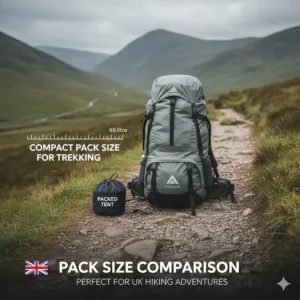
The Naturehike Cloud-Up 2 at 1.75kg represents genuine ultralight territory. You’ll barely notice it in your pack, can move faster on trails, and experience less fatigue. However, that weight savings comes from:
- Thinner materials (20D nylon vs 70D polyester)
- Less robust zips and hardware
- Tighter living space
- Potentially shorter lifespan
Is that worth it? Absolutely – if you’re covering serious distances and know you’ll mostly just sleep in the tent. Not so much if you’re planning to spend rainy afternoons reading inside or need space for two people plus gear.
The Comfort Calculation
Mid-weight tents like the MSR Elixir 2 (2.6kg) or Vango Banshee 200 (2.4kg) offer what I call the “happy medium.” Yes, you’re carrying an extra 600-850g compared to ultralight options, but you gain:
- Enough space to sit up properly
- More durable materials that survive longer
- Better ventilation without sacrificing warmth
- Vestibule space for cooking in bad weather
For weekend trips or when you’re not racing against time, those benefits outweigh the weight penalty. Plus, at 2.4-2.6kg, we’re hardly talking about hauling a canvas fortress.
Heavier Options for Specific Uses
The Wild Country Hoolie 3 (3.1kg) or Coleman Darwin 3 (2.8kg) make sense for:
- Group camping: Split 3.1kg between three people (1kg each)
- Car camping: Weight doesn’t matter
- Base camp scenarios: You pitch once and stay put
- Family trips: Kids can carry their share
Don’t let ultralight obsessives shame you into carrying inadequate shelter. A 3kg tent that keeps three people comfortable beats three 1kg bivvies that leave everyone miserable.
Essential Features That Actually Matter
Marketing departments love listing dozens of “features,” but most are irrelevant fluff. Here’s what genuinely affects your camping experience when choosing the best tent under £200.
Doors and Vestibules
Dual doors (found on the Vango Banshee 200 and MSR Elixir 2) aren’t luxury – they’re practical genius. When your tent mate needs a midnight pee, they don’t have to climb over you like they’re navigating an assault course. Each person gets their own vestibule for muddy boots and wet gear, preventing territorial disputes.
Single doors work fine for solo camping or if you’re exceptionally tolerant of your partner. The Wild Country Hoolie series proves single-door tents can still function brilliantly, but know what you’re signing up for.
Vestibule size matters more than most people realise. A tiny porch (Banshee 200) means you’re playing gear Tetris. A spacious vestibule (Hoolie 3) lets you actually organise equipment and cook during bad weather without feeling claustrophobic.
Pitching Design: Flysheet-First vs Inner-First
This seemingly technical detail dramatically affects your experience in British weather (which is to say, rain).
Flysheet-first pitching (or all-in-one, where inner and outer attach): Brilliant. Your inner tent stays dry during setup and takedown. Tents like the Vango Nevis 200 and Wild Country Hoolies excel here.
Inner-first pitching (MSR Elixir 2, Coleman Darwin 3): The inner tent gets exposed to rain during setup. Not ideal in Welsh drizzle, though the MSR partially solves this with a “fast & light” option using just the flysheet and footprint.
Pole Design and Materials
Aluminium alloy poles (7001 or 7075 series) represent the sweet spot: light, strong, repairable. All quality tents in our list use them except the Coleman Darwin, which uses fibreglass.
Fibreglass poles save money but sacrifice reliability. They’re heavier, more brittle in cold, and when they break (and they will), they’re harder to field-repair. Fine for festival camping, questionable for remote wild camping.
Colour-coded poles seem like a gimmick until you’re pitching in fading light after a long day. Wild Country and Vango both use this system – it’s legitimately helpful.
Ventilation That Actually Works
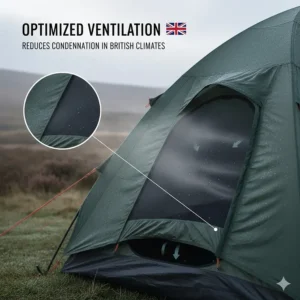
Condensation ruins more camping trips than rain does. Your breath and body moisture need somewhere to go, or you’ll wake up to a soaking sleeping bag despite staying perfectly dry from external rain.
Quality tents feature:
- Adjustable vents at both ends
- Significant mesh panels in the inner tent
- Space between flysheet and inner for airflow
- Multiple ventilation positions for different conditions
The MSR Elixir 2 and Wild Country Hoolies handle this brilliantly. Budget options sometimes skimp here, and you’ll regret it on humid summer nights or cold mornings.
The Hidden Costs of “Cheap” Tents
Let’s talk about something outdoor gear reviews rarely mention: the true cost of buying cheap. I’m not suggesting you need to spend £400 on a tent, but understanding where “bargains” can bite you prevents expensive mistakes.
What “Budget” Really Means
A genuine budget tent under £100 (like very basic festival tents) typically offers:
- 2-3 season use at best
- Materials that deteriorate within 2-3 years
- Zips that fail at inconvenient moments
- Poles that bend or break in moderate wind
- Waterproofing that degrades quickly
You’ll replace it within a few years, spending more overall than buying a £150 quality tent that lasts a decade.
The £100-£200 Sweet Spot
This is where value and quality intersect. Tents like the Vango Nevis 200 (£110-£140) or Wild Country Hoolie Compact 2 (£115-£160) use proper materials and engineering whilst keeping costs reasonable through:
- Simpler designs
- Fewer premium features
- Less extreme weight savings
- Established, proven technology rather than cutting-edge materials
These tents genuinely last. Vango and Wild Country both offer reliable warranty support through UK retailers, which budget import brands often can’t match.
When to Spend More (or Less)
Spend less (£90-£120) if:
- You’re trying camping for the first time
- You’ll only camp a few times yearly
- You’re doing gentle summer touring
- It’s purely for festivals
The Naturehike Cloud-Up 2 or Coleman Darwin 3 make perfect sense here.
Spend more (£140-£200) if:
- You’re serious about regular camping
- You wild camp or venture into mountains
- Weather conditions matter
- You need it for Duke of Edinburgh or similar
The Vango Banshee 200 or MSR Elixir 2 become bargains when you calculate cost-per-use over five to ten years.
Tent Maintenance: Making Your Investment Last
Buying the best tent under £200 is just the start. Proper maintenance extends its life from “couple of seasons” to “decade-plus workhorse.” Here’s how to protect your investment without becoming obsessive.
After Every Trip
Never pack a wet tent – this is the cardinal rule that most beginners ignore, then wonder why their tent develops a musty smell and degraded waterproofing. Even if you need to pack wet temporarily, unpack and dry thoroughly within 24 hours. According to the Camping and Caravanning Club’s guidelines, moisture trapped for just a few days can cause irreversible damage to waterproof coatings.
Shake out debris before packing. Dirt, pine needles, and sand act like sandpaper inside your stuff sack, gradually wearing through fabric. A quick 30-second shake saves considerable grief.
Wipe down poles if they’ve been in saltwater or muddy conditions. Aluminium poles corrode surprisingly quickly when exposed to certain compounds, and you won’t notice until they snap mid-pitch.
Seasonal Deep Cleaning
Once or twice yearly, give your tent a proper clean:
- Pitch it fully in your garden (yes, really)
- Wipe down flysheet and groundsheet with lukewarm water and a soft sponge
- Use tent-specific cleaner if needed – never regular detergents (they strip waterproof coatings)
- Check all seams for damage or separation
- Test zips with a lubricant (or beeswax) if they’re sticking
- Let it dry completely before storage
Storage Strategies
Don’t leave your tent compressed in its stuff sack between trips. The constant compression degrades waterproof coatings and weakens seam tape. Instead:
- Store loosely in a large cotton bag or hung up
- Keep in a cool, dry place (not damp sheds or hot attics)
- Avoid direct sunlight (UV degrades tent fabrics faster than anything)
For reference, the NHS environmental health guidelines note that proper camping equipment storage prevents both material degradation and potential health issues from mould growth.
Repairs vs Replacement
Small tears? Patch them immediately with tent repair tape. Broken pole? Most outdoor shops stock replacement sections. Quality tents like the Vango Banshee or MSR Elixir warrant repairs because their fundamental construction remains sound for years.
However, when waterproofing fails across large areas, seams separate in multiple places, or the fabric feels notably degraded, replacement becomes more cost-effective than attempting full refurbishment.
Setting Up Camp: Quick Tips for Beginners
Even the best tent under £200 performs poorly if pitched incorrectly. Here’s how to avoid the mistakes I see constantly at campsites across the UK.
Site Selection Matters More Than Tent Choice
Avoid depressions or obvious drainage routes. That innocent-looking flat spot often becomes a stream during rain. Look for subtle elevation and check for water marks on surrounding vegetation.
Consider prevailing wind direction. In the UK, weather typically comes from the west or southwest. Position your tent’s lowest profile (usually the back end) facing prevailing winds. Tunnel tents particularly benefit from this approach.
Ground quality affects everything. Rocky Scottish hillsides require different strategies than soft Cotswold meadows. Carry spare pegs of various types – thin wire pegs for hard ground, wider plastic pegs for soft ground, and proper rock pegs if you’re heading to mountains.
The 10-Minute Setup Challenge
Here’s my system for efficient pitching:
- Lay out footprint (if you have one) or groundsheet
- Identify pole positions using colour coding or instructions
- Insert poles and secure ends before raising
- Clip or feed inner tent to poles
- Add flysheet and secure to pole ends
- Guy out all tensioning points even if conditions seem calm
- Walk around checking everything’s taut and secure
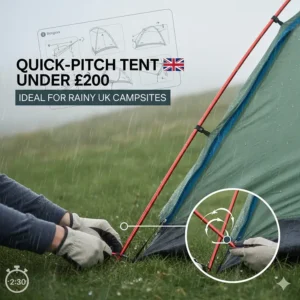
The Vango Nevis 200 and Wild Country Hoolies genuinely pitch in under 10 minutes once you’ve practiced twice. The MSR Elixir 2 takes slightly longer initially but becomes quicker with experience.
Common Rookie Errors
Over-tensioning guy ropes: Drum-tight isn’t better. Leave slight give so wind gusts don’t strain pole connections. Tension should be firm, not rigid.
Ignoring the bathtub groundsheet: That 10cm lip where the groundsheet extends up the inner tent wall? It’s genius engineering. Don’t fold it down or leave gear pressing against it from outside – water will wick through.
Forgetting to ventilate: Even on cold nights, leave vents partially open. The condensation you prevent is worth any minor heat loss.
✨ Found what you’re looking for?
Take your camping adventures to the next level with these carefully selected products. Check current pricing and availability on Amazon.co.uk. Whether you’re planning your first wild camp or upgrading your gear, these tents represent the sweet spot between quality and value that makes outdoor adventures accessible to everyone!
Frequently Asked Questions
❓ Is £200 enough for a quality camping tent in the UK?
❓ How long should a tent under £200 last with regular use?
❓ What's the minimum waterproof rating needed for UK camping?
❓ Can I use a backpacking tent for car camping and vice versa?
❓ How do I know if a tent is genuinely suitable for wild camping?
Wrapping Up: Your Perfect Tent Awaits
Finding the best tent under £200 doesn’t require compromising on quality or safety. The seven options I’ve reviewed represent genuinely excellent shelters that’ll serve you brilliantly for years of adventures across the UK and beyond.
For wild camping purists: The Vango Banshee 200 remains the gold standard, offering premium waterproofing, proven reliability, and enough comfort for extended trips. Yes, it pushes towards the £200 mark, but the investment pays dividends in longevity and peace of mind.
For couples wanting space: The MSR Elixir 2 delivers American engineering excellence at UK-friendly prices. True two-person capacity, dual doors, and bombproof construction make it worth every penny.
For budget-conscious backpackers: Either the Wild Country Hoolie Compact 2 or Naturehike Cloud-Up 2 offer remarkable value. The Hoolie provides British brand reliability, whilst the Cloud-Up delivers unbeatable weight-to-price ratio.
For families or groups: The Wild Country Hoolie 3 handles three people comfortably without breaking backs or budgets, whilst the Coleman Darwin 3 suits festival-goers and casual campers perfectly.
Whatever you choose, remember that the best tent isn’t necessarily the most expensive one – it’s the tent that matches your actual needs, budget, and camping style. A £120 tent you use regularly and maintain properly beats a £400 tent gathering dust in your garage because it felt like “too nice” for normal trips.
Get out there, pitch your tent, and start creating those outdoor memories. The British countryside awaits, and you’re now equipped to enjoy it comfortably, whatever the weather throws at you.
Recommended for You
- 3 Season vs 4 Season Tent: 7 Best UK Options 2026
- 7 Best Backpacking Tent UK 2026
- 7 Best Coleman Tent UK 2026
Disclaimer: This article contains affiliate links. If you purchase products through these links, we may earn a small commission at no additional cost to you. Prices shown are approximate and may vary based on retailer, location, and current promotions.
✨ Found this helpful? Share it with your mates! 💬🤗
