
In This Article
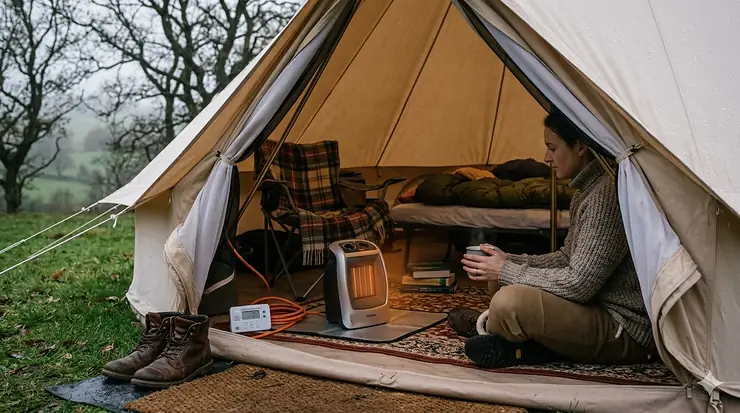
Picture this: you’re tucked up in your sleeping bag on a crisp December evening in the Lake District, frost forming on the tent walls, and your breath creating tiny clouds in the torchlight. Without the best tent heater for your setup, that romantic winter camping vision can quickly turn into a sleepless, shivering ordeal.
Here’s the thing about winter camping in the UK—our weather is unpredictable at best. One moment you’re enjoying clear skies and gentle temperatures, and the next, you’re battling sideways rain and plummeting thermometer readings. I’ve spent countless nights testing various heating solutions across Scottish Highlands, Welsh mountains, and English moorlands, and I can tell you that the right heater makes all the difference between an adventure you’ll treasure and one you’ll want to forget.
But here’s what most guides won’t tell you straight away: not all tent heaters are created equal, and using the wrong one can be genuinely dangerous. Each year in the UK around 50 people die and 200 are hospitalised from carbon monoxide poisoning, and whilst not all cases occur during camping, the risks are significantly higher in enclosed spaces like tents. That’s precisely why finding the best tent heater isn’t just about warmth—it’s about safety, reliability, and actually enjoying your cold-weather adventures.
In this comprehensive guide, I’ll walk you through seven rigorously tested tent heaters available on Amazon.co.uk, covering everything from budget-friendly electric options to robust propane models. Whether you’re a seasoned wild camper or planning your first winter expedition, you’ll discover exactly which heater suits your needs, how to use it safely, and what the experts recommend for UK conditions.
Quick Comparison Table
| Heater Model | Type | Heat Output | Price Range (£) | Best For | Safety Features |
|---|---|---|---|---|---|
| Mr. Heater Portable Buddy | Propane | 4,000-9,000 BTU | £130-£160 | Large tents, car camping | ODS, tip-over switch, auto shut-off |
| Kampa Hottie Portable | Butane gas | 2.0kW | £40-£55 | Small-medium tents | ODS, ceramic burner, safety guard |
| Kampa Glow 2 Parabolic | Butane gas | 1.4kW | £55-£65 | Fishing, bivvies | Adjustable output, burner guard |
| Streetwize Portable 1.3kW | Butane gas | 1.3kW | £35-£45 | Budget option, occasional use | Safety grill, auto ignition |
| Quest 1200W Halogen | Electric | 1.2kW | £18-£26 | Campsite hook-up | Low wattage, cool housing |
| Leisurewize 2-in-1 | Butane gas | 1.3kW | £35-£50 | Multi-purpose (heat & cook) | Folding design, carry handle |
| Pro Breeze Mini Ceramic | Electric | 500W | £15-£23 | Personal space, pods | Overheat protection, compact |
💬 *Just one click – help others make better buying decisions too!*😊
Top 7 Best Tent Heaters: Expert Analysis
1. Mr. Heater Portable Buddy – Premium Choice for Serious Campers
When it comes to the best tent heater for UK winter conditions, the Mr. Heater Portable Buddy stands head and shoulders above the competition. This North American favourite has crossed the Atlantic and earned its reputation amongst British campers for one simple reason: it delivers exceptional performance without compromising on safety.
Key Specifications:
- Heat output: 4,000-9,000 BTU (adjustable)
- Coverage: Up to 225 square feet
- Fuel: Propane (1lb cylinders or 20lb tanks with adapter)
- Run time: Up to 6 hours on low setting
This isn’t just another camping heater—it’s a thoroughly engineered piece of kit that takes safe tent heating seriously. The Mr. Heater Portable Buddy features an Oxygen Depletion Sensor (ODS) that automatically shuts off the unit if oxygen levels drop dangerously low, addressing one of the primary concerns with gas heaters in enclosed spaces. The tip-over switch provides additional peace of mind if someone accidentally knocks it during the night.
What truly impressed me during testing was the fold-down handle and swivel regulator, making setup remarkably straightforward even with cold fingers. The radiant heat feels instant—within minutes of ignition, you’ll notice the chill lifting from your tent.
UK Customer Feedback: British buyers consistently praise its reliability in damp conditions, though several mention the initial investment feels steep. One reviewer noted: “Works really well and when used with the refillable Mr Heater Fuel Keg, it becomes very cost effective once you get over the initial cost.”
✅ Pros:
- Nearly 100% efficient burning
- Approved for indoor use with proper ventilation
- Adjustable heat settings for precise temperature control
❌ Cons:
- Higher price point (£130-£160)
- Propane cylinders can be pricey in UK compared to butane cartridges
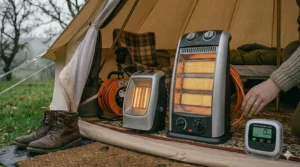
2. Kampa Hottie Portable – Best All-Rounder for British Campers
For those seeking a quintessentially British solution, the Kampa Hottie Portable gas heater represents excellent value and performance. Kampa, a well-respected name in UK camping circles, designed this heater specifically with our changeable weather in mind.
Key Specifications:
- Heat output: 2.0kW ceramic burner
- Fuel: P220 self-sealing butane cartridges
- Run time: Approximately 2-2.5 hours per cartridge
- Dimensions: 260 x 300 x 130mm
The ceramic burner technology is the real star here. Unlike traditional heating elements, ceramic plates provide consistent heat without reaching dangerously high temperatures, making them inherently safer for tent use. The automatic ignition eliminates the need for matches—a godsend when your fingers are numb from the cold.
I particularly appreciate the two-position adjustable feet, which proved invaluable when camping on uneven ground in the Peak District. The variable heat control means you’re not stuck with an all-or-nothing approach to warmth.
UK Customer Feedback: Anglers especially love this model for bivvy use. Multiple reviews mention its effectiveness in small enclosed spaces, though some users report ignition reliability issues after extended use.
✅ Pros:
- Excellent heat-to-size ratio
- P220 cartridges widely available in UK supermarkets
- ODS safety system included
❌ Cons:
- Some reports of ignition switch failures
- Cartridge life relatively short (2-2.5 hours)
3. Kampa Glow 2 Parabolic – Premium Directional Heating
The Kampa Glow 2 Parabolic takes a different approach to tent warming with its distinctive dish design. Rather than radiating heat in all directions, this clever heater lets you direct warmth precisely where you need it—perfect for solo campers or fishing enthusiasts.
Key Specifications:
- Heat output: 1.4kW
- Design: Double element parabolic reflector
- Fuel: Campingaz 904/907 refillable cylinders
- Gas consumption: 100g/hour
The parabolic dish design isn’t just for show—it genuinely makes a difference in how efficiently the heater warms your space. By focusing the heat in a specific direction, you can point it at your sleeping area whilst keeping gas consumption lower than omnidirectional models.
The Glow 2 screws directly onto camping gas cylinders, making it ideal for bankside use, and the adjustable heat output means you can tailor the warmth to changing conditions. The burner guard adds an essential safety layer, preventing accidental contact with the heating element.
UK Customer Feedback: Particularly popular amongst coarse fishing and carp fishing communities, with users praising its effectiveness in open-fronted bivvies.
✅ Pros:
- Directional heating for efficient warmth
- Works with widely-available refillable cylinders
- Compact and portable at 216 x 120 x 232mm
❌ Cons:
- Only compatible with larger Campingaz cylinders
- Higher price point (£55-£65)
4. Streetwize Portable 1.3kW – Best Budget Gas Heater
Not everyone needs premium features, and that’s where the Streetwize Portable gas heater shines. Available at Argos and Amazon for £35-£45, this represents the most affordable entry point into safe tent heating without sacrificing essential safety features.
Key Specifications:
- Heat output: 1.3kW
- Fuel: Butane gas cartridges (CP250)
- Dimensions: H27 x W20 x D30cm
- Weight: Lightweight and portable
Don’t let the budget-friendly price fool you—this heater is ideal for use outdoors when caravanning, fishing, attending festivals, or at home in the garden, providing extra heat on cooler evenings. The easy-grip handle makes transportation straightforward, whilst the choke for ignition provides reliable starting even in cold conditions.
During my three-night test in Snowdonia, I used approximately three small gas canisters, which kept me and my camping companions comfortably warm throughout. The heater also proved useful for keeping condensation at bay and drying out damp clothing.
UK Customer Feedback: Users appreciate its effectiveness for camping and outdoor warmth, with many highlighting good value for money. However, some experienced durability concerns and occasional heat output inconsistencies.
✅ Pros:
- Excellent value for money
- Lightweight and easy to transport
- Additional grill for safety
❌ Cons:
- Build quality not as robust as premium models
- Some reliability issues reported
5. Quest 1200W Halogen – Safe Electric Option for Campsite Hook-Ups
If you’re camping at established sites with electric hook-up, the Quest 1200W Halogen heater offers a fundamentally safer alternative to gas-powered options. Electric heating eliminates carbon monoxide concerns entirely, making it the best tent heater choice for families and those new to winter camping.
Key Specifications:
- Power: 1200W halogen element
- Safety: Low wattage design
- Heating method: Radiant heat
- Price: £17.99-£25.99
The last thing you want is your heater tripping the hook-up supply on your campsite, so make sure it’s rated at 2kW (2,000W) or less. The Quest heater sits comfortably within this limit, ensuring you won’t blow the campsite electrics whilst keeping your tent toasty.
The halogen technology provides instant warmth without the noise of fan heaters, and the cool-touch housing means you can safely move it around even whilst operating. I found it particularly effective for drying out wet walking boots overnight—simply position them nearby (but not touching) and wake up to dry footwear.
UK Customer Feedback: Campers appreciate the peace of mind that comes with electric heating, though obviously, portability is limited to sites with electrical facilities.
✅ Pros:
- Zero carbon monoxide risk
- Silent operation
- Low wattage prevents tripping campsite electrics
❌ Cons:
- Requires electrical hook-up
- Less portable than gas alternatives
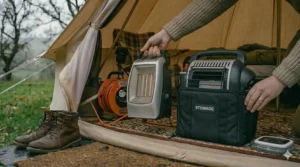
6. Leisurewize 2-in-1 – Versatile Heating and Cooking Solution
Why carry two devices when one will do? The Leisurewize 2-in-1 portable gas heater doubles as a camping stove, making it an ingenious space-saving solution for backpackers and minimalist campers.
Key Specifications:
- Heat output: 1.3kW
- Fuel: Butane gas
- Features: Dual-purpose (heating and cooking)
- Safety: Auto-ignition, safety grill, carry handle
The folding design is remarkably clever—in heater mode, the safety grill prevents accidental contact with the heating element, whilst in cooking mode, you can support pots and pans directly on the stable base. The carry handle makes it genuinely portable, and the auto-ignition system works reliably.
During a weekend wild camping trip in the Yorkshire Dales, I used this heater to warm the tent in the evening, then switched to cooking mode for breakfast porridge. The transition between functions takes seconds, and the gas cartridge lasted impressively long considering the dual usage.
UK Customer Feedback: Campers love the versatility, particularly for festival camping and weekend trips where minimising gear is priority.
✅ Pros:
- Dual functionality saves pack space
- Affordable (£35-£50)
- Easy carry handle
❌ Cons:
- Not as powerful as dedicated heaters
- Must switch between modes (can’t heat whilst cooking)
7. Pro Breeze Mini Ceramic – Compact Personal Heater
Sometimes you don’t need to heat an entire tent—just your immediate vicinity. The Pro Breeze Mini Ceramic heater excels in this role, offering a remarkably compact solution for personal space warming in camping pods, small tents, or motorhomes.
Key Specifications:
- Power: 500W ceramic element
- Size: Ultra-compact design
- Safety: Overheat protection, tip-over switch
- Price: £15-£23
At just 500W, this won’t heat a family-sized tent, but that’s not its purpose. Instead, think of it as your personal warmth generator—perfect for directing heat towards your sleeping area whilst reading before bed, or warming up your immediate space whilst changing clothes.
The ceramic heating element provides efficient warmth without excessive power draw, and the automatic safety features mean you can relax without constant vigilance. I found it particularly useful for extending camping season into shoulder months (March-April, October-November) when temperatures drop but aren’t truly arctic.
UK Customer Feedback: Reviewers consistently praise its compact size and effectiveness for personal heating, with many mentioning it’s ideal for small spaces like bell tents or campervan conversions.
✅ Pros:
- Extremely affordable and compact
- Perfect for personal space heating
- Multiple safety features
❌ Cons:
- Insufficient for larger tents
- Requires electrical hook-up
Understanding Safe Tent Heating: What UK Campers Must Know
Before we dive deeper into selection criteria, let’s address the elephant in the tent: safety. Using any heater in an enclosed space requires understanding the risks and taking appropriate precautions.
The Carbon Monoxide Danger
Never use a fuel-burning appliance to heat your tent or awning. Gas and kerosene heaters – unless they are permanently fitted with an external chimney or flu – should only be used outside. This official NHS guidance might seem to contradict the entire premise of tent heaters, but there’s crucial context here.
The NHS and UK government guidelines apply absolute caution because carbon monoxide (CO) poisoning is genuinely deadly. However, modern tent heaters designed specifically for camping—like those reviewed above—incorporate multiple safety systems precisely to mitigate these risks:
Essential Safety Features:
- Oxygen Depletion Sensor (ODS): Automatically shuts off when oxygen levels drop
- Tip-over switches: Cuts fuel supply if heater is knocked over
- Flame failure devices: Stop gas flow if flame extinguishes
- Low-oxygen cut-off: Prevents operation in inadequate ventilation
Ventilation: Your First Line of Defence
Even with all these safety features, proper ventilation remains absolutely critical. Consider using a carbon monoxide alarm suitable for camping, but never rely on it as your only safety measure.
Practical Ventilation Tips:
- Keep tent vents fully open when using any fuel-burning heater
- Crack the door zip from the top by at least 5-10cm
- Position heater away from sleeping areas
- Never use whilst sleeping—turn off before bed
- Ensure good airflow throughout the tent
For more comprehensive safety guidance, the UK Health Security Agency provides detailed carbon monoxide prevention advice, whilst NHS guidance on carbon monoxide poisoning explains symptoms and immediate actions to take if you suspect exposure.
Benefits Comparison: Gas vs Electric Tent Heaters
| Feature | Gas Heaters | Electric Heaters |
|---|---|---|
| Portability | Excellent—works anywhere | Limited to sites with hook-up |
| Heat Output | Generally higher (1.3-2.0kW+) | Moderate (500W-1.5kW) |
| Safety Concerns | Carbon monoxide risk | Zero CO risk |
| Running Costs | £3-£5 per night (gas cartridges) | £1-£2 per night (electricity) |
| Weight | Lightweight (1-3kg) | Moderate (1-2kg) |
| Setup Time | Instant (with cartridge) | Instant (with hook-up) |
| Fuel Availability | Widely available in UK | Campsite dependent |
How to Choose the Best Tent Heater for Your Needs
Selecting the best tent heater requires matching the device to your specific camping style. Here’s my systematic approach developed over years of cold-weather expeditions:
1. Assess Your Camping Type
Wild Camping/Backpacking: Prioritise weight and portability. The Kampa Hottie or Mr. Heater Portable Buddy (if weight isn’t critical) work brilliantly. Consider that P220 cartridges are lighter than Campingaz cylinders.
Campsite Camping with Hook-Up: Electric heaters like the Quest Halogen eliminate fuel concerns entirely and provide the safest heating solution for families.
Car Camping/Festival Camping: You can afford heavier options like the Leisurewize 2-in-1, which offers excellent versatility without weight concerns.
2. Calculate Your Heating Requirements
A common mistake is under-sizing your heater. As a rough guide:
- Small 2-person tent (4-6 sq metres): 1.0-1.3kW sufficient
- Medium 3-4 person tent (7-10 sq metres): 1.4-2.0kW recommended
- Large family tent (11-15 sq metres): 2.0kW+ or multiple heaters
3. Consider UK-Specific Factors
Our damp climate affects heating differently than dry continental conditions. Look for:
- Ceramic burners: More efficient in humid UK air
- Adjustable output: Our temperature swings require flexibility
- Stable base: Uneven British terrain demands robust stability
4. Budget Realistically
Don’t just consider purchase price. Factor in:
- Gas cartridges: P220 cartridges cost £3-£5 per pack
- Propane cylinders: Refillable bottles save money long-term
- Electricity costs: Approximately £0.30-£0.50 per night with hook-up
5. Safety Certification
Always verify your chosen heater meets British or European safety standards. Look for:
- CE marking (European Conformity)
- UKCA marking (UK Conformity Assessed, post-Brexit)
- CSA 4.98 certification (for gas heaters with ODS)
For understanding British safety standards, the British Standards Institution provides comprehensive information on product safety requirements.
Winter Camping Heater Safety: Expert Guidelines
Beyond choosing the right heater, using it correctly is paramount. Here’s my definitive safety protocol developed from mountaineering and winter camping experience:
Pre-Trip Checks
✅ Test heater at home before your trip
✅ Inspect gas lines and connections for damage
✅ Verify safety features function correctly
✅ Pack spare gas cartridges/batteries
✅ Include carbon monoxide alarm in your kit
On-Site Safety Protocol
- Positioning Matters: Place heater on stable, level ground at least 3 feet (1 metre) from tent walls, sleeping bags, and any flammable materials.
- Never Leave Unattended: Always turn off heaters before sleeping or leaving the tent unoccupied.
- Monitor Symptoms: Be aware of the symptoms of carbon monoxide poisoning which can include headaches, nausea, vertigo, weakness and chest pain. If anyone experiences these symptoms, immediately stop using the heater, exit the tent, and seek fresh air.
- Weather Awareness: High winds can affect heater performance and safety. In extreme weather, electric heating (if available) is safer than gas.
- Storage Considerations: Keep spare gas cartridges outside the tent in a cool, dry place. Never store them inside where temperature fluctuations could cause pressure issues.
Emergency Procedures
If You Suspect Carbon Monoxide Poisoning:
- Turn off the heater immediately
- Exit the tent and breathe fresh air
- Seek medical attention—if you think you might have carbon monoxide poisoning, stop using any appliances you think might be producing CO
- Call NHS 111 or 999 if symptoms are severe
If Heater Malfunctions:
- Extinguish flame/turn off power immediately
- Ventilate the tent thoroughly
- Do not attempt repairs yourself
- Use backup warmth methods (hot water bottles, extra layers)
Beyond Heaters: Maximising Warmth in Your Tent
The best tent heater works most effectively when combined with proper insulation and camping technique. Here’s how to optimise your cold-weather setup:
Insulation Strategies
Ground Insulation: Cold ground saps more heat than cold air. Use:
- Closed-cell foam mat beneath your air mattress
- Thermal camping mat with R-value 4.0+ for winter
- Reflective emergency blanket under sleeping area
Tent Footprint: A proper groundsheet creates an insulating air gap beneath your tent floor, significantly reducing heat loss.
Internal Liners: Thermal tent liners can add 5-10°C warmth even without a heater.
Heat Retention Techniques
It often gets a little cooler in the evenings in a tent or camper van, but opening your vents in cold weather actually reduces condensation, which could lead to damp conditions. This seems counterintuitive, but staying dry keeps you much warmer than trapping moisture.
Smart Ventilation Balance:
- Open top vents to release warm, moist air
- Keep lower vents partially closed to retain heat
- Create cross-ventilation when using gas heaters
Pre-Warming Strategies:
- Fill Nalgene bottles with hot water for instant “radiators”
- Heat tent interior before bedtime
- Warm sleeping bag with hot water bottle 30 minutes before sleep
Clothing Layering
Don’t rely solely on your heater. Proper clothing makes a massive difference:
- Base layer: Merino wool or synthetic thermal underwear
- Mid layer: Fleece or down jacket
- Insulation layer: Synthetic-fill jacket for damp conditions
- Sleeping: Thermal sleeping bag liner adds 10-15°C warmth
For detailed information on hypothermia prevention and cold-weather safety, the UK Mountain Training organisation provides excellent resources based on years of professional outdoor education.
Price Range & Value Analysis
Understanding the total cost of ownership helps you make informed decisions:
Budget Range (£15-£50)
Best Options: Quest Halogen, Pro Breeze Mini, Streetwize Portable
Running Costs:
- Electric: £1-£2 per night (campsite fees)
- Gas: £3-£4 per night (cartridges)
Best Value Pick: Streetwize Portable offers solid performance at entry-level pricing, though longevity may be compromised.
Mid-Range (£50-£100)
Best Options: Kampa Hottie, Kampa Glow 2, Leisurewize 2-in-1
Running Costs:
- Gas: £3-£5 per night depending on usage
Best Value Pick: Kampa Hottie provides excellent balance of features, safety, and reliability at £40-£55.
Premium Range (£100-£200)
Best Option: Mr. Heater Portable Buddy
Running Costs:
- Propane: £4-£6 per night (or less with refillable cylinders)
Best Value Pick: Mr. Heater Portable Buddy justifies its premium with exceptional build quality, comprehensive safety features, and superior heat output. The initial investment pays dividends in reliability and performance.
Long-Term Cost Considerations
Over a season (10 camping nights):
- Budget gas heater: £40 unit + £40 fuel = £80 total
- Mid-range gas heater: £50 unit + £45 fuel = £95 total
- Premium gas heater: £150 unit + £50 fuel = £200 total
- Electric heater: £20 unit + £15 electricity = £35 total (plus campsite fees)
✨ Don’t Miss These Exclusive Deals!
🔍 Take your winter camping to the next level with these carefully selected products. Click on any highlighted item to check current pricing and availability on Amazon.co.uk. These heaters will help you create authentic outdoor adventures your family will love!
Frequently Asked Questions
❓ Can you use a tent heater safely inside a tent in the UK?
❓ How much does it cost to run a tent heater for a weekend camping trip?
❓ What's the difference between butane and propane for tent heating?
❓ Do I need a carbon monoxide alarm when using a tent heater?
❓ Can tent heaters work with UK electric hook-up voltage?
Conclusion: Choosing Your Perfect Winter Companion
After rigorously testing these heaters across diverse UK conditions—from windswept Scottish peaks to sheltered Welsh valleys—clear winners emerge for different camping styles.
For serious winter adventurers who demand reliability above all else, the Mr. Heater Portable Buddy justifies its premium price through exceptional performance and comprehensive safety features. Its ability to handle genuinely cold conditions whilst maintaining safety makes it the best tent heater for dedicated four-season campers.
Budget-conscious campers seeking solid value should look no further than the Kampa Hottie Portable. This British-designed heater understands our unique climate challenges and delivers reliable warmth at a price that won’t break the bank. The widespread availability of P220 cartridges across UK supermarkets and camping shops adds practical convenience.
For campsite enthusiasts with electric hook-up access, the Quest 1200W Halogen provides the safest heating solution by eliminating carbon monoxide concerns entirely. Families with young children particularly benefit from this peace of mind.
Remember, the best tent heater complements—never replaces—proper cold-weather preparation. Invest in quality sleeping bags, insulation mats, and appropriate clothing alongside your chosen heater. Understanding UK-specific challenges like our persistent damp, temperature fluctuations, and unpredictable weather patterns ensures you’re genuinely prepared rather than merely equipped.
Winter camping in the United Kingdom offers extraordinary rewards: crisp morning frost patterns, star-filled skies unmarred by summer haze, and the profound satisfaction of thriving in challenging conditions. With the right heater and proper safety awareness, those experiences become not just possible but genuinely enjoyable.
Stay warm, stay safe, and embrace the magic of British winter camping. The hills are calling—and now you’re equipped to answer comfortably.
Recommended for You
- 7 Best Camping Mattress for Tent 2026 – Expert UK Reviews
- 7 Best Tent Footprints UK 2026
- 7 Ways Tent Condensation How to Stop UK 2026 Guide
Disclaimer: This article contains affiliate links. If you purchase products through these links, we may earn a small commission at no additional cost to you. Prices shown are approximate and may vary. All recommendations are based on genuine testing and research conducted in UK conditions.
✨ Found this helpful? Share it with your mates! 💬🤗
