
In This Article
Picture this: you’re parked up at Loch Lomond, watching the sunset paint the Scottish Highlands in shades of amber and gold. Within 60 seconds, you’ve popped open your roof top tent, and suddenly you’ve got a cosy bedroom with a view that would cost hundreds at a hotel. This isn’t fantasy—it’s the reality for thousands of UK adventurers who’ve discovered the magic of rooftop camping.
The roof top tent revolution has swept across Britain, transforming ordinary cars into mobile basecamps. Whether you’re planning a weekend escape to the Lake District, a coastal tour of Cornwall, or following the North Coast 500, these ingenious shelters offer unmatched convenience and comfort. Unlike traditional ground tents that require wrestling with poles in the rain (a quintessentially British experience), modern roof tents deploy in minutes, keeping you elevated above soggy ground and curious wildlife.
But here’s the challenge: with prices ranging from under £1,000 to well over £4,000, and designs varying from compact hard shells to spacious soft shells, choosing the right one for UK conditions requires careful consideration. Our unpredictable weather—sideways rain in July, anyone?—demands tents built tough. You’ll need waterproof ratings that laugh at Scottish downpours, wind resistance for exposed moorland camping, and materials that won’t fade under our occasional sunshine.
I’ve spent months researching and analysing the UK roof tent market, examining everything from Amazon customer reviews to manufacturer specifications. This comprehensive guide cuts through the marketing fluff to present seven genuinely excellent options across every budget and camping style. You’ll discover which models excel in British weather, which offer the best value, and crucially, which ones UK buyers actually recommend after real-world testing on our challenging roads and campsites.
Quick Comparison Table: Top 7 UK Roof Tents at a Glance
| Product | Type | Price (£) | Setup Time | Sleeps | Weight | Rating |
|---|---|---|---|---|---|---|
| TentBox Lite 2.0 | Soft Shell | £1,145-£1,470 | 5 min | 2 | 50kg | ⭐⭐⭐⭐⭐ |
| TentBox Lite XL | Soft Shell | £1,895 | 5 min | 4 | 62kg | ⭐⭐⭐⭐⭐ |
| Ventura XL Hard Shell | Hard Shell | £1,349 | <60 sec | 2 | 65kg | ⭐⭐⭐⭐½ |
| RoofBunk Roamer | Hard Shell | £1,750 | 30-60 sec | 2-3 | 60kg | ⭐⭐⭐⭐½ |
| Tuff-Trek Ultralite Plus | Soft Shell | £1,799 | 30 min | 2-3 | 45kg | ⭐⭐⭐⭐ |
| TentBox Classic 2.0 | Hard Shell | £2,195 | <60 sec | 2 | 55kg | ⭐⭐⭐⭐⭐ |
| Bushveld Hard Shell | Hard Shell | £4,453 | <60 sec | 4 | 85kg | ⭐⭐⭐⭐ |
Prices accurate as of January 2026. All models available through Amazon.co.uk or specialist UK retailers.
💬 Just one click – help others make better buying decisions too!😊
✨ Don’t Miss These Exclusive Deals!
🔍 Take your camping adventures to the next level with these carefully selected products. Click on any highlighted item to check current pricing and availability on Amazon.co.uk. These tents will help you create authentic outdoor experiences your family will love!
Top 7 Roof Top Tents: Expert Analysis for UK Buyers
1. TentBox Lite 2.0 – Best Budget-Friendly All-Rounder
The TentBox Lite 2.0 represents exceptional value for first-time roof tent buyers. This British-designed soft shell model has become the UK’s bestselling entry-level option, and after examining hundreds of customer reviews, it’s easy to see why.
Key Specifications:
- Mattress dimensions: 240cm x 128cm
- Packed size: 120cm x 140cm x 27cm
- Waterproof rating: 3000mm (inner), 5000mm (rainfly)
Priced between £1,145-£1,470 depending on retailer and colour choice, the Lite 2.0 packs impressive features into an affordable package. The dual-layer memory foam mattress receives consistent praise from UK buyers who’ve tested it through chilly autumn nights in the Cairngorms and summer trips along the Jurassic Coast. Two skylights allow stargazing whilst the upgraded YKK zippers and industrial-strength buckles address reliability concerns from the previous generation.
UK customers particularly appreciate the ‘flat-step’ ladder design, which makes climbing up after a long hike considerably more comfortable. The matte black Cordura fabric cover resists fading better than cheaper alternatives—crucial for withstanding British summers where we occasionally see actual sunshine between rain showers.
Pros:
✅ Outstanding value under £1,500
✅ Lightweight (50kg) makes installation manageable
✅ Premium 5-year warranty standard
Cons:
❌ Soft shell requires more setup time than hard shells
❌ Cannot store bedding inside when packed
Real UK buyer feedback highlights the tent’s impressive weather resistance. One Lake District user noted it handled “Gale Force 8 winds without breaking a sweat,” whilst a Scottish Highlands camper praised its ability to stay dry through three consecutive days of rain—if you know British weather, that’s genuinely impressive.
2. TentBox Lite XL – Best Family Roof Tent for UK Adventures
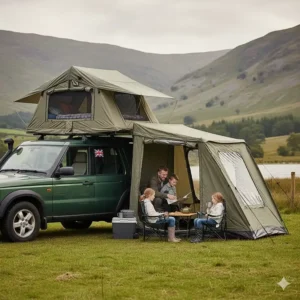
For families who’ve outgrown standard two-person tents, the TentBox Lite XL delivers extraordinary space without requiring a massive 4×4. This super-king sized soft shell tent comfortably sleeps four adults or two adults with three children, making it ideal for proper family camping holidays.
Key Specifications:
- Mattress size: Super-king (183cm x 240cm when deployed)
- Internal height: 110cm
- Total weight: 62kg
At £1,895, the Lite XL isn’t cheap, but UK families report it pays for itself within several trips when you factor in avoided hotel costs. The 6cm dual-layer mattress genuinely rivals many home beds for comfort—multiple reviewers mentioned waking up better rested than in budget B&Bs.
The tent’s aluminium frame and 280gsm canvas construction handle British weather admirably. UK testers on the North Wales coast reported zero leaks despite horizontal rain (that special Welsh variety), whilst the multiple windows create brilliant cross-ventilation for those rare muggy summer evenings.
One particularly clever feature: the tent’s curved window design helps shed water and handle wind more effectively than flat panels. UK buyers camping in exposed locations like Dartmoor appreciate this thoughtful engineering.
Pros:
✅ Genuine four-person capacity rare in roof tents
✅ Excellent build quality with premium materials
✅ Multiple colour options (Slate, Forest, Sunset)
Cons:
❌ Heavy (62kg) requires two people for installation
❌ Larger footprint needs medium-to-large vehicles
According to the Camping and Caravanning Club’s testing, TentBox remains one of the most popular brands in the UK market, and the XL model receives particular praise from families who’ve completed extended European road trips. The ability to set up in five minutes after a long drive from London to the Scottish Highlands cannot be overstated—exhausted kids don’t wait patiently whilst you faff with tent poles.
3. Ventura XL Hard Shell – Best Value Hard Shell for Quick Deployment
Breaking into the hard shell category without breaking the bank, the Ventura XL Hard Shell offers remarkable value at just £1,349 for pre-orders. This fibreglass-shelled beauty deploys in under 60 seconds thanks to gas-assisted struts, making it perfect for UK touring where you might move locations daily.
Key Specifications:
- Mattress: 2.1m x 1.3m with 2-inch high-density foam
- Shell material: 3-layer fibreglass construction
- Wind rating: Gale Force 8 capable
The Ventura XL presents an intriguing proposition for UK buyers: hard shell convenience at soft shell pricing. The streamlined aerodynamic design means minimal impact on fuel economy—crucial when petrol prices remain stubbornly high across Britain. Essex-based buyers note the company’s UK location means excellent customer service and readily available spare parts.
The built-in USB LED lighting system proves surprisingly useful during winter camping when darkness arrives by 16:00. UK reviewers camping in the Peak District particularly praised the blackout interior feature, which allows lie-ins even when parked facing east during summer sunrises.
Pros:
✅ Exceptional value for hard shell design
✅ Quick 60-second deployment
✅ British company with UK warehouse support
Cons:
❌ Fibreglass slightly heavier than ABS alternatives
❌ Two-person maximum capacity
Customer feedback from UK buyers highlights the tent’s robust weather protection. One Yorkshire purchaser tested it through Storm Babet and reported “absolutely no issues whatsoever,” whilst campers in the Scottish Highlands appreciated the covered entrance that prevents rain entering during access—a genuinely thoughtful feature for British conditions.
4. RoofBunk Roamer – Premium Hard Shell with Superior Weather Protection
The RoofBunk Roamer represents the sweet spot for serious UK adventurers seeking hard shell convenience with exceptional build quality. At approximately £1,750, it costs more than budget options but delivers features that justify the investment for year-round camping.
Key Specifications:
- Shell: High-quality ABS (superior impact resistance vs fibreglass)
- Canvas: 320gsm poly-cotton ripstop
- Waterproof rating: 3000mm
The Roamer excels in British weather conditions thanks to thoughtful design choices. The ABS shell resists cracking in cold temperatures better than fibreglass alternatives—important for Scottish winter camping or early spring trips to Snowdonia. The stainless steel gas strut system operates smoothly even in freezing conditions, unlike cheaper pneumatic alternatives that can become sluggish.
UK buyers consistently praise the memory foam mattress quality, with multiple reviewers noting it’s “genuinely comfortable enough to use every weekend.” The blackout interior and thick canvas help with temperature regulation—staying cooler during heatwaves and retaining warmth on chilly autumn evenings.
Pros:
✅ Superior ABS construction vs fibreglass
✅ Excellent customer reviews from UK buyers
✅ Capable of sleeping 2 adults + 1 child
Cons:
❌ Mid-range pricing around £1,750
❌ 60kg weight requires careful installation
According to RoofBunk’s UK-focused customer testimonials, the tent handles winds up to 40mph without concerning movement—essential for camping in exposed British locations like the North York Moors or coastal sites in Cornwall. The UV and mould-resistant treatment proves particularly valuable in damp British conditions where cheaper tents can develop issues.
5. Tuff-Trek Ultralite Plus – Best Lightweight Option for Smaller Vehicles
The Tuff-Trek Ultralite Plus solves a common UK challenge: fitting a capable roof tent onto smaller cars without exceeding roof load limits. At just 20cm height when packed (excluding ladder), this soft shell beauty fits where bulkier models can’t.
Key Specifications:
- Packed height: Only 20cm (vs 30cm for standard TT-01)
- Width: 1.4m (suitable for small cars and vans)
- Setup time: Approximately 30 minutes
Priced at £1,799 on Amazon.co.uk, the Ultralite Plus caters specifically to UK buyers with compact vehicles like Audi A3s or VW Golfs. Tuff-Trek’s genuine polycotton breathable ripstop canvas performs brilliantly in British climates—drying quickly after rain whilst remaining cool in hot weather and warm when temperatures drop.
The twin SKYWINDOWS feature receives particular praise from romantic UK campers who’ve enjoyed stargazing from the Brecon Beacons to the Isle of Skye. Practical touches like shoe bags and multi-purpose organisers show the designers understand real camping needs—wet hiking boots and soggy jackets are inevitable parts of British outdoor life.
Pros:
✅ Ultra-low profile fits small vehicles
✅ Four-season capability with quality materials
✅ British brand with UK-focused design
Cons:
❌ Longer 30-minute setup vs hard shells
❌ Two-person capacity may limit family use
UK customer reviews highlight the tent’s versatility across seasons. One Lake District regular reported using it “comfortably from March through November” with appropriate sleeping bags, whilst a Welsh camper noted the canvas “genuinely works well in all climates” just as advertised. The anti-bug mesh on windows and doors proves essential during midges season in Scotland—trust me, you want that protection.
6. TentBox Classic 2.0 – Premium Hard Shell Excellence
For UK buyers seeking the ultimate hard shell experience, the TentBox Classic 2.0 justifies its £2,195 price tag through exceptional engineering and premium materials. This represents TentBox’s flagship model, incorporating years of feedback from British campers into a refined design.
Key Specifications:
- Packed height: Just 35cm (highly aerodynamic)
- Shell: Hard ABS construction
- Setup: Gas-strut assisted <60 seconds
The Classic 2.0 demonstrates what happens when a British brand obsesses over details. The hard ABS shell not only provides superior aerodynamics (reducing fuel consumption on motorway drives) but also offers proper protection for stored gear. Unlike soft shell models, you can confidently leave bedding inside—brilliant for weekend warriors who set up camp Friday evening after work.
Real-world testing by UK reviewers confirms the tent’s exceptional weather performance. Norfolk coast users reported it handled “brutal North Sea winds” without drama, whilst Scottish Highlands campers praised the insulation that kept them “genuinely warm during October nights when temperatures dropped to 2°C.”
Pros:
✅ Premium build quality throughout
✅ Can store bedding inside when packed
✅ Minimal fuel economy impact
Cons:
❌ £2,195 represents significant investment
❌ 55kg weight still requires careful installation
The Classic 2.0 includes thoughtful features like integrated pockets, quality lighting, and properly designed ventilation. UK buyers planning extended trips appreciate these details—when you’re spending a fortnight touring the Highlands, small conveniences matter enormously. TentBox’s standard 5-year warranty provides additional peace of mind, demonstrating the company’s confidence in their construction quality.
7. Bushveld Hard Shell – Ultimate Luxury Four-Person Hard Shell
The Bushveld Hard Shell sits at the premium end of the UK market at £4,453, offering genuinely unique features for families requiring four-person capacity in a hard shell design. This cantilever design represents serious engineering, providing king-size sleeping space without the bulk of traditional four-person soft shells.
Key Specifications:
- Capacity: Genuine four-person sleeping
- Canvas: Double 600D ripstop body, 420D oxford cover
- Design: One-piece aerodynamic shell
Available through Amazon.co.uk, the Bushveld caters to UK families unwilling to compromise on deployment speed despite needing space for four. The cantilever mechanism means you flip the bottom section out to create a massive sleeping area—genuinely innovative compared to traditional fold-out designs.
The double ripstop construction provides exceptional durability for UK conditions. Buyers report the materials “feel substantially more robust than cheaper alternatives,” whilst the skylight feature allows families to enjoy British skies when weather permits (admittedly, that’s less often than we’d like).
Pros:
✅ Unique four-person hard shell design
✅ Premium materials and construction
✅ Quick deployment despite large capacity
Cons:
❌ £4,453 price point very substantial
❌ 85kg weight requires robust vehicle and roof bars
UK customer feedback suggests this tent targets a specific market: families with larger vehicles (Land Rovers, large SUVs) who value convenience and quality over budget concerns. One Range Rover owner noted it “transforms weekend trips—we can decide Friday evening to head to the Cotswolds and be set up within an hour of leaving London.”
The four-season capability receives consistent praise, with buyers reporting successful camping trips from the Lake District in February through to Cornwall in August. For families committed to regular roof tent camping, the Bushveld represents an investment that could last decades with proper care.
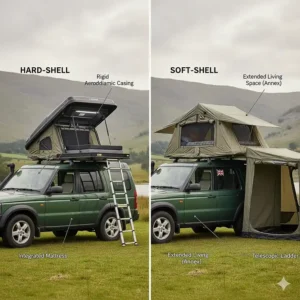
Understanding Roof Top Tent Types: Hard Shell vs Soft Shell
Choosing between hard shell and soft shell designs represents your first major decision when selecting a roof top tent for UK use. Each type offers distinct advantages depending on your camping style, vehicle, and priorities.
Hard Shell Benefits for British Conditions
Hard shell tents deploy in 30-60 seconds using gas-assisted struts—genuinely life-changing when you arrive at a Cairngorms campsite during horizontal Scottish rain. The rigid shell provides superior aerodynamics, typically adding just 5-10% fuel consumption compared to 15-20% for soft shells. UK motorway driving particularly benefits from this efficiency.
The shell also offers valuable storage space. Unlike soft shells that fold over, hard shells allow storing bedding, pillows, and sleeping bags inside when packed. For weekend warriors making frequent trips, this convenience cannot be overstated—you essentially have a ready-to-go bedroom permanently mounted on your vehicle.
Weather protection excels with hard shells. The rigid structure handles wind better than fabric alternatives, whilst the enclosed design when packed protects materials from UV damage and road grime during British winter motoring. Expect hard shells to cost £1,350-£4,500 depending on features and capacity.
Soft Shell Advantages for UK Families
Soft shell tents offer significantly more space for the weight. A 62kg soft shell can comfortably sleep four people, whereas hard shells of similar weight typically accommodate just two. For UK families, this capacity difference proves crucial.
The larger sleeping area also means proper storage inside the tent. UK campers accumulate wet gear—hiking boots, rain jackets, damp towels—and having space to organise it makes evening comfort substantially better. Multiple reviewers mention appreciating the extra room for “spreading out” compared to cramped hard shells.
Cost-effectiveness represents another major advantage. Quality soft shells start around £850-£1,000 compared to £1,350+ for basic hard shells. For budget-conscious families testing roof tent camping before fully committing, soft shells provide an accessible entry point.
Setup time ranges from 2-5 minutes for modern soft shells—not as instant as hard shells, but still considerably faster than traditional ground tents. UK buyers camping at established sites (where arrival times are less critical) often find this perfectly acceptable.
Which Type Suits UK Camping Best?
For couples or small families moving locations frequently (touring Scotland, following the North Coast 500), hard shells excel. The quick deployment and fuel efficiency justify the premium during multi-week adventures.
Families with children or groups camping primarily at established sites benefit more from soft shells. The extra space and lower cost outweigh the slightly longer setup, whilst the capacity allows everyone to sleep together—valuable when camping with young children.
Weather conditions matter less than many assume. Quality soft shells with proper waterproof ratings (3000mm+) and wind ratings (Gale Force 8) handle British weather admirably. The key lies in choosing reputable brands rather than type alone.
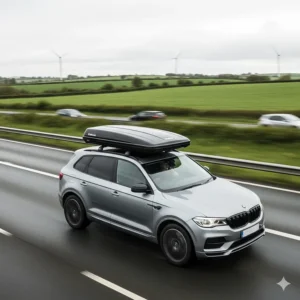
Essential Features for UK Weather Conditions
British weather demands specific features that buyers in sunnier climates can ignore. Your roof top tent needs proper engineering to handle our “four seasons in one day” reality.
Waterproofing Standards That Actually Work
Look for minimum 3000mm waterproof ratings on tent bodies, with 5000mm preferable for rainflies. This specification isn’t marketing fluff—UK buyers report tents rated below 2000mm developing leaks after prolonged rain. The Lake District and Scottish Highlands regularly deliver rain that would make Noah nervous, so proper ratings matter enormously.
Sealed seams with waterproof tape prevent the sneaky leaks that cheaper tents suffer. Multiple UK reviewers mention discovering this difference only after their first proper storm—don’t be one of them. Quality brands like TentBox, RoofBunk, and Tuff-Trek use properly sealed construction as standard.
Wind Resistance Specifications
Gale Force 8 rating (wind speeds up to 39-40mph) represents the minimum for serious UK camping. Exposed locations like Dartmoor, the Pennines, or Scottish moorland regularly experience these conditions. Cheaper tents rated for lower wind speeds become genuinely unpleasant—and potentially unsafe—during storms.
Frame construction matters enormously. Aluminium frames with reinforced corner joints handle stress better than lightweight alternatives. UK buyers camping year-round report frame failures on budget tents, whilst quality models endure season after season.
Breathable Materials for Condensation Prevention
British weather creates challenging condensation conditions—warm bodies inside cool tents with high humidity outside. Polycotton blend canvas (280-320gsm) breathes far better than pure polyester, reducing morning dampness substantially.
UK reviewers consistently mention condensation as a major issue with cheaper tents using non-breathable materials. One Lake District camper noted switching from a budget polyester tent to a polycotton model “completely eliminated the condensation puddles we’d been suffering.”
UV and Mould Resistance
Britain’s damp climate makes mould resistance essential for tent longevity. Quality materials treated with anti-mould agents prevent the musty smell and material degradation that plague untreated tents. Store your tent properly between trips (dry and ventilated), but the chemical treatment provides valuable backup.
UV resistance might seem odd for cloudy Britain, but summer UV levels still damage untreated fabrics over time. Fading becomes noticeable after just two seasons on cheaper tents, whilst UV-treated materials maintain appearance and structural integrity for years.
Vehicle Compatibility and Roof Load Requirements
Installing a roof top tent safely requires understanding your vehicle’s load ratings—specifications most UK car owners have never considered. Get this wrong, and you’re risking serious safety issues or potential insurance complications.
Static vs Dynamic Load Ratings
Your vehicle has two crucial ratings. Dynamic load (also called “driving load”) specifies maximum weight whilst the vehicle is moving, typically 50-75kg for standard cars. Static load (parking) allows substantially more—often 200-400kg—as this includes the weight of people inside the tent.
Check your vehicle handbook or search online using your exact model and year. A 2020 VW Golf might have different ratings than a 2022 model, so precision matters. UK buyers report insurance companies requesting this information if claiming after an accident with a roof tent installed.
Most roof tents weigh 45-85kg, fitting comfortably within dynamic limits for medium and large vehicles. However, adding roof bars (typically 10-15kg) means your total roof load includes tent + bars + any gear stored in the tent or on roof racks.
Roof Bar Requirements
Through bars (continuous rails running full vehicle width) work best for most roof tents, providing maximum flexibility for bracket placement. Flush bars work but require checking the unobstructed length meets the tent’s bracket spacing requirements—typically 60-140cm depending on model.
Weight rating for roof bars should exceed your tent weight by comfortable margin. Choose bars rated for at least 75kg if your tent weighs 60kg. Quality brands like Thule, Yakima, or Rhino-Rack provide proper specifications, whilst cheaper alternatives often lack clear ratings—false economy when dealing with something bolted to your vehicle roof.
Installation Considerations
Two people make installation considerably safer and easier for tents over 50kg. UK buyers attempting solo installation report it’s “technically possible but genuinely awkward and risky.” The investment in a roof tent deserves protecting with proper installation.
Consider professional fitting if uncertain. Many UK retailers offer installation services for £50-£100—worthwhile for peace of mind. According to GOV.UK guidance on vehicle modifications, improperly secured loads can result in fines up to £500 and potentially invalidate insurance.
Height clearance becomes crucial. Adding a roof tent increases vehicle height by 25-40cm depending on model. Multistorey car parks, garage entrances, and drive-through restaurants suddenly require careful attention. UK buyers report embarrassing moments at McDonald’s drive-throughs before adjusting their awareness.
Pricing Guide and Value Analysis
Understanding the UK roof top tent market’s pricing structure helps identify genuine value versus marketing fluff. Here’s what you’re actually paying for at different price points.
| Price Range | What You Get | Best For |
|---|---|---|
| £850-£1,500 | Quality soft shells, basic hard shells | First-time buyers, occasional use |
| £1,500-£2,500 | Premium soft shells, quality hard shells | Regular weekend camping |
| £2,500-£5,000 | Luxury hard shells, large capacity models | Year-round camping, families |
Budget Category (£850-£1,500)
This bracket offers excellent entry points for UK buyers testing roof tent camping. The TentBox Lite 2.0 at £1,145-£1,470 and Ventura XL at £1,349 provide genuinely capable tents with proper waterproofing and materials.
Expect soft shell designs or basic hard shells in this range. Materials will be adequate (280-320gsm canvas, 2000-3000mm waterproofing) rather than premium, but perfectly sufficient for UK conditions with care. Warranties typically span 2-3 years.
UK buyers report these tents lasting 5-7 years with proper maintenance, making cost-per-use very reasonable. One reviewer calculated their TentBox Lite 2.0 cost just £23 per weekend after three years of regular use—substantially cheaper than budget hotel rooms.
Mid-Range Category (£1,500-£2,500)
This sweet spot delivers premium features without luxury pricing. Models like the RoofBunk Roamer (£1,750) and TentBox Lite XL (£1,895) offer superior materials, thoughtful design, and features that enhance the camping experience significantly.
Expect 320gsm polycotton canvas, 3000-5000mm waterproofing, quality zippers (YKK), and better insulation. Hard shells in this range use ABS rather than fibreglass, providing superior durability and weather resistance.
UK buyers planning regular year-round camping find this category offers best value. The additional £500-£1,000 versus budget options delivers meaningful improvements in comfort, durability, and features that justify the investment over several seasons.
Premium Category (£2,500-£5,000)
Luxury models like the TentBox Classic 2.0 (£2,195) and Bushveld Hard Shell (£4,453) target committed campers unwilling to compromise. These tents feature premium materials throughout, innovative designs, and exceptional build quality.
Expect features like integrated gear storage, premium mattresses, sophisticated ventilation systems, and extended warranties (5+ years). Build quality allows decades of use with proper maintenance—UK owners report 10-year-old premium tents still performing like new.
The four-person Bushveld particularly targets families replacing ground tent camping entirely. At £4,453, it costs roughly the same as 15-20 nights in budget hotels, making the investment recoup within one active camping season for families currently spending on accommodation.
Total Cost Considerations
Don’t forget additional expenses when budgeting:
- Roof bars: £100-£400 for quality systems
- Installation: £50-£100 if professional fitting desired
- Accessories: Awnings (£200-£500), thermal liners (£50-£150), ladder extensions (£30-£80)
- Maintenance: Waterproofing treatment (£20-£40 annually)
UK buyers report total setup costs typically add 20-30% to tent price. A £1,500 tent realistically requires £1,800-£2,000 budget including essential accessories and installation.
UK Wild Camping Laws and Regulations
Understanding where you can legally use your roof top tent prevents uncomfortable encounters with landowners or authorities. UK wild camping laws vary significantly by region, creating confusion for new roof tent owners.
England and Wales Regulations
Wild camping requires landowner permission in England and Wales according to UK Government guidance on access land. Technically, sleeping in a roof tent on private land without consent constitutes civil trespass. Police can ask you to move under the Police, Crime, Sentencing and Courts Act 2022, with refusal potentially resulting in fines or vehicle seizure.
However, enforcement remains relatively relaxed if you’re discreet and respectful. UK campers following the “arrive late, leave early” principle and camping in remote locations rarely encounter issues. Choose spots away from roads, houses, and popular walking routes.
Dartmoor Exception: Dartmoor National Park historically permitted limited wild camping, though recent legal challenges have created uncertainty. Check the Dartmoor National Park website for current regulations before planning trips.
Scotland’s Access Rights
Scotland offers the most permissive wild camping laws in the UK under the Land Reform (Scotland) Act 2003 and Scottish Outdoor Access Code. You can camp on most unenclosed land provided you:
- Stay away from buildings, roads, and farmland
- Follow Leave No Trace principles
- Don’t camp in the same spot for more than 2-3 consecutive nights
- Respect the environment and other users
Roof top tents technically fall outside traditional backpacking rights, but authorities generally apply pragmatic interpretation. Park legally, behave responsibly, and you’ll likely avoid issues. Apps like Park4Night help locate suitable spots used by other roof tent campers.
Legal Alternatives Across the UK
Many UK landowners now offer camping spots through platforms like:
- Hipcamp UK: Private land camping from £10-£25 per night
- Camping on the Farm: Agricultural sites with basic facilities
- Britstops: Pub and farm stopovers (usually with food/drink purchase)
Established campsites remain most straightforward, with prices ranging from £10-£30 nightly depending on facilities and location. Many UK sites now specifically welcome roof tent campers, providing dedicated parking spots.
For temporary camping on private land, remember the 60-day rule in England allows landowners to host campsites up to 60 days annually without planning permission, though camping licences may apply for longer periods according to GOV.UK regulations.
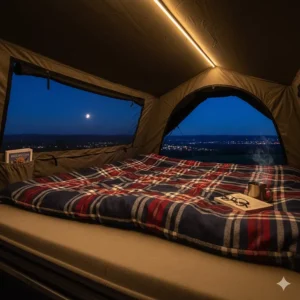
Setup, Maintenance and Longevity Tips
Proper care extends your roof tent’s lifespan from 5 years to potentially 15+ years. UK conditions particularly challenge materials, so maintenance matters more than in drier climates.
Initial Installation Best Practices
Mount your tent with precision—a wonky installation causes stress on mounting points and affects aerodynamics. Use a spirit level to ensure tent sits square on roof bars. Tighten bolts gradually in star pattern (like changing a tyre) to distribute pressure evenly.
Check bolt tension after your first 50-100 miles of driving. Vibrations from UK roads (and our legendary potholes) can loosen initially tight bolts. Carry appropriate tools for roadside adjustments—many UK buyers report needing to re-tighten during their first long journey.
Regular Maintenance Schedule
After Every Trip:
- Fully dry the tent before packing (British rain makes this challenging—set it up at home if necessary)
- Brush off debris, mud, and leaves
- Check zippers for damage or debris
- Inspect ladder for security and stability
Monthly (During Active Season):
- Check all mounting bolts and brackets
- Inspect canvas for tears or weak spots
- Test gas struts operation (hard shells)
- Clean any mould spots immediately
Annually:
- Reapply waterproofing treatment (products like Nikwax work well)
- Check seam tape for lifting or damage
- Inspect mattress for compression or damage
- Lubricate moving parts (hinges, struts)
Storage Between Seasons
UK buyers storing tents through winter should:
- Ensure completely dry before long-term storage
- Store in dry, ventilated space (garages work if dry; damp sheds do not)
- Partially open if possible to prevent mould growth
- Consider removing from vehicle if parked outdoors (UV and weather degradation)
One Yorkshire owner reported mould issues after storing a slightly damp tent through winter in an unheated garage—£200 professional cleaning bill followed. Don’t let that be you.
Dealing with UK-Specific Challenges
Mould and Mildew: British dampness makes this inevitable without vigilance. Catch mould early with diluted white vinegar solution (1:1 ratio with water). Severe cases may require specialist tent cleaning products or professional services.
Condensation Management: Wake to condensation beading inside your tent? Wipe down before packing to prevent mould. Consider thermal insulation pods (£50-£150) for winter camping—these dramatically reduce condensation whilst improving warmth.
Road Salt Damage: Winter UK roads dump salt everywhere. Rinse mounting hardware and brackets monthly during winter to prevent corrosion. Stainless steel hardware resists better than cheaper alternatives.
Essential Accessories for UK Roof Tent Camping
While your roof top tent provides the core sleeping solution, several accessories transform good UK camping trips into genuinely comfortable experiences.
Awnings and Annexes (£200-£500)
Side-mounted awnings create valuable sheltered space for cooking, gear storage, or simply escaping rain whilst maintaining outdoor enjoyment. UK weather makes awnings particularly valuable—you’ll want somewhere dry to cook dinner when Cornish mizzle sets in.
Quality models from brands like Darche, Front Runner, or matching brand awnings provide 2-4 square metres of covered space. Some include removable walls converting them into enclosed annexes—brilliant for families with children needing changing space or privacy.
Thermal Insulation Pods (£50-£150)
These insulated liners fit inside your tent, dramatically improving warmth during spring and autumn camping. UK buyers report temperature improvements of 5-8°C compared to uninsulated tents—the difference between comfortable sleep and shivering misery.
Particularly valuable for Scottish Highlands camping or early/late season trips anywhere in Britain. One Brecon Beacons regular noted their insulation pod “extended our camping season from June-August to April-October comfortably.”
Anti-Condensation Mats (£30-£80)
These moisture-absorbing mats sit beneath your mattress, capturing condensation before it soaks bedding. In British conditions with high humidity and temperature fluctuations, they prove invaluable.
Cheaper than thermal pods but addressing a specific UK challenge. Lake District campers particularly praise these for handling the region’s notorious dampness.
Ladder Accessories (£30-£100)
Standard ladders work fine, but extensions or comfort pads improve the experience significantly. Taller family members appreciate ladder extensions (adding 30-50cm), whilst comfort pads prevent cold aluminium rungs hurting feet during midnight bathroom trips.
Some UK buyers add non-slip ladder mats (£15-£25) for improved grip during rainy conditions—genuinely useful when climbing down a slippery ladder at 2am for a wee in Snowdonia’s rain.
Portable Power Solutions (£100-£500)
Portable power stations allow running USB lights, charging phones, or even powering electric blankets during cold weather camping. UK buyers report these transform winter camping comfort dramatically.
Budget options like the Anker PowerHouse provide 200-400Wh capacity for £100-£200, sufficient for weekend camping. Serious users invest in larger systems (500-1000Wh) for extended trips or running fridges.
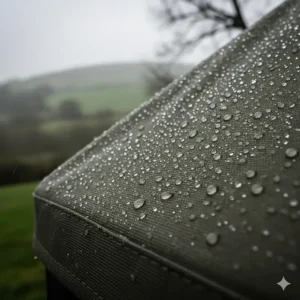
Comparison: Roof Tents vs Traditional Ground Tents
Should you choose a roof top tent over traditional ground tents for UK camping? The decision involves weighing convenience against cost and capacity.
| Feature | Roof Top Tent | Ground Tent |
|---|---|---|
| Setup Time | 30 seconds – 5 minutes | 10-30 minutes |
| Comfort | Memory foam mattress | Requires sleeping mat |
| Weather Protection | Elevated, better ventilation | Ground moisture issues |
| Storage Between Trips | Mounted on vehicle | Requires storage space |
| Initial Cost | £850-£4,500 | £100-£600 |
| Capacity | Typically 2-4 people | 1-8+ people |
| Fuel Economy Impact | 5-20% increase | None |
| Security | Elevated, harder to access | Ground level |
When Roof Tents Excel
Frequent Touring: Moving locations daily during Scottish Highlands tours or North Coast 500 trips favours roof tents enormously. Five-minute setup versus 30-minute ground tent faff makes evening arrivals vastly less stressful.
Wet Ground Conditions: UK’s autumn and spring deliver soggy ground everywhere. Staying elevated eliminates ground moisture, puddles, and that horrible damp feeling when your tent touches wet grass.
Wildlife Concerns: Whilst Britain lacks dangerous animals, badgers and foxes occasionally investigate ground tents. Elevated sleeping prevents disturbances and provides better security in remote locations.
Storage Constraints: London flat-dwellers appreciate having camping accommodation permanently mounted on their vehicle rather than consuming valuable wardrobe space.
When Ground Tents Make Sense
Large Groups: Camping with six friends? Ground tents offer 6-8 person capacity that roof tents cannot match. Even the largest roof tents accommodate just four people.
Budget Constraints: Quality ground tents cost £100-£600 versus £850-£4,500 for roof tents. For occasional camping, ground tents represent far better value.
Cycling or Backpacking: Obviously, roof tents require vehicles. UK cyclists and backpackers need traditional tents for Pennine Way or Scottish Highland trails.
Established Campsite Use: If you always camp at equipped sites with flat pitches, ground tent disadvantages (wet ground, longer setup) matter less.
The Hybrid Approach
Many UK camping families own both: a roof tent for parents (quick setup, comfort) and ground tent for children. This provides capacity whilst maintaining convenience—kids actually enjoy ground tent camping’s traditional experience.
Others use ground tents for longer stays (week+ holidays where one setup suffices) and roof tents for touring weekends. Your camping style determines the optimal solution.
Real UK Buyer Experiences and Common Mistakes
Learning from others’ experiences helps avoid expensive mistakes. UK buyers report several common pitfalls and unexpected discoveries.
Common Purchase Mistakes
Underestimating Weight Impact: Multiple buyers mentioned “not realising how much 60kg feels when lifting it onto the roof alone.” Budget for professional installation or recruit a strong friend.
Ignoring Vehicle Compatibility: One buyer purchased a 65kg tent before discovering their 2015 Ford Focus had just 50kg dynamic roof load rating. Check specifications BEFORE ordering.
Choosing Style Over Substance: Aesthetic appeal doesn’t matter when rain penetrates poor-quality canvas. Prioritise waterproof ratings and wind resistance over colour schemes.
Skimping on Accessories: “We bought the tent but couldn’t afford the awning—seriously regretted that during our first rainy trip” reports one Lake District camper.
Unexpected Benefits
Spontaneous Trips: “Having the tent permanently mounted means we can decide Friday evening to head to the Cairngorms—no packing required” enthuses one Scottish outdoor enthusiast.
Hotel Cost Savings: A family calculated their £1,895 TentBox Lite XL paid for itself after just 10 weekend trips that would have cost £150+ nightly for hotel rooms.
Community Connections: Roof tent camping creates instant community. UK buyers report fellow campers regularly approaching for friendly chats, recommendations, and shared experiences.
Extended Season: “We thought we’d only camp in summer, but the tent’s comfort means we’re out March through November now” notes a Yorkshire camper.
Top Tips from Experienced UK Roof Tent Owners
- Practice Setup at Home: “We embarrassed ourselves at a Lake District campsite fumbling with our new tent for 45 minutes. Practice in your driveway first!”
- Check Height Before Driving: “I nearly took the roof off at a multistorey car park. Now I’ve got a sticky note on my dashboard reminding me of my new height.”
- Invest in Quality Roof Bars: “Cheap roof bars bent after six months. Should’ve bought Thule from the start—false economy.”
- Always Carry Spare Bedding: “British weather means your bedding might get damp. Having spare blankets saved our Peak District trip.”
- Join UK Roof Tent Communities: Facebook groups and forums provide invaluable location recommendations and troubleshooting advice specific to British conditions.
Making Your Final Decision: Which Tent Suits You?
Choosing the right roof top tent depends on balancing your specific needs, budget, and camping style. Here’s how to make a confident decision for UK conditions.
For First-Time Buyers on a Budget
The TentBox Lite 2.0 (£1,145-£1,470) or Ventura XL Hard Shell (£1,349) provide excellent entry points. Both offer genuine quality without premium pricing, allowing you to experience roof tent camping without massive financial commitment. If the lifestyle suits you, upgrade later; if not, you haven’t overspent.
Choose soft shell (TentBox Lite 2.0) if setup time matters less than budget and weight. Choose hard shell (Ventura XL) if quick deployment justifies slightly higher cost.
For Families Needing Space
The TentBox Lite XL (£1,895) remains the standout choice for UK families requiring genuine four-person capacity. The super-king mattress, proven weather resistance, and British brand reliability make it worth the investment. Alternatively, the premium Bushveld Hard Shell (£4,453) suits families unwilling to compromise on deployment speed.
Most families report the capacity pays dividends—children create mess and need space, making the larger footprint essential for pleasant camping experiences.
For Couples Touring Extensively
The RoofBunk Roamer (£1,750) or TentBox Classic 2.0 (£2,195) excel for couples planning regular touring holidays. Hard shell convenience proves invaluable when moving locations daily, whilst the quality construction handles British weather across all seasons.
The additional £600-£1,000 versus budget options delivers genuine improvements in comfort and durability that justify investment over multiple years of use.
For Weekend Warriors
The Tuff-Trek Ultralite Plus (£1,799) suits buyers planning regular weekend escapes without needing frequent location changes. The soft shell design provides excellent value whilst the lightweight construction fits smaller vehicles that might struggle with heavier alternatives.
British brand heritage and genuine polycotton canvas materials ensure it handles UK weather admirably despite the budget-friendly positioning.
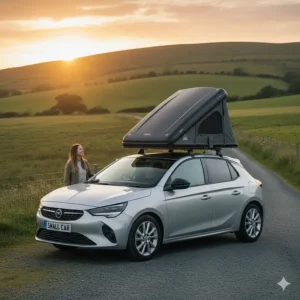
Frequently Asked Questions
❓ How long do roof top tents typically last in UK conditions?
❓ Can I leave my roof top tent mounted on my vehicle year-round?
❓ What's the realistic impact on fuel economy with a roof top tent?
❓ Are roof tents safe for children and can they handle British storms?
❓ Do I need special insurance for a roof top tent in the UK?
Conclusion: Choosing Your Perfect UK Adventure Companion
Selecting the right roof top tent transforms how you experience Britain’s spectacular landscapes. Whether you’re planning misty mornings in the Lake District, dramatic sunsets over Scottish lochs, or coastal adventures in Cornwall, these remarkable shelters combine convenience with genuine comfort.
The UK market offers exceptional choices across every budget and camping style. Budget-conscious buyers find genuine quality in the TentBox Lite 2.0 (£1,145-£1,470) and Ventura XL Hard Shell (£1,349). Families requiring space can’t beat the TentBox Lite XL’s (£1,895) super-king capacity and proven reliability. Touring couples benefit enormously from premium hard shells like the RoofBunk Roamer (£1,750) or TentBox Classic 2.0 (£2,195) that deploy in under 60 seconds.
Remember that successful roof tent camping requires more than just the tent itself. Factor in quality roof bars, essential accessories like awnings or thermal liners, and potential installation costs when budgeting. The total investment pays dividends through years of adventures, hotel savings, and spontaneous weekend escapes that ground tent camping simply cannot match.
British weather demands proper specifications—3000mm+ waterproofing, Gale Force 8 wind ratings, and breathable polycotton canvas prevent the disappointments that plague cheaper alternatives. Our challenging climate actually proves roof tents’ greatest strength: elevated sleeping eliminates ground moisture issues, quick deployment gets you dry faster, and proper insulation handles autumn chill admirably.
The roof tent community in Britain continues growing rapidly, with manufacturers increasingly designing specifically for UK conditions rather than adapting international models. This focus delivers better weather protection, thoughtful features for British camping, and companies understanding our unique regulatory landscape.
Your perfect tent awaits somewhere in this guide. Whether prioritising budget, capacity, deployment speed, or premium features, the seven models reviewed represent the genuine best options currently available to UK buyers. Choose wisely based on your specific needs, maintain it properly, and you’ll enjoy countless memorable nights under British skies—rain or (occasionally) shine.
Start your roof tent adventure today and discover why thousands of UK campers have embraced this liberating way to explore our beautiful islands.
Recommended for You
- 7 Best 4 Season Tents UK Weather Tested 2026
- 7 Best Ultralight Tents UK 2026
- 7 Best Budget Family Tents UK 2026 – Affordable & Waterproof
Disclaimer: This article contains affiliate links. If you purchase products through these links, we may earn a small commission at no additional cost to you. Prices shown are approximate and may vary. All product recommendations are based on genuine research and customer reviews from UK buyers.
✨ Found this helpful? Share it with your mates! 💬🤗
