
In This Article
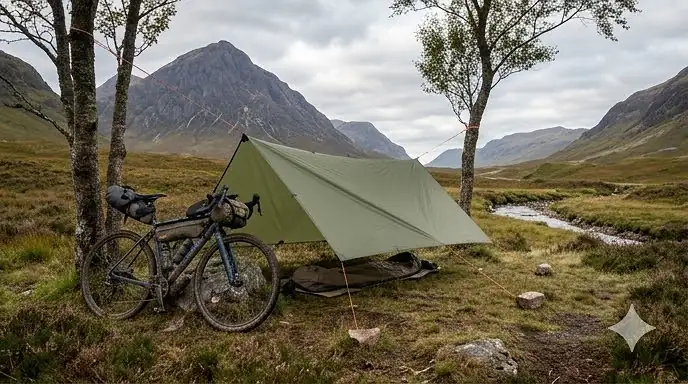
Picture this: you’re halfway through a weekend tour of the North York Moors when the skies open up — proper biblical stuff, the kind of rain that makes you question your life choices. Your mate’s faffing with tent poles in the downpour whilst you’ve already got your lightweight tarp for bikepacking rigged over your bike, kettle on, and a brew steaming. That’s the tarp advantage in a nutshell.
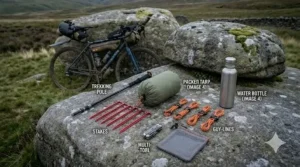
After years of schlepping tents across the UK’s soggy trails, I’ve become something of a tarp convert. The weight savings alone — we’re talking 300-700g versus 1.5-2.5kg for a comparable tent — mean you can actually carry that extra layer or a decent book without your panniers groaning. But what most buyers overlook about lightweight tarps for bikepacking is how they fundamentally change your relationship with the outdoors. No zipped cocoon separating you from dawn birdsong or that satisfying patter of rain on fabric whilst you’re snug underneath.
The British climate demands a specific approach to tarp selection. Our relentless drizzle, occasional gales sweeping across the Pennines, and the fact that summer can feel distinctly autumnal mean you need proper waterproof ratings (3,000mm minimum) and clever pitching options that don’t rely on finding two perfectly-spaced trees in a Lake District campsite. Research from outdoor recreation studies confirms that shelter choice significantly impacts bikepacking comfort in variable weather conditions. This guide cuts through the marketing waffle to show you exactly which lightweight tarp for bikepacking will keep you dry on Scottish lochs, Welsh valleys, and everywhere between — whether you’re spending around £30 for a budget basha or stretching to £180 for ultralight perfection.
Quick Comparison: Best Lightweight Tarps for Bikepacking
| Tarp Model | Weight | Dimensions | Price Range | Best For | Waterproof Rating |
|---|---|---|---|---|---|
| DD SuperLight Bikepacker | 320g | 3.7m x 2.3m | £60-£75 | Bike-specific pitches | 3,000mm |
| DD SuperLight Tarp | 460g | 3m x 2.9m | £45-£60 | Versatile setups | 3,000mm |
| DD Tarp 3×3 Olive | 720g | 3m x 3m | £40-£55 | Budget reliability | 3,000mm |
| DD Tarp S | 450g | 2.8m x 1.5m | £30-£45 | Minimalist solo | 3,000mm |
| HIDEWALKER 3x3m | 580g | 3m x 3m | £25-£40 | Entry-level | 3,000mm |
| Alpkit Tarpstar 1 | 500g | Pyramid | £160-£180 | UK brand quality | Not specified |
| DD Magic Carpet XL | 320g | 2.2m x 1.4m | £20-£30 | Groundsheet | Rainproof |
💬 Just one click — help others make better buying decisions too! 😊
✨ Don’t Miss These Exclusive Deals!
🔍 Take your bikepacking shelter to the next level with these carefully selected products. Click on any highlighted item to check current pricing and availability on Amazon.co.uk. These picks will help you find exactly what you need!
Top 7 Lightweight Tarps for Bikepacking: Expert Analysis
1. DD SuperLight Bikepacker Tarp — Purpose-Built for Pedal Power
The DD SuperLight Bikepacker Tarp represents DD Hammocks’ first dedicated bikepacking shelter, and they’ve actually thought it through. At 3.7m x 2.3m, the elongated rectangular cut perfectly accommodates bike-as-pole setups without leaving your rear wheel exposed to the elements. The 320g pack weight (excluding pegs and anchor strap) genuinely disappears in a seatpack.
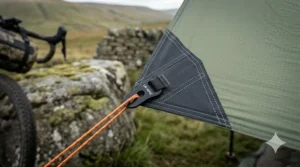
What the spec sheet won’t tell you is how the included bike anchor strap transforms setup speed. Rather than faffing with guylines wrapped round your handlebars, you’ve got multiple attachment loops that secure your bike upright in seconds — handy when you’re rolling into a Scottish bothy at dusk with fingers already going numb. The 3,000mm PU-coated ripstop nylon handles British downpours admirably, whilst 19 attachment points provide pitch versatility that shines when the wind shifts direction overnight.
In practice, this tarp excels for solo bikepackers covering open terrain — coastal paths, moorland bridleways, gravel routes across the Dales where natural anchor points are wishful thinking. The narrow width (2.3m versus 3m on square tarps) does mean less interior space if you’re bivvying with a mate, but for solo missions with your bike providing structure, it’s spot-on. UK customers consistently praise the waterproof performance, noting that even in Lake District deluges, condensation stays manageable if you leave one end partially open for airflow.
Pros: Bike-specific design eliminates need for poles or trees
✅ Genuine ultralight credentials at 320g
✅ 19 attachment points enable adaptive pitching in variable British weather
Cons:
❌ Narrower width limits two-person comfort
❌ Premium pricing versus standard tarps
Value Verdict: Around £65-£75 positions this in the mid-premium bracket, but the bike-integration features justify the extra £20-30 over generic rectangles if you’re serious about bikepacking-specific shelter.
2. DD SuperLight Tarp — The Versatile All-Rounder
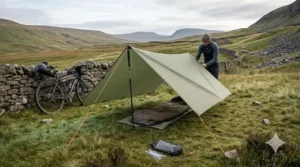
DD SuperLight Tarp hits the sweet spot between weight, coverage, and adaptability. The near-square 3m x 2.9m footprint provides generous protection for one person plus gear, or adequate coverage for two riders sharing warmth and moaning about British weather. At 460g (excluding pegs), it’s light enough for credit card touring yet substantial enough for week-long Scottish adventures.
The same 3,000mm-rated PU-coated ripstop nylon as the Bikepacker version delivers reliable waterproofing — crucial when you’re pitched on Dartmoor experiencing four seasons in an afternoon. What most buyers overlook about this model is its 19 reinforced attachment points distributed around edges and along the ridgeline. This isn’t marketing fluff; it means you can rig everything from minimalist A-frames to asymmetric wind-sheds without the tarp developing stress points after a fortnight of Welsh squalls.
For UK riders, the dimensions work brilliantly across multiple scenarios. Touring canal towpaths where you’ll find convenient tree spacing? Classic A-frame pitch. Wild camping on windswept Northumberland beaches? Peg down low in diamond configuration with your bike as windbreak. The versatility genuinely saves you carrying multiple shelter solutions, and the ability to adjust pitch tightness helps manage condensation — rather important when you’re waking up in a West Country valley where mist doesn’t so much roll in as permanently reside.
Customer feedback from UK users highlights excellent build quality (taped seams, reinforced stress points) and colour availability in Olive Green, Coyote Brown, or Sunset Orange — the latter being genuinely useful for visibility if you’re pitched near bridleways used by mountain bikers with questionable braking skills.
Pros:
✅ Near-square dimensions suit solo or duo camping
✅ 19 attachment points enable multiple pitch configurations
✅ Proven British weather performance across all seasons
Cons:
❌ Heavier than bike-specific alternatives
❌ Requires trekking poles, trees, or bike for proper pitch
Value Verdict: In the £45-£60 range, this delivers serious bang per gram — less than a third the price of boutique ultralight shelters whilst handling UK conditions with equal competence.
3. DD Tarp 3×3 Olive Green — The Budget Workhorse
The DD Tarp 3×3 represents DD Hammocks’ original design philosophy: bombproof reliability without boutique pricing. At 720g (excluding pegs and guys), it’s heavier than SuperLight siblings, but the extra fabric mass brings peace of mind when gales sweep across the Cairngorms at 2am and you’re questioning whether your pitch will hold.
This 3m x 3m square configuration provides ample coverage for hammock camping (DD’s original market) but translates brilliantly to bikepacking ground setups. The same 3,000mm PU coating and taped seams as pricier models mean waterproof performance doesn’t suffer — you’re simply carrying an extra 250-300g of ripstop nylon that adds durability and marginally better condensation management through thicker fabric. The 19 attachment points (16 around edges, 3 along centreline) mirror the SuperLight range’s versatility.
What the budget-conscious British bikepacker gets here is proven trail heritage. This tarp featured prominently in Chris Ryan’s Amazon survival series, enduring monsoon conditions that make Welsh rain look like light mizzle. Whilst that’s marketing territory, the underlying point stands: the construction quality doesn’t dramatically drop off just because you’re saving £15-20. UK customers report 5+ years of regular use without significant wear — rather important when you’re budgeting for other kit upgrades like decent waterproof panniers or lights for those 4pm winter sunsets.
The Olive Green colourway blends nicely with British countryside (less important than marketing suggests, but pleasant nonetheless), and availability on Amazon Prime UK typically means next-day delivery, so you can impulse-buy before a weekend trip without paying express shipping premiums.
Pros:
✅ Exceptional value in the £40-£55 bracket
✅ Proven durability across harsh UK conditions
✅ Same attachment versatility as premium DD models
Cons:
❌ 720g weight penalty versus ultralight alternatives
❌ Standard ripstop fabric packs bulkier than silnylon options
Value Verdict: Around £45 buys you a tarp that’ll outlast two budget alternatives — proper cost-per-use economics for regular bikepackers.
4. DD Tarp S — Minimalist Solo Shelter
DD Tarp S strips back to essentials: 2.8m x 1.5m of 3,000mm-rated protection weighing just 450g. This compact rectangle targets solo bikepackers running ultralight setups where every gram counts and you’re comfortable with cosy rather than palatial shelter.
The narrow 1.5m width demands precise pitch technique — you’re essentially creating a bivvy-style envelope over yourself and essential gear, with the bike positioned strategically at one end as structural support. This isn’t a tarp for lounging about reading novels whilst rain hammers down; it’s functional minimalism for riders who prioritise pack weight over living space. That said, the 2.8m length provides adequate coverage for most people plus a rucksack at your feet, and if you’re disciplined about condensation management (partial ventilation even in rain), it performs admirably across UK conditions.
What British riders particularly appreciate is the genuinely pocket-sized pack volume. This tarp fits comfortably in handlebar rolls or frame bags without dominating precious space, leaving room for extra layers or that hipflask of single malt that makes wild camping decidedly more civilised. The 19 attachment points seem generous given the modest dimensions, but they enable creative pitching when you’re improvising with available anchor points — useful on canal-side tours where trees are sporadic and your bike becomes primary infrastructure.
The trade-off is obvious: limited coverage means exposure to elements if weather turns properly foul. This works brilliantly for fair-weather summer tours or ultralight credit card missions where you’re carrying minimal gear. It’s less ideal for week-long Scottish adventures in shoulder season when you might need to wait out horizontal rain for hours.
Pros:
✅ Genuinely ultralight at 450g
✅ Compact pack size suits handlebar or frame bags
✅ Budget-friendly entry to DD quality (£30-£45 range)
Cons:
❌ Narrow width limits interior space and weather protection
❌ Requires precise pitching skills in variable conditions
Value Verdict: Around £35 delivers exceptional grams-per-pound efficiency for minimalist riders willing to trade comfort for weight savings.
5. HIDEWALKER 3x3m Camping Tarp — Budget Entry Point
The HIDEWALKER 3x3m represents the affordable end of the lightweight tarp for bikepacking spectrum, typically retailing around £25-£40 on Amazon UK. Don’t let the unfamiliar brand name put you off — at 580g and 3m x 3m coverage with 3,000mm waterproof rating, the fundamental specifications match pricier alternatives.
Where budget tarps typically skimp is build quality and longevity. The HIDEWALKER uses 210T polyester with silver PU coating rather than the ripstop nylon DD Hammocks favours. In practice, this means marginally less tear resistance and potentially shorter lifespan under UV exposure — relevant if you’re touring sunny Mediterranean routes, less critical for British bikepackers where our weather is reliably overcast. The 19 attachment points are present but reinforcement quality varies, so inspect carefully before heavy-duty use.
What makes this compelling for UK beginners is the risk-reward ratio. If you’re uncertain whether tarp camping suits your style, investing £30 rather than £70 lets you experiment without buyer’s remorse. The tarp performs adequately in moderate British rain, though heavy downpours can sometimes find seams that aren’t quite as thoroughly taped as premium models. UK customer reviews note satisfactory performance for casual weekend use, with sensible expectations about longevity.
Availability in multiple colourways (olive green, camo, grey) provides options, and the included pegs and guylines — whilst basic — function adequately for initial trips before you inevitably upgrade to lighter titanium stakes.
Pros:
✅ Exceptional entry-level pricing (£25-£40)
✅ Standard 3x3m dimensions suit versatile pitching
✅ Adequate waterproofing for fair-weather UK touring
Cons:
❌ Polyester fabric less durable than ripstop nylon
❌ Quality control inconsistencies reported by UK buyers
Value Verdict: Around £30 buys reasonable performance for occasional use — sensible starter tarp before committing to premium alternatives.
6. Alpkit Tarpstar 1 — British Brand Pyramid Innovation
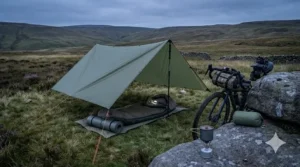
Alpkit Tarpstar 1 takes a different approach: pyramid tarp tent design using trekking poles for structure. At 500g for the complete package, this British brand’s offering targets bikepackers who value integrated solutions over modular versatility. The single-pole pitch creates surprising interior volume — you can actually sit upright whilst your mate’s horizontal in their A-frame tarp across the campsite.
The pyramid configuration handles British wind exceptionally well. Rather than presenting large surface areas to gusts (the Achilles heel of poorly-pitched rectangular tarps), the sloped sides deflect rather than catch wind, remaining stable even when Pennine squalls test your gear. Alpkit specifies waterproof fabric without publishing exact hydrostatic ratings, but UK customer feedback consistently reports excellent rain protection — unsurprising given Alpkit’s heritage designing kit for British conditions rather than sunny Californian trails.
What British bikepackers particularly value is the brand’s customer service and warranty support based in Derbyshire. If seams fail or fabric develops issues, you’re dealing with UK-based support rather than international shipping headaches. The price point around £160-£180 positions this as premium, but you’re paying for refined British design that accounts for our reliably damp climate, plus the reassurance of dealing with a company that actually understands what “torrential Lake District rain” means.
The pyramid format does limit pitch versatility compared to rectangular tarps — you’re committed to trekking poles or similar supports. For bikepackers who already carry poles or enjoy the integrated tent-like experience, it’s brilliant. For minimalists who prefer bike-as-structure setups, it’s less adaptable.
Pros:
✅ Pyramid design provides excellent wind stability
✅ British brand with UK-based customer support
✅ Integrated solution reduces pitching complexity
Cons:
❌ Requires trekking poles (not included)
❌ Premium pricing versus rectangular alternatives
Value Verdict: Around £170 delivers refined British engineering for riders who value brand heritage and customer support accessibility.
7. DD Magic Carpet XL — Essential Groundsheet Companion
The DD Magic Carpet XL (2.2m x 1.4m, 320g) deserves mention as the often-overlooked companion to tarp camping. This rainproof groundsheet addresses the tarp’s fundamental limitation: no floor. At around £20-£30, it’s the difference between waking up on sodden grass versus relatively dry comfort.
The dimensions suit solo sleeping mats with space for kit at your head or feet. The fabric isn’t fully waterproof to tent floor standards (it’s described as “rainproof” rather than 3,000mm+), but it provides adequate protection from ground moisture — crucial when you’re pitched on British soil that hasn’t been truly dry since approximately 1987. The weight penalty (320g) is noticeable but worthwhile if you’re camping multiple consecutive nights where comfort matters.
UK bikepackers typically pair this with tarps for weekend tours, appreciating the psychological comfort of a defined sleeping area separate from muddy ground. It also functions as a picnic blanket during lunch stops or emergency bike maintenance surface when you’re adjusting gears in a layby and don’t fancy kneeling in puddles.
Pros:
✅ Budget-friendly ground protection (£20-£30)
✅ Multi-functional beyond sleeping area
✅ Pairs perfectly with DD tarp ecosystem
Cons:
❌ Adds 320g weight penalty
❌ “Rainproof” rating less robust than tent floors
Value Verdict: Around £25 dramatically improves tarp camping comfort — worthwhile investment for regular multi-night tours.
Setting Up Your Lightweight Tarp for British Conditions: Practical Field Guide
After pitching tarps across Scotland in sideways sleet and the Cotswolds in deceptively gentle drizzle, I’ve learned that setup technique matters more than marketing claims. According to Cycling UK’s bikepacking guidance, proper pitch technique can mean the difference between dry comfort and miserable nights. Here’s what actually works when British weather turns characteristically dramatic.
The Bike-as-Structure Method (My Go-To for Open Ground)
Secure your bike upright using the anchor strap over handlebars, positioned with saddle pointing away from prevailing wind. Drape tarp ridgeline over saddle, tensioning front corners to pegs 45° forward of bike. Tension rear corners similarly backward. This creates an elongated A-frame with bike as central support — zero reliance on trees, rapid 3-minute setup even when your fingers are numb.
British weather tip: Always position bike so wind hits the tarp’s closed end, not the open side where you’ll sleep. Obvious in retrospect, miserable if you get it backward and spend the night with rain driving into your bivvy.
Condensation Management (Crucial in Our Damp Climate)
British humidity combines with our temperature swings (chilly nights, warmish days) to create condensation challenges even expensive tents struggle with. The solution: pitch tarps with permanent ventilation even during rain. Leave at least 20cm gap at one end, accepting minor damp exposure in exchange for airflow that prevents your sleeping bag becoming a sodden sponge by dawn. I’ve woken up drier under ventilated tarps in Scottish downpours than sealed tents in Norfolk drizzle.
Winter Adaptations for Short British Days
December sunset around 4pm means you’re often pitching in darkness. Practice setup in your garden first — genuinely worthwhile when you’re fumbling with guylines by headtorch on a Welsh hillside. Carry reflective guylines or hi-vis markers; other trail users (dog walkers, mountain bikers) won’t see earth-tone tarps in dusk gloom and you’d rather not have someone cycling into your shelter.
Wet Weather Re-Pitching Protocol
If wind shifts overnight (common when Atlantic fronts sweep across Britain), don’t suffer stoically. Re-tension guy lines from inside your sleeping bag using a trekking pole or bike pump to reach pegs — genuinely possible with practice and vastly preferable to crawling outside at 3am in horizontal rain.
Real British Bikepackers: Which Tarp Suits Your Style?
The Weekend Wanderer (Cotswolds, Chilterns, gentle exploration)
Budget: £150-£250 total kit
Tarp choice: DD Tarp 3×3 Olive (£45) + Magic Carpet XL (£25)
Why: Reliability trumps ultimate weight savings when you’re cycling 50-80km days with cake stops. The 3×3 provides ample living space for evening camp routine, and at 720g it’s hardly a burden in panniers. The groundsheet transforms comfort levels when you’re wild camping on slightly damp Cotswold meadows. Total weight around 1kg is competitive with budget tents whilst costing £70 versus £150+ for comparable tent solutions.
The Credit Card Tourer (café-to-pub missions, light kit)
Budget: £200-£300 total kit
Tarp choice: DD SuperLight Tarp (£55)
Why: You’re carrying minimal gear (phone charger, spare jersey, toothbrush), staying mostly in pubs or bothies, but want emergency shelter capability. The 460g SuperLight packs tiny in a seatpack, provides adequate coverage for the one night you actually wild camp, and 19 attachment points mean you can improvise setups using pub beer garden furniture if caught out (I’ve done this; it works).
The Serious Distance Rider (Trans-Scotland, multi-week epics)
Budget: £400+ total kit
Tarp choice: DD SuperLight Bikepacker (£70) + Magic Carpet XL (£25)
Why: When you’re covering 100km+ daily across Scottish Highlands, every gram compounds. The 320g Bikepacker’s bike-specific design means no poles to carry, rapid setup when you’re exhausted, and elongated dimensions suit solo bivvying with panniers stored under shelter. The groundsheet adds comfort for consecutive nights wild camping. Total 640g competes with ultralight tents costing £400+ whilst providing better ventilation and more versatile pitching.
The Gravel Adventurer (off-road exploring, variable terrain)
Budget: £300-£400 total kit
Tarp choice: Alpkit Tarpstar 1 (£170)
Why: Gravel routes often lead to exposed hilltop pitches where wind is constant. The pyramid configuration’s structural stability handles British weather better than flapping rectangular tarps. You’re already carrying trekking poles for steep footpath sections, so weight penalty is minimal. Supporting a British brand with UK warranty support matters when you’re 200km from home dealing with gear issues.
How to Choose a Lightweight Tarp for Bikepacking: British Buyer’s Guide
Waterproof Rating: Minimum 3,000mm for UK Conditions
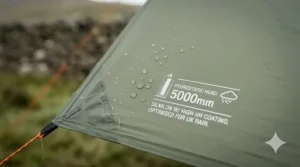
British rain isn’t the heaviest globally (that honour goes to the tropics), but our relentless drizzle combined with occasional deluges means sustained water exposure. A 3,000mm hydrostatic head rating handles everything from Welsh mizzle to Lake District cloudbursts. Lower ratings (1,500-2,000mm) might work for Mediterranean touring; they’re inadequate for Britain where “dry spell” means two hours between showers.
Weight Per Square Metre: The Efficiency Metric
Divide tarp weight by coverage area to assess efficiency. The DD SuperLight Bikepacker (320g for 8.51 m²) achieves 37.6 g/m² — excellent. Budget tarps claiming “ultralight” but weighing 800g for 9 m² deliver 88.9 g/m² — heavier per coverage unit. This metric cuts through marketing waffle, revealing whether you’re paying for actual material efficiency or just small dimensions marketed as “lightweight.”
Attachment Points: Versatility Insurance
British weather’s unpredictability demands adaptive pitching. Minimum 16 attachment points enables diamond pitches (wind protection), A-frames (rain shedding), asymmetric configurations (variable terrain). Cheaper tarps sometimes skimp to 8-12 points — adequate for perfect conditions, limiting in reality when wind shifts overnight or your intended pitch site is waterlogged.
Fabric Choice: Ripstop Nylon vs Polyester
Ripstop nylon (DD Hammocks, premium brands) offers superior tear resistance and longevity — crucial when British brambles snag fabric or Scottish gorse brushes your shelter. Polyester (budget alternatives) weighs similarly but degrades faster under UV and mechanical stress. For occasional use, polyester works; for regular UK touring, invest in ripstop durability.
Pack Size: Frame Bag vs Seatpack Considerations
Rectangular tarps stuff compressibly into seatpacks or panniers — ideal for traditional touring setups. Pyramid tarps require specific pole storage solutions. Measure your bag dimensions before purchasing; a tarp that technically weighs 500g but won’t fit your seatpack forces you into panniers, negating bikepacking’s off-road agility advantages.
UK Climate Considerations: Why Ventilation Beats Full Enclosure
British humidity creates condensation even in “waterproof breathable” tents. Tarps’ open design naturally ventilates, preventing the clammy sleeping bag syndrome familiar to tent users after damp British nights. This isn’t a bug; it’s a feature. Embrace the openness, pitch with weather awareness, and you’ll sleep drier than friends in sealed tents experiencing internal precipitation.
UKCA Marking and Safety Standards
Post-Brexit, outdoor gear sold in Britain should carry UKCA (UK Conformity Assessed) marking for products with safety implications. Most tarps escape this requirement (they’re fabric shelters, not electrical items), but check that manufacturers comply with UK fire safety standards — particularly relevant if you’re cooking under tarps at festival campsites where regulations apply.
Common Mistakes When Buying Your First Lightweight Tarp for Bikepacking
Assuming “Ultralight” Means “Adequate Coverage”
The marketing trap: tarps marketed as “ultralight” achieve low weights through tiny dimensions (2m x 1.5m), barely covering a sleeping mat. You’re not saving weight; you’re buying inadequate shelter. Calculate coverage per gram rather than just headline weight. A 500g tarp measuring 3m x 3m (9 m²) delivers 55.6 g/m² — far more efficient than 350g covering 4 m² (87.5 g/m²). British weather punishes undersized shelters; prioritise adequate coverage.
Ignoring UK-Specific Model Variations
US-designed tarps often lack features British conditions demand: taped seams (essential for our sustained wet), reinforced attachment points (for gusty exposure), darker colours (for woodland camping without glowing like a beacon). Verify the exact model available on Amazon UK matches specifications you’ve researched, as international variants sometimes differ in waterproof coatings or attachment counts.
Overlooking Groundsheet Integration
Tarps provide overhead protection; they don’t address ground moisture. British soil stays damp approximately 11 months yearly (optimistic estimate). Budget £20-£30 for a groundsheet companion or accept sleeping directly on sodden earth — an experience that rapidly destroys enthusiasm for tarp camping. This isn’t optional luxury; it’s fundamental to sustainable comfort.
Believing Tarps Replace Tents for All Scenarios
Tarps excel in specific contexts: fair weather touring, minimalist adventures, experienced outdoors people comfortable with exposure. They struggle in: insect-heavy environments (Scottish midges laugh at open shelters), prolonged foul weather requiring days sheltering inside, situations where privacy matters (busy campsites, roadside pitches near paths). Be honest about your tolerance for discomfort before ditching tents entirely.
Underestimating Setup Practice Requirements
Your first tarp pitch in a Cotswolds garden takes 30 minutes of head-scratching. Your tenth pitch in a Scottish gale takes 3 minutes of efficient movement. The learning curve is real. Practice at home before committing to remote tours where fumbling with guy lines at dusk in rain genuinely tests your resolve to continue bikepacking.
Ignoring Seasonal Temperature Implications
Tarps’ open design provides less insulating dead air space than tents. On chilly British autumn nights (6-10°C), you’ll need warmer sleeping bags than tent camping equivalents — typically adding 200-300g that partially offsets tarp weight savings. Budget accordingly; don’t assume tarp camping automatically means carrying less total sleep system weight.
Forgetting Post-Brexit Import Considerations
Some tarps on Amazon UK ship from EU sellers, potentially incurring customs duties (2-6% typically) and extended delivery times. Verify seller location and Prime eligibility. UK-based DD Hammocks stock usually arrives next-day for Prime members; international alternatives might take 2+ weeks and cost more after import adjustments. Worth checking when planning imminent trips.
Lightweight Tarp vs Traditional Tent for British Bikepacking
Weight and Pack Size: The Obvious Advantage
A quality lightweight tarp for bikepacking weighs 300-700g versus 1,200-2,500g for comparable single-person tents. That 500-1,800g saving translates directly to easier hill climbs across Welsh valleys or room for extra clothing layers when Scottish weather turns typically Scottish. Pack size compounds this: tarps stuff into seatpacks or handlebar rolls, whilst tent pole sections demand panniers or frame bags. For riders prioritising off-road agility over campsite luxury, this weight difference fundamentally changes bike handling.
Setup Speed: Conditions-Dependent
In fair weather with practice, tarps pitch faster than tents — 3-5 minutes versus 8-12 for pole-based tents. The trade-off: tarps require judgement about wind direction, anchor point selection, and pitch tension. Tents offer idiot-proof consistency; peg out the corners, clip poles, you’re done. In British conditions where weather shifts rapidly, tarps demand active awareness — rewarding for experienced campers, frustrating for beginners who just want shelter now after 80km in rain.
Weather Protection: The Ventilation Trade
British humidity creates condensation challenges for both shelter types. Tents trap moisture unless carefully ventilated; tarps naturally ventilate but expose you to elements. In practice, well-pitched tarps often perform better than single-wall budget tents in damp conditions, keeping you drier despite lacking full enclosure. Double-wall premium tents (£300+) outperform tarps for absolute weather protection, but at substantial weight and cost penalties unsuitable for bikepacking.
Versatility: Tarps Win for Adaptability
Changing wind direction overnight? Re-tension tarp guy lines from your sleeping bag. Unexpected midday rain during lunch? Deploy tarp as quick shelter, continue eating underneath. Tent pitched but too hot inside? You’re stuck. Tarps adapt; tents persist in their original configuration. For British touring where weather reliability is mythical, adaptive shelter suits conditions better than fixed-format alternatives.
The Privacy Question: Personal Tolerance Varies
Tarps place you visibly in the landscape. Wonderful for stargazing on clear Northumberland nights; less wonderful when dog walkers peer curiously at your morning ablutions on canal towpaths. Tents provide privacy cocoons — valuable in busy British countryside where wild camping inevitably intersects with recreational walkers. Assess honestly: does exposure bother you? If privacy matters, tents win regardless of weight penalties.
Long-Term Cost Analysis
Quality tarps (DD Hammocks range) cost £40-£75 and last 5+ years with reasonable care. Comparable lightweight tents start around £150 and climb to £400+ for premium ultralight models. Over typical 5-year usage, the tarp’s cost-per-night advantage compounds significantly — relevant when budgeting for other bikepacking essentials like waterproof panniers (£80-£200) or decent lights for British winter riding (£50-£150).
British Weather Reality Check
Our climate isn’t extreme by global standards — we rarely see -20°C winter or +35°C summer. What we have is consistent dampness with occasional gales. Tarps handle this admirably if you pitch intelligently and accept minor exposure. Genuinely extreme conditions (Highland winter, multi-day Atlantic storms) favour tents. For typical British bikepacking across spring-autumn, tarps deliver 80% of tent performance at 40% of the weight and cost.
Essential Accessories to Pair with Your Lightweight Tarp for Bikepacking
Bivvy Bag: The Weatherproof Sleep System Upgrade
A lightweight bivvy bag (waterproof/breathable sleeve for your sleeping bag) transforms tarp performance in British conditions. Models like the Alpkit Hunka or Rab Alpine weigh 200-400g and cost £40-£100, providing crucial wind/rain protection when tarp pitch alone isn’t sufficient. Think of it as modular shelter: tarp handles bulk of weather, bivvy provides personal microclimate. Combined weight still undercuts most tents whilst offering superior condensation management.
Titanium Pegs: Worth the Premium
Budget tarp packages include basic aluminium pegs that bend in hard British ground (clay, rocky Scottish soil). Upgrading to titanium stakes (£15-£25 for set of 8) saves 50-80g whilst vastly improving holding power. For riders covering mixed terrain — soft Cornish sand to Yorkshire stone — the reliability justifies cost. Alternatively, carry mixed peg selection: V-pegs for soft ground, rock pegs for hard surfaces, wire pegs for general use.
Reflective Guy Lines: Safety and Nighttime Navigation
British countryside offers brilliant dark-sky stargazing but also creates trip hazards when nature calls at 2am. Reflective guy lines (£8-£12 per set) glow under headtorch, preventing that undignified stumble into your own tarp guy that makes you question life choices. Also improves visibility for other trail users — dog walkers, night hikers, mountain bikers — reducing chance of someone cycling into your shelter.
Insect Head Net: Scottish Midge Defence
Tarps’ open design welcomes British wildlife — mostly charming (dawn birdsong!) but occasionally biblical (Highland midges June-September). A head net (£5-£15, under 50g) provides crucial defence when camping near Scottish lochs where midges swarm at dusk. Lightweight mosquito coils also work but create fire risk under tarps; head nets offer safer solution.
Trekking Poles: Multi-Function Investment
If your tarp pitch requires poles rather than bike structure, collapsible trekking poles (£30-£80, 200-300g pair) serve triple duty: tarp supports, hill ascent aids when pushing bike up Peak District climbs, river crossing stability when fording swollen Scottish streams. Models with flick-lock adjustment enable rapid height changes for adaptive pitching.
Dry Bags for Internal Organisation
Without tent pockets for organisation, tarp camping benefits from dry bags segregating kit: one for electronics (powerbank, phone), one for clothing, one for cooking gear. Colour-coded bags (£8-£15 each) streamline nighttime searches when you need something specific by headtorch. Lightweight options add minimal weight (30-50g) whilst dramatically improving camp efficiency.
UK Regulations, Legality, and Wild Camping Considerations
England and Wales: The Complicated Picture
Unlike Scotland, England and Wales lack statutory wild camping rights. Technically, camping on uncultivated land without landowner permission constitutes trespass — a civil matter, not criminal, meaning police won’t arrest you but landowners can request you move on. Reality proves more nuanced: discreet overnight bivvying, arriving late and leaving early with zero trace, is widely tolerated across moorlands, coastal paths, and forests. The low profile of tarp setups (versus bright tents) aids discretion.
Dartmoor remains England’s exception, offering designated camping zones where wild camping is permitted. Elsewhere, following the Countryside Code — respect wildlife, leave no trace, avoid enclosed farmland — generally keeps you under radar. During British lambing season (March-May), avoid agricultural land entirely; farmers rightfully prioritise livestock over romantic camping notions.
Scotland: Land Reform Act 2003 Freedoms
Scotland’s Land Reform Act 2003 provides statutory access rights including wild camping, as detailed on the Scottish Government’s outdoor access page. This includes lightweight temporary shelters (tarps qualify), no fires without permission, leave no trace, avoid enclosed farmland. This makes Scotland genuinely bikepacker-friendly — pitch respectfully on hillsides, glens, even some estates (check local bylaws), without trespass concerns plaguing English equivalents.
Exceptions exist: Loch Lomond and Trossachs National Park implements camping management zones (March-September) requiring permits in specific areas due to previous environmental damage. Check visitscotland.com for current restrictions before planning Scottish tours.
Northern Ireland: Access Agreements
Northern Ireland lacks Scotland’s comprehensive access rights but offers improving access through negotiated agreements. Mourne Mountains and some forest areas permit wild camping with landowner cooperation. The Outdoor Recreation Northern Ireland website provides updated guidance on permitted areas — worth consulting given regional variations.
Fire Safety and Open Flame Regulations
Tarps’ fabric construction creates fire risk when cooking inside. British law doesn’t specifically regulate camping stoves, but you’re liable for damage caused by negligence. Use stoves outside your tarp shelter, never underneath fabric. During British dry spells (rare but consequential), fire risk increases; some moorlands implement temporary no-fire bylaws. Breaching these risks prosecution plus environmental damage undermining wild camping acceptance.
Insurance Implications
Standard travel insurance rarely covers wild camping injuries or third-party damage. Specialist outdoor insurance (BMC membership £54 annually provides comprehensive cover) protects against hillwalking injuries, third-party liability, and mountain rescue costs. For serious British bikepacking tours across Scottish Highlands or Welsh mountains, the coverage justifies cost — particularly given mountain rescue services can bill for helicopter callouts (£3,000+).
FAQ: Your Lightweight Tarp for Bikepacking Questions Answered
❓ Can you actually stay dry bikepacking with a tarp in British weather?
❓ How do lightweight tarps perform in British wind compared to tents?
❓ What's the minimum tarp size for bikepacking in UK conditions?
❓ Are tarps suitable for Scottish midge season (June-September)?
❓ Can you cook under a lightweight tarp in British rain without fire risk?
Conclusion: Finding Your Perfect Lightweight Tarp for Bikepacking Match
After touring Britain from Cornish coastal paths to Scottish Highlands with various shelter solutions, I’ve settled firmly in the tarp-camping camp — but with eyes wide open about trade-offs. These aren’t miracle solutions eliminating weight whilst maintaining tent comfort; they’re carefully designed compromises delivering adequate protection at exceptional weight savings for riders willing to develop proper pitching skills.
For British conditions specifically, the DD SuperLight range represents the sweet spot: proven waterproof performance (3,000mm ratings handle our relentless drizzle), UK-based availability meaning next-day Prime delivery before weekend trips, and pricing (£45-£75) that doesn’t require remortgaging. The SuperLight Bikepacker earns its premium through bike-specific features genuinely useful when touring open moorland, whilst budget-conscious riders lose minimal capability choosing the standard 3×3 model.
What separates successful tarp camping from miserable soggy nights isn’t gear cost — it’s understanding British weather patterns well enough to pitch intelligently. Learn to read wind direction, tension guy lines properly, and accept minor dampness as tarps’ fundamental compromise. The payoff is substantial: 500-1,500g weight savings enabling longer tours or luxury items (proper coffee setup, decent book, that hipflask), pack volumes fitting seatpacks rather than demanding panniers, and genuine connection to British landscapes impossible inside zipped tent cocoons.
Start with a weekend trial using budget options (HIDEWALKER or DD Tarp 3×3) before committing to premium ultralight models. Practice pitching in your garden until muscle memory develops. Pair your tarp with appropriate accessories (bivvy bag for weather protection, groundsheet for comfort, titanium pegs for reliability), and you’ll discover why tarp camping converts become evangelical about minimalist shelter — it genuinely transforms bikepacking into lighter, more adaptable adventures across Britain’s brilliantly variable terrain and reliably unpredictable weather.
Recommended for You
- 7 Best Heavy Duty Tarp for Tent Protection UK 2026 Guide
- 7 Best Tarp for Camping UK 2026: Expert Wild Camping Guide
- 7 Best Lightweight Tent Carpet for Festivals UK 2026
Disclaimer: This article contains affiliate links. As an Amazon Associate, I earn from qualifying purchases. If you purchase products through these links, we may earn a small commission at no additional cost to you.
✨ Found this helpful? Share it with your mates! 💬🤗
