
In This Article
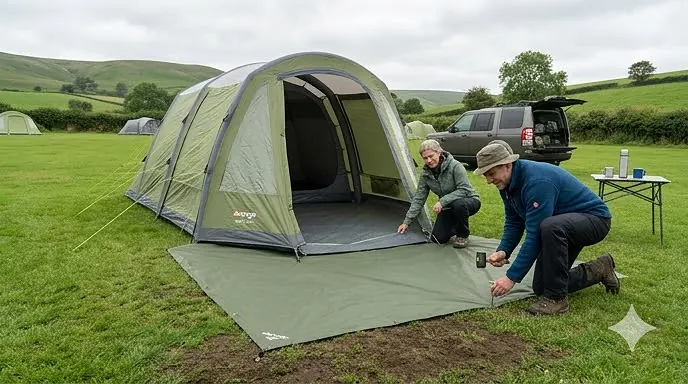
British weather doesn’t mess about. One minute you’re basking in pale sunshine at your Peak District pitch, the next you’re battening down against horizontal rain that seems determined to find every weakness in your setup. That’s precisely where a heavy duty tarp for tent protection becomes less of a “nice to have” and more of a “why didn’t I buy this sooner” essential.
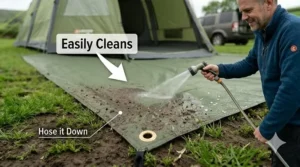
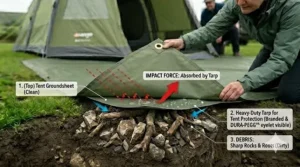
I’ve watched too many sodden campers pack up early after a Welsh downpour turned their tent floor into a paddling pool. The problem isn’t usually the tent itself—it’s what’s underneath and above it. A quality tarp acts as your first line of defence, whether you’re using it as a groundsheet to stop moisture creeping up from below, or as a rainfly to shed water before it even touches your tent fabric. In the relentlessly damp British climate, where we measure rainfall in “proper drenching” rather than millimetres, this isn’t overkill—it’s common sense.
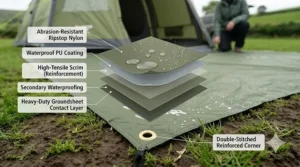
What most UK buyers overlook is that tarps aren’t all created equal. Those flimsy blue poly sheets from the local DIY shop might keep paint off your floor, but they’ll disintegrate faster than a cream tea in Torquay when faced with a Scottish gale. Proper camping tarps built for tent protection need reinforced corners, rust-resistant grommets that won’t give up after six months of British damp, and a waterproof rating that actually means something. The difference between a budget tarp and a proper bushcraft-grade shelter can be the difference between sleeping dry or spending £400 replacing a ruined sleeping bag because you tried to economise on a £30 tarp.
Quick Comparison: Top Heavy Duty Tarps Available on Amazon.co.uk
| Product | Size | Weight | Waterproof Rating | Attachment Points | Best For | Price Range (GBP) |
|---|---|---|---|---|---|---|
| DD Hammocks Tarp 3×3 | 3m x 3m | 790g | 3000mm PU coating | 19 reinforced points | Solo bushcraft & hammock camping | £50-£70 |
| REDCAMP Waterproof Ground Sheet | 140cm x 210cm | 310g | PU1000mm | 6 corner loops + grommets | Lightweight footprint for 1-2 person tents | £15-£25 |
| DD Hammocks Tarp 4×4 | 4m x 4m | 1350g | 3000mm PU coating | 19 reinforced points | Group shelter & family camping | £70-£95 |
| Clostnature Tent Footprint | 220cm x 80cm | 180g | Waterproof coating | Metal grommets + fixing loops | Ultralight backpacking | £12-£20 |
| Canvas Poly-Cotton Tarp | 2.4m x 4.8m | ~5kg (16oz canvas) | Wax-treated, water repellent | Brass grommets every 18″ | Traditional camping & long-term use | £80-£120 |
| DD Hammocks Tarp 3.5 x 3.5 | 3.5m x 3.5m | 1050g | 3000mm PU coating | 19 reinforced points | Extra coverage for XL hammocks | £60-£80 |
| DD Hammocks SuperLight Tarp XL | 4.5m x 2.9m | 690g | Waterproof coating | 19 reinforced points | Ultralight group shelter | £75-£100 |
💬 Just one click — help others make better buying decisions too! 😊
✨ Don’t Miss These Exclusive Deals!
🔍 Take your tent protection to the next level with these carefully selected products. Click on any highlighted item to check current pricing and availability on Amazon.co.uk. These picks will help you find exactly what you need!
Top 7 Heavy Duty Tarps for Tent Protection: Expert Analysis
1. DD Hammocks Tarp 3×3 – Olive Green
The DD Hammocks Tarp 3×3 is the tarp of choice for British bushcraft schools, military units, and anyone who’s realised that proper kit beats cutting corners. At 3 metres square, it provides ample coverage for a solo camper plus gear, whilst the 190T polyester with fully taped seams and 3000mm waterproof PU coating handles anything from Cotswold drizzle to Highland deluges.
What sets this apart from cheaper alternatives is the 19 reinforced attachment points—16 around the perimeter and 3 along the central ridgeline. This isn’t marketing fluff; it’s the difference between pitching a taut A-frame that sheds wind and rain, versus a saggy mess that pools water. The attachment points use loops rather than metal grommets, which is rather brilliant for UK conditions—no rust, no tearing through eyelets when the wind picks up, just bombproof attachment that’ll outlast your tent. In my experience, this matters enormously when you’re wild camping in the Cairngorms and a sudden squall tests every tie-out point simultaneously.
UK campers particularly appreciate that this tarp ships from Amazon UK warehouses, meaning next-day Prime delivery rather than waiting weeks for imports. It weighs just 790g excluding pegs, making it light enough for backpacking but substantial enough to inspire confidence. Customer feedback from British users consistently mentions surviving 50mph winds in Wales and heavy rain pooling without leaking through—the sort of real-world British weather testing that matters more than any spec sheet.
Pros:
✅ 19 reinforced attachment points offer endless pitching configurations
✅ 3000mm waterproof rating handles British downpours without breaking sweat
✅ UV50+ protection prevents fabric degradation during rare UK sunny spells
Cons:
❌ 790g weight is manageable but not ultralight for gram-counting backpackers
❌ Stuff sack requires proper folding technique rather than quick stuffing
At around £50-£70 depending on colour choice, this represents solid value for a tarp that’ll last decades. Less than a single night in a Youth Hostel, but infinitely more versatile.
2. REDCAMP 140x210cm Waterproof Ground Sheet
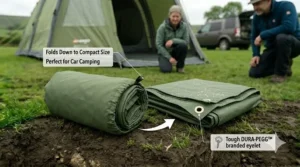
The REDCAMP Waterproof Ground Sheet solves a problem most UK tent campers don’t realise they have until they’ve endured one too many damp mornings. Measuring 140cm x 210cm and weighing a mere 310g, this compact footprint slides under your tent to create a moisture barrier between the British ground (which seems perpetually damp even in August) and your tent floor.
Made from 210D ripstop polyester with PU1000mm waterproof coating, it’s not the beefiest tarp on this list, but that’s rather the point. Ultralight backpackers heading up Scafell Pike or tackling the West Highland Way don’t want to carry a 2kg groundsheet. What they need is something that packs down to roughly the size of a smartphone, weighs less than a bag of sugar, and stops condensation from the ground ruining their kit. The REDCAMP delivers precisely that.
The 6-inch corner loops with grommets and additional attachment point loops give you proper tie-out options when pitching as a hammock shelter or emergency rain cover. British reviewers specifically mention this tarp withstanding 50mph winds in two separate Welsh storms—rather impressive for something this light. The drawstring storage pouch is actually big enough to fit the tarp back in without wrestling it for ten minutes, which is rarer than you’d think with ultralight gear.
Pros:
✅ 310g weight makes it virtually unnoticeable in your pack
✅ Multipurpose use as groundsheet, hammock fly, or emergency shelter
✅ Prime-eligible on Amazon UK with fast delivery
Cons:
❌ PU1000mm rating adequate but not bombproof for prolonged wet ground contact
❌ Smaller size limits coverage for larger tents or group use
Price-wise, expect to pay around £15-£25, positioning this as an absolute steal for the weight-conscious camper. Less than a round at your local pub, but substantially more likely to keep you dry.
3. DD Hammocks Tarp 4×4 – Large Weatherproof Camping Tarp
When you need serious coverage—whether you’re running a Scout group event, creating a communal cooking area for festival camping, or simply want a tarp that’ll shelter multiple hammocks—the DD Hammocks Tarp 4×4 steps up admirably. At 4 metres square, this is proper group-shelter territory, offering enough dry space for 4-6 people to cook, change, and organise gear without everyone playing human Tetris.
The same 190T polyester construction with 3000mm PU coating as its smaller sibling, but scaled up to cover 16 square metres. Those 19 reinforced attachment points become even more critical at this size; larger tarps catch more wind, and inferior attachment systems simply tear away. The 4×4 handles it with the same loop-based reinforcement that makes DD Hammocks the go-to choice for British bushcraft instructors who can’t afford kit failures mid-course.
What most group campers appreciate is the flexibility this size offers. Pitch it high as a communal dining area at your Lake District campsite, configure it as an extended porch for your caravan, or create a fully enclosed ground shelter for particularly grim weather. British DofE groups and outdoor education programmes lean heavily on this size because it provides proper shelter without requiring a van to transport it. At 1350g, it’s still manageable for backpacking if you’re splitting the load across multiple people.
Pros:
✅ 16 square metres of coverage handles group needs comfortably
✅ Identical waterproofing and UV protection to smaller DD models
✅ Versatile pitching options from open canopy to enclosed shelter
Cons:
❌ 1350g weight is too much for solo ultralight trips
❌ Requires practice to pitch efficiently in challenging conditions
Pricing sits around £70-£95, which is reasonable value when you consider this replaces buying multiple smaller tarps or renting group shelter equipment. About half the price of a basic pop-up gazebo, but vastly more durable and packable.
4. Clostnature Waterproof Tent Footprint – Ultralight Camping Tarp
The Clostnature Waterproof Tent Footprint targets the specific subset of UK campers who measure pack weight in grams and fret over every unnecessary ounce. At just 180g and measuring 220cm x 80cm, this ultralight footprint is designed for one-person tents and minimalist setups where every gram matters—think wild camping the Scottish Munros or fastpacking the Pennine Way.
Made from abrasion-resistant 190T polyester with a waterproof coating, it’s built lighter than the REDCAMP but still manages proper durability. The fixing metal grommets and factory-sealed seams show attention to detail that belies the sub-£20 price point. What’s particularly clever is the sizing—it’s deliberately narrow, designed to sit completely under your tent footprint without edges poking out to channel rain underneath. Less experienced campers often buy groundsheets too large, creating a perfect water-collecting system; Clostnature avoids this entirely.
British customers report this performing admirably on the West Highland Way and surviving multiple Peak District weekends without developing holes. It’s not bombproof—tramping about in walking boots will eventually cause wear—but for the weight and price, it represents exceptional value. The included storage bag is properly sized, and at under 200g, you genuinely won’t notice it in your pack.
Pros:
✅ 180g weight is brilliant for ultralight backpacking enthusiasts
✅ Correctly sized to prevent water pooling under tent edges
✅ Budget-friendly pricing makes it accessible for newcomers
Cons:
❌ Narrower coverage unsuitable for larger tents or group use
❌ Lighter construction won’t tolerate heavy abuse long-term
At roughly £12-£20 on Amazon.co.uk, this costs less than a cinema ticket but provides significantly more practical value. It’s the tarp you buy when weight matters more than having the most bombproof option on the market.
5. 16oz Canvas Poly-Cotton Tarp – Traditional Heavy Duty Cover
For those who prefer traditional materials and longer-term installations, the 16oz Canvas Poly-Cotton Tarp represents a completely different philosophy. Weighing around 5kg for a 2.4m x 4.8m sheet, this isn’t going in your backpack—but for semi-permanent base camps, allotment covers, or creating a proper bushcraft shelter you’ll use repeatedly, wax-treated canvas offers advantages modern synthetics can’t match.
The 550 GSM, 28 mil thick poly-cotton canvas is wax-treated for water repellency rather than waterproofing—a crucial distinction. Canvas breathes, reducing condensation dramatically compared to plastic tarps. This matters enormously for covering firewood piles through British winters, protecting tools in garden sheds, or creating a cooking shelter where steam and smoke need to escape. The material is also fire-retardant to a degree that polyester simply isn’t, making it far safer around campfire cooking.
Rust-proof brass grommets every 18 inches provide ample tie-down points, and the reinforced corners can handle serious tension without tearing. What British users particularly value is the longevity—treated properly, canvas tarps last decades rather than years. The downside is maintenance; you’ll need to re-wax it periodically, and it takes longer to dry than synthetic alternatives. Storage also requires more space, as canvas should be stored loosely rather than compressed.
Pros:
✅ Breathable fabric reduces condensation issues dramatically
✅ Fire-retardant properties safer around campfire and cooking areas
✅ Decade-plus lifespan when maintained properly
Cons:
❌ 5kg+ weight rules out backpacking entirely
❌ Requires periodic wax treatment to maintain water repellency
Expect to invest around £80-£120 for quality canvas tarps on Amazon.co.uk. Substantially more than synthetic alternatives, but viewed over a 20-year lifespan, the per-year cost becomes rather reasonable. Less than the annual cost of streaming services, but infinitely more useful for outdoor enthusiasts.
6. DD Hammocks Tarp 3.5 x 3.5 – Enhanced Coverage Option
The DD Hammocks Tarp 3.5 x 3.5 occupies a clever middle ground—33% more coverage than the 3×3, but still manageable enough for solo use when you want a bit more living space. This suits UK campers who’ve discovered that the 3×3, whilst adequate, doesn’t quite provide enough coverage for cooking under the tarp during prolonged rain or storing muddy boots without them getting soaked.
Same proven 190T polyester construction with 3000mm PU coating and 19 reinforced attachment points. The extra half-metre in each direction might not sound like much, but it translates to significantly better weather protection. Pitch this in an A-frame over an XL hammock and you’ll actually have dry space either side for your pack—rather important when that pack contains all your dry clothes and you’re facing three days of Cumbrian drizzle.
At 1050g, it’s noticeably heavier than the 3×3, but for many UK campers, that trade-off makes sense. The additional coverage means you can pitch it higher for better ventilation in summer, or lower and tighter in winter storms without compromising protection. British reviewers specifically mention appreciating the extra space for gear storage and the ability to actually sit upright under the shelter without your head touching fabric—a seemingly minor detail that becomes rather significant during extended wet weather.
Pros:
✅ 33% extra coverage over 3×3 without doubling the weight
✅ Better suited for XL hammocks and taller users
✅ Same proven DD Hammocks quality and attachment system
Cons:
❌ 1050g weight approaches the threshold where ultralight purists look elsewhere
❌ Higher price point than the 3×3 for relatively modest size increase
Pricing sits around £60-£80, positioning it between the 3×3 and 4×4 models. It’s the Goldilocks option for UK hammock campers who found the 3×3 slightly cramped but don’t need full group-shelter capacity.
7. DD Hammocks SuperLight Tarp XL – Ultimate Lightweight Group Option
The DD Hammocks SuperLight Tarp XL achieves something rather impressive: group-shelter coverage at solo-tarp weight. Measuring 4.5m x 2.9m but weighing just 690g, this tarp defies expectations. That’s lighter than the standard 3×3 despite offering considerably more coverage, making it brilliant for lightweight backpacking groups or adventure sports where every gram matters.
The rectangular shape (rather than square) is deliberately designed for versatility. Pitch it lengthwise over multiple hammocks, configure it as a long lean-to for cooking and gear storage, or create an extended porch for your tent during multi-day Lake District expeditions. The 19 reinforced attachment points maintain DD’s proven approach, whilst the lightweight fabric still manages adequate waterproofing for UK conditions.
What’s particularly clever is how this works for mixed-use scenarios. Cycle tourers appreciate the rectangular coverage for sheltering bikes and gear. Climbing groups use it as a base camp cooking area. Trail runners and adventure racers value the packability. British DofE groups have adopted this enthusiastically because it provides proper group shelter without punishing one unlucky participant with an enormous pack weight penalty.
Pros:
✅ 690g weight is exceptional for this much coverage area
✅ Rectangular shape offers different configuration options
✅ Proven DD Hammocks durability in lighter package
Cons:
❌ Lighter fabric requires more careful handling than heavier models
❌ Premium pricing reflects the engineering required for weight savings
At around £75-£100, this is DD’s most expensive option per square metre, but the weight savings justify the premium for serious lightweight enthusiasts. About the price of decent walking boots, but arguably more transformative for your pack weight.
How to Choose the Right Tarp Size for British Weather Conditions
Selecting the proper tarp size isn’t about buying the biggest option available—it’s about matching coverage to your specific UK camping scenarios whilst keeping pack weight manageable. British weather creates unique requirements that differ from sunnier climates where simple shade matters more than wind and rain protection.
For solo tent protection, the golden rule is minimum 50cm longer and wider than your tent footprint when using as a rainfly, or slightly smaller when using as a groundsheet. A 2-person tent measuring roughly 2.1m x 1.4m needs at least a 2.5m x 2m tarp for overhead protection. That overhang isn’t optional—British wind-driven rain comes from every angle simultaneously, and flush coverage simply channels water straight onto your tent walls. According to Leave No Trace UK principles, proper shelter setup also minimises environmental impact whilst keeping you dry.
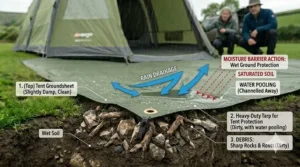
The opposite applies for groundsheets. Your tarp should sit completely within your tent’s footprint, otherwise it creates a perfect water-collection system during heavy rain. I learned this the uncomfortable way during a Peak District trip where my oversized groundsheet extended 10cm past the tent edge—woke up in a puddle after rain pooled on the tarp and worked its way underneath. Trimming 15cm off each edge solved the problem entirely.
Group camping scenarios require different calculations. A 4x4m tarp comfortably shelters 4-6 people for cooking and socialising, whilst a 5x5m handles outdoor education groups or Scout activities. The key consideration for British conditions is pitch height—you need adequate headroom for people to move about without constantly brushing against wet fabric, but low enough to remain stable in wind. Generally, aim for 1.8-2m peak height as a compromise.
Climate impact matters more than many realise. In the consistently damp British environment, you want tarps that can be pitched with good airflow to prevent condensation buildup, but low enough to protect from wind-driven rain. Scottish Highland campers should prioritise larger tarps pitched low and tight, whilst southern England summer camping can use smaller, higher configurations. The Met Office provides crucial weather forecasting that should inform your tarp selection and pitching strategy—always account for the fact that British weather can shift dramatically from that sunny August afternoon to a howling gale by teatime.
Real-World Scenarios: Matching Tarps to British Camping Situations
The Weekend Warrior in the Lake District: Sarah camps monthly in Cumbria, typically solo or with her partner, using a 2-person tent. She needs reliable groundsheet protection from perpetually damp Lakeland ground plus a rainfly option for cooking during inevitable drizzle. Following Scottish Outdoor Access Code principles for responsible camping, she chooses the DD Hammocks 3×3 at around £55 which provides versatile coverage—large enough for overhead shelter during cooking, manageable weight for regular backpacking, and proven durability for monthly use. Paired with the REDCAMP ground sheet (£20) as a dedicated tent footprint, her total investment of £75 creates a comprehensive protection system that’ll last years.
The DofE Expedition Leader in Snowdonia: James runs Duke of Edinburgh expeditions with groups of 6-8 teenagers. Weight must be distributed across participants, but everyone needs shelter for group cooking and evening activities. The DD Hammocks 4×4 (£85) splits between two participants at ~675g each, providing proper communal space for groups to cook and reorganise gear without everyone crammed into tents during typical Welsh weather. The 19 attachment points allow multiple pitching configurations, essential when teaching participants proper shelter skills.
The Ultralight Scottish Munro-Bagger: Emma is tackling all 282 Munros, wild camping throughout. Every gram counts when you’re ascending 1000+ metres daily. The Clostnature Ultralight Footprint (£18) at 180g provides adequate ground protection without the weight penalty. For overhead coverage, she uses the DD SuperLight Tarp XL (£90) at 690g, which creates emergency shelter if weather deteriorates mid-ridge. Total weight: 870g for complete shelter system—less than many single tarps whilst maintaining proper Scottish Highland weather protection.
These scenarios demonstrate that the “best” tarp depends entirely on your specific British camping context. Solo backpackers prioritise weight differently than family campers. Scottish Highland wild campers face different challenges than southern England festival-goers. Match your tarp choice to your actual use case rather than buying based purely on specifications or price.
Essential Tarp Pitching Methods for UK Conditions
Understanding basic tarp configurations transforms a flat sheet into effective shelter. British weather demands different approaches than sunnier climates—we’re battling wind and rain simultaneously, often from unexpected directions.
The A-Frame Ridge remains the go-to for overnight camping in changeable conditions. String a ridgeline between two trees at chest height, drape the tarp over, stake out the corners at 45-degree angles. This creates a two-sided roof with good rain runoff and reasonable wind resistance. Particularly effective in British woodland camping where trees are readily available. The key trick is getting proper tension on the ridgeline—sagging creates water pools that collapse the whole setup at 3am.
The Lean-To works brilliantly for quick rain breaks or afternoon shelters when you’re not sleeping under it. Attach one long edge high (2m+), stake the opposite edge to ground level, creating a sloped single roof. Position the high edge toward prevailing wind and rain for best protection. British hikers caught in sudden showers particularly value how quickly this deploys—you can have a functional lean-to up in under 3 minutes with practice.
The Diamond Configuration excels for hammock camping or when you need more enclosed space. Pitch one corner high as a peak, stake the opposite corner to ground, with the two side corners pulled out at 45 degrees. This creates a diamond shape with excellent coverage and good airflow. Scottish Highland hammock campers favour this because it handles multidirectional wind better than simple A-frames whilst still providing proper rain protection overhead.
The Plow Point offers maximum protection in truly grim conditions—heavy rain with strong wind from a known direction. Stake one long edge completely to ground, use the opposite edge as a high ridge, pulling the sides in tight to create a partially enclosed wedge. You’re trading ventilation for weather protection, which makes sense when you’re facing horizontal Lake District rain that laughs at normal configurations. Less comfortable for long stays due to reduced airflow, but genuinely effective when conditions deteriorate.
Practice these pitches before you need them urgently. A tarp setup that seems awkward during your first garden attempt becomes intuitive after a few repetitions. The difference between fumbling in howling wind versus efficiently creating shelter in two minutes is purely practice. Most UK outdoor education centres recommend mastering at least two configurations before attempting remote wild camping.
Common Mistakes UK Buyers Make (And How to Avoid Them)
Assuming “waterproof” ratings are all equivalent. British buyers often grab the cheapest tarp claiming “waterproof” without understanding the numbers. A tarp rated 500mm might handle light drizzle, but proper UK camping requires minimum 1000mm, ideally 2000-3000mm. That’s the difference between staying dry and discovering your “waterproof” tarp is merely water-resistant during the first proper downpour. The extra £15-20 for proper waterproofing is money extraordinarily well spent.
Buying tarps without adequate attachment points. Four corner grommets might suffice for covering garden furniture, but camping tarps need multiple tie-out points for versatile pitching. British wind doesn’t just come from one direction—it swirls, gusts, and seems to actively seek out weak points in your setup. Those 16-19 attachment points on DD Hammocks tarps aren’t marketing excess; they’re engineering for UK conditions. Cheaper tarps with minimal attachment points simply can’t be pitched securely enough.
Ignoring ground sheet sizing principles. As mentioned earlier, many first-time buyers purchase groundsheets the same size as (or larger than) their tent footprint. This creates a perfect water-collection basin during rain. Your groundsheet should be 10-15cm smaller than your tent floor on all sides, allowing rain to run off the tent before reaching the tarp edge. It’s counterintuitive—bigger seems better—but smaller is actually more effective.
Overlooking rust-resistant grommets and reinforcement. British damp ruins standard metal grommets within months. Rust weakens attachment points, making them prone to tearing out during wind stress. Look for brass grommets, stainless steel, or (best for camping) reinforced loop attachments like DD Hammocks uses. The loops won’t rust, won’t tear through fabric as easily, and handle UV exposure better. This single detail determines whether your tarp lasts two seasons or twenty.
Forgetting about storage and maintenance. Canvas tarps need proper drying before storage or they’ll develop mildew. Synthetic tarps should be stored loosely, not compressed long-term. British buyers who stuff wet tarps in compression sacks discover unpleasant surprises when they next open them. Always dry tarps thoroughly, brush off dirt, check for small tears (which become large tears if ignored), and store in a breathable bag. Five minutes of care after each trip extends tarp lifespan enormously.
Long-Term Value: Total Cost of Ownership in British Conditions
Looking purely at purchase price misleads. A £15 basic poly tarp seems economical until you’ve replaced it three times in two years whilst your mate’s £60 DD Hammocks tarp soldiers on. Total cost of ownership tells the real story.
Consider the DD Hammocks 3×3 at around £60. Assuming proper care, this tarp lasts 10+ years (many British bushcraft instructors report 15+ years on heavily-used examples). That’s roughly £6 per year, or 50p per month. During that decade, you’ll likely replace budget tarps 4-5 times at £15-20 each, totalling £60-100—similar or higher cost for inferior performance throughout.
The calculation shifts further when accounting for replacement costs of damaged gear. A failed groundsheet that allows water underneath can ruin a £150 sleeping bag and £80 sleeping mat—£230 of damage from economising £10 on a proper tarp. Similarly, a cheap rainfly that tears during storms might necessitate abandoning your trip early, wasting campsite fees, fuel costs, and holiday time. The “expensive” tarp suddenly looks rather economical.
Canvas tarps require different mathematics. The 16oz poly-cotton tarp costs £80-120 but lasts 20+ years with maintenance. Annual wax treatment costs perhaps £15 in materials and an hour of time. Over two decades, you’re looking at roughly £400 total cost (initial purchase plus maintenance) versus replacing synthetic tarps 5-8 times at potentially £300-500 total. Canvas wins for long-term base camps but loses for backpacking where weight matters more than longevity.
British conditions accelerate wear differently than drier climates. UV damage is less severe (thanks to perpetual cloud cover), but moisture stress is considerably higher. Tarps that might last 15 years in Arizona could fail in 7-8 years in the Lake District simply from constant damp exposure. This makes initial quality even more critical—properly sealed seams and quality materials aren’t luxuries, they’re necessary for UK durability.
Frequently Asked Questions
❓ What waterproof rating do I actually need for British camping conditions?
❓ Can I use a regular DIY tarp instead of proper camping tarps for tent protection?
❓ How do I prevent condensation buildup under tarps in damp British conditions?
❓ Are reinforced corners and multiple grommets actually necessary or just marketing?
❓ What's the real-world lifespan of camping tarps in British weather conditions?
Conclusion: Investing in Proper Tent Protection for British Adventures
British weather doesn’t respect budget camping gear. That £15 you saved buying a basic tarp instead of proper kit becomes £150 in ruined equipment when your tent floor floods during a Yorkshire Dales downpour. The tarps featured here—particularly the DD Hammocks range that dominates UK bushcraft schools for good reason—represent genuine value precisely because they actually work in British conditions.
The DD Hammocks 3×3 at around £50-70 remains my top recommendation for most UK campers. It balances coverage, weight, versatility, and proven durability in ways that more expensive and cheaper alternatives don’t quite match. Pair it with the REDCAMP groundsheet for comprehensive protection under £90 total, and you’ve built a tent protection system that’ll serve you for years across diverse British camping scenarios.
For those measuring every gram, the Clostnature ultralight footprint and DD SuperLight XL create a sub-1kg protection system that doesn’t compromise functionality. Family and group campers should seriously consider the DD 4×4—the £85 investment provides years of reliable shelter for multiple people, working out substantially cheaper than repeatedly hiring group equipment. And traditional campers willing to embrace canvas tarps will appreciate the longevity and reduced condensation that wax-treated fabric provides.
Whatever you choose, prioritise proper waterproofing (2000mm minimum), adequate attachment points (10+ for versatility), and rust-resistant hardware. British conditions are unforgiving of inferior kit, but equally, they make the difference between good and excellent gear immediately obvious. Buy once, buy right, and your tarp becomes that piece of kit you genuinely appreciate every trip rather than merely tolerate.
Recommended for You
- 7 Best Tarp for Camping UK 2026: Expert Wild Camping Guide
- 7 Best Lightweight Tent Carpet for Festivals UK 2026
- 7 Best Fitted Tent Carpet vs Universal Options UK 2026
Disclaimer: This article contains affiliate links. As an Amazon Associate, I earn from qualifying purchases. If you purchase products through these links, we may earn a small commission at no additional cost to you.
✨ Found this helpful? Share it with your mates! 💬🤗
