
In This Article
Picture this: you’re deep in the Lake District, miles from civilisation, when a gust of wind sends your tent pole snapping like a twig. Or perhaps you’ve just discovered a jagged tear in your flysheet moments before the rain starts hammering down. Sound familiar? If you’ve ever been caught out by damaged camping gear in the wilderness, you’ll know that sinking feeling all too well.
A quality tent repair kit isn’t just another item cluttering your rucksack—it’s your insurance policy against ruined camping trips. Whether you’re a weekend warrior tackling the Brecon Beacons or a festival-goer braving Glastonbury’s infamous mud, the right repair kit can mean the difference between a comfortable night’s sleep and a soggy, miserable disaster.
The outdoor recreation market has evolved tremendously, with repair kits now offering sophisticated solutions that go far beyond duct tape and hope. From ultra-strong adhesive patches that bond permanently to technical fabrics, to precision-engineered pole splints that restore structural integrity in seconds, today’s tent repair kit options are genuinely impressive. According to The British Mountaineering Council, repairing rather than replacing outdoor gear significantly reduces textile waste whilst saving you considerable money—a win-win for both your wallet and the planet.
In this comprehensive guide, I’ll walk you through the seven best tent repair kit options available in the UK for 2026, examining everything from budget-friendly emergency fixes to premium professional-grade solutions. You’ll discover exactly what to look for, how to use these kits effectively, and which products deliver the best value for British campers.
Quick Comparison Table: Top Tent Repair Kits at a Glance
| Product | Best For | Price Range | Key Features | Rating |
|---|---|---|---|---|
| Gear Aid Tenacious Tape | All-round repairs | £9.99-£12.99 | Waterproof, ultra-strong adhesive, machine washable | 4.6/5 ⭐ |
| Stormsure Inflatable Tent Repair Kit | Inflatable tents | £9.99-£14.99 | Flexible adhesive, TUFF Tape patches, airtight seal | 4.5/5 ⭐ |
| Coghlan’s Tent Repair Kit | Budget repairs | £5.99-£8.99 | Canvas material, nylon screen, needle & thread | 4.3/5 ⭐ |
| TRIWONDER Tent Pole Repair Splint | Pole emergencies | £6.99-£9.99 | Aluminium alloy, fits 7.9-8.5mm poles, lightweight | 4.4/5 ⭐ |
| PRO-FIX Ripstop Repair Patch Kit | Technical fabrics | £8.99-£11.99 | Pre-cut patches, self-adhesive, olive green | 4.5/5 ⭐ |
| OAZ Nylon Fabric Patch | Lightweight repairs | £7.19-£9.99 | Self-adhesive, waterproof, minimal weight | 4.3/5 ⭐ |
| PEOVLVN Self Adhesive Fabric Repair | Quick fixes | £5.99-£7.99 | 3 sheets, multiple colours, versatile use | 4.4/5 ⭐ |
💬 Just one click – help others make better buying decisions too! 😊
Top 7 Tent Repair Kits: Expert Analysis
1. Gear Aid Tenacious Tape – The Professional’s Choice
When it comes to tent repair tape waterproof solutions, Gear Aid Tenacious Tape stands head and shoulders above the competition. This isn’t your ordinary repair tape—it’s a professional-grade solution that’s rescued countless camping trips across the UK.
Key Specifications:
- Ultra-aggressive adhesive that bonds permanently to nylon, vinyl, and ripstop fabrics
- Available in clear, black, and multiple colour options (3″ × 20″ strips)
- Machine washable after 24 hours
- Waterproof coating that won’t peel during storms
What Makes It Special:
The tape uses a weatherproof adhesive specifically engineered for technical outdoor fabrics. Unlike cheaper alternatives that peel off in the rain or lose adhesion in cold temperatures, Tenacious Tape actually becomes stronger over time. UK buyers consistently praise its reliability in harsh Scottish Highland conditions and the notoriously wet Welsh mountains.
Customer Feedback:
British campers report using this tape for everything from patching flysheets at Snowdonia to emergency repairs on down jackets. One Lake District hiker mentioned: “Repaired a nasty gash in my tent during a storm—three months later and multiple rain-soaked weekends, the patch is still holding perfectly.”
✅ Pros:
- Genuinely waterproof and weatherproof
- Works on virtually any tent fabric
- Colour options for discreet repairs
❌ Cons:
- Premium pricing compared to basic tapes
- Requires 24-hour curing time for optimal strength
UK Price: £9.99-£12.99
Availability: Amazon.co.uk, outdoor retailers nationwide
2. Stormsure Inflatable Tent Repair Kit – Essential for Air Beam Tents
The Stormsure Inflatable Tent Repair Kit addresses a specific challenge that’s becoming increasingly common as inflatable tents gain popularity across British campsites. This comprehensive kit combines flexible repair adhesive with transparent TUFF Tape for airtight, durable fixes.
Key Specifications:
- 5g tube of Stormsure Flexible Repair Adhesive
- Two 75mm TUFF Tape patches plus 15cm strip
- Includes protective gloves, spatula, and alcohol wipe
- Resistant to tension and folding stress
What Makes It Special:
Stormsure’s unique formulation remains flexible when cured, making it ideal for materials that undergo constant tension and compression. The adhesive creates waterproof, abrasion-resistant repairs that withstand the rigours of packing and unpacking inflatable tents.
Customer Feedback:
Festival-goers and family campers appreciate the kit’s versatility. According to reviews from UK buyers, it works brilliantly on groundsheets, awnings, and even paddling pools. “Fixed a puncture in my Vango air beam tent at a Peak District campsite—back to full pressure within hours,” noted one satisfied customer.
✅ Pros:
- Specifically designed for inflatable tents
- Creates truly airtight seals
- Comprehensive kit with all necessary tools
❌ Cons:
- Not suitable for silicone-infused lightweight fabrics
- 10-12 hour curing time required
UK Price: £9.99-£14.99
Availability: Amazon.co.uk, specialist camping retailers
3. Coghlan’s Tent Repair Kit – The Budget Champion
For campers who want essential tent pole repair and fabric patching without breaking the bank, Coghlan’s Tent Repair Kit delivers remarkable value. This traditional-style kit has been saving camping trips for decades.
Key Specifications:
- Two 8″ × 8″ waterproof canvas patches
- One 8″ × 8″ nylon window screen
- Heavy-duty needle, thread, and canvas cement
- Compact storage pouch
What Makes It Special:
This kit takes a traditional approach—actual sewing materials rather than modern adhesive solutions. For many experienced campers, there’s something reassuring about having needle and thread available, especially for larger tears that benefit from stitched reinforcement.
Customer Feedback:
British buyers frequently mention this kit’s reliability and straightforward approach. “Old-school but effective,” commented one reviewer. “Used it to repair a groundsheet tear at a Scottish campsite—the stitched repair is still going strong two seasons later.”
✅ Pros:
- Exceptional value for money
- Traditional repair methods
- Includes window screen replacement material
❌ Cons:
- Requires basic sewing skills
- Heavier than modern adhesive-only kits
UK Price: £5.99-£8.99
Availability: Amazon.co.uk, outdoor and camping shops
4. TRIWONDER Tent Pole Repair Splint Kit – Emergency Pole Salvation
When tent pole splint emergencies strike—and they do, usually at the worst possible moment—the TRIWONDER Tent Pole Repair Splint Kit provides an instant, reliable solution. These aluminium alloy sleeves are specifically engineered for field repairs.
Key Specifications:
- Four aluminium alloy repair tubes
- Fits poles with 7.9-8.5mm diameter
- Anodised surface prevents corrosion
- Approximately 130mm length per tube
What Makes It Special:
The lightweight aluminium construction provides genuine structural support whilst adding minimal weight to your pack. The anodising process creates a smooth, corrosion-resistant finish that won’t degrade even in Britain’s damp climate.
Customer Feedback:
UK campers report these splints as genuine lifesavers. One Lake District hiker shared: “My fibreglass pole snapped during a storm—slipped the splint over the break and secured it with cable ties. Held firm through the night and got me home safely.”
✅ Pros:
- Extremely lightweight and portable
- Quick, tool-free installation
- Corrosion-resistant construction
❌ Cons:
- Diameter-specific (check your pole size)
- Best used as temporary fix for fibreglass poles
UK Price: £6.99-£9.99
Availability: Amazon.co.uk with free UK delivery
5. PRO-FIX Ripstop Repair Patch Kit – Technical Fabric Specialist
The PRO-FIX Ripstop Repair Patch Kit caters specifically to modern technical tents using ripstop nylon and similar high-performance fabrics. These pre-cut, self-adhesive patches offer professional-quality repairs without the professional price tag.
Key Specifications:
- Pre-cut self-adhesive patches in olive green
- Waterproof and tear-resistant
- Suitable for tents, jackets, sleeping bags, backpacks
- Ultra-lightweight design for backpackers
What Makes It Special:
The patches use a specialized adhesive formulated for ripstop fabrics, creating a bond that prevents tears from spreading whilst maintaining the fabric’s flexibility. The olive green colour works brilliantly with most outdoor gear.
Customer Feedback:
British ultralight backpackers particularly appreciate these patches. “Perfect for my silnylon tent,” mentioned one Pennine Way through-hiker. “Barely noticeable and genuinely waterproof—tested in proper Lake District rain.”
✅ Pros:
- Pre-cut shapes save time and effort
- Specifically designed for ripstop materials
- Excellent for backpacking (minimal weight)
❌ Cons:
- Colour choice limited
- Pre-cut sizes may not suit all repairs
UK Price: £8.99-£11.99
Availability: Amazon.co.uk and outdoor specialists
6. OAZ Nylon Fabric Patch – Lightweight Versatility
The OAZ Nylon Fabric Patch represents excellent value for campers wanting tent fabric patch solutions that work across multiple applications. This self-adhesive waterproof tape has become a bestseller on Amazon UK for good reason.
Key Specifications:
- Self-adhesive nylon repair tape
- Waterproof and lightweight construction
- Suitable for down jackets, sleeping bags, and tents
- Available in various sizes
What Makes It Special:
This patch combines affordability with genuine effectiveness. The nylon construction provides strength without adding significant weight, whilst the adhesive creates a waterproof seal suitable for British weather conditions.
Customer Feedback:
UK buyers rate this highly for emergency repairs. “Keeps a roll in my camping kit permanently,” shared one reviewer. “Fixed a tear in my tent at a Brecon Beacons campsite—quick, easy, and actually waterproof.”
✅ Pros:
- Extremely affordable
- Versatile across multiple gear types
- Good adhesion on clean surfaces
❌ Cons:
- May require replacement in extreme conditions
- Less durable than premium options
UK Price: £7.19-£9.99
Availability: Amazon.co.uk with Prime delivery
7. PEOVLVN Self Adhesive Fabric Repair Patch – The Multi-Pack Solution
Rounding out our selection, the PEOVLVN Self Adhesive Fabric Repair Patch offers exceptional value through its three-sheet multi-pack format. This kit ensures you’re always prepared, whether at home or in the field.
Key Specifications:
- Three self-adhesive fabric sheets
- Waterproof stick-on design
- Suitable for tents, sleeping bags, clothing
- Black colour blends well with most gear
What Makes It Special:
Having multiple sheets means you can keep one in your camping kit, one in your car, and one at home. The generous sizing allows you to cut patches to exactly the size needed for any repair.
Customer Feedback:
Festival campers and family outdoor enthusiasts appreciate the multi-pack approach. “Used one sheet to patch my tent, another for my son’s sleeping bag,” commented a UK buyer. “Still have one left for future emergencies.”
✅ Pros:
- Excellent value multi-pack
- Flexible sizing options
- Works on various materials
❌ Cons:
- Basic adhesive (not professional-grade)
- May peel under extreme stress
UK Price: £5.99-£7.99
Availability: Amazon.co.uk and camping retailers
What Is a Tent Repair Kit? Understanding Your Options
A tent repair kit is a compact collection of materials and tools designed to fix common camping gear damage in the field or at home. These kits typically include adhesive patches, fabric pieces, repair tape, and sometimes sewing materials or pole splints to address tears, punctures, broken poles, and failing zips.
Modern tent repair kits have evolved significantly from the basic duct tape approach. Today’s solutions use sophisticated adhesives that create waterproof, flexible bonds capable of withstanding harsh weather conditions. According to research on outdoor gear maintenance, properly applied repairs can extend tent lifespan by years, representing substantial savings compared to replacement costs.
The best tent repair kit for you depends on your camping style, tent type, and the repairs you’re most likely to encounter. Ultralight backpackers prioritize minimal weight and maximum effectiveness, whilst family campers might opt for comprehensive kits with multiple repair options. Understanding these differences helps you make informed choices that truly suit your needs.
Understanding Tent Repair Kit Components
Fabric Patches and Repair Tape
The foundation of most repair kits, fabric patches come in two main varieties: adhesive-backed patches for quick fixes and traditional sewn patches for permanent repairs. Modern adhesive patches use advanced polymers that create waterproof seals whilst remaining flexible enough to withstand tent movement and packing.
Repair tape represents the quick-fix solution most campers reach for first. Quality tapes like Gear Aid’s Tenacious Tape feature ultra-aggressive adhesives specifically formulated for technical outdoor fabrics. They bond to nylon, ripstop, vinyl, and polyester, creating repairs that actually strengthen over time rather than degrading.
For lightweight tents using silicone-impregnated fabrics (silnylon), standard adhesive repairs often fail. These require specialized silicone-based sealants—something to verify before purchasing a repair kit if you own a modern ultralight tent.
Pole Repair Solutions
Tent pole damage represents one of camping’s most frustrating emergencies, but modern repair solutions have become remarkably effective. Pole splints—essentially aluminium sleeves that slide over broken sections—provide immediate structural support. The key lies in choosing splints that match your pole diameter; most UK tents use poles between 7.9mm and 16mm diameter.
For fibreglass poles common in budget tents, splints combined with tape create serviceable temporary fixes. Aluminium poles, favoured in premium tents, require more robust splinting but repair more reliably. Some comprehensive kits include shock cord and ferrules for complete pole reconstruction, though these require more skill and time to use effectively.
According to The Camping and Caravanning Club, carrying spare pole sections represents the most reliable solution, with repair splints serving as essential backup for unexpected breakage.
Adhesives and Sealants
High-quality flexible adhesives like Stormsure create permanent, waterproof bonds that remain flexible when cured. Unlike rigid glues that crack under stress, these adhesives move with the fabric, maintaining integrity through repeated packing, unpacking, and use.
Seam sealers address a different challenge—preventing water ingress through stitched seams. Most tents leave the factory with sealed seams, but this protection degrades over time. Reapplying seam sealer before each season significantly extends waterproof performance, particularly crucial in Britain’s wet climate.
For emergency tent zip replacement scenarios, some advanced kits include zip repair solutions, though truly damaged zips often require professional repair or replacement. Prevention through regular zip maintenance (cleaning debris and applying lubricant) proves far more effective than attempting field repairs.
How to Choose the Right Tent Repair Kit
Assess Your Tent Type and Materials
Different tent constructions demand different repair approaches. Traditional polyester tents with taped seams respond well to standard adhesive patches. Modern silnylon ultralight tents require specialized silicone adhesives. Inflatable air beam tents need flexible, airtight repair solutions like Stormsure.
Check your tent’s specifications before purchasing a repair kit. The fabric type, pole material, and groundsheet construction all influence which repairs will work effectively. Canvas tents, increasingly rare but still beloved by traditional campers, require sewn repairs rather than adhesive solutions.
Consider your tent’s age and condition too. Older tents with degraded waterproof coatings might benefit from complete reproofing rather than patch repairs. Sometimes, understanding when repair becomes impractical saves frustration and wasted effort.
Match Kit to Camping Style
Weekend campers staying on established campsites can afford comprehensive repair kits with multiple components. These kits provide solutions for various scenarios, from torn flysheets to broken guy lines. The extra weight matters less when you’re pitching a hundred metres from your car.
Ultralight backpackers and wild campers face different priorities. Every gram counts when you’re carrying everything on your back across the Scottish Highlands or Welsh mountains. For these adventurers, minimal emergency repairs—perhaps just Tenacious Tape and a single pole splint—make more sense than bulky comprehensive kits.
Festival-goers occupy a middle ground. They need reliable repairs (festival tents face unique challenges from enthusiastic neighbours and unpredictable British weather), but weight isn’t critical. Multi-purpose kits that handle fabric tears, groundsheet punctures, and guy line replacements serve well here.
Consider Skill Level and Time
Some repairs require genuine skill. Sewing patches onto canvas tents demands patience and technique. Threading shock cord through replacement pole sections needs steady hands and clear instructions. Be honest about your abilities and available time—there’s no shame in choosing simpler solutions that actually work rather than complex repairs you’ll struggle to complete properly.
Modern self-adhesive patches have revolutionized field repairs precisely because they eliminate the skill barrier. Clean surface, apply patch, press firmly, wait—these simple steps produce reliable results even for complete beginners. For many campers, this accessibility outweighs any theoretical advantages of sewn repairs.
Time constraints matter too. If you’re wild camping in deteriorating weather, you need repairs that work fast. Twenty-four-hour curing times become problematic when rain’s forecast in six hours. Emergency tent repair often means accepting temporary solutions that get you through the immediate crisis, with permanent fixes waiting until you’re home.
Step-by-Step: Using Your Tent Repair Kit Effectively
Repairing Fabric Tears and Holes
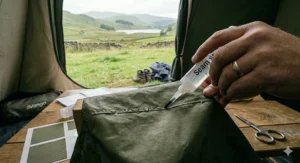
Start by thoroughly cleaning the damaged area. Dirt, moisture, and oils prevent adhesive from bonding properly. Use isopropyl alcohol (often included in quality kits) to clean at least 5cm around the tear. Let it dry completely—rushing this step ruins otherwise good repairs.
For small punctures under 2cm, a single patch suffices. Position the patch to overlap the damage by at least 2.5cm in all directions. Round the corners with scissors; sharp corners peel more easily than rounded ones. Apply the patch from the centre outward, pressing firmly to eliminate air bubbles.
Larger tears require different approaches. If the tear’s edges align cleanly, consider repairing from both sides for maximum strength. Apply adhesive to both sides, let it become tacky, then press together before adding patches. For ragged tears where edges don’t meet, bridge the gap with adhesive, allow it to cure, then reinforce with patches.
Emergency Tent Pole Repair Techniques
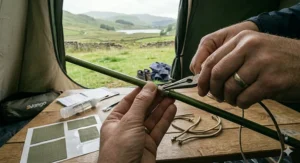
When a pole snaps mid-camp, quick action prevents further damage. First, remove tension from the affected pole by loosening guy lines. Retrieve both broken pieces—you’ll need them.
Align the broken ends as closely as possible. Slide your repair splint over the break, ensuring it extends at least 5cm beyond the fracture on both sides. For added security, wrap waterproof tape around the splinted section. This creates a rigid repair that distributes stress away from the break point.
Fibreglass poles splinter when they break, creating sharp edges. Wrap these thoroughly with tape before handling further. The splint prevents the pole from flexing at the break point, but excessive tension will still cause failure. Reduce guy line tension slightly to avoid overstressing the repair.
If you lack proper splints, improvisation becomes necessary. Tent pegs, carefully positioned and heavily taped, can create emergency splints. A straight stick cut to appropriate length works too. The goal isn’t perfection—it’s getting you through the night safely. According to outdoor gear repair experts, even improvised fixes often last surprisingly long when properly executed.
Waterproofing and Seam Sealing
Re-waterproofing tent fabric extends its functional life significantly. Modern tents use Durable Water Repellent (DWR) coatings that degrade over time, especially with UV exposure and repeated packing. When water no longer beads on your flysheet, it’s time for reproofing.
Clean your tent thoroughly first. Dirt interferes with waterproofing treatments, creating patchy results. Use specialist tent cleaners rather than household detergents, which can damage coatings. Let the tent dry completely in shade—direct sunlight accelerates UV damage.
Apply waterproofing spray evenly across the flysheet, following manufacturer instructions carefully. Work in well-ventilated areas; these sprays contain chemicals requiring proper precautions. Multiple light coats prove more effective than single heavy applications. Let each coat cure fully before adding the next.
Seam sealing requires different products—typically brush-on sealants applied directly to stitched seams. Turn the tent inside-out to access interior seams. Apply sealant generously but neatly, ensuring complete coverage. Let it cure for 24 hours minimum before packing away. Most seam sealers smell strong during application and curing; work outdoors whenever possible.
Tent Repair Kit vs Professional Repair Services
When DIY Makes Sense
Minor damage responds beautifully to quality repair kits. Small tears under 10cm, simple pole splints, and seam resealing fall well within DIY capabilities. These repairs cost pennies compared to professional services, and you gain valuable self-sufficiency for future camping trips.
Time also favours DIY for simple repairs. Posting your tent for professional repair means waiting days or weeks for return. If you’ve got a camping trip planned soon, even imperfect DIY repairs beat waiting for professional service. Many repairs that seem daunting initially become straightforward once you’ve attempted them.
The satisfaction of successfully repairing your own gear shouldn’t be underestimated either. There’s genuine pride in extending your tent’s life through your own efforts, especially amongst the growing community embracing sustainable outdoor practices.
When to Seek Professional Help
Extensive damage often exceeds DIY capabilities. Large tears spanning 30cm or more, multiple overlapping damages, or structural failures involving poles and fabric together typically require professional assessment. Repair specialists possess tools, materials, and expertise that justify their costs for complex work.
Valuable or vintage tents deserve professional attention too. If you own a premium tent worth £500 or more, professional repairs ensure the work matches the tent’s quality. Specialist outdoor repair services across the UK can source matching fabrics, perform invisible repairs, and guarantee their work—peace of mind worth the investment.
Zip failures particularly benefit from professional service. Whilst emergency zip repair exists, properly replacing damaged zips requires specialized equipment and skills. The British Mountaineering Council’s repair directory lists reputable services across the UK specializing in outdoor gear repairs.
Preventative Maintenance: Avoiding Repairs Altogether
Proper Tent Setup and Pitching
Most tent damage stems from improper pitching. Excessive tension tears fabric and stresses poles beyond design limits. Guy lines should be taut but not drum-tight. If you can play a tune on your guy lines, you’ve overtightened them.
Select pitching locations carefully. Clear away sharp stones, sticks, and debris that could puncture your groundsheet. Avoid pitching under trees; falling branches cause surprising damage, and tree sap proves nearly impossible to remove from tent fabric.
Wind orientation matters enormously. Position your tent with the smallest profile facing prevailing winds. Use all supplied guy lines; manufacturers include them for good reason. In exposed locations, add extra pegging points using spare cord to distribute wind loads more evenly.
Storage and Care Between Trips
How you store your tent between adventures significantly impacts its longevity. Never pack a damp tent long-term; moisture breeds mould and mildew that irreparably damage fabrics. If you must pack wet after a rainy trip, unpack and dry your tent within 48 hours maximum.
Store tents loosely rather than tightly compressed. Constant compression degrades waterproof coatings and stresses seams. Stuff sacks work fine for transport, but use larger storage bags for long-term keeping. Some enthusiasts hang their tents in garages or spare rooms—ideal if space permits.
Avoid extreme temperatures during storage. Attics reach scorching temperatures in summer; basements might suffer dampness. A cool, dry cupboard represents the ideal storage location. Keep tents away from chemicals, particularly petrol, oils, and solvents that can degrade synthetic fabrics.
Regular Inspection and Early Intervention
Quick tent checks before each trip catch small problems before they become major failures. Unfold your tent a week before departure and examine it systematically. Hold flysheet and groundsheet up to light sources; small holes show clearly this way.
Check all zips for smooth operation. Debris caught in zip teeth causes damage when forced. Clean zips regularly with a soft brush, and apply silicone-based zip lubricant annually. This simple maintenance prevents the majority of zip failures.
Inspect poles for cracks, particularly at ferrule connections where stresses concentrate. Fibreglass poles show tell-tale splintering before complete failure; replace them proactively. Check shock cord tension too—poles that don’t snap together firmly need cord replacement before they fail completely.
Early intervention saves money and hassle. A small tear caught early repairs with a single patch. That same tear ignored becomes a gaping hole requiring extensive repair or professional service. Invest five minutes inspecting your tent before each trip; it’s the best prevention available.
Cost Analysis: Repair Kits vs Tent Replacement
The True Cost of Replacing vs Repairing
A quality family tent costs £200-£500 or more. Premium backpacking tents easily exceed £600. Against these figures, a £10-£15 repair kit represents extraordinary value. Even multiple repairs throughout a tent’s life cost less than replacement.
Consider the hidden costs of replacement too. Environmental impact, time spent researching and purchasing, and disposal of the old tent all carry costs beyond simple price tags. Repairing aligns with growing sustainability awareness whilst delivering tangible financial benefits.
However, not all repairs make economic sense. If your tent requires £100 worth of professional repairs, and similar new tents cost £150, replacement might prove wiser. Age factors in too—investing heavily in repairs for a 10-year-old tent with degraded fabrics rarely makes sense. Use the “50% rule”: if repairs cost over half the replacement value, consider replacing instead.
Long-term Value of Quality Repair Kits
A well-stocked repair kit serves for years, handling multiple tents and various gear. That £12 invested in Tenacious Tape repairs dozens of tears across tents, jackets, rucksacks, and sleeping bags. Viewed across its lifetime, quality repair materials cost mere pennies per use.
Budget kits require replacement more frequently but still deliver value. Even if cheaper adhesive patches need replacing every few seasons, the total cost remains far below tent replacement. The key lies in matching kit quality to repair frequency—occasional campers manage fine with budget options, whilst frequent adventurers benefit from investing in premium materials.
Educational value deserves mention too. Learning repair skills builds self-reliance and confidence. These skills transfer across outdoor gear generally, making you more capable and independent on future adventures. That intangible value, whilst hard to quantify, significantly enhances the outdoor experience.
✨ Don’t Miss These Exclusive Deals!
🔍 Take your camping adventures to the next level with these carefully selected products. Click on any highlighted item to check current pricing and availability on Amazon.co.uk. These tools will help you create authentic outdoor memories your family will love!
Benefits vs Traditional Alternatives: Why Modern Repair Kits Excel
| Feature | Modern Repair Kits | Traditional Duct Tape | Sewing Repairs |
|---|---|---|---|
| Waterproofing | Excellent—designed for outdoor fabrics | Poor—adhesive fails when wet | Requires separate sealing |
| Durability | Months to years of service | Days to weeks maximum | Excellent if done properly |
| Ease of Use | Simple application, no skills needed | Very easy but temporary | Requires sewing skills |
| Weight | Minimal—grams only | Light but less effective | Heaviest (needle, thread, fabric) |
| Flexibility | Moves with fabric naturally | Stiff and prone to cracking | Excellent when sewn correctly |
| Professional Appearance | Nearly invisible when applied well | Obviously visible | Can be neat with skill |
| Cost | £6-£15 for quality kits | £3-£5 but frequent replacement | Low but time-intensive |
Modern repair kits outperform traditional alternatives across virtually every metric. The adhesive technology has advanced dramatically, creating bonds that genuinely last rather than serving as temporary fixes. Whilst duct tape has its place in emergency toolkits, it simply can’t match specialized repair tapes for outdoor gear.
Common Mistakes to Avoid When Using Tent Repair Kits
Rushing the Repair Process
Impatience ruins more repairs than any other factor. Adhesives require specific curing times for maximum strength. Applying a patch and immediately packing your tent causes the repair to fail. Follow manufacturer timing recommendations religiously, even when inconvenient.
Surface preparation receives insufficient attention from many people. A patch applied to dirty, damp fabric won’t bond properly, regardless of adhesive quality. Clean thoroughly, let dry completely, and only then apply repairs. This discipline separates successful repairs from frustrating failures.
Temperature affects adhesive performance too. Very cold conditions slow or prevent proper bonding. If repairing in cold weather, warm the adhesive and fabric slightly (perhaps inside your jacket) before application. Some adhesives specify minimum application temperatures—check these before attempting winter repairs.
Using Incorrect Patch Sizes
Too-small patches fail at edges where stress concentrates. Your patch should extend at least 2.5cm beyond the damage in all directions—more for larger tears. Skimping on patch size to conserve materials proves counterproductive when the repair fails prematurely.
Conversely, excessively large patches add unnecessary weight and stiffness. For small punctures, a 5cm × 5cm patch suffices. Match patch size to damage extent, erring slightly toward larger rather than smaller.
Shape matters too. Round or oval patches perform better than rectangular ones. Sharp corners peel more readily than curved edges. If using rectangular patches, round the corners with scissors before application. This small step significantly improves longevity.
Ignoring Fabric Compatibility
Not all adhesives work on all fabrics. Silicone-treated fabrics reject standard adhesives; they require silicone-based products specifically. Vinyl materials need vinyl-compatible adhesives. PVC, nylon, polyester—each has optimal adhesive formulations.
Check your tent’s material specification before purchasing repair kits. Most manufacturers list fabric types in product descriptions or instruction manuals. Matching adhesive to fabric type isn’t optional—it’s essential for reliable repairs. Using incompatible products wastes time and money whilst leaving you with a still-damaged tent.
Price Range & Value Analysis
| Price Category | Typical Cost | What You Get | Best For |
|---|---|---|---|
| Budget Kits | £5-£8 | Basic patches, simple adhesive, minimal tools | Occasional campers, emergency backup |
| Mid-Range Kits | £9-£12 | Quality adhesive tape, multiple patches, some tools | Regular campers, reliable repairs |
| Premium Kits | £13-£20+ | Professional adhesives, comprehensive tools, pole splints | Frequent adventurers, serious outdoor enthusiasts |
Value isn’t simply about price—it’s about matching cost to need. An occasional festival camper gains little from a £20 professional kit when a £7 basic option handles their rare repairs perfectly adequately. Conversely, serious backpackers relying on their gear in remote locations benefit enormously from investing in premium materials that won’t fail when needed most.
Consider cost-per-use rather than purchase price alone. A £12 repair kit that serves reliably for five years across dozens of repairs costs mere pence per use. A £6 kit requiring replacement annually might ultimately cost more whilst delivering inferior results. Quality often proves economical over time.
FAQ: Your Tent Repair Kit Questions Answered
❓ How long do tent repair patches last in UK weather conditions?
❓ Can I use a tent repair kit on inflatable camping mattresses and sleeping pads?
❓ What's the difference between tent fabric patch and tent repair tape waterproof options?
❓ How do I repair a tent pole without a proper splint in emergencies?
❓ Should I attempt emergency tent repair on silnylon ultralight tents differently from regular tents?
Conclusion: Choosing Your Perfect Tent Repair Kit for 2026
Selecting the right tent repair kit ultimately depends on matching products to your specific camping style, tent type, and repair frequency. For most UK campers, mid-range options like Gear Aid Tenacious Tape or Stormsure Tent Repair Kit deliver exceptional reliability without excessive cost. These proven solutions handle everything from festival emergencies to serious wild camping challenges across Britain’s demanding conditions.
Budget-conscious campers find tremendous value in options like Coghlan’s Tent Repair Kit, which provides traditional repair capabilities at remarkably affordable prices. Whilst lacking the advanced adhesive technology of premium options, these kits handle common repairs perfectly adequately for occasional use. The key lies in honest self-assessment—if you camp twice yearly, premium repair materials offer little advantage over budget alternatives.
Serious outdoor enthusiasts, particularly those wild camping in remote Scottish Highlands or undertaking multi-day backpacking trips, benefit from investing in comprehensive repair solutions. Combining quality adhesive tape, pole splints, and specialized patches creates robust repair capabilities that inspire confidence when miles from civilization. For these adventurers, the marginal extra cost delivers disproportionate peace of mind.
Remember that prevention significantly outweighs cure. Proper tent setup, careful storage, and regular inspection prevent most damage requiring repairs. Even the best tent repair kit can’t match the simplicity of avoiding damage altogether. However, when damage inevitably occurs—and it will if you camp regularly—quality repair materials transform potential trip-ending disasters into minor inconveniences quickly resolved.
The outdoor gear repair movement continues gaining momentum across the UK, driven by sustainability awareness and economic pragmatism. Repairing rather than replacing camping equipment reduces environmental impact whilst saving substantial money. Every successfully repaired tent represents one less unit heading to landfill and one more investment in sustainable outdoor practices.
Ultimately, a well-chosen tent repair kit isn’t just about fixing tents—it’s about enabling adventures, building self-reliance, and embracing sustainable outdoor practices. Whether you choose budget-friendly basics or premium professional solutions, having repair capabilities transforms your relationship with outdoor gear from disposable consumable to repairable investment. That shift in perspective, perhaps more than any specific product, represents the true value of these remarkable kits.
Recommended for You
- Best Tent Lights UK 2026: 7 Expert-Tested Options
- Best Tent Heater: 7 Safe Options for UK Winter Camping 2026
- 7 Best Camping Mattress for Tent 2026 – Expert UK Reviews
Disclaimer: This article contains affiliate links. If you purchase products through these links, we may earn a small commission at no additional cost to you. Prices shown are approximate and may vary.
✨ Found this helpful? Share it with your mates! 💬🤗
